Artwork
Jesper Rasmussen Brochmand
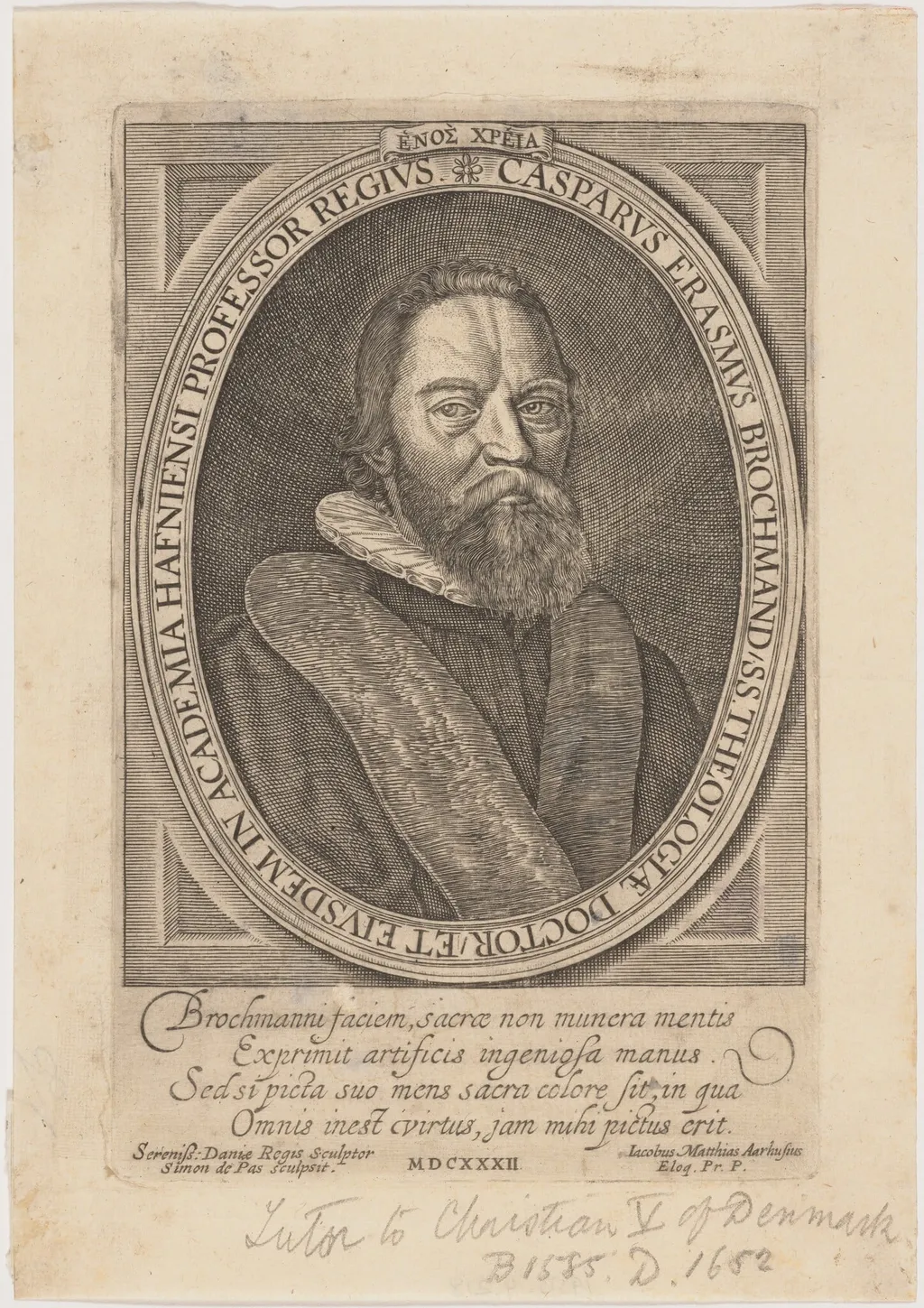
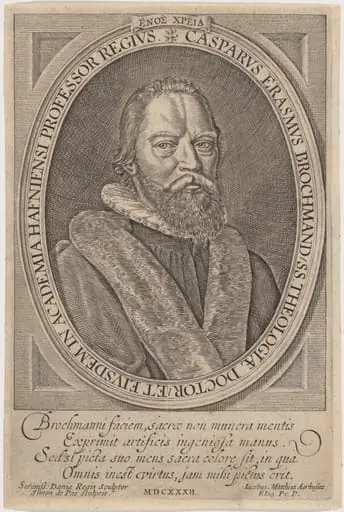
Jesper Rasmussen Brochmand is an ink print by the Baroque artist Simon van de Passe. It dates from 1632 and is held in the collection of the National Gallery of Art.
About this work
The text around his head calls him a professor and doctor, and the Latin words below praise his mind and skills.
This is a black-and-white portrait of an older man with a long white beard and dark hair. He’s wearing a high collar and a dark robe. The background is plain, but his face is framed by a decorative border with Latin text.
The text around his head calls him a professor and doctor, and the Latin words below praise his mind and skills. The artist signed it in 1632, and the style looks detailed and precise.
Next, check out engraving to see how artists like this carved intricate lines into metal plates.
Overview
This 1632 engraving by Simon van de Passe depicts Jesper Rasmussen Brochmand, a Danish theologian and academic. Rendered in monochrome, the portrait emphasizes precision and restraint, typical of early 17th-century printmaking. The image is framed by an ornamental border containing Latin inscriptions, distinguishing it from plain portraiture and signaling the subject’s scholarly status. The artist’s signature and date confirm its origin and timing.
Subject & Meaning
Jesper Rasmussen Brochmand was a respected professor and doctor of theology in Denmark. The Latin inscriptions surrounding his portrait identify his titles and commend his intellectual and scholarly virtues. The absence of elaborate setting focuses attention on his dignified bearing and the authority conferred by his academic role. The portrait functions as both likeness and honorific tribute, common in scholarly portraiture of the period.
Technique & Style
Simon van de Passe employed fine, controlled lines typical of copperplate engraving to render texture and form. The beard, collar, and robe are defined by meticulous cross-hatching, while the face is modeled with subtle tonal gradations. The decorative border, with its intricate script and floral motifs, reflects the period’s preference for combining textual and visual elements to convey status. The style is restrained yet highly detailed, emphasizing clarity over ornamentation.
History & Provenance
Created in 1632, the engraving was likely produced to circulate among academic and ecclesiastical circles in Northern Europe. Van de Passe, part of a renowned family of printmakers, specialized in portraits of notable figures. While the exact early ownership is undocumented, such prints were often collected by universities and libraries, suggesting institutional preservation. Its survival reflects its role in disseminating scholarly identity.
Context
In early 17th-century Denmark, printed portraits of clergy and academics served as tools of reputation and institutional memory. Brochmand’s image aligns with a broader European trend of using engraving to immortalize learned men. The Latin inscriptions reflect the lingua franca of scholarship, while the formal attire and plain background mirror Protestant ideals of modesty and intellectual rigor over visual splendor.
Legacy
The engraving remains a documented example of how academic authority was visually constructed in the early modern era. It contributes to the archive of van de Passe’s portraiture and offers insight into the visual culture of Danish Protestantism. Though not widely reproduced today, it persists in institutional collections as a record of scholarly identity and printmaking practice of its time.
Artist & collection

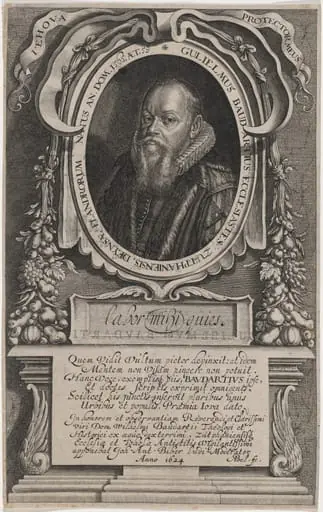 Gulielmus Baudartius, Theologian and Historian
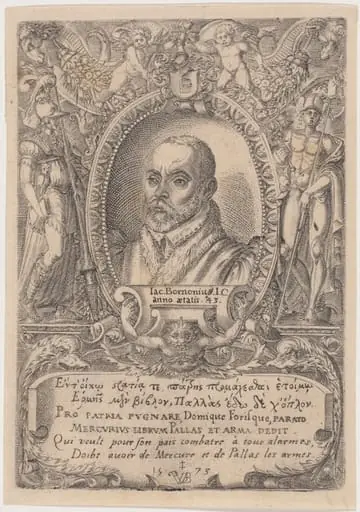 Jacob Bornonius
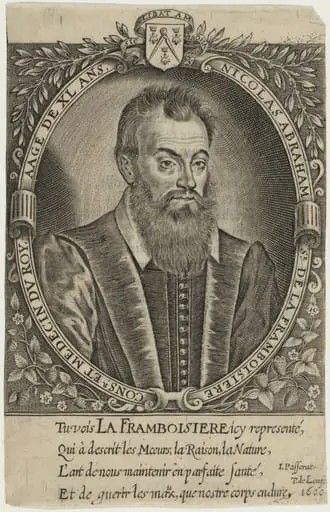 Nicolas Abraham de la Framboisiere
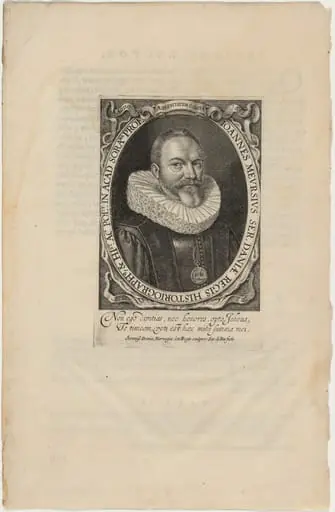 Johannes Meursius, Historian
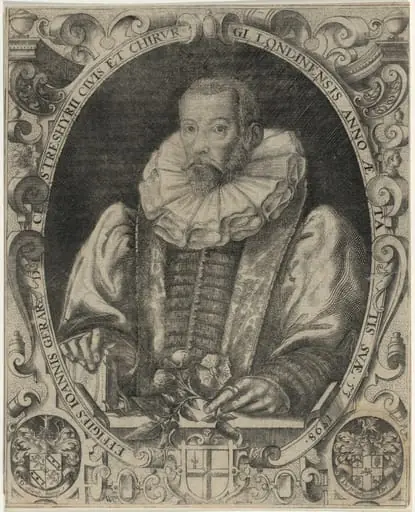 John Gerard, Herbalist
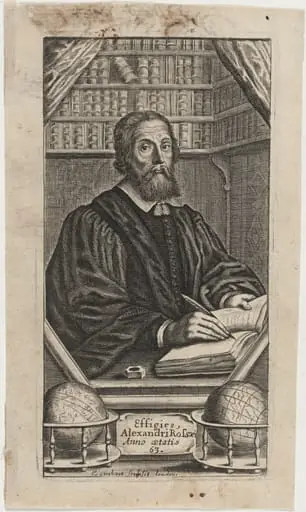 Alexander Ross, Chaplain to Charles I
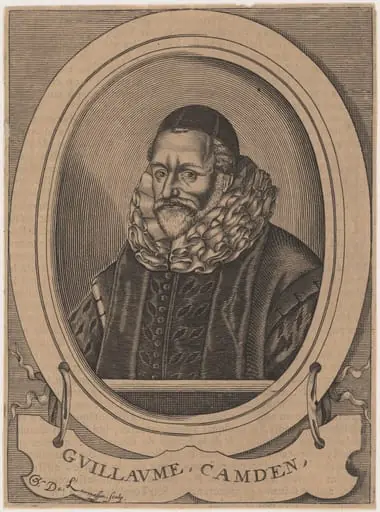 William Camden, Herald, Antiquary and Historian
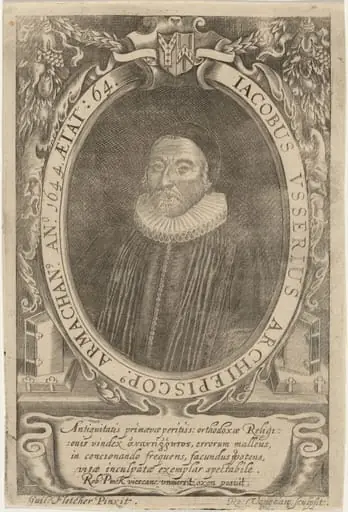 James Ussher, Archbishop of Armagh
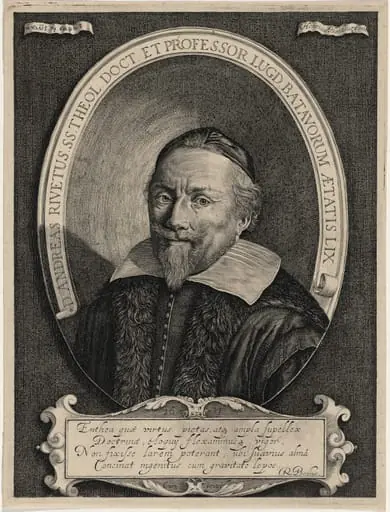 Andreas Rivetus, Doctor of Divinity and Professor
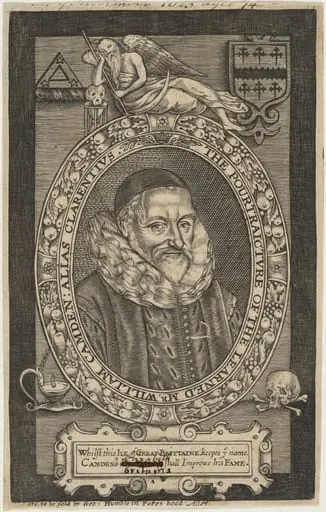 William Camden
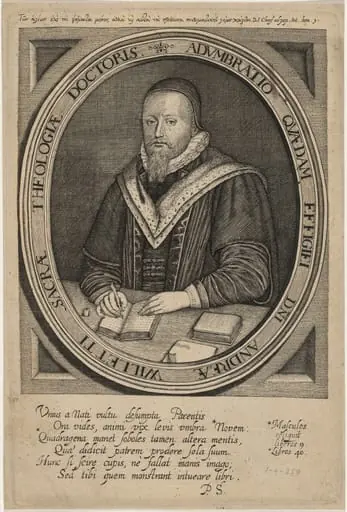 Andrew Willet, D.D., Controversionalist
 Jesper Rasmussen Brochmand