Artwork
Nicolas Abraham de la Framboisiere
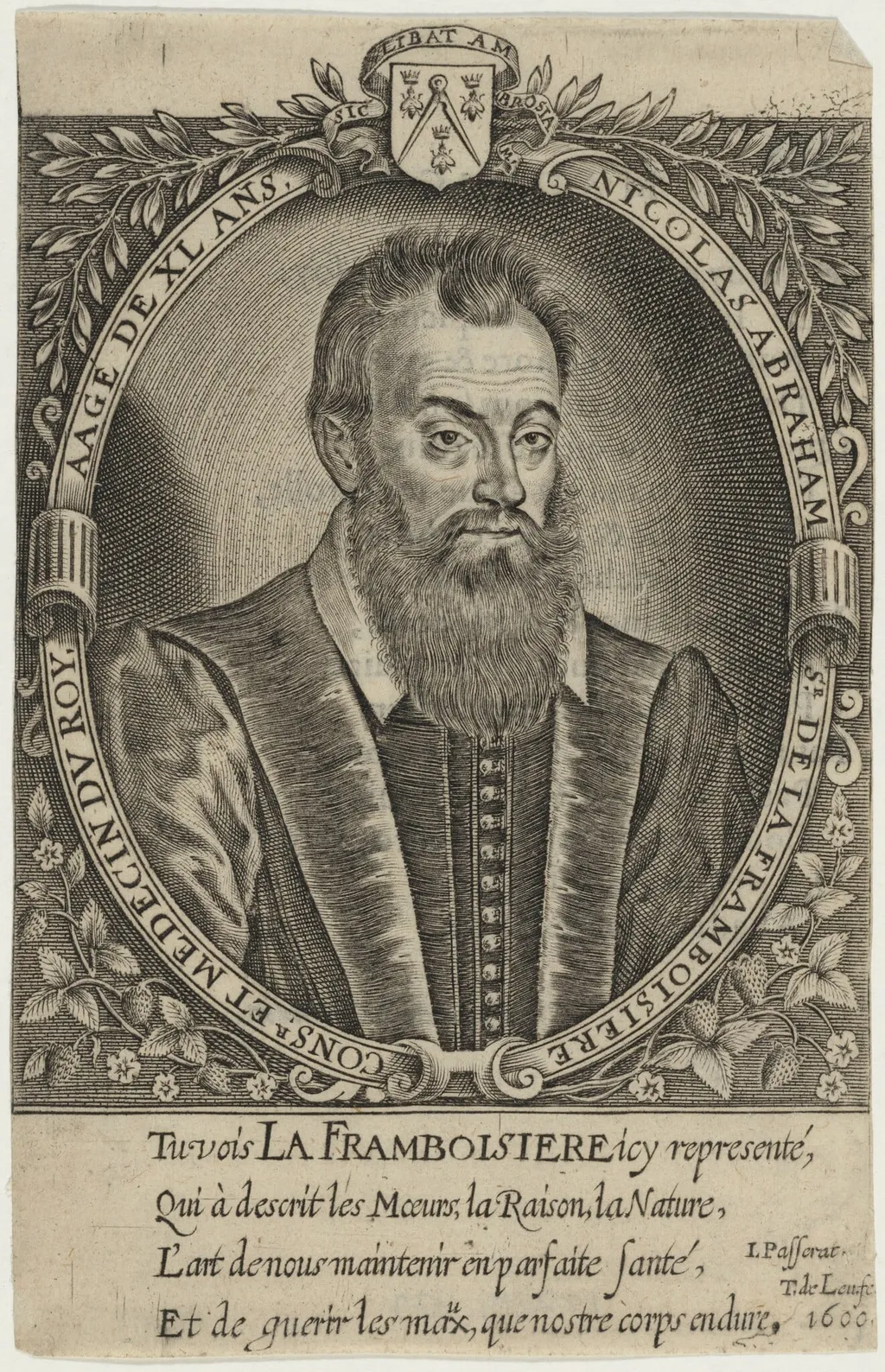
Nicolas Abraham de la Framboisiere is an ink print by the Baroque artist Thomas de Leu. It dates from 1600 and is held in the collection of the National Gallery of Art.
About this work
Overview
This 1600 engraving by Thomas de Leu portrays Nicolas Abraham de la Framboisiere, a French intellectual known for his writings on natural philosophy.
This 1600 engraving by Thomas de Leu portrays Nicolas Abraham de la Framboisiere, a French intellectual known for his writings on natural philosophy. Executed in fine linear detail, the portrait is part of a broader tradition of scholarly portraiture in early 17th-century France. De Leu, active in Paris, specialized in reproductive prints that circulated images of notable figures among educated audiences.
Subject & Meaning
The sitter, Nicolas Abraham de la Framboisiere, is depicted as a man of learning, his serious expression and formal attire reflecting his scholarly status. The leaf wreath and heraldic crest above his head suggest honor and intellectual achievement. Latin inscriptions on either side reference his contributions to the study of nature and reason, framing him within the humanist tradition of combining empirical observation with philosophical inquiry.
Technique & Style
Thomas de Leu employed fine-line engraving to render texture and form with precision. The portrait’s chiaroscuro effects are achieved through controlled hatching, emphasizing the contours of the face and the folds of the robe. The surrounding decorative elements—scrolls, wreath, crest—are rendered with delicate precision, typical of Northern European printmaking conventions of the period. The signature in the lower corner confirms the artist’s authorship and professional practice.
History & Provenance
Created in 1600, the print was likely produced for dissemination among scholarly circles in Paris. De Leu, as both engraver and publisher, controlled the production and distribution of such portraits. While no early ownership records are widely documented, similar prints from his workshop survive in institutional collections, suggesting the image was circulated in limited, targeted editions for academic and aristocratic patrons.
Context
In early 17th-century France, portrait engravings served as tools for intellectual commemoration. As print culture expanded, images of philosophers, scientists, and statesmen became common in libraries and private collections. De Leu’s work aligns with this trend, positioning de la Framboisiere within a visual canon of thinkers whose contributions were deemed worthy of preservation through the printed image.
Legacy
Though de la Framboisiere is not widely remembered today, this engraving preserves his image and intellectual identity for posterity. De Leu’s technique exemplifies the craftsmanship of French printmakers who bridged art and scholarship. The print remains a material artifact of how knowledge was visually legitimized in the early modern period, offering insight into the intersection of portraiture and intellectual culture.
Artist & collection
Artist
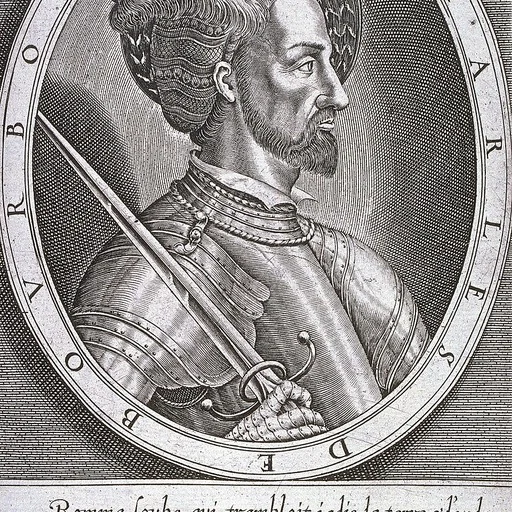
Thomas de Leu or Leeuw or Le Leup or Deleu (1560–1612) was a French engraver, publisher, and print dealer of Flemish origin.

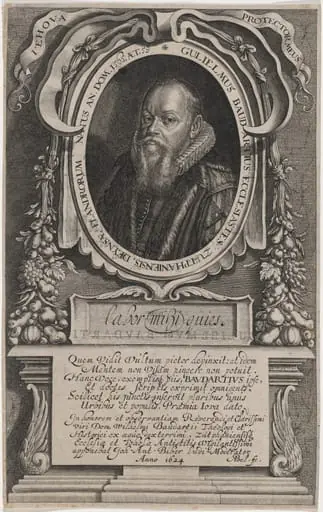 Gulielmus Baudartius, Theologian and Historian
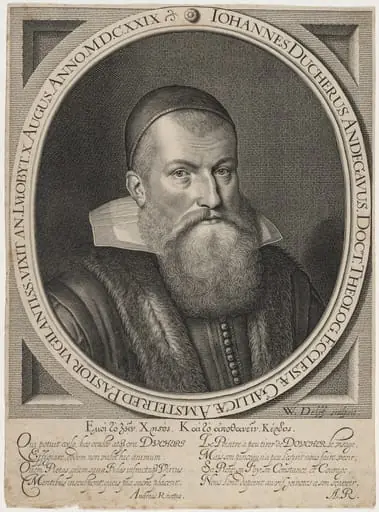 John Doucher, French Divine
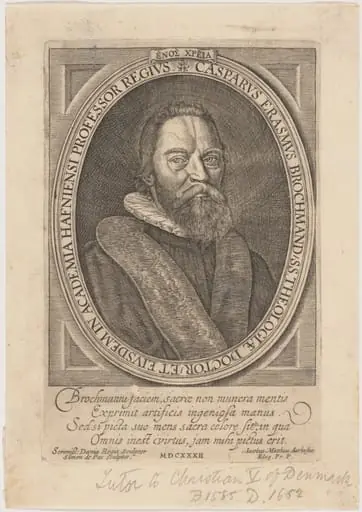 Jesper Rasmussen Brochmand
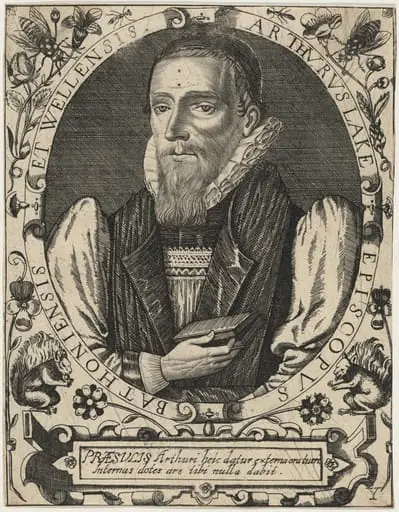 Arthur Lake, Bishop of Bath and Wells
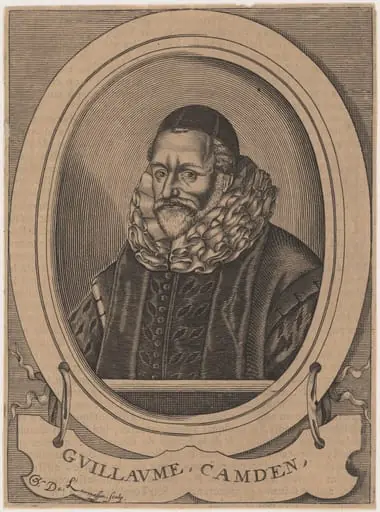 William Camden, Herald, Antiquary and Historian
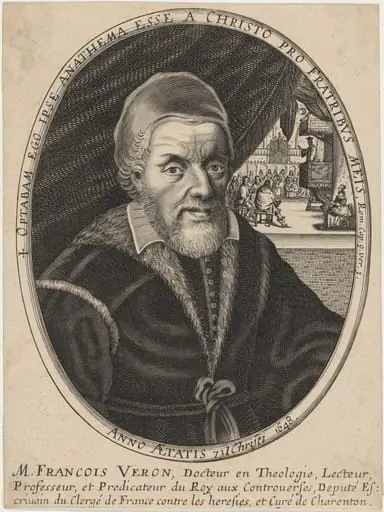 M. Francois Veron, Doctor of Theology, Lecturer, Professor, under Louis XIV
 Reverend Robert Bolton
 Rev. Robert Bolton
 Jacobus Arminius
 John Gerard, Herbalist
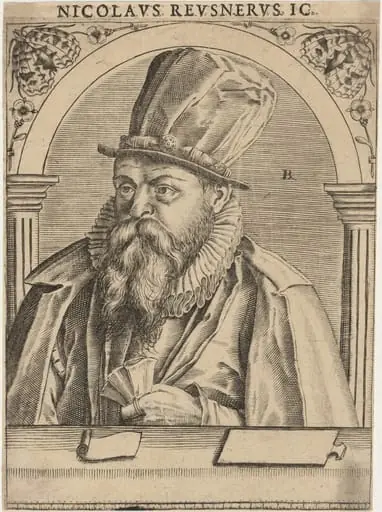 Nicolas Reusner
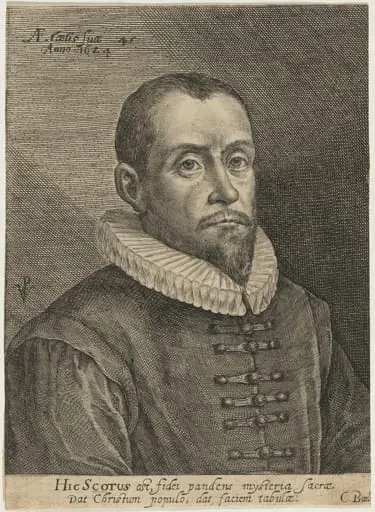 Thomas Scott