Artwork
Sir Walter Raleigh
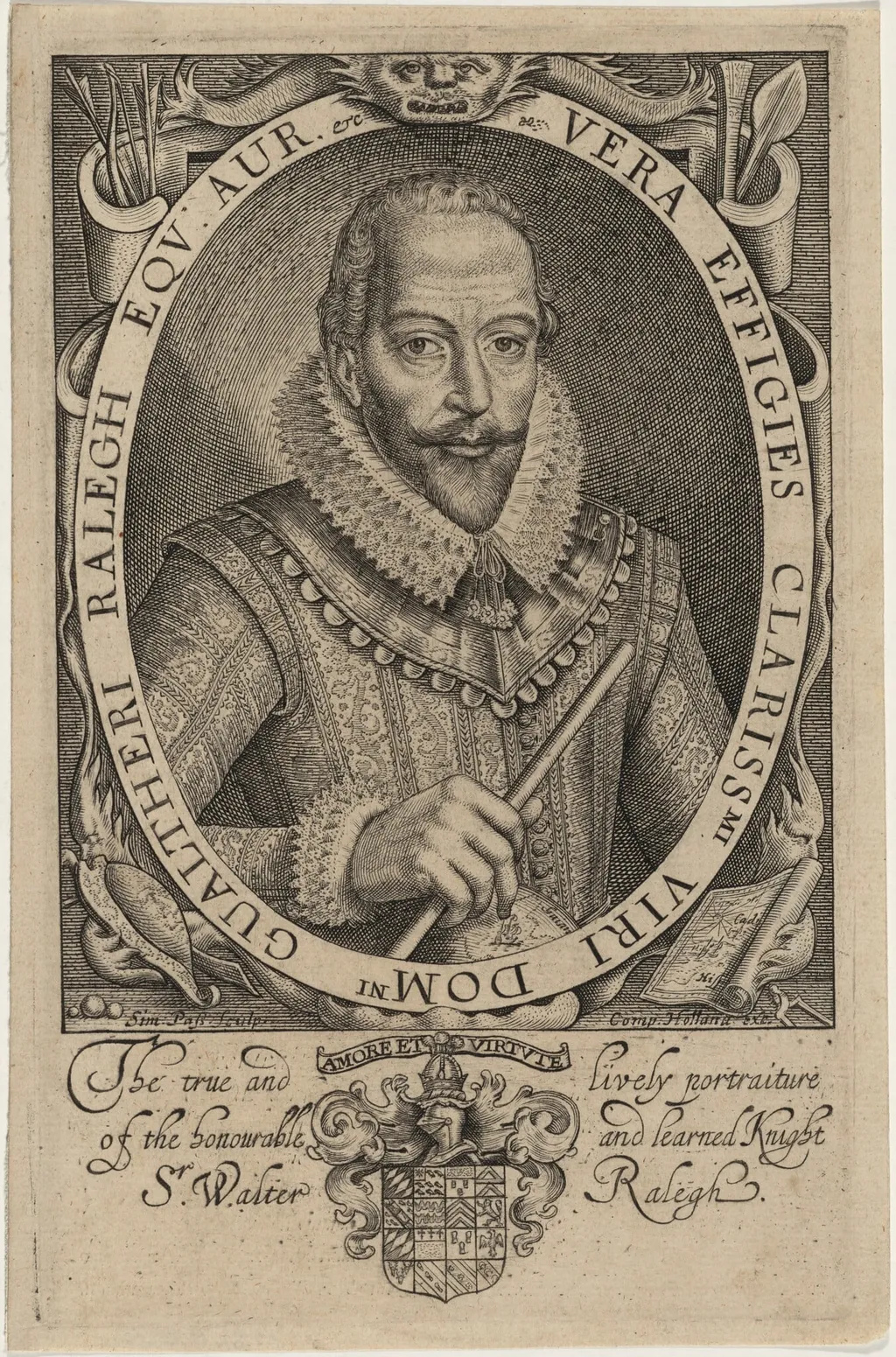
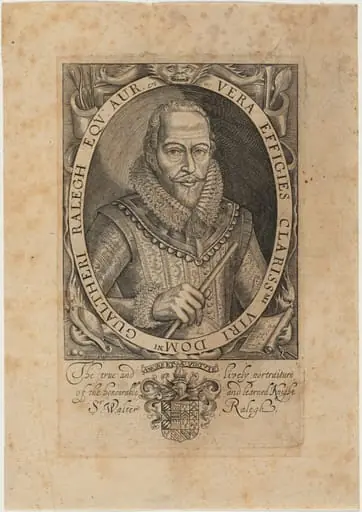
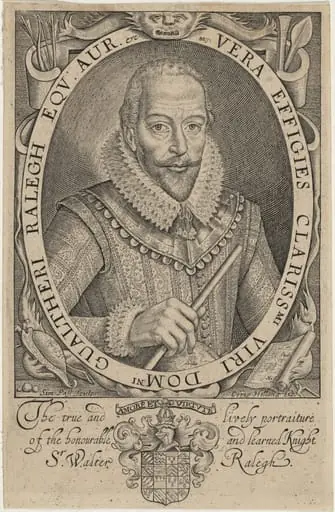
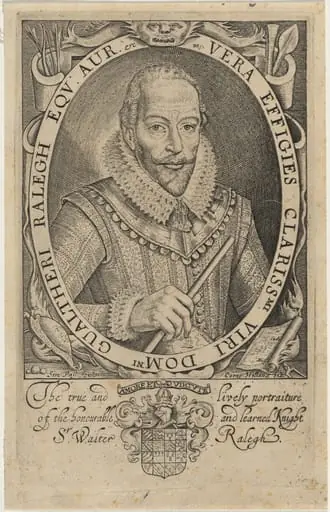
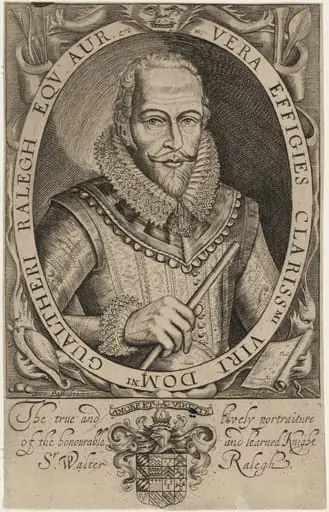
Sir Walter Raleigh is an ink print by the Renaissance artist Simon van de Passe. It dates from 1621 and is held in the collection of the National Gallery of Art.
About this work
Overview
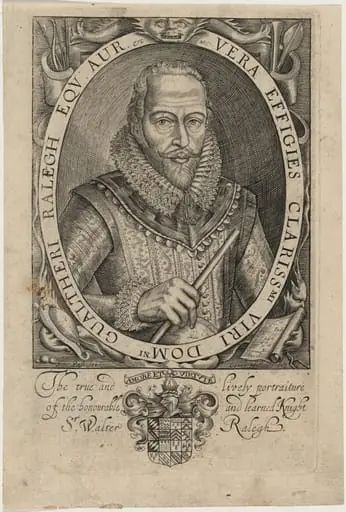
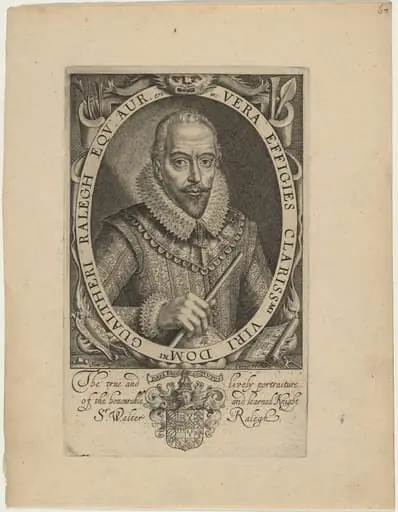
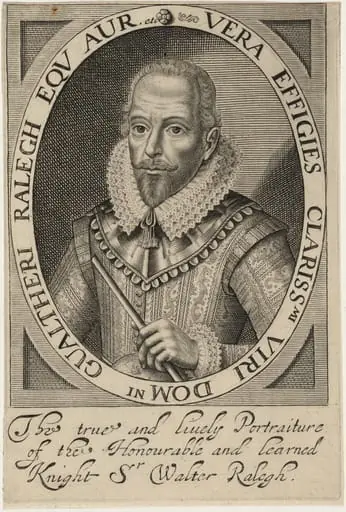
Executed through engraving on metal, the image captures Raleigh in elaborate early 17th-century attire, with a high ruffled collar and a chain of office.
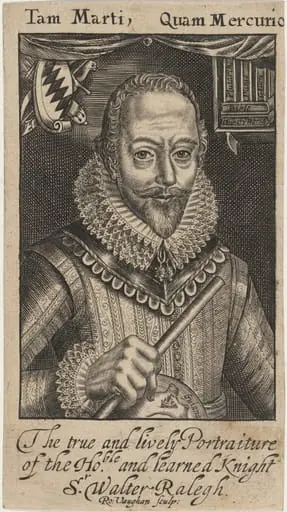
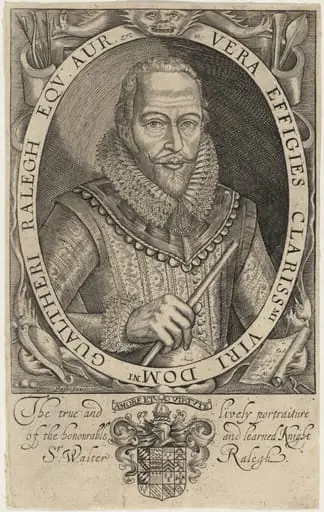
This black-and-white print, created in 1621 by Simon van de Passe, depicts Sir Walter Raleigh as a formal portrait. Executed through engraving on metal, the image captures Raleigh in elaborate early 17th-century attire, with a high ruffled collar and a chain of office. The composition is framed by ornamental scrollwork and Latin inscriptions, reinforcing the subject’s status. A small heraldic shield at the base suggests lineage and noble identity.
Subject & Meaning
The portrait presents Sir Walter Raleigh as a distinguished courtier and explorer, emphasizing his public persona rather than personal character. The Latin banner and coat of arms serve to legitimize his legacy, aligning him with aristocratic tradition. Though executed after his execution in 1618, the image reflects efforts to preserve his reputation among those who admired his role in England’s imperial ambitions and intellectual circles.
Technique & Style
Van de Passe employed fine-line engraving to render texture and detail, particularly in the lace of Raleigh’s collar and the metallic sheen of his chain. The background is deliberately minimal, directing focus to the figure. Decorative borders with scrolling foliage and Latin text frame the portrait, a common convention in early modern print portraiture that blended artistry with textual authority.
History & Provenance
Created shortly after Raleigh’s death, the engraving was likely produced for distribution among his supporters and patrons. Van de Passe, a Dutch printmaker active in England, specialized in portraiture for the elite. This print may have circulated as a commemorative object, helping to sustain Raleigh’s image in the years following his controversial trial and execution under James I.
Context
In the early 1600s, engraved portraits were key tools for shaping public memory of influential figures. Raleigh, once a favorite of Elizabeth I but later condemned as a traitor, remained a polarizing symbol. This image, produced in a period of political recalibration, subtly rehabilitates his status through formal iconography, aligning him with the dignity of nobility despite his fall from favor.
Legacy
The engraving became one of the most widely reproduced images of Raleigh, influencing later depictions in books and historical records. Its combination of heraldic symbolism and precise engraving set a standard for portraiture of Elizabethan and Jacobean figures. Though not a likeness from life, it endured as the dominant visual representation of Raleigh for centuries.
Artist & collection