Artwork
Poor Fisherman
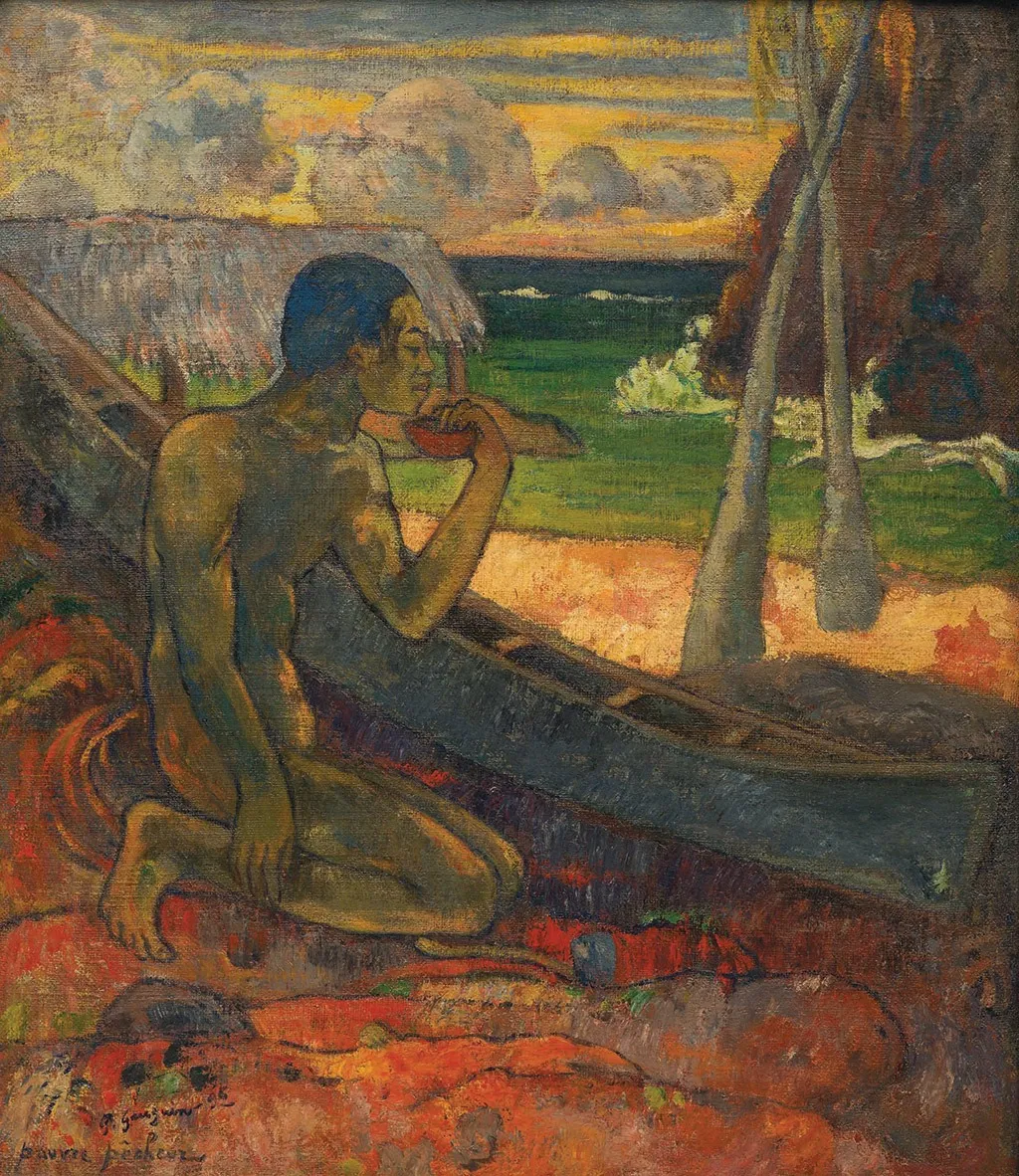
Poor Fisherman is an oil painting by the Post-Impressionist artist Paul Gauguin. It dates from 1898 and is held in the collection of the São Paulo Museum of Art.
About this work
Overview
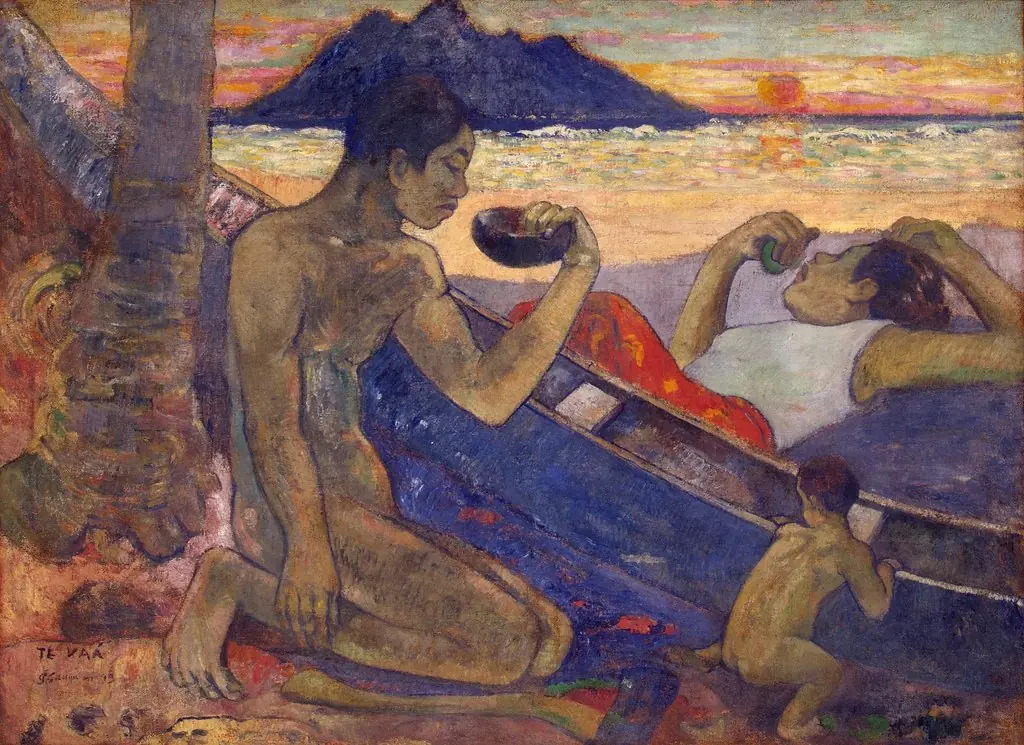
Painted in 1898, *Poor Fisherman* is an oil-on-canvas work by Paul Gauguin, created during his time in Tahiti. It reflects his shift away from European realism toward a more symbolic and emotionally charged visual language. The painting captures a solitary figure in a quiet coastal setting, embodying Gauguin’s interest in indigenous life and spiritual introspection.
Subject & Meaning
The figure is a local fisherman, shirtless and seated in a canoe, drinking from a bowl. His stillness and isolated position suggest a moment of quiet endurance rather than labor. Gauguin avoids narrative detail, instead presenting the man as a symbol of elemental existence—aligned with his broader pursuit of authenticity beyond Western industrial society.
Technique & Style
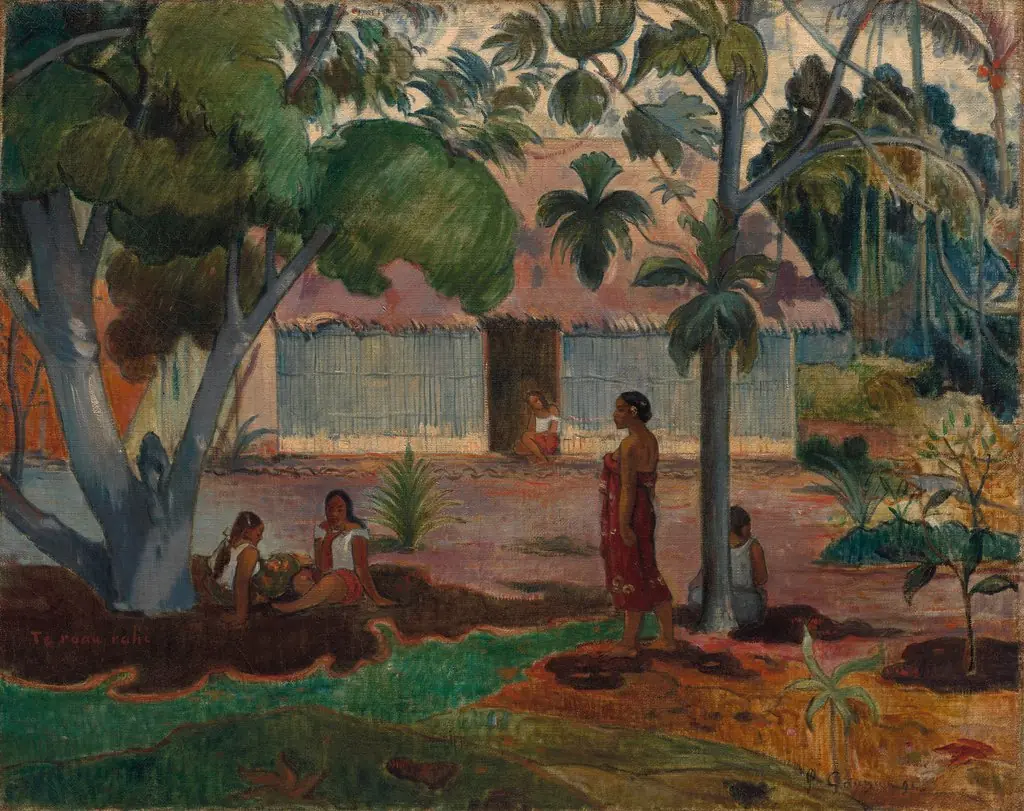
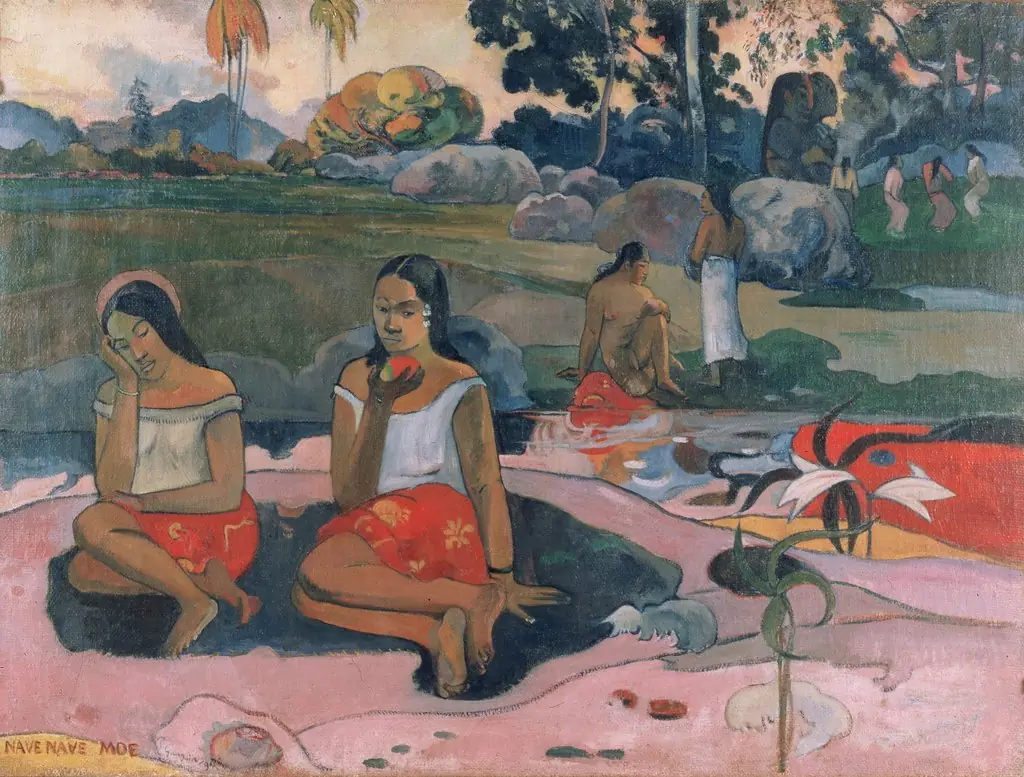
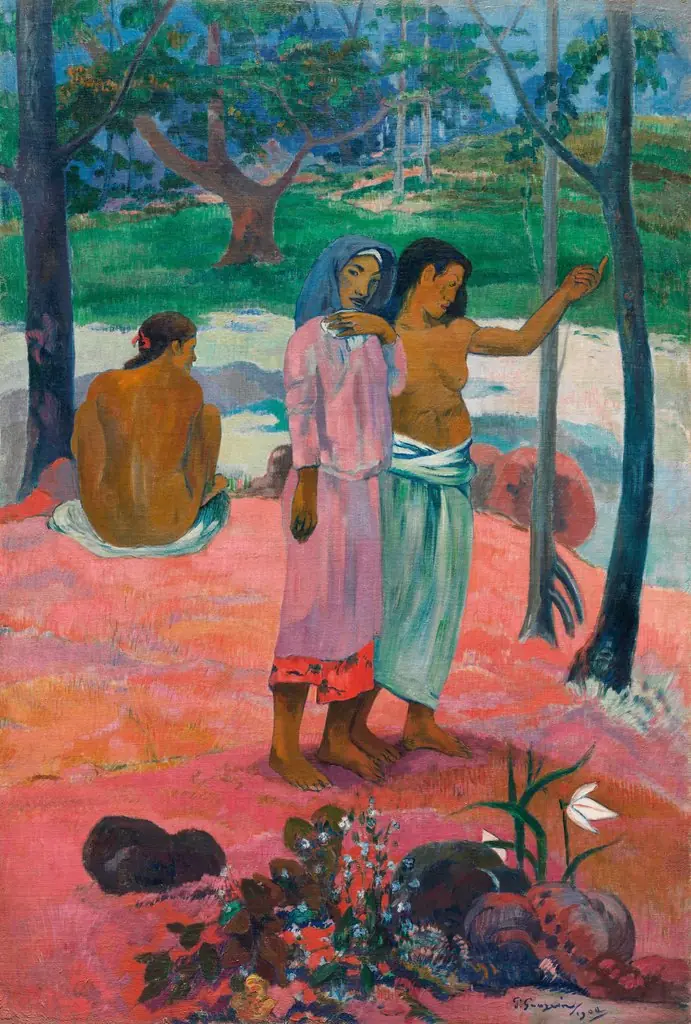
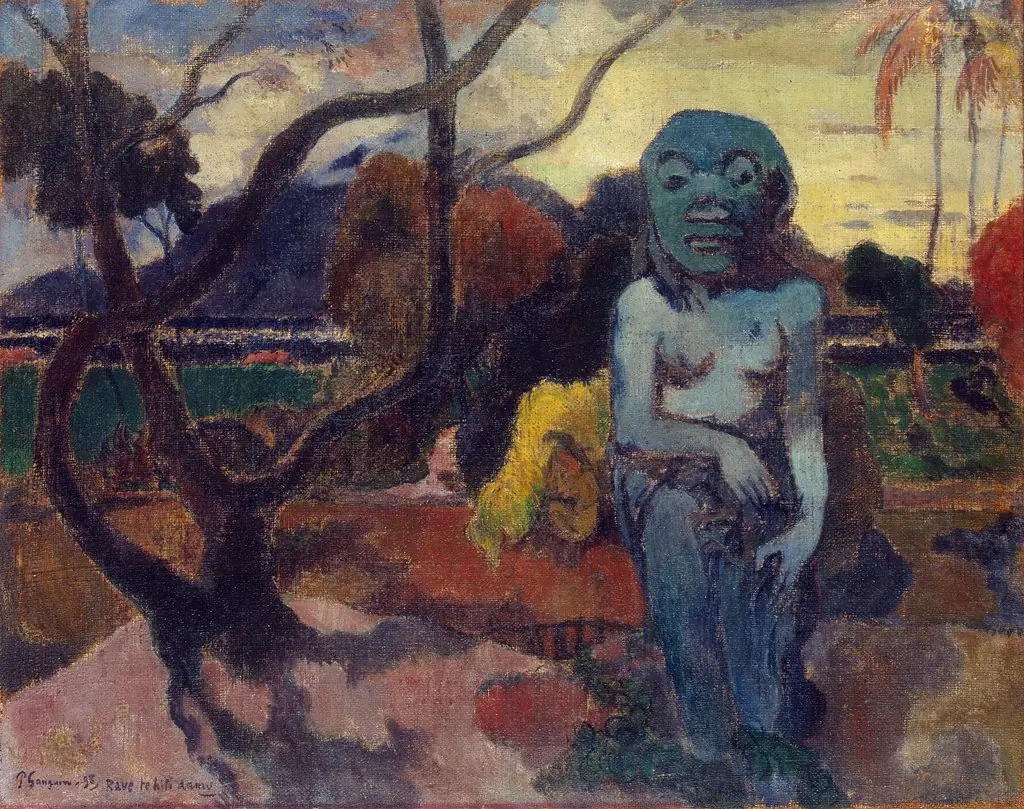
Gauguin employs flat planes of muted color—earthy browns, olive greens, and soft blues—to flatten spatial depth and emphasize mood over realism. Outlines are deliberate, forms simplified, and perspective deliberately ambiguous. This Synthetist approach prioritizes emotional resonance and symbolic harmony, distancing the work from Impressionist optical effects.
History & Provenance
Created during Gauguin’s second stay in French Polynesia, the painting emerged from a period of personal hardship and artistic isolation. It was not widely exhibited during his lifetime and remained largely unknown until posthumous reassessments of his oeuvre in the early 20th century. Its current location traces to later acquisitions by institutions recognizing his influence on modernism.
Context
Gauguin sought refuge from European modernity in the Pacific, drawn by perceived cultural purity. *Poor Fisherman* reflects his romanticized view of indigenous life, though it also reveals his detachment from the actual conditions of labor. The work sits within a broader colonial framework, where Western artists projected idealized visions onto non-Western subjects.
Legacy
Though overlooked in his lifetime, Gauguin’s stylistic innovations—bold color, flattened form, symbolic intent—resonated with later movements like Expressionism and Fauvism. *Poor Fisherman* exemplifies his contribution to redefining painting as a vehicle for inner experience rather than external observation, influencing generations of artists seeking alternatives to realism.
Artist & collection
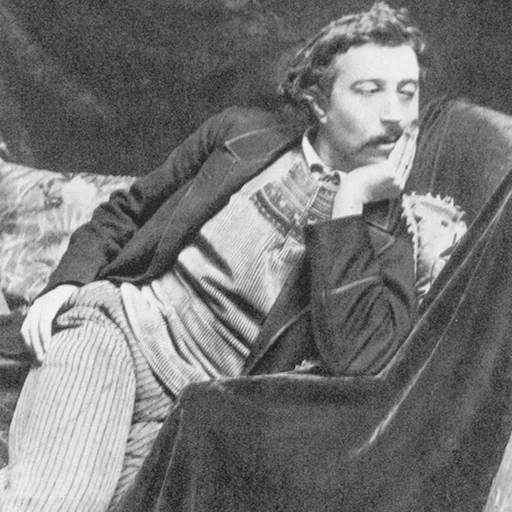
Artist
Eugène Henri Paul Gauguin (; French: ; 7 June 1848 – 8 May 1903) was a French painter, sculptor, printmaker, ceramist, and writer, whose work has been primarily associated with the Post-Impressionist and Symbolist movements.