Artwork
Landscapes: Young Elm Trees
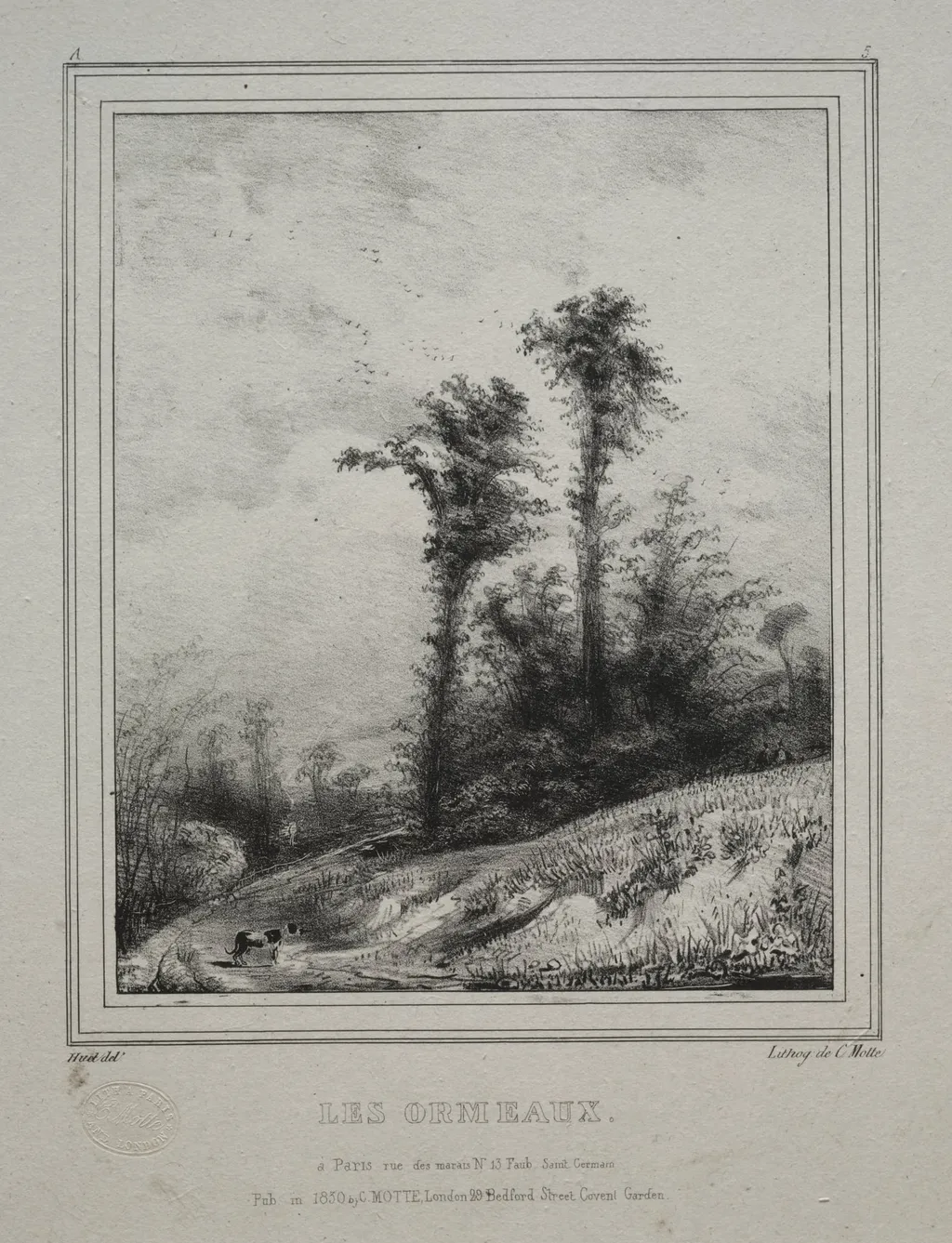
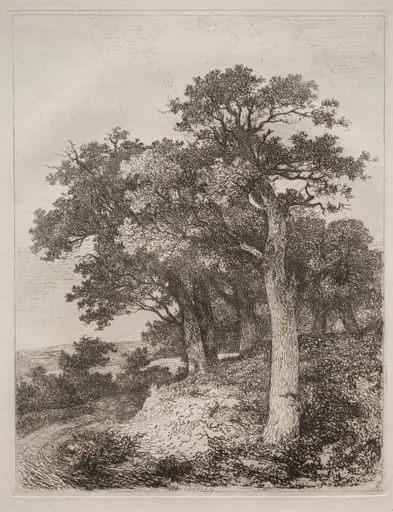
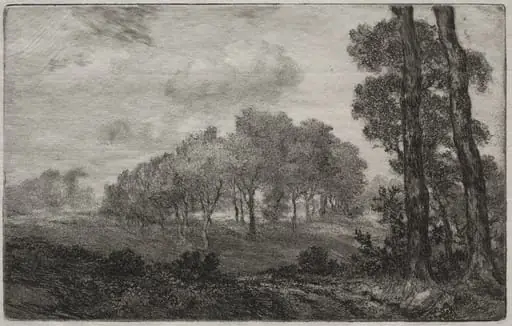
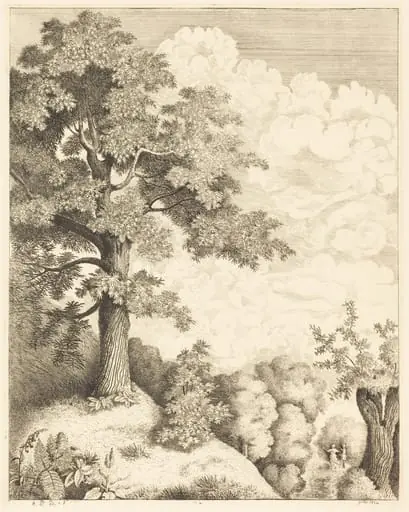
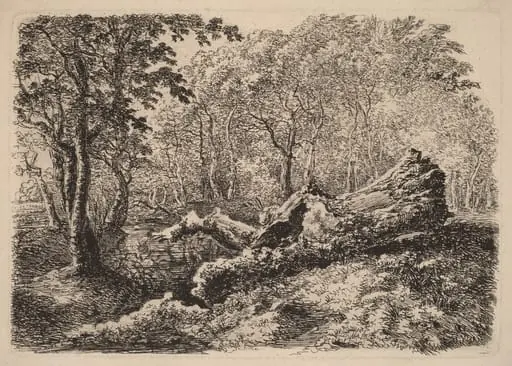
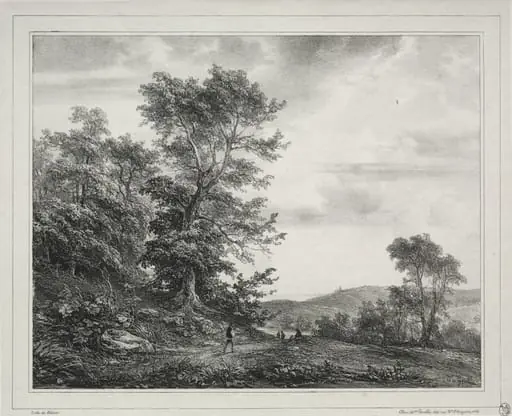
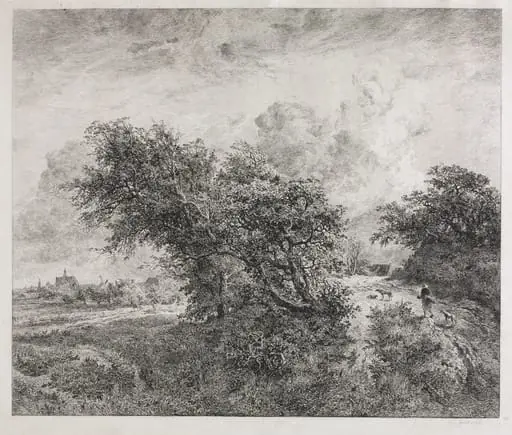
Landscapes: Young Elm Trees is a print by the Romanticist artist Paul Huet. It dates from 1829 and is held in the collection of the Cleveland Museum of Art.
About this work
Overview
Initially trained in neoclassical methods under Antoine-Jean Gros and Jean-Baptiste Guérin, he gradually moved away from academic conventions.
Paul Huet, a French artist born in Paris in 1803, produced the print *Landscapes: Young Elm Trees* in 1829. Initially trained in neoclassical methods under Antoine-Jean Gros and Jean-Baptiste Guérin, he gradually moved away from academic conventions. His exposure to English landscape painters like Bonington and Constable led him to prioritize direct engagement with the natural world, resulting in this intimate, observational work now held by The Cleveland Museum of Art.
Subject & Meaning
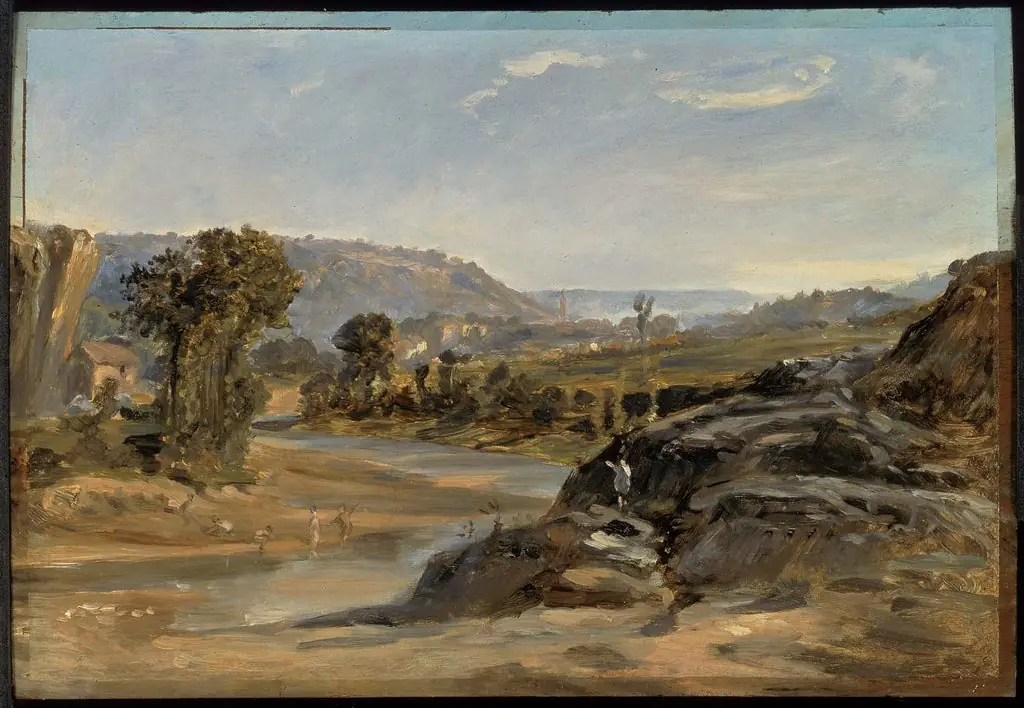
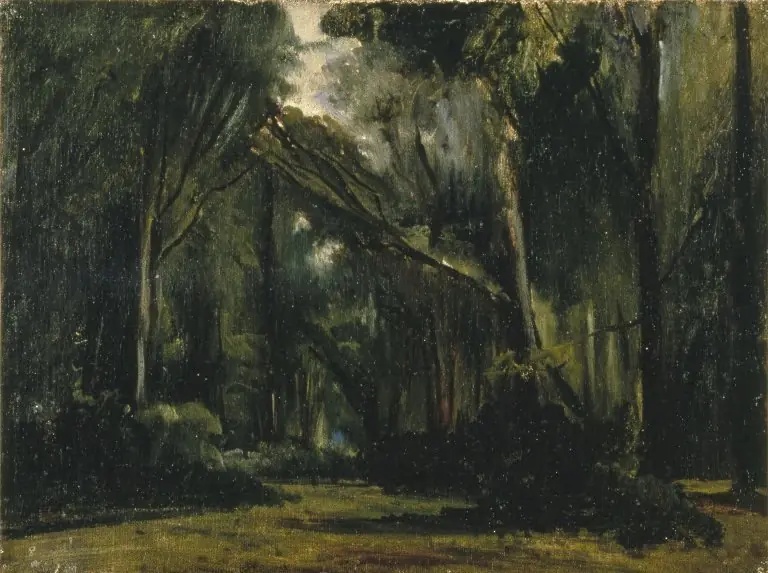
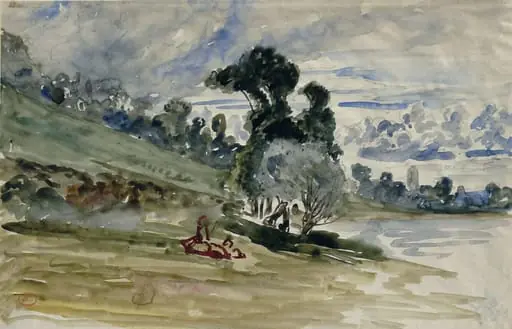
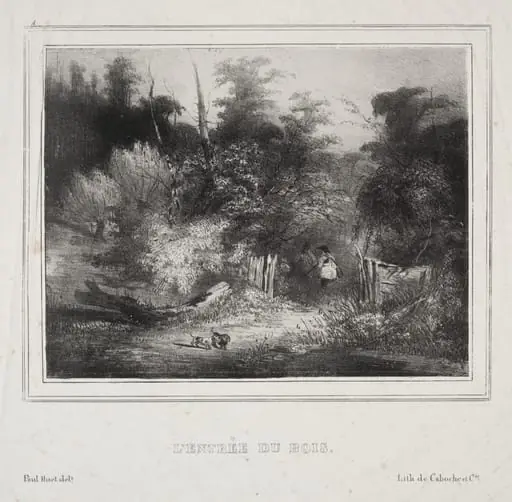
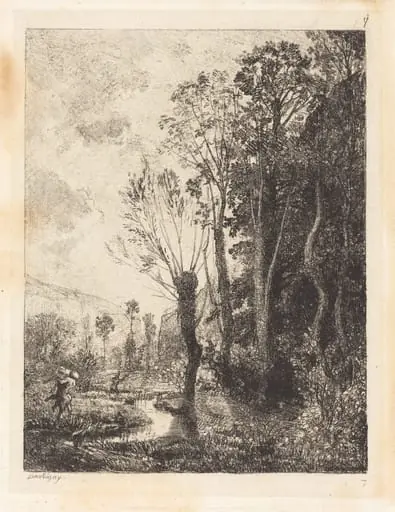
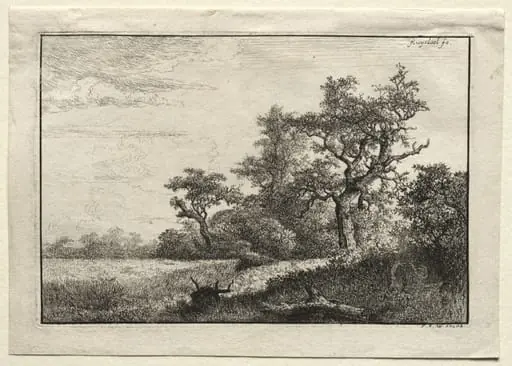
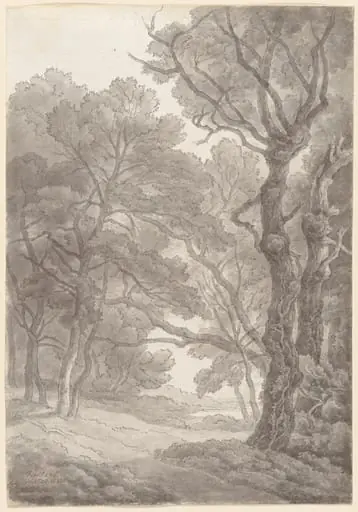
The print depicts a tranquil woodland scene with two slender elm trees rising centrally, their branches stretching skyward. A narrow stream meanders through undergrowth, and a deer pauses near its edge, suggesting quiet coexistence between animal and environment. Huet avoids narrative or symbolism, instead emphasizing the stillness and subtle rhythms of nature, reflecting a shift toward authenticity over idealized composition.
Technique & Style
Huet employed fine, soft lines to render foliage, water, and terrain with delicate precision. The tonal gradations suggest dappled light filtering through leaves, while the loose, sketchlike quality conveys immediacy. His technique diverges from rigid academic draftsmanship, embracing a more fluid, atmospheric approach influenced by English plein air practices. The absence of bold contrasts or dramatic lighting reinforces a sense of calm observation.
History & Provenance
Created in 1829, the print emerged during Huet’s formative years as he transitioned from classical training to a more naturalistic style. It was likely part of a series exploring rural scenes, reflecting his growing interest in unidealized landscapes. The work entered The Cleveland Museum of Art’s collection as part of its broader acquisition of 19th-century European prints, preserving its role in the evolution of French landscape art.
Context
In the late 1820s, French artists began reevaluating landscape as a subject worthy of serious study, moving beyond historical or mythological themes. Huet’s work aligns with this shift, paralleling the influence of British painters who emphasized direct observation. His focus on ordinary natural settings resonated with emerging Romantic sensibilities, though his approach remained restrained, avoiding overt emotionalism in favor of quiet realism.
Legacy
Huet’s *Young Elm Trees* exemplifies a pivotal moment in French printmaking, where naturalism began to replace academic formalism. Though less widely known than contemporaries like Corot, his commitment to observing nature firsthand contributed to the groundwork for later Barbizon School practices. The print remains a quiet testament to the growing legitimacy of landscape as a subject rooted in personal experience rather than inherited convention.
Artist & collection
Artist
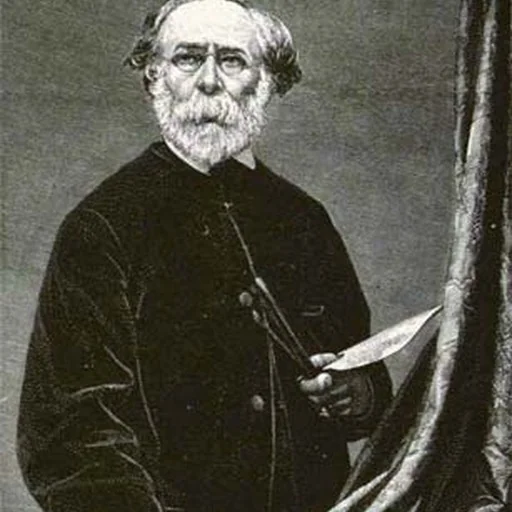
Paul Huet (French pronunciation: ; 3 October 1803 – 8 January 1869) was a French painter and printmaker born in Paris.