Artwork
Untitled
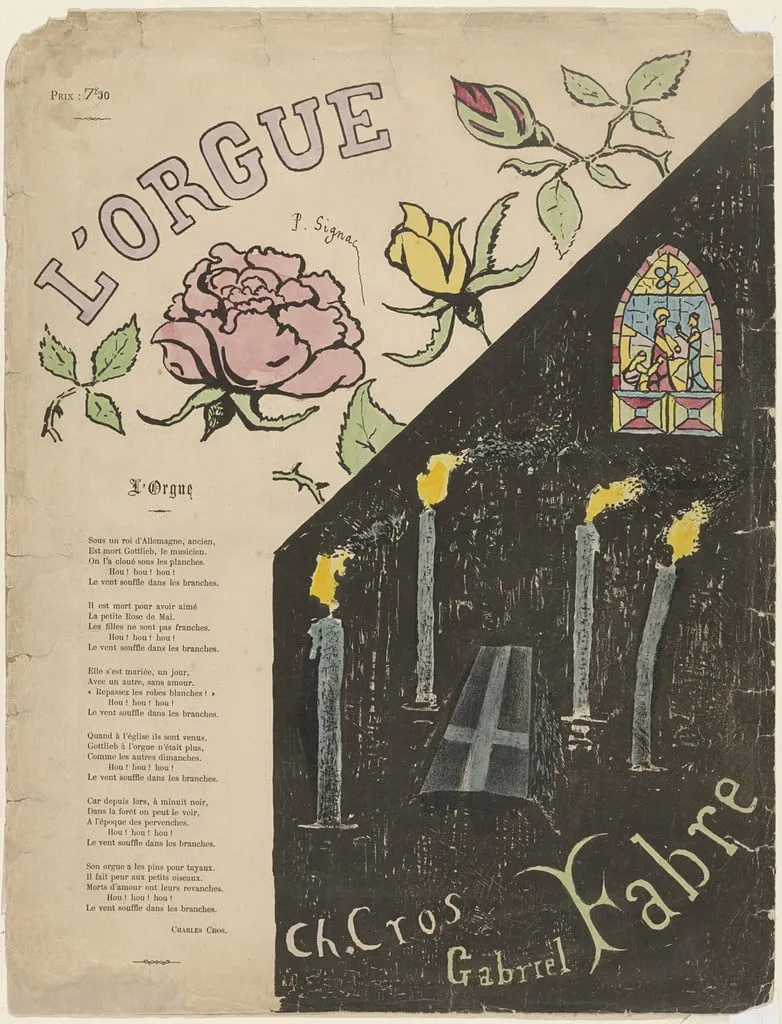
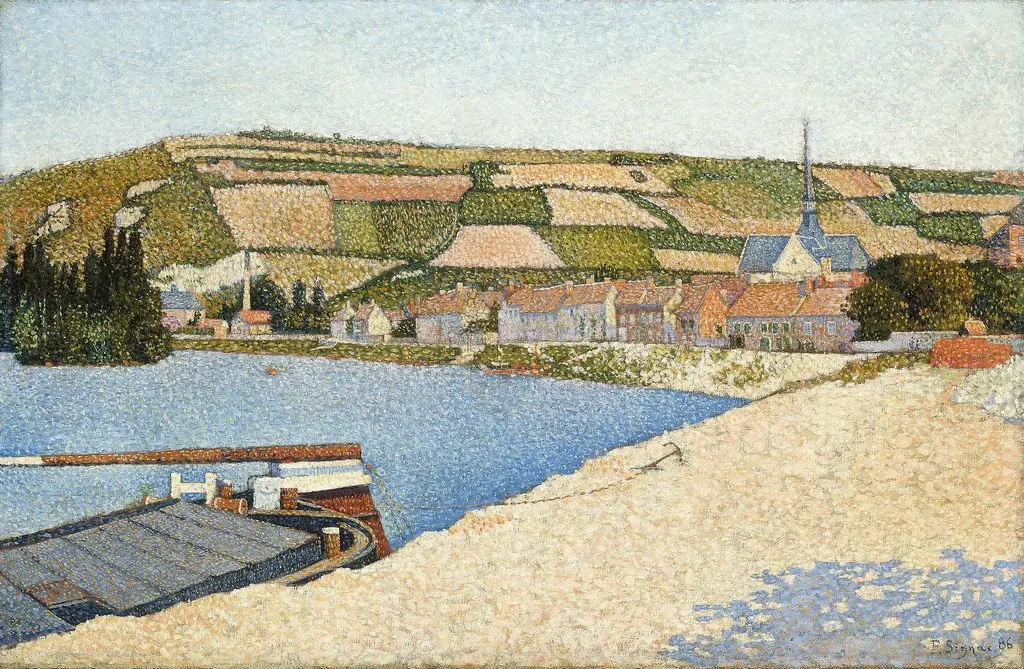
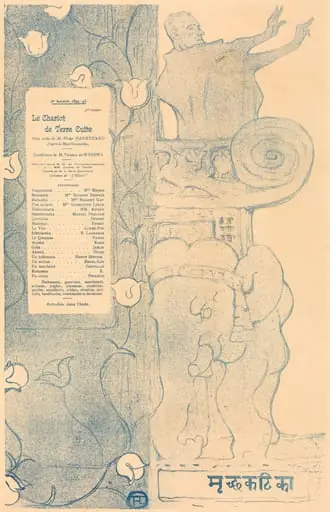
Untitled is a watercolor print by the Impressionist artist Paul Signac. It dates from 1893 and is held in the collection of the Museum of Modern Art.
About this work
Overview
Unlike conventional prints, it functions as a hybrid object—part image, part poem, part score—reflecting Signac’s interest in synesthetic expression.
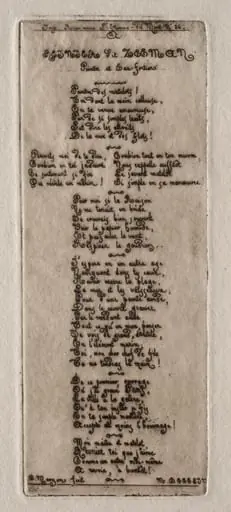
Created in 1893, this lithograph by Paul Signac incorporates watercolor and an original musical score, merging printmaking with hand-painted and notated elements. Unlike conventional prints, it functions as a hybrid object—part image, part poem, part score—reflecting Signac’s interest in synesthetic expression. The work is held in the collection of The Museum of Modern Art, where its layered composition invites multiple modes of perception.
Subject & Meaning
The piece reproduces a poem by Charles Cros, rendered in handwritten text and then overlaid with translucent watercolor washes. The accompanying musical notation suggests the poem’s rhythm might be sung, transforming silent language into an implied auditory experience. Signac’s choice to fuse text and melody reflects a broader fin-de-siècle fascination with uniting sensory domains, turning poetry into something felt as much as read.
Technique & Style
Signac employed lithography as a base, then added delicate watercolor layers to enhance tone and luminosity. The blue and yellow swirls suggest movement, echoing the optical effects of Neo-Impressionist color theory. The musical staff at the base, drawn in ink, is not decorative but functional—intended to be performed. This integration of media was experimental, challenging the boundaries between visual art and music.
History & Provenance
Produced during Signac’s mature Neo-Impressionist phase, the work emerged from his circle’s exploration of interdisciplinary art. Though not widely exhibited at the time, it entered The Museum of Modern Art’s collection in the 20th century, recognized for its rarity as a multi-sensory print. Its preservation reflects early institutional interest in non-traditional artistic forms beyond painting and sculpture.
Context
In the 1890s, artists across Europe experimented with synesthesia and total artworks, influenced by Symbolist poetry and Wagnerian music dramas. Signac, already known for seascapes, turned inward to explore abstraction and sensory fusion. This piece aligns with contemporaneous efforts by poets and musicians to dissolve genre boundaries, positioning art as an immersive, multi-modal experience rather than a static object.
Legacy
The work stands as an early example of conceptual intermedia, predating 20th-century movements that merged visual art with sound and text. While not widely replicated, its structure influenced later artists exploring the intersection of notation, color, and language. Its presence in MoMA’s collection affirms its role as a quiet but significant experiment in expanding the definition of what a print could be.
Artist & collection

Artist
Paul Victor Jules Signac ( seen-YAHK, French: ; 11 November 1863 – 15 August 1935) was a French Neo-Impressionist painter who, with Georges Seurat, helped develop the artistic technique Pointillism.

 Etchings of Paris: Dedication to Reynier Nooms, called Zeeman
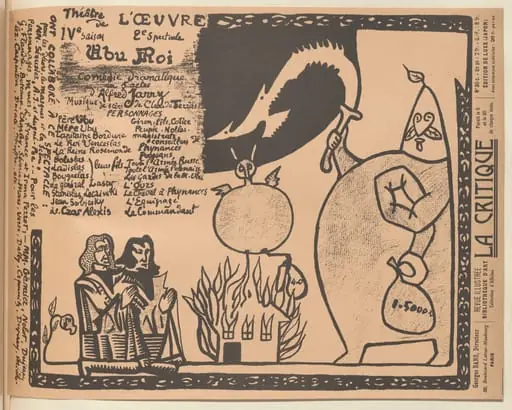 Untitled
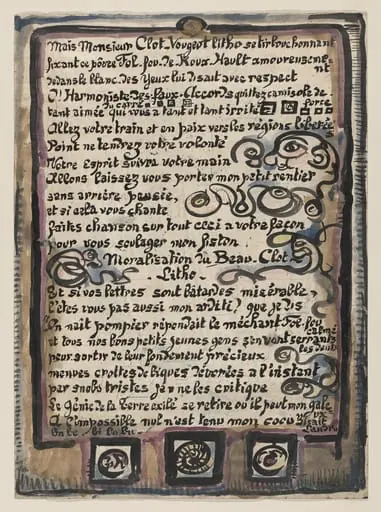 Untitled
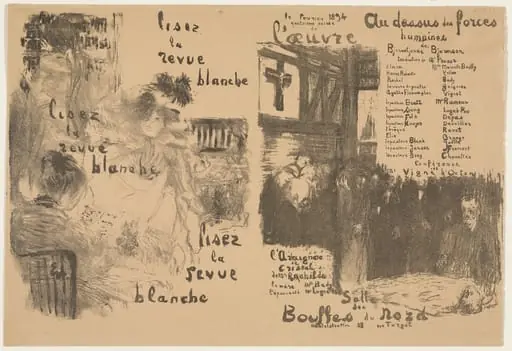 Untitled
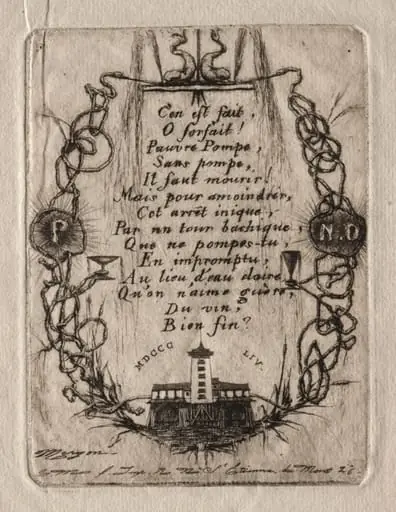 Etchings of Paris: The Notre Dame Pump, Small Plate
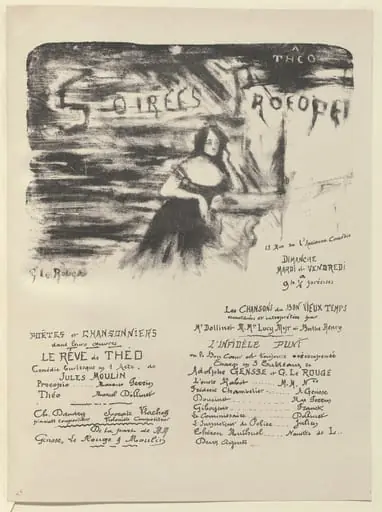 Untitled
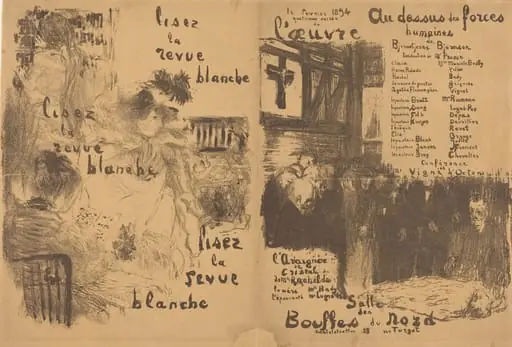 Au dessus des forces humaines; L'Araignée de cristal
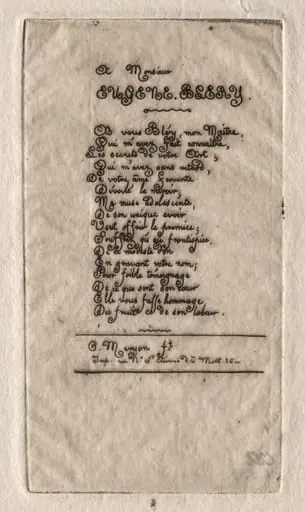 Verses to Eugène Bléry
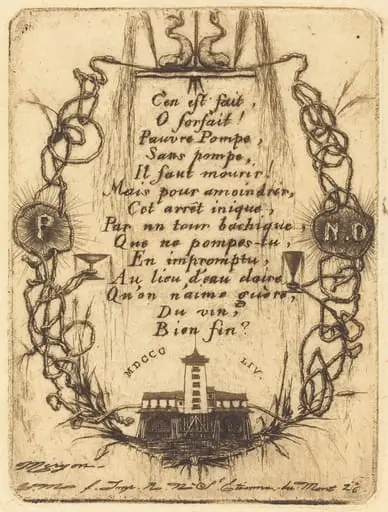 La petite pompe, Paris (The Notre Dame Pump, small plate)
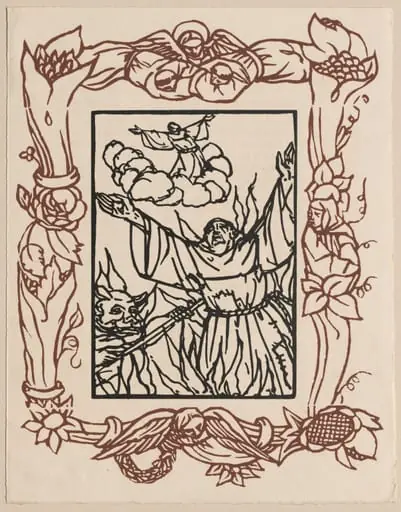 Small Flowers of Saint Francis
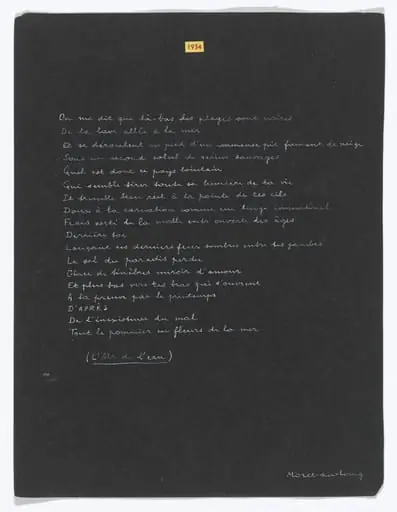 Untitled
 Le Chariot de terre cuite