Artwork
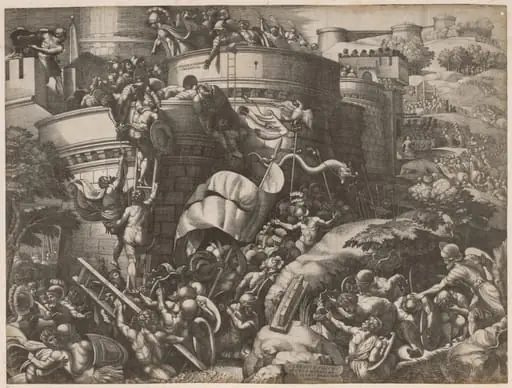
The Taking of Cartagena
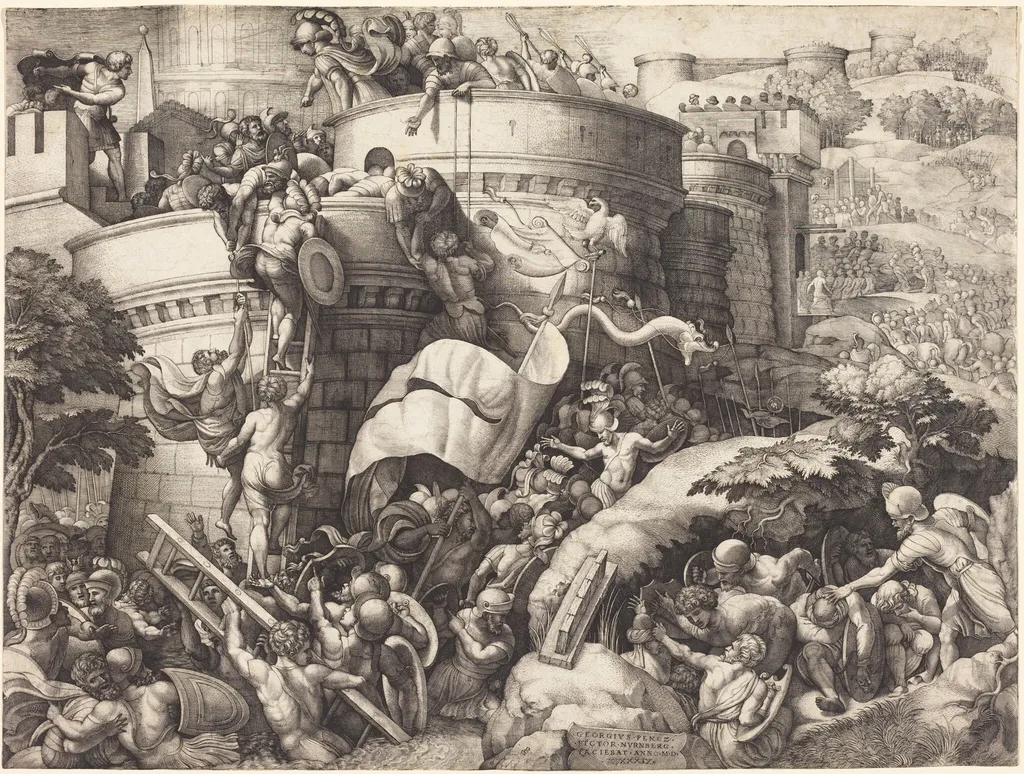
The Taking of Cartagena is an ink print by the Renaissance artist Georg Pencz. It dates from 1525 and is held in the collection of the National Gallery of Art.
About this work
Overview
The Taking of Cartagena is an engraving created by Georg Pencz in 1525. It is a detailed print depicting a chaotic scene with numerous figures and a prominent structure.
Subject & Meaning
The engraving shows a historical or military scene, with figures in ancient attire, some armed and helmeted, gathered around a large object. The specific event or narrative represented is not clearly identified.
Technique & Style
Pencz employed intricate engraving techniques, including cross-hatching to achieve shading and depth, giving the image a sense of volume. The style reflects his training under Albrecht Dürer and later influence from Venetian art.
History & Provenance
Pencz was imprisoned for religious dissent the same year he created the engraving, indicating a turbulent period in his life. His work was influenced by his time in Italy and his training in Nuremberg.
Context
The engraving was produced during a time of religious and possibly artistic upheaval, as evidenced by Pencz's imprisonment alongside the Beham brothers.
Artist & collection
Artist
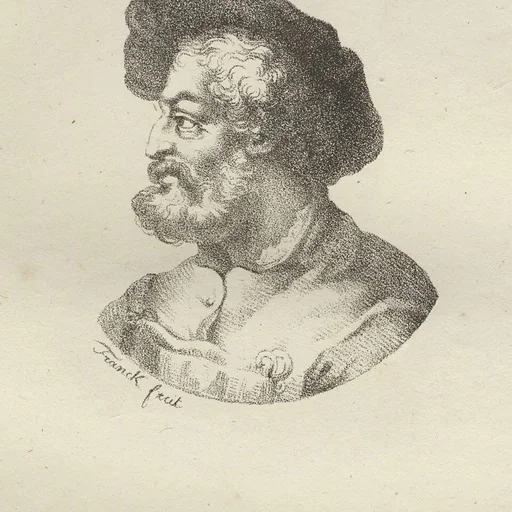
Georg Pencz (c. 1500 – 11 October 1550) was a German engraver, painter and printmaker. Pencz was probably born in Westheim near Bad Windsheim/Franconia. He travelled to Nuremberg in 1523 and joined Albrecht Dürer’s…

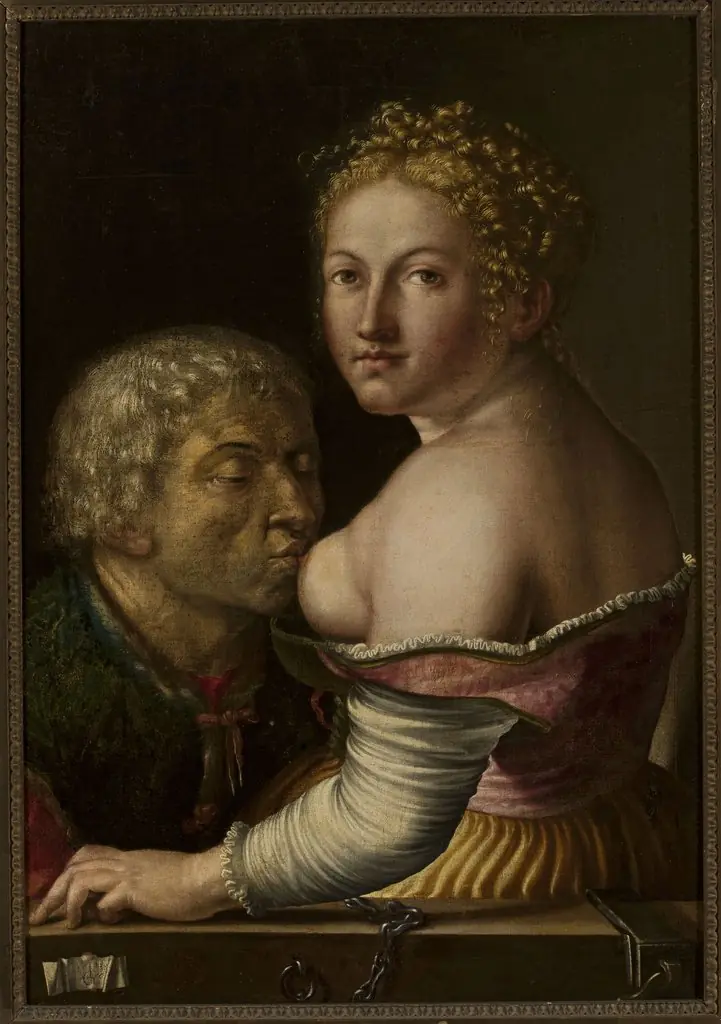
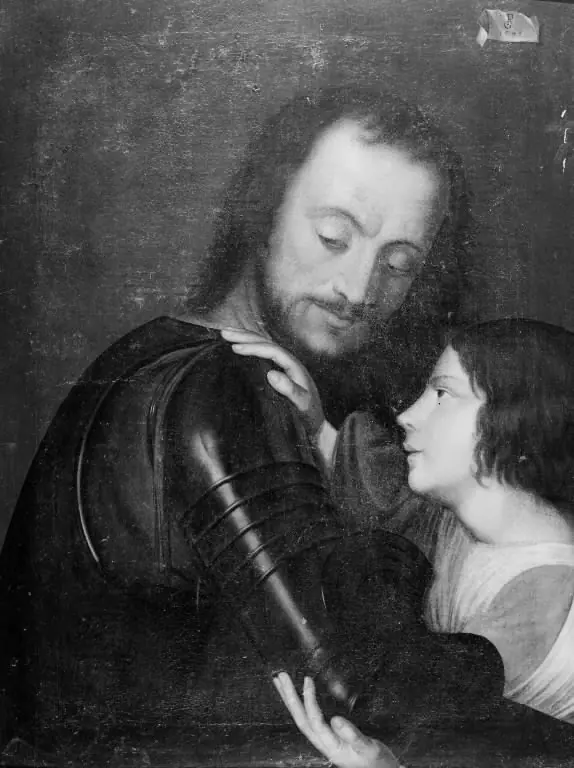
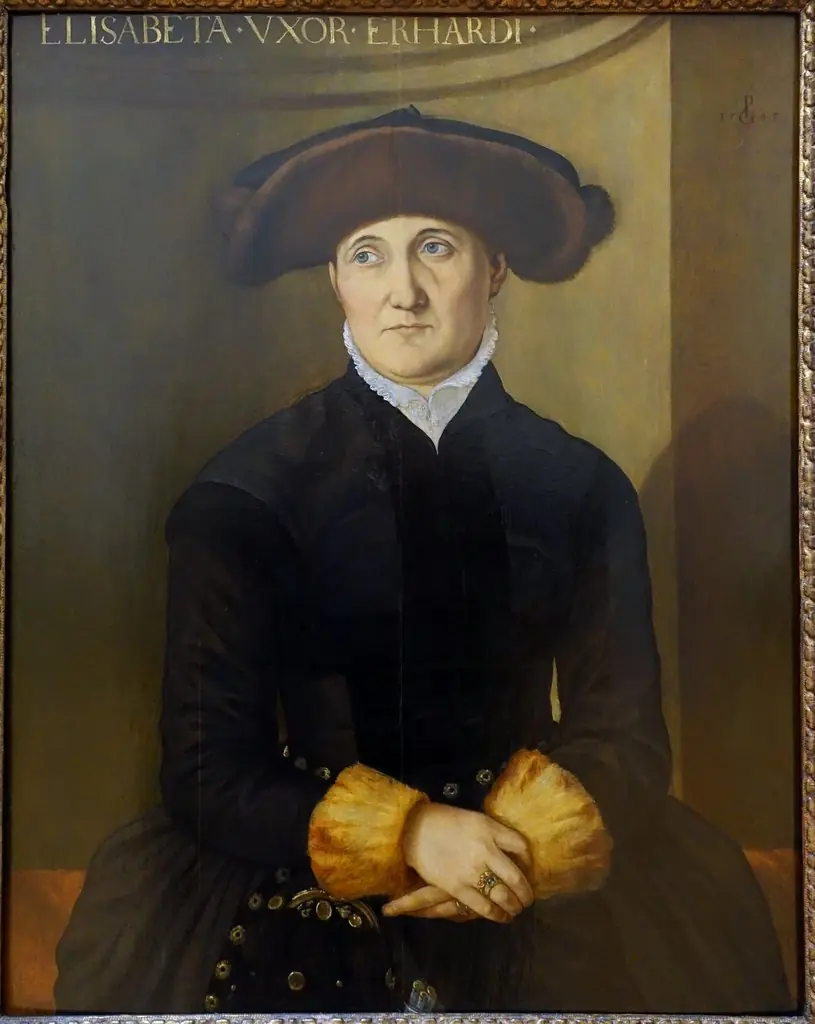
 The Seige of Carthage
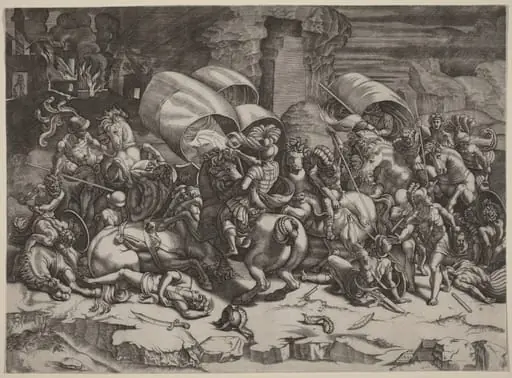 The Battle with the Cutlass
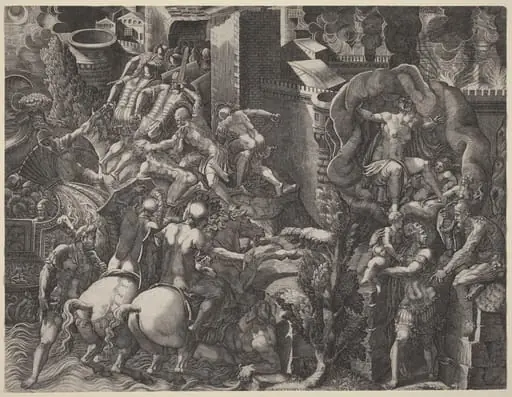 The Fall of Troy and the Escape of Aeneas
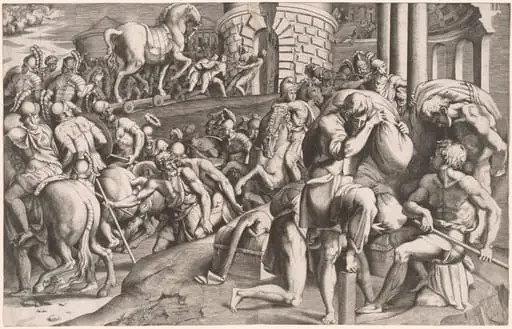 The Trojans Hauling the Wooden Horse into Troy
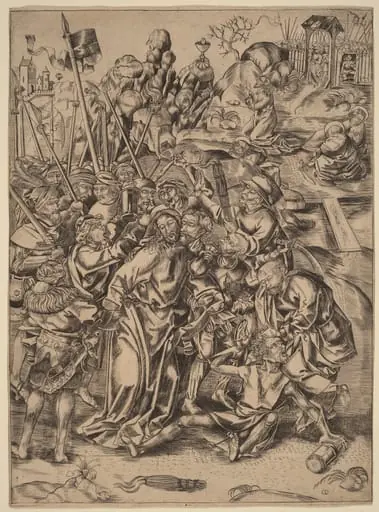 The Betrayal
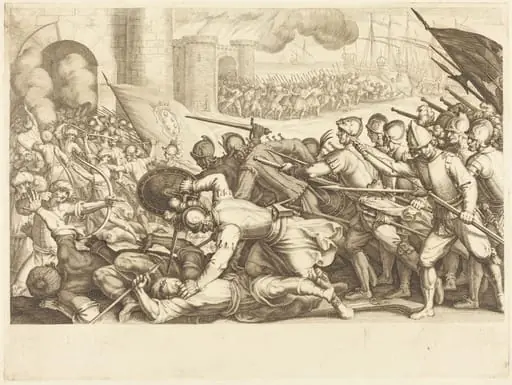 The Troops Forcing the Gate of a Town
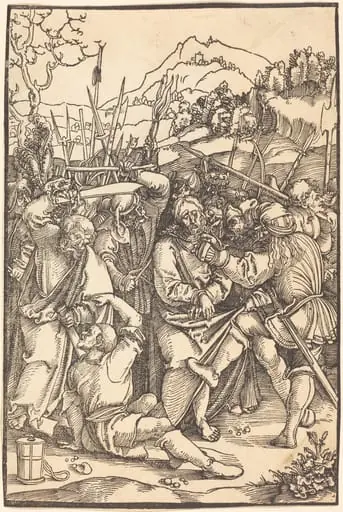 Christ Taken Prisoner
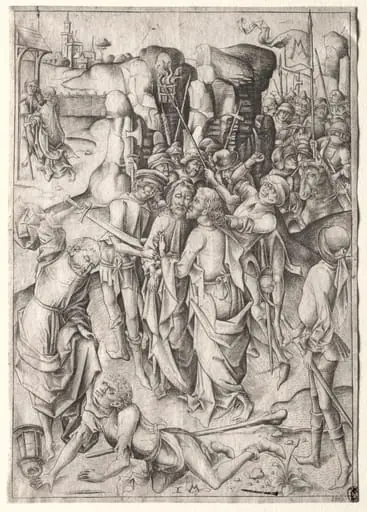 The Passion: Christ Taken Captive
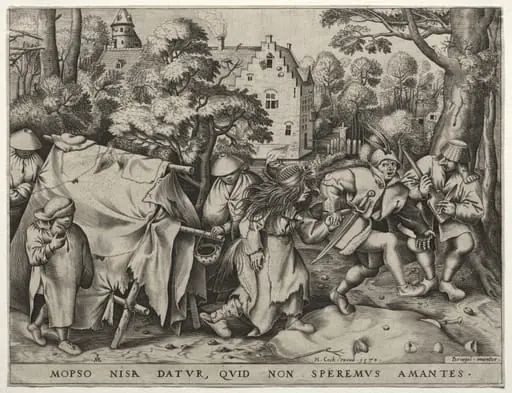 The Wedding of Mopsus and Nisa (The Dirty Bride)
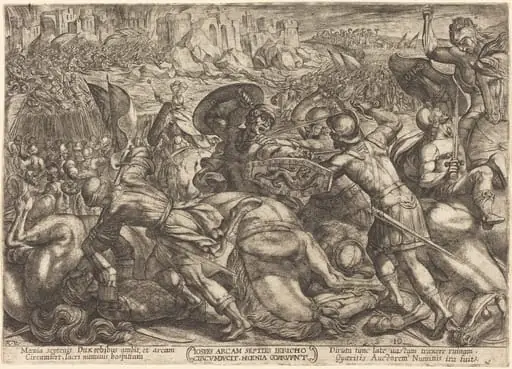 The Taking of the City of Jericho
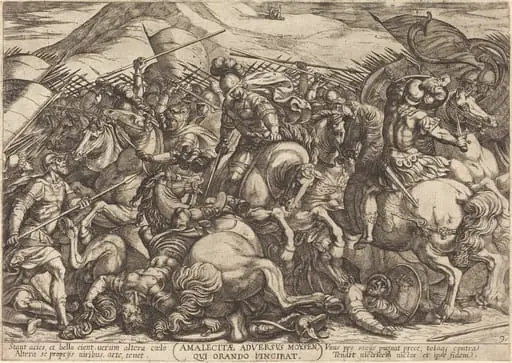 The Defeat of the Amalikits by the Hebrews
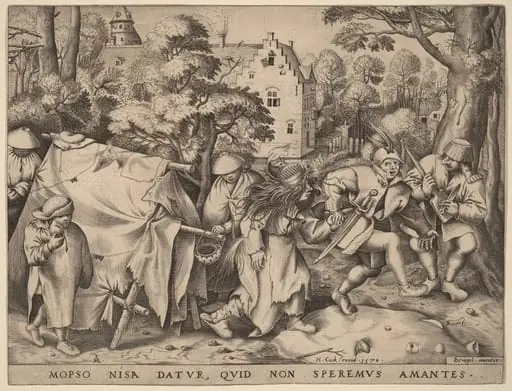 The Wedding of Mopsus and Nisa