Artwork
The Fall of Troy and the Escape of Aeneas
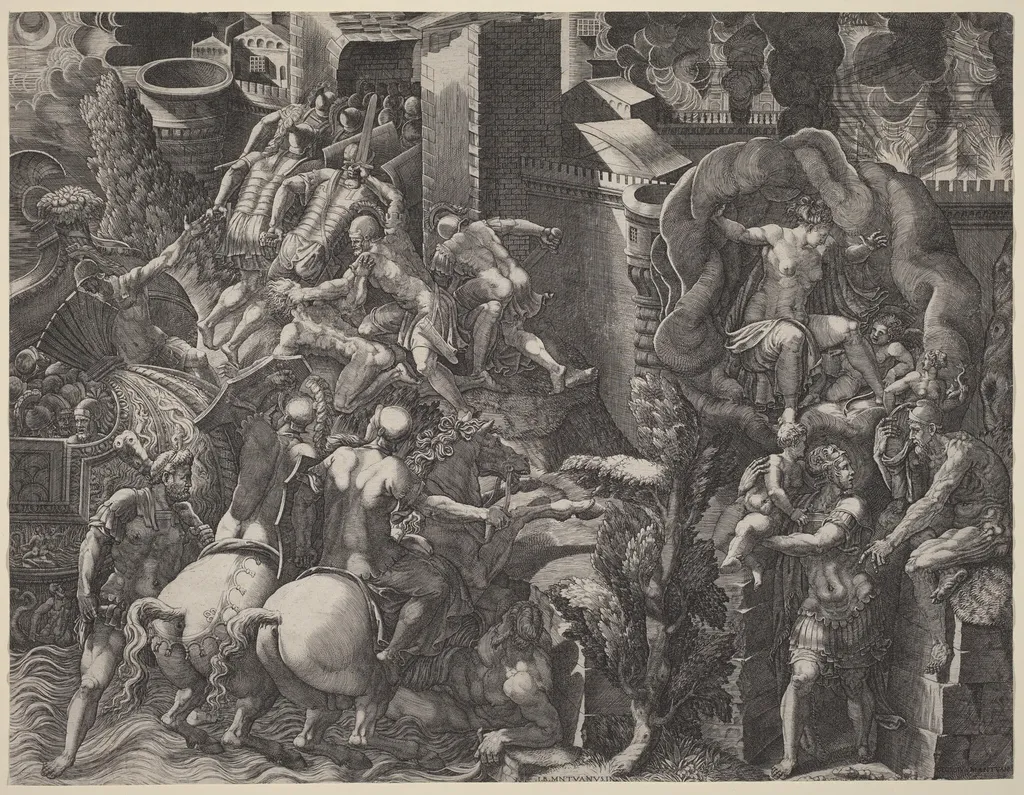
The Fall of Troy and the Escape of Aeneas is an ink print by the Renaissance artist Giorgio Ghisi. It dates from 1545 and is held in the collection of the National Gallery of Art.
About this work
Overview
The Fall of Troy and the Escape of Aeneas is a 16th-century engraving on laid paper, created by Italian artist Giorgio Ghisi around 1545. This print captures a pivotal moment from classical mythology.
Subject & Meaning
The engraving depicts the destruction of Troy and Aeneas' escape, a narrative rooted in classical sources. The chaotic scene conveys the intensity of war and mythological turmoil, with a city in flames, clashing soldiers, and mythological elements like a giant bull.
Technique & Style
Executed in the late Mannerist style, the engraving showcases Ghisi's meticulous technique, packing the composition with intricate details. Flames, smoke, and twisted bodies create a dynamic, crowded visual landscape.
History & Provenance
Giorgio Ghisi, originally from Mantua, produced this work during his time in either Antwerp or France. The exact provenance of the piece is not detailed here, reflecting the artist's broader European influence.
Context
Created circa 1545, the print reflects the Renaissance interest in classical mythology and the artistic trends of late Mannerism, characterized by complex, emotionally charged compositions.
Legacy
While specific details on the print's direct legacy are not provided, it contributes to the broader legacy of Mannerist engraving and the enduring depiction of classical themes in European art.
Artist & collection
Artist
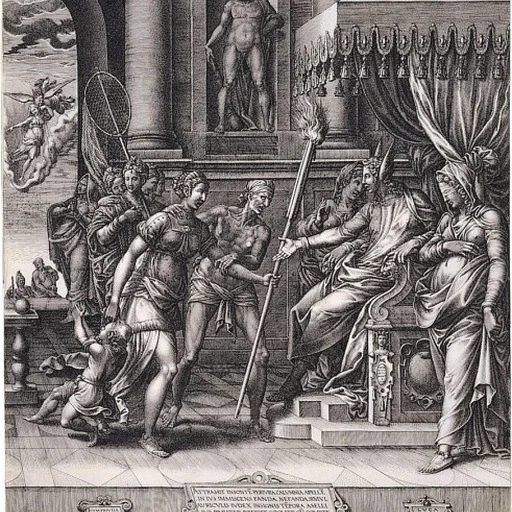
Giorgio Ghisi (1520 — 15 December 1582) was an Italian engraver from Mantua who also worked in Antwerp and in France.

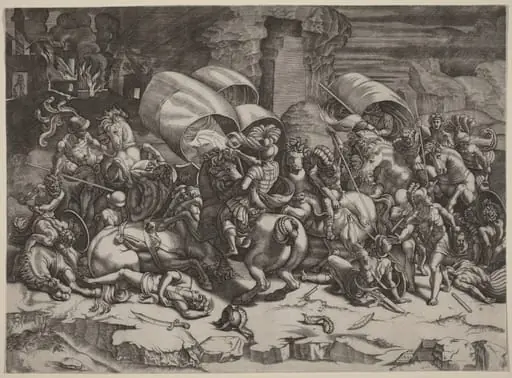 The Battle with the Cutlass
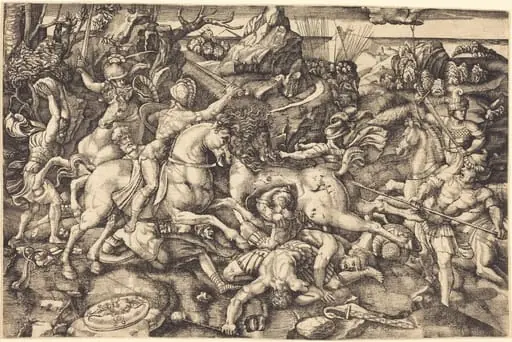 Combat between Horsemen and Foot Soldiers
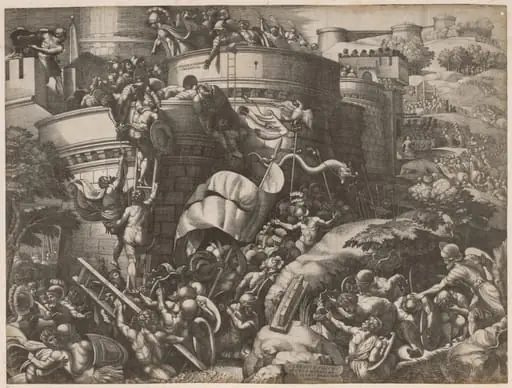 The Seige of Carthage
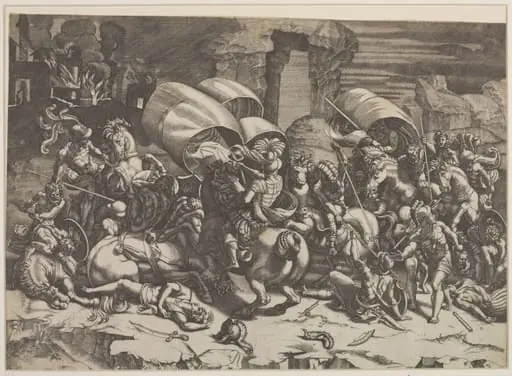 La bataille au coutelas
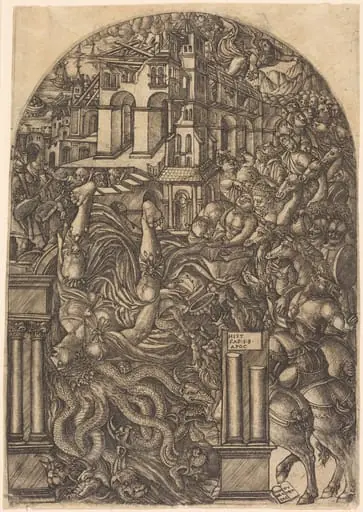 The Fall of Babylon
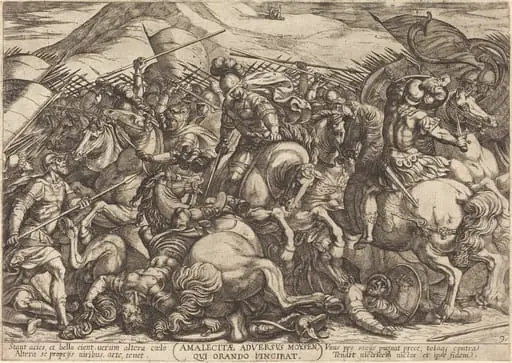 The Defeat of the Amalikits by the Hebrews
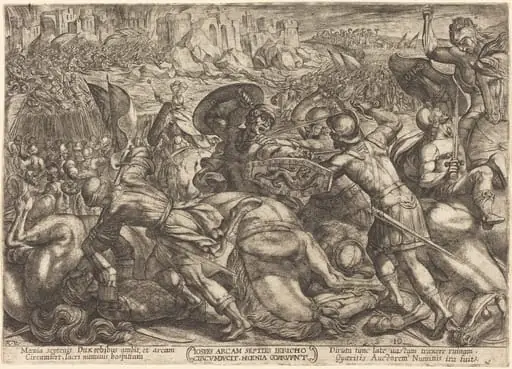 The Taking of the City of Jericho
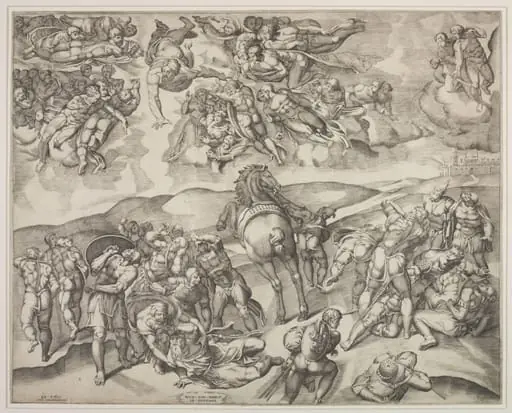 Conversion of St. Paul
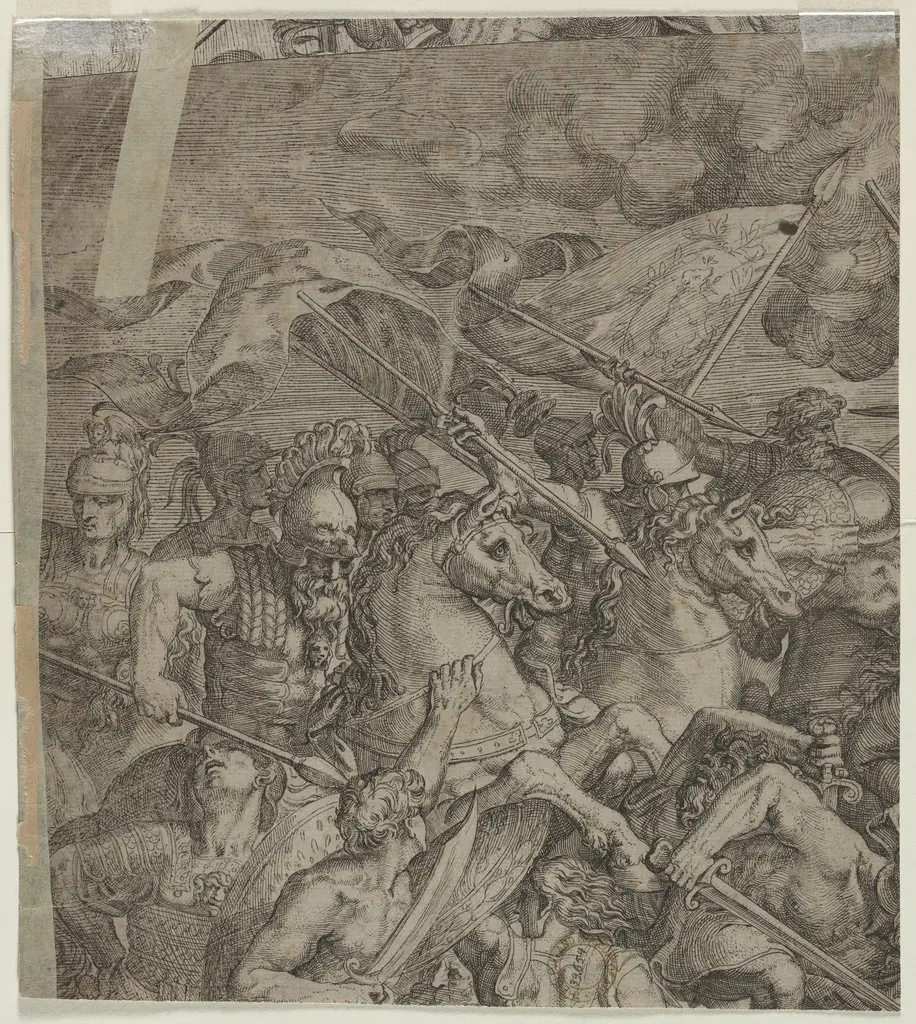 Battle of the Milvian Bridge between the Roman Emperors Constantine I and Maxentius
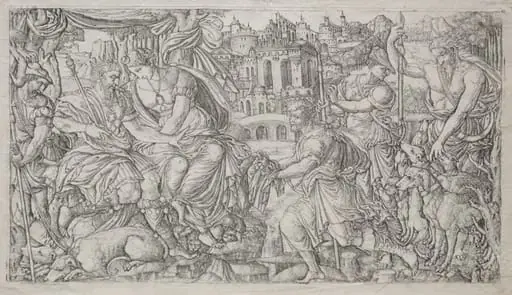 Huntsman Presenting a Gift to a King
 The Angel Sounding the Sixth Trumpet
 The Trojans Repulsing the Greeks