Artwork
La Place, Beauvais
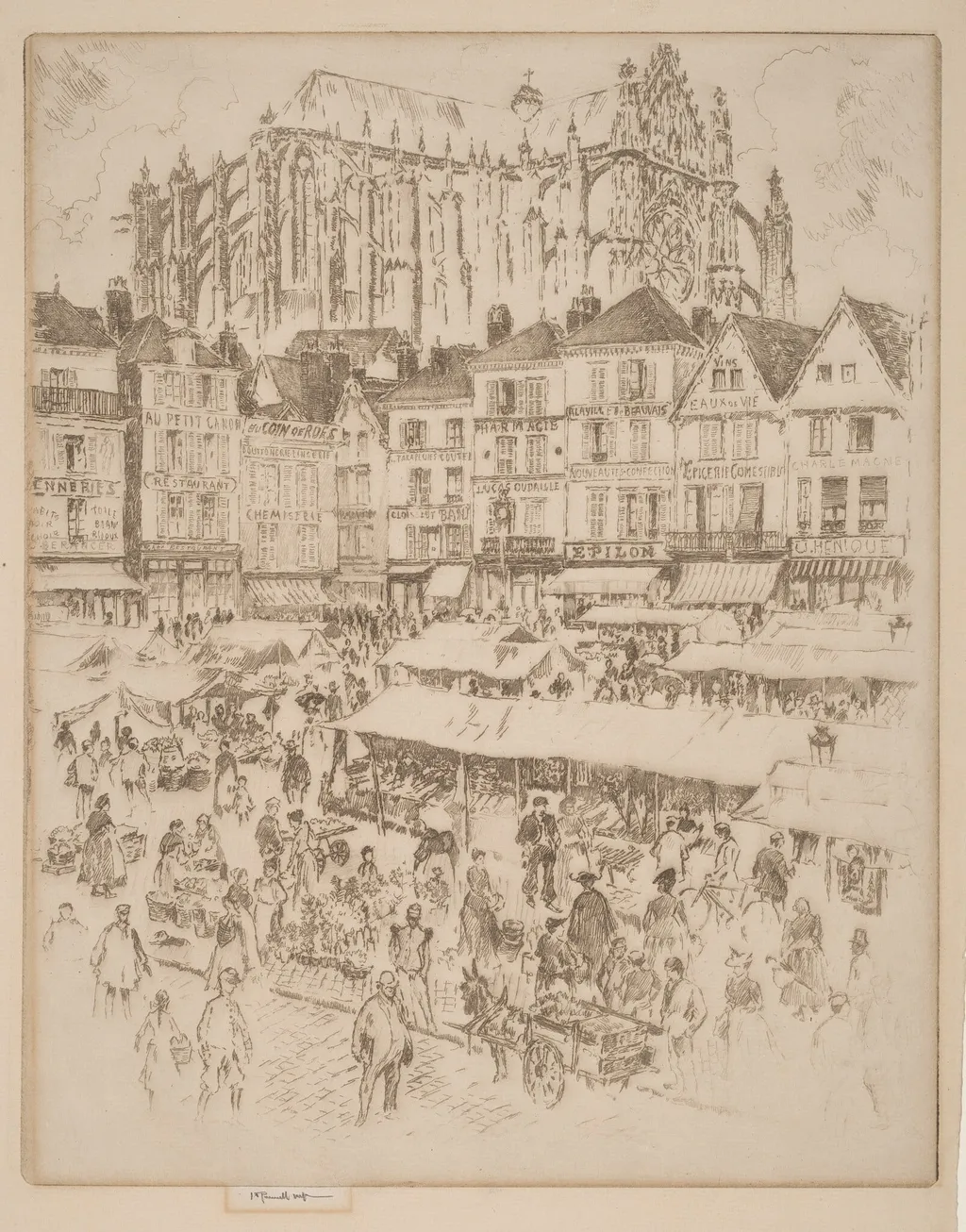
La Place, Beauvais is an ink print by Joseph Pennell. It dates from 1907 and is held in the collection of the National Gallery of Art.
About this work
Overview
A skilled draftsman and printmaker, he traveled extensively across the continent, documenting architecture and daily life with precision.
Joseph Pennell produced *La Place, Beauvais* in 1907 as an etching, part of his broader engagement with European urban landscapes. A skilled draftsman and printmaker, he traveled extensively across the continent, documenting architecture and daily life with precision. This work exemplifies his focus on capturing the rhythm of public spaces through the nuanced possibilities of etching, a medium he mastered over decades of practice.
Subject & Meaning
The scene depicts a bustling square in Beauvais, France, with tightly packed buildings, street vendors, and pedestrians engaged in ordinary activities. French signage and local commerce anchor the image in its specific time and place. The rising church tower suggests the spiritual and civic center of the town. Pennell’s choice to render this ordinary moment reflects an interest in the quiet dignity of urban life, not grand monuments but the texture of daily existence.
Technique & Style
Pennell employed fine, incised lines to build dense, layered detail across the plate, creating a sense of crowded movement without heavy shading. The etching’s rapid, sketchlike quality conveys immediacy, as if the scene was observed and recorded in real time. His approach prioritizes linear precision over tonal contrast, allowing architectural forms and human figures to emerge through careful line work rather than dramatic light and shadow.
History & Provenance
Created during Pennell’s extended stays in Europe, the print emerged from his systematic documentation of towns and cities. While specific ownership history prior to institutional acquisition is not widely documented, the work aligns with his broader output of urban views collected by museums and private collectors in the early 20th century. It was likely circulated through print exhibitions and publications that featured his European travels.
Context
Pennell’s work in 1907 coincided with a growing interest among artists in capturing modern urban environments, influenced by Whistler’s tonal subtlety and the rise of print culture. Unlike romanticized depictions of the past, his etchings emphasized authenticity and observation. *La Place, Beauvais* reflects a shift toward documenting the ordinary, aligning with broader trends in documentary art and the increasing accessibility of printmaking as a medium for personal expression.
Legacy
Pennell’s etchings, including this one, contributed to the revival of printmaking as a serious artistic medium in America and Europe. His focus on architectural detail and everyday life influenced later generations of urban documentarians. While not widely known today, his body of work remains a valuable record of early 20th-century European towns, valued for its observational rigor and technical discipline.
Artist & collection
Artist
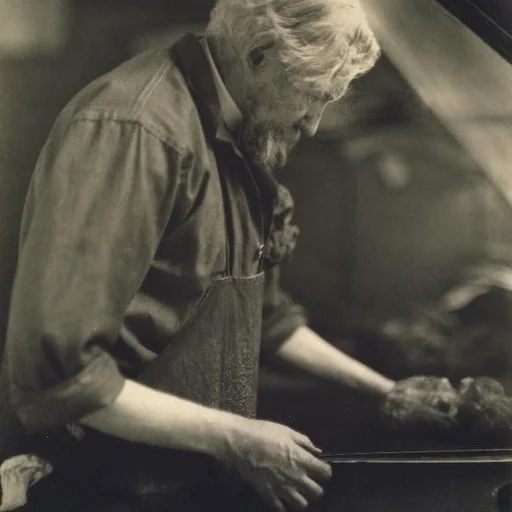
Joseph Pennell (July 4, 1857 – April 23, 1926) was an American draftsman, etcher, lithographer, and illustrator for books and magazines.

 Towers of the Bishop's Palace, Beauvais
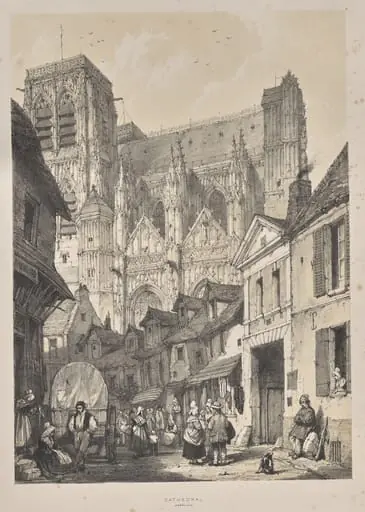 Architecture of the Middle Ages: Cathedral, Abbeville
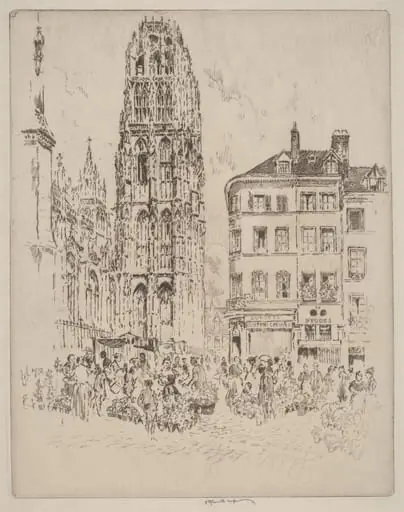 Flower Market and Butter Tower, Rouen
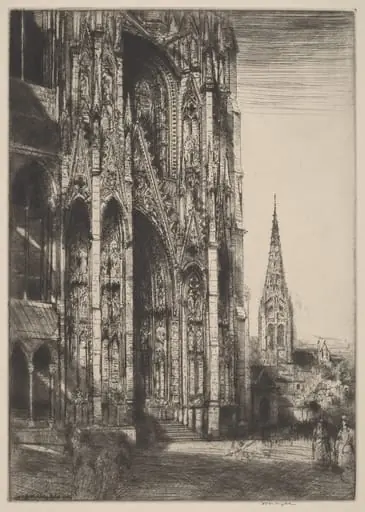 Gothic Night
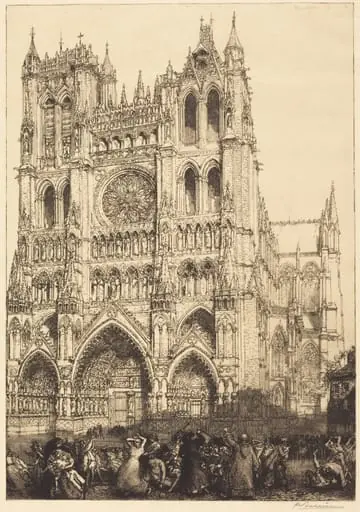 Amiens Cathedral (Cathedrale d'Amiens - Jour d'inventaire)
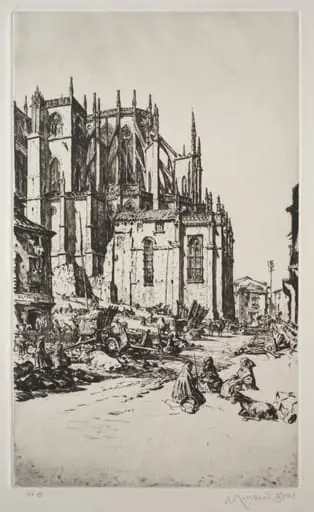 Study for Leon Apse
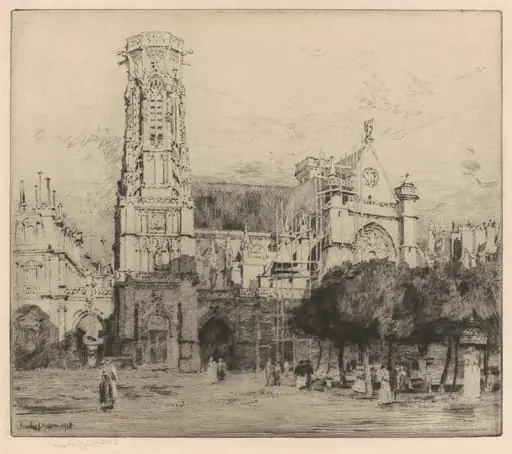 Saint Germain, L'Auxerrois
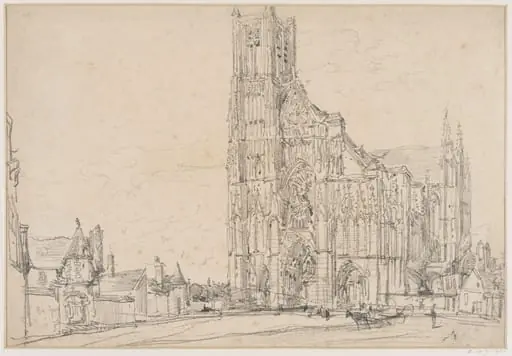 Exterior view of a church in France
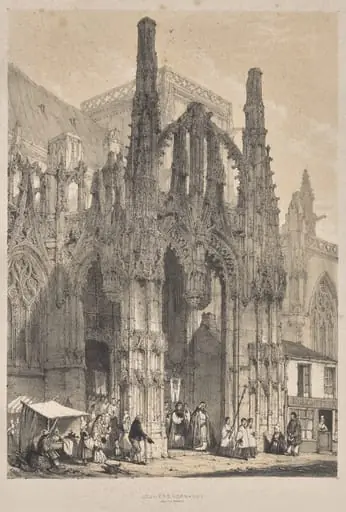 Architecture of the Middle Ages: Louviers, Normandy, South Porch
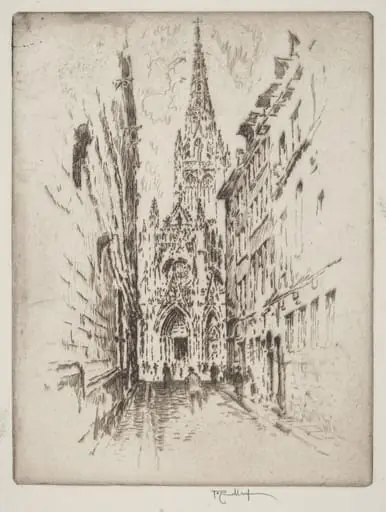 San Maclou, Rouen