Artwork
Flagellation of Christ
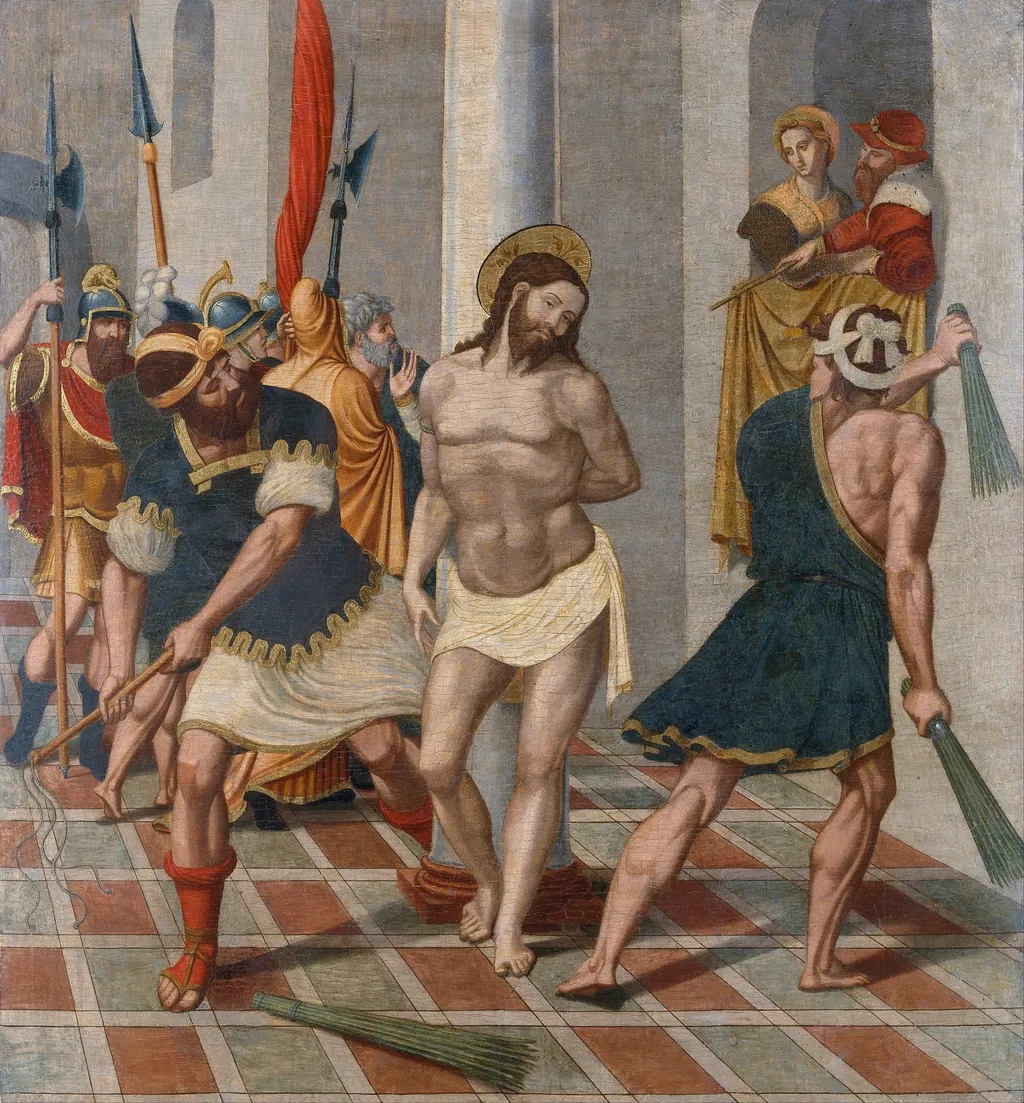
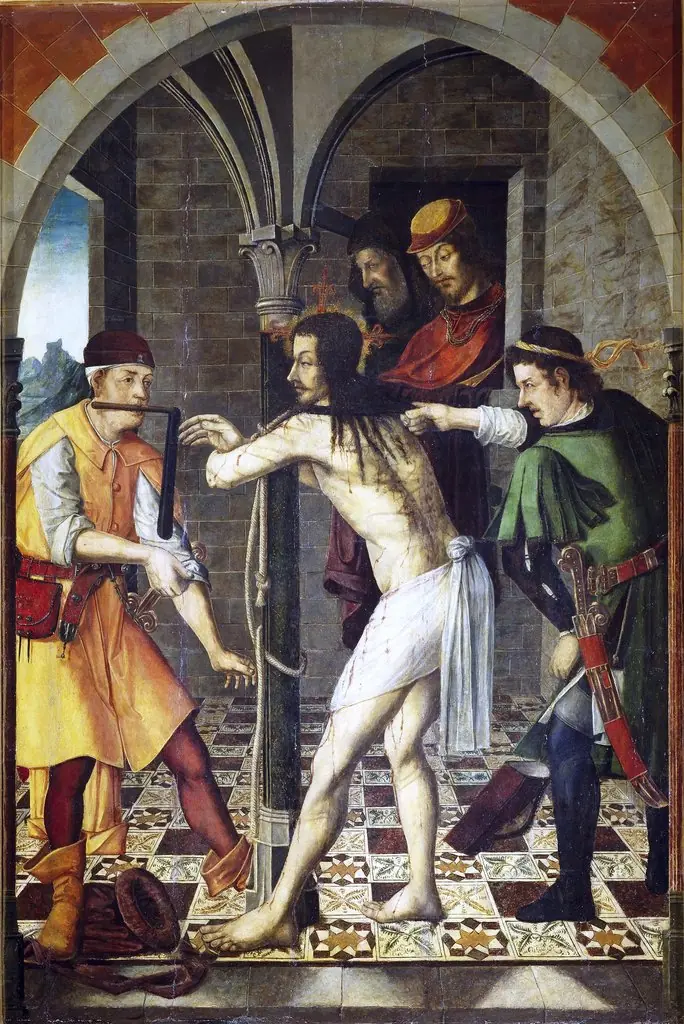
Flagellation of Christ is an unspecified painting by Pere Serafí. It dates from 1543 and is held in the collection of the Museu Nacional d'Art de Catalunya.
About this work
Overview
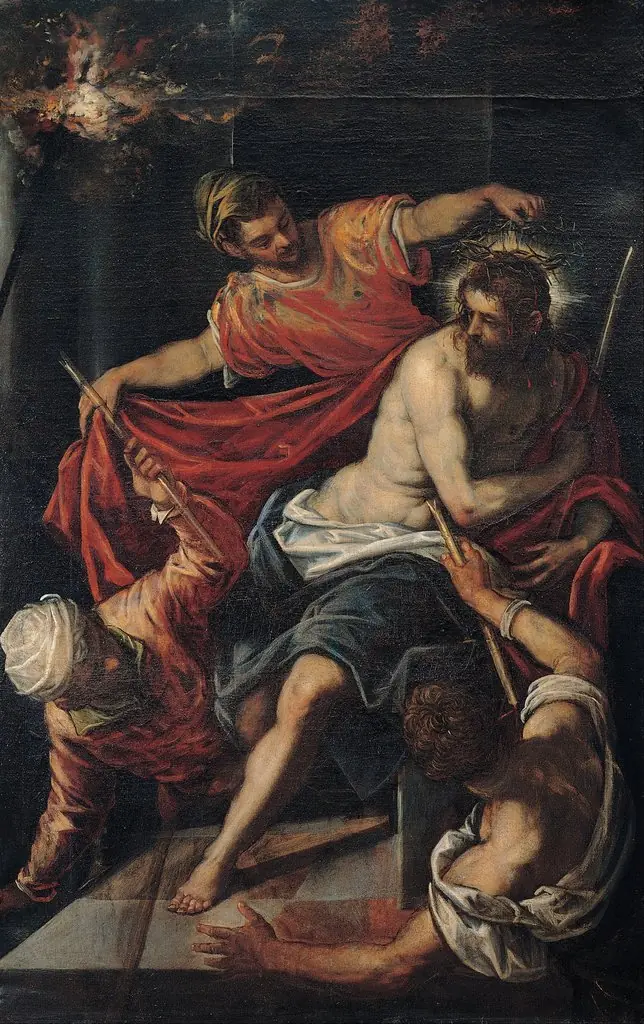
Pere Serafí’s Flagellation of Christ, executed in 1543, is an oil painting that portrays the biblical episode of Christ’s scourging. The work is part of the collection of the Museu Nacional d’Art de Catalunya, where it is displayed among other Renaissance religious pieces.
Subject & Meaning
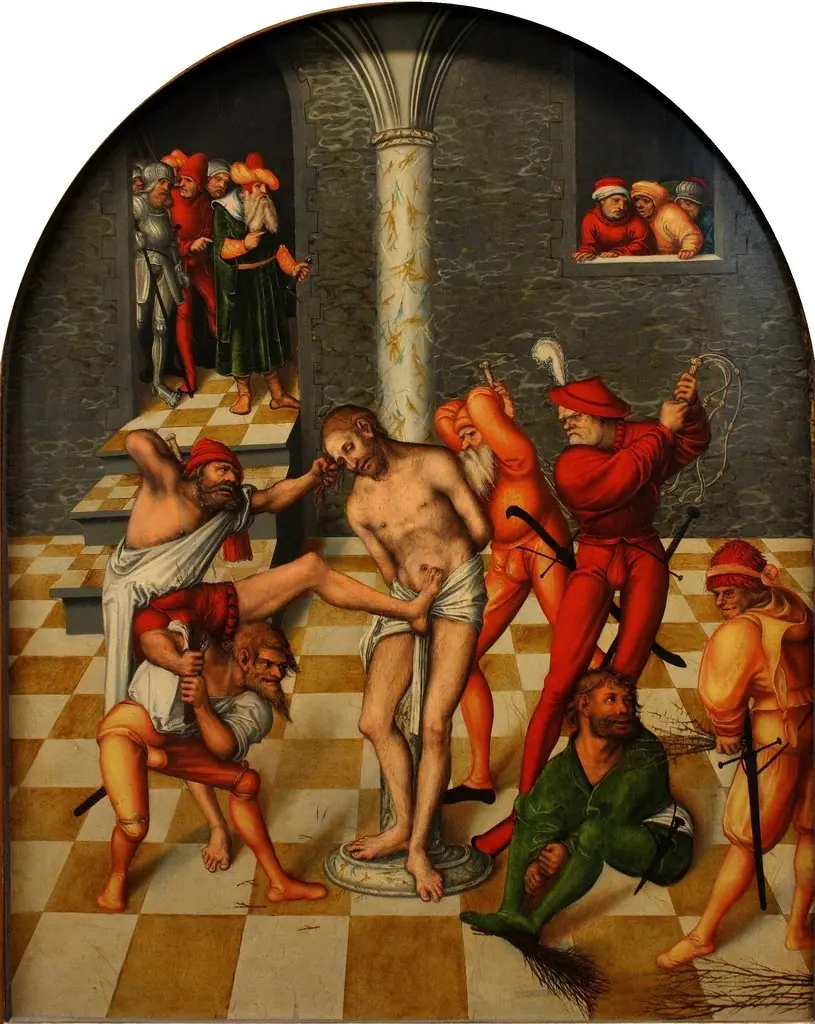
The composition centers on a naked Christ, his torso covered only by a white cloth, his head crowned with a golden halo. Two figures in dark blue garments wield whips, delivering the blows that define the flagellation narrative, while onlookers in the background observe, some holding spears or flags, underscoring the public nature of the punishment.
Technique & Style
Serafí employs a restrained palette of blues, reds, and golds, contrasting the stark flesh of Christ with the richly colored attire of the tormentors. The tiled floor, rendered in alternating red and white squares, creates a structured spatial setting, while the chiaroscuro modeling gives the scene a dramatic, three‑dimensional quality.
History & Provenance
Created in the mid‑16th century, the painting entered the holdings of the Museu Nacional d’Art de Catalunya during the museum’s early acquisitions of Catalan Renaissance art. Its provenance prior to museum acquisition remains undocumented in the available records.
Context
The flagellation was a common subject in Counter‑Reformation art, intended to evoke empathy and piety. Serafí’s treatment aligns with contemporary devotional works, emphasizing Christ’s physical suffering as a focal point for meditation on redemption.
Own this work as a print
Artist & collection