Artwork
The Seed Falling by the Wayside
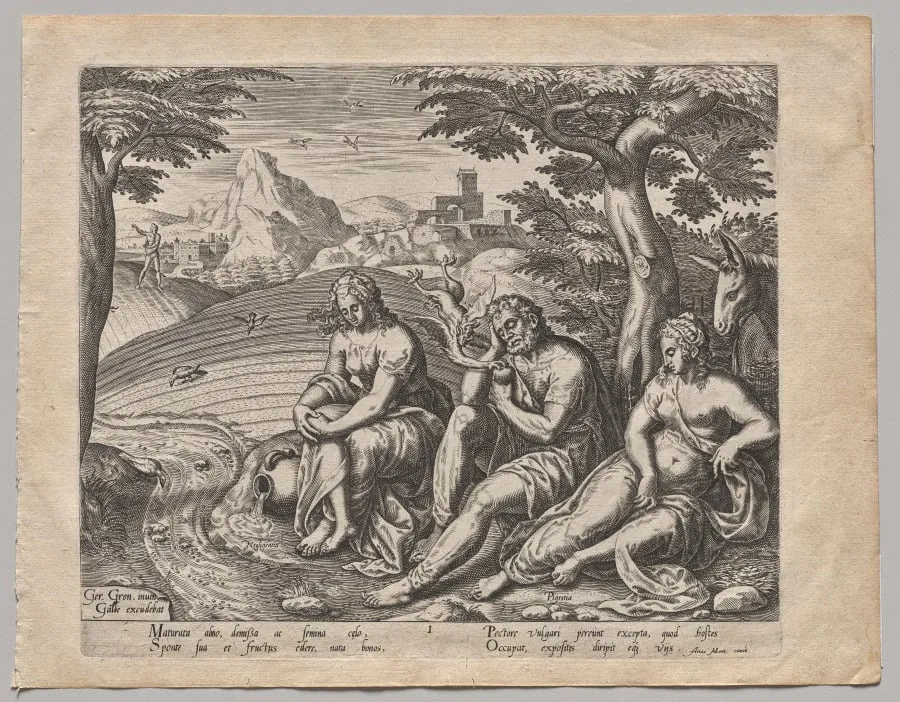
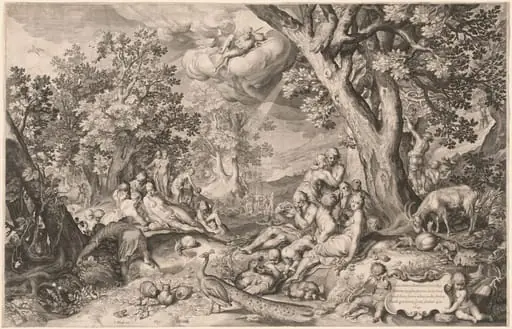
The Seed Falling by the Wayside is a print by the Renaissance artist Philip Galle. It dates from 1574 and is held in the collection of the Cleveland Museum of Art. This print is one of four in a series depicting the Parable of the Sower, produced in Antwerp around the close of the 16th century.
About this work
Overview
It visually interprets a passage from the Gospels in which seeds fall on different kinds of ground, symbolizing varied human responses to divine teaching.
This print is one of four in a series depicting the Parable of the Sower, produced in Antwerp around the close of the 16th century. It visually interprets a passage from the Gospels in which seeds fall on different kinds of ground, symbolizing varied human responses to divine teaching. Here, the focus is on the seed lost to hardened soil, rendered as a sleeping farmer and a mischievous devil intercepting the word before it can take root.
Subject & Meaning
The sleeping sower represents those unmoved by spiritual instruction, their indifference made literal through slumber. A small, almost whimsical devil plucks seeds from the man’s chest, suggesting the subtle, persistent nature of spiritual neglect. Birds feeding on scattered grain reinforce the idea of divine message lost to neglect and distraction, not malice alone.
Technique & Style
The composition is tightly framed, emphasizing intimate detail over grandeur. Fine linework defines the farmer’s posture, the devil’s delicate form, and the texture of rocky earth. The contrast between the human figure’s stillness and the devil’s nimble motion creates narrative tension. The scale of the devil, deliberately small, heightens the sense of quiet corruption rather than overt evil.
History & Provenance
Created in Antwerp during a period when religious imagery remained widely circulated despite Reformation tensions, the print served both devotional and commercial purposes. It likely circulated among literate urban audiences familiar with biblical parables, functioning as a moral reminder embedded in everyday visual culture. Its production aligns with the city’s thriving print industry of the late Renaissance.
Context
In the late 1500s, the Southern Netherlands remained a center for Catholic visual culture, where biblical stories were translated into accessible, domestic-scale imagery. Artists often blended scriptural themes with folkloric elements to engage viewers emotionally. This print’s playful devil reflects a broader trend of using familiar, even humorous figures to convey serious theological lessons.
Legacy
The print contributes to a broader Northern European tradition of moralizing imagery that used everyday scenes to convey spiritual truths. Its combination of biblical narrative with subtle, almost domestic symbolism influenced later genre scenes in Dutch and Flemish art, where the sacred and the mundane coexisted without overt grandeur.
Artist & collection
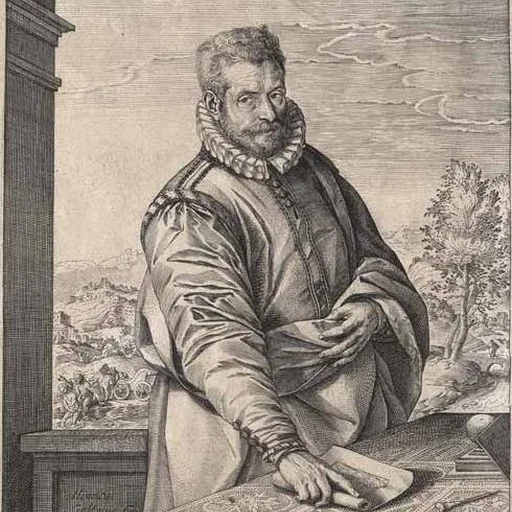
Artist
Philip (or Philips) Galle (1537 – March 1612) was a Dutch publisher, best known for publishing old master prints, which he also produced as designer and engraver. He is especially known for his reproductive engravings of paintings.

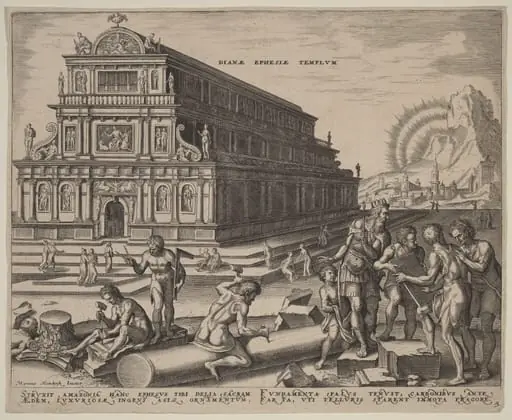 Dianae Ephesiae Templum (The Temple of Diana at Ephesus)
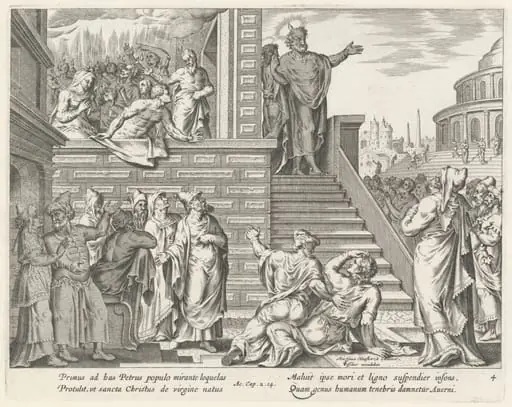 Saint Peter Speaks to the People about Christ
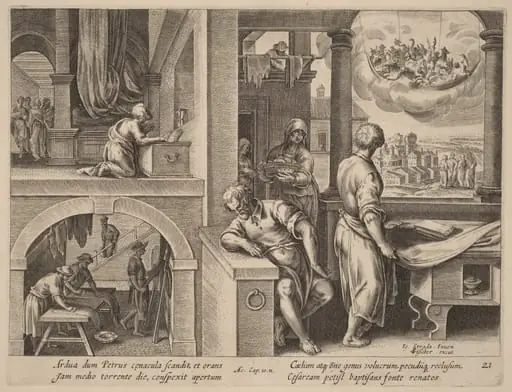 The Vision of Saint Peter
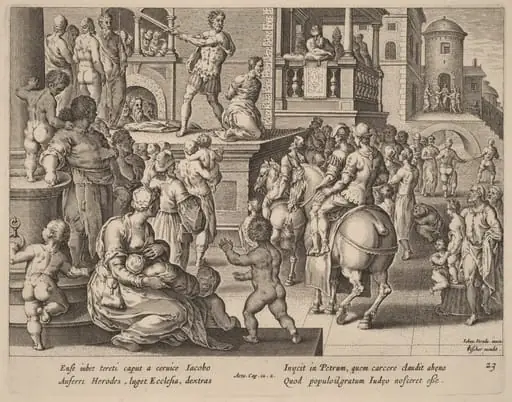 Beheading of Saint James
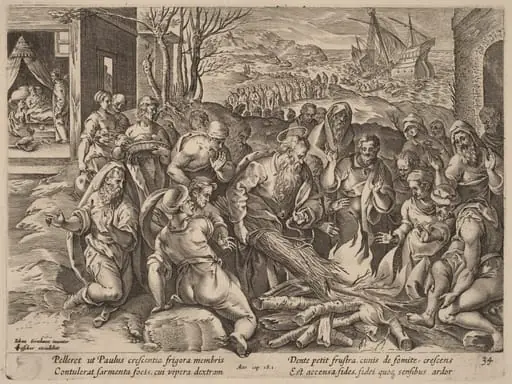 Saint Paul Shipwrecked on the Island of Melita
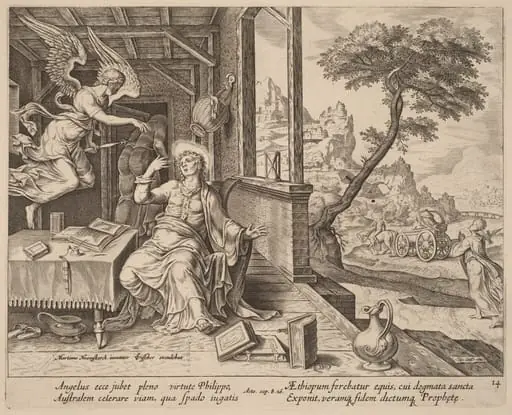 The Angel Orders Saint Philip to Accompany the Ethiopian Eunuch
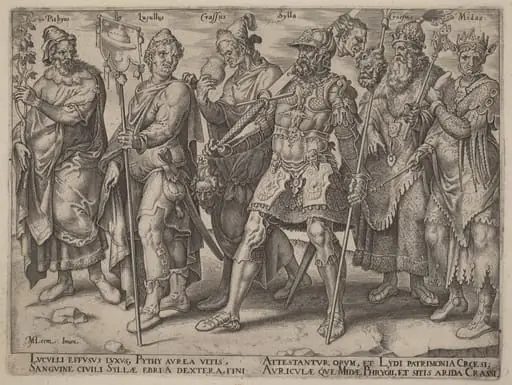 Notorious Examples of Wealth from Antiquity
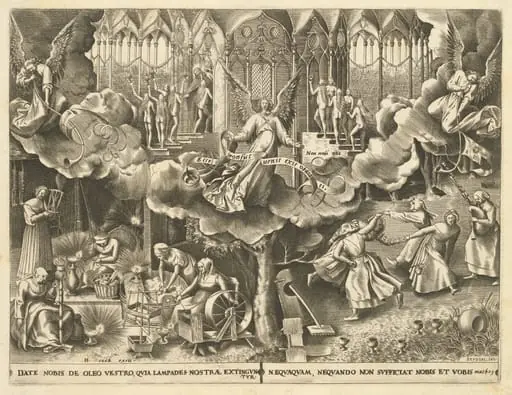 The Parable of the Wise and Foolish Virgins