Artwork
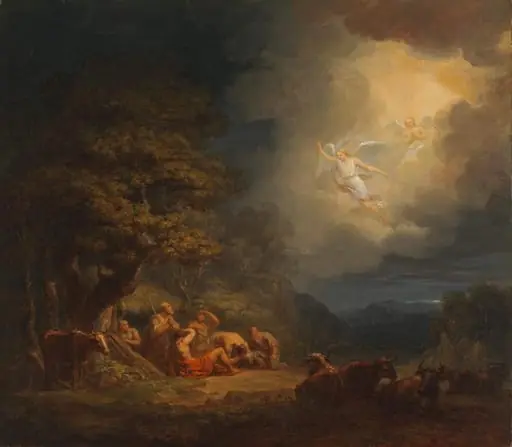
The Angel appearing to the Shepherds
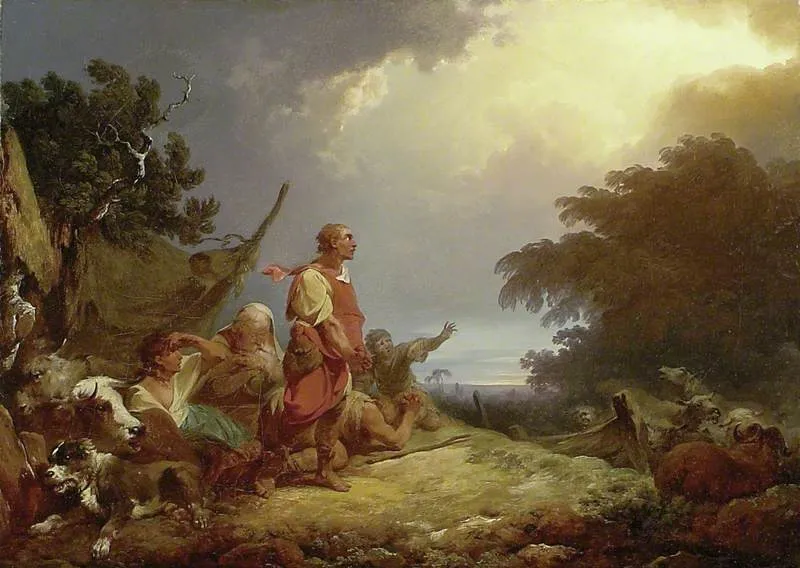
The Angel appearing to the Shepherds is an oil painting by the Rococo painting artist Philip James de Loutherbourg. It dates from 1765 and is held in the collection of the Ashmolean Museum.
About this work
Overview
Though born in France, de Loutherbourg had settled in Britain by this time, where his background in stage design influenced his approach to narrative painting.
Painted in 1765 by Philip James de Loutherbourg, this oil-on-canvas work depicts a biblical moment from the Gospel of Luke. Though born in France, de Loutherbourg had settled in Britain by this time, where his background in stage design influenced his approach to narrative painting. The piece is part of the Ashmolean Museum’s collection, representing his early religious subject matter before he turned primarily to maritime and industrial themes.
Subject & Meaning
The scene captures the angel’s announcement to the shepherds of Christ’s birth, a moment of divine revelation in a humble setting. The central figure, radiating light, addresses a group of shepherds and their livestock, their postures conveying awe and quiet reception. The absence of grandeur in the figures and landscape underscores the theological emphasis on humility and the accessibility of divine grace to ordinary people.
Technique & Style
De Loutherbourg employs chiaroscuro to model forms and direct attention, with the angel illuminated against a dim, atmospheric background. The figures are rendered with naturalistic detail, their clothing and gestures grounded in observed rural life. Though the composition retains a theatrical arrangement, the palette is restrained, avoiding the ornamental excesses of Rococo in favor of dramatic clarity and emotional immediacy.
History & Provenance
Created during de Loutherbourg’s early years in Britain, the painting predates his fame for theatrical scenery and naval battles. It was likely commissioned or painted for private devotion, reflecting his engagement with religious themes before his career shifted toward spectacle. The work entered the Ashmolean Museum’s holdings in the 19th century, where it remains as a rare example of his devotional output.
Context
In mid-18th-century Britain, religious imagery was less dominant than in earlier centuries, yet biblical scenes still held cultural resonance. De Loutherbourg’s treatment aligns with a growing interest in emotionally direct, human-centered narratives. His theatrical training informed his ability to stage sacred events with clarity, bridging the conventions of history painting with the emerging taste for accessible, lifelike storytelling.
Legacy
Though de Loutherbourg is better known for his later industrial and theatrical works, this painting reveals his early command of narrative composition and light. It stands as a quiet testament to his versatility and the broader 18th-century trend of grounding spiritual themes in tangible, everyday settings. The work contributes to understanding the transition from ornamental to emotionally resonant religious art in Britain.
Artist & collection
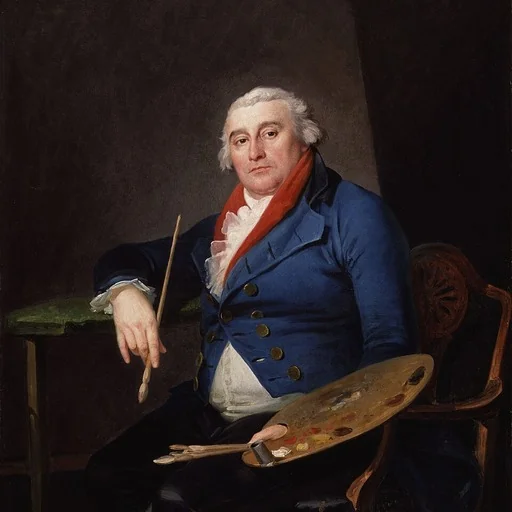
Artist
Philip James de Loutherbourg, RA (born Philippe Jacques de Loutherbourg; 31 October 1740 – 11 March 1812) was a French-born British painter who became known for his large naval works, his elaborate set designs for…