Artwork
Mountain Scenery
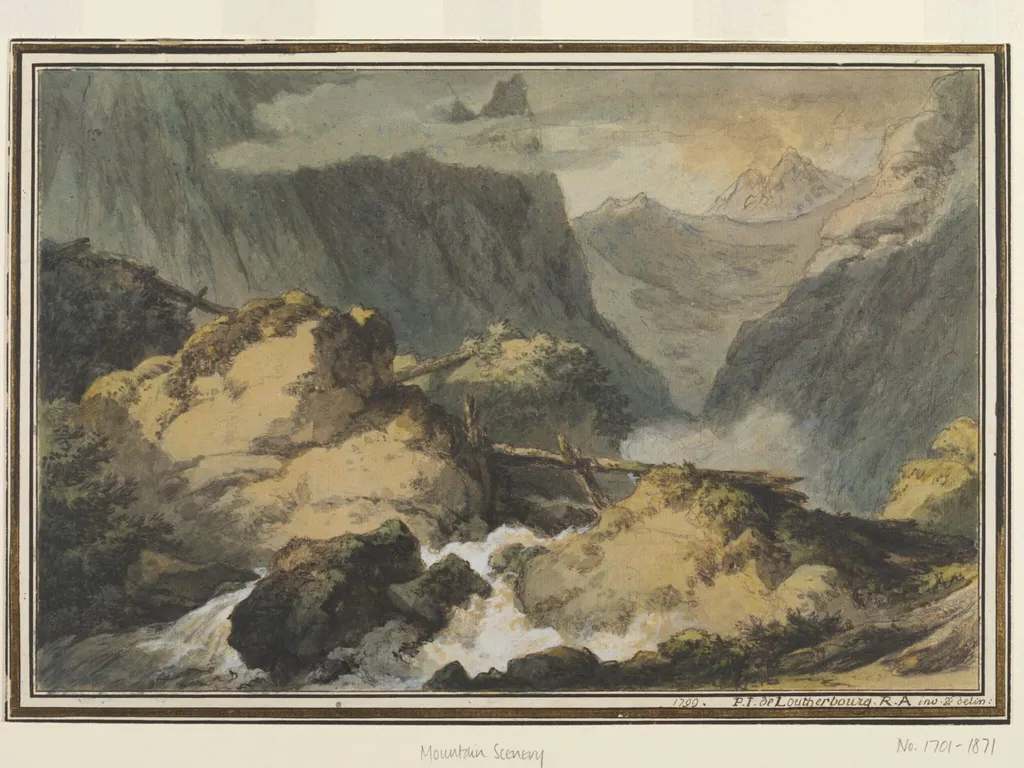
Mountain Scenery is a watercolor work on paper by the Romanticist artist Philip James de Loutherbourg. It dates from 1799 and is held in the collection of the Victoria and Albert Museum. Painted in 1799, this watercolour by Philippe Jacques de Loutherbourg depicts a rugged mountain landscape.
About this work
Overview
Painted in 1799, this watercolour by Philippe Jacques de Loutherbourg depicts a rugged mountain landscape. Executed in muted tones of brown, grey, and green, the work captures the raw character of nature through subtle washes and restrained detail. The composition emphasizes natural forces rather than human presence, aligning with emerging Romantic sensibilities of the period.
Subject & Meaning
The scene centers on a steep, rocky terrain with a narrow stream cutting through it. A fallen tree spans the water, introducing a sense of disruption and motion. The absence of figures and the dominance of natural elements suggest a contemplation of nature’s indifference and power, reflecting a shift away from idealized landscapes toward more untamed, emotional environments.
Technique & Style
Loutherbourg employed transparent watercolour washes to build layered textures, suggesting rock faces, foliage, and atmospheric haze with minimal brushwork. The muted palette and soft edges create a somber, immersive tone. Delicate drybrush strokes define tree trunks and scattered shrubs, while the stream’s flow is implied through subtle tonal shifts rather than defined lines.
History & Provenance
Created in the final years of the 18th century, the work emerged during a period when British artists were increasingly drawn to wild landscapes. Though Loutherbourg was known for theatrical scenes, this piece reveals his engagement with the natural world. Its survival as a standalone watercolour suggests it may have been a private study or preparatory work, not intended for public exhibition.
Context
Loutherbourg’s watercolour aligns with this trend, sharing affinities with the emerging Romantic movement’s interest in sublime, untamed scenery.
In the late 1790s, artists across Europe began turning to nature as a source of emotional and spiritual resonance. Loutherbourg’s watercolour aligns with this trend, sharing affinities with the emerging Romantic movement’s interest in sublime, untamed scenery. While not as expansive as Turner’s later works, it reflects a similar desire to convey nature’s grandeur through restrained, atmospheric means.
Legacy
This watercolour contributes to the broader evolution of landscape art in Britain, bridging 18th-century topographical traditions and 19th-century Romantic expression. Though less widely known than contemporaries like Constable or Turner, Loutherbourg’s work demonstrates how watercolour was used to explore mood and natural force, influencing later artists who valued immediacy and emotional tone over detail.
Own this work as a print
Artist & collection
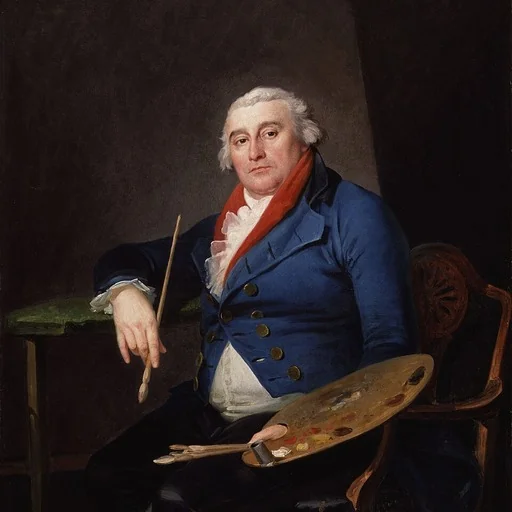
Artist
Philip James de Loutherbourg, RA (born Philippe Jacques de Loutherbourg; 31 October 1740 – 11 March 1812) was a French-born British painter who became known for his large naval works, his elaborate set designs for…

 The Pass Between Dale and Dalsjed
 Hellvellyn
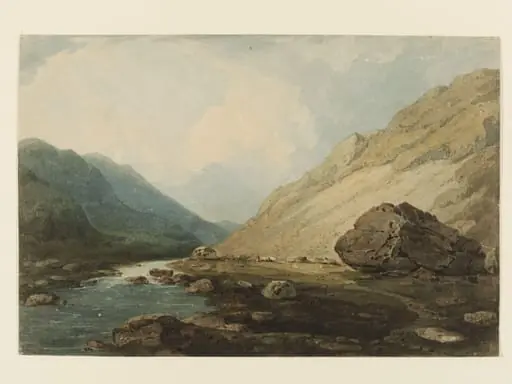 View in the Pass of Llanberis, Wales
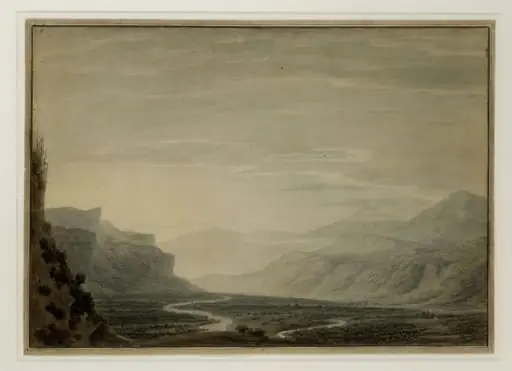 Valley with winding streams, a range of mountains in the background, and a village on the left
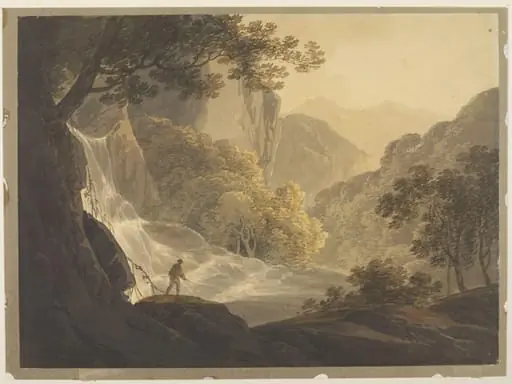 Waterfall
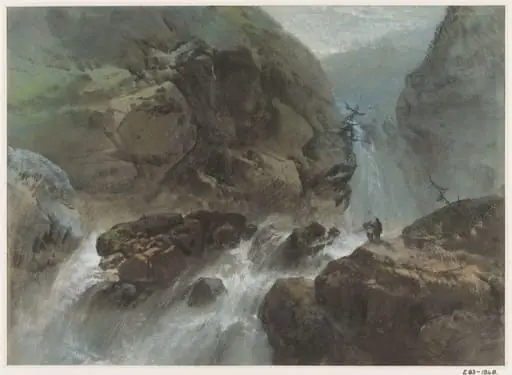 A Scottish waterfall
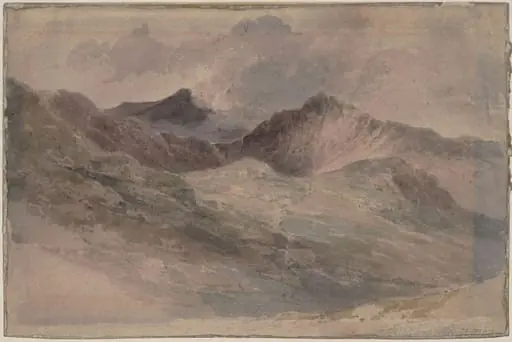 Snowdon and the Vale of Llanberis
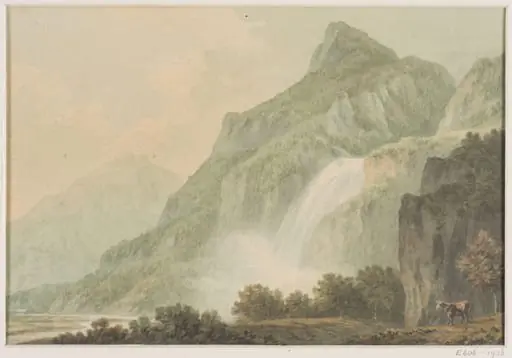 Landscape with waterfall
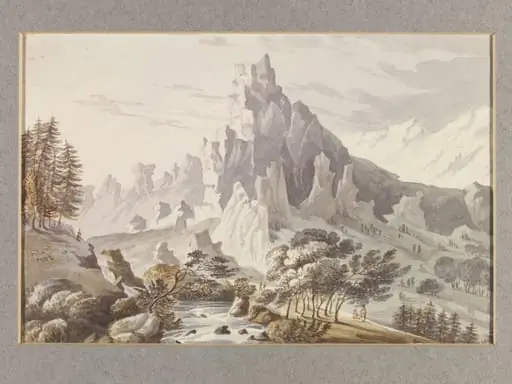 Cedar Forest & Snowy Peak on Mount Lebanon
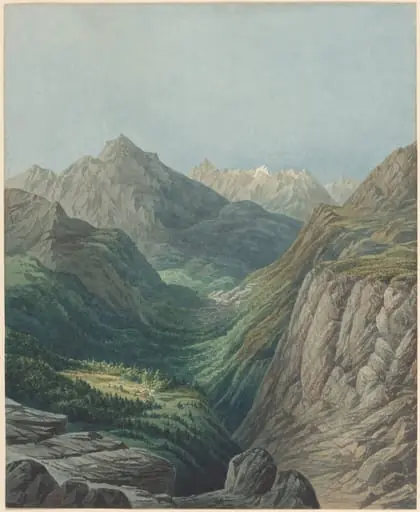 An Alpine Valley
![The Alps [recto], by John Singer Sargent](https://artifactworldgallery.com/img/john-singer-sargent--the-alps-recto--be3c1d8551c9fe49-w320.webp) The Alps [recto]
The Alps [recto]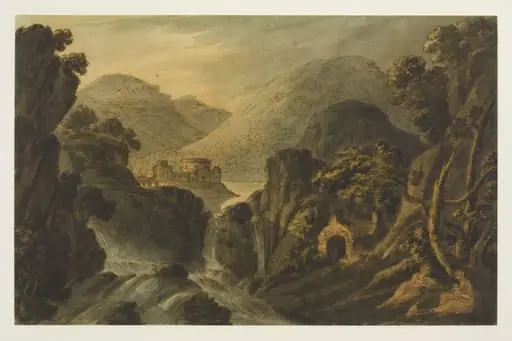 Classical landscape with cascade