Artwork
Still life
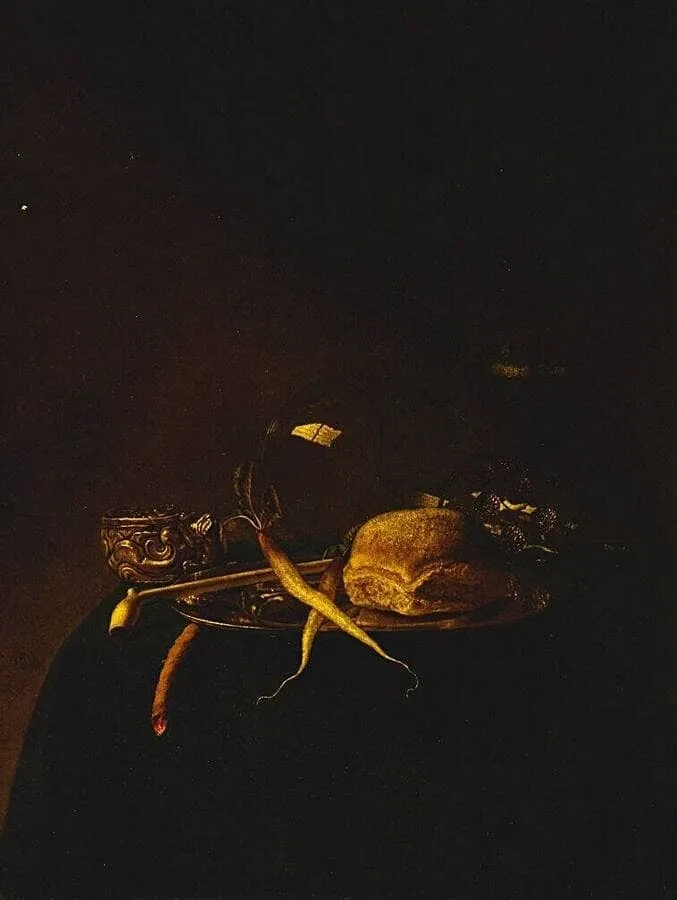
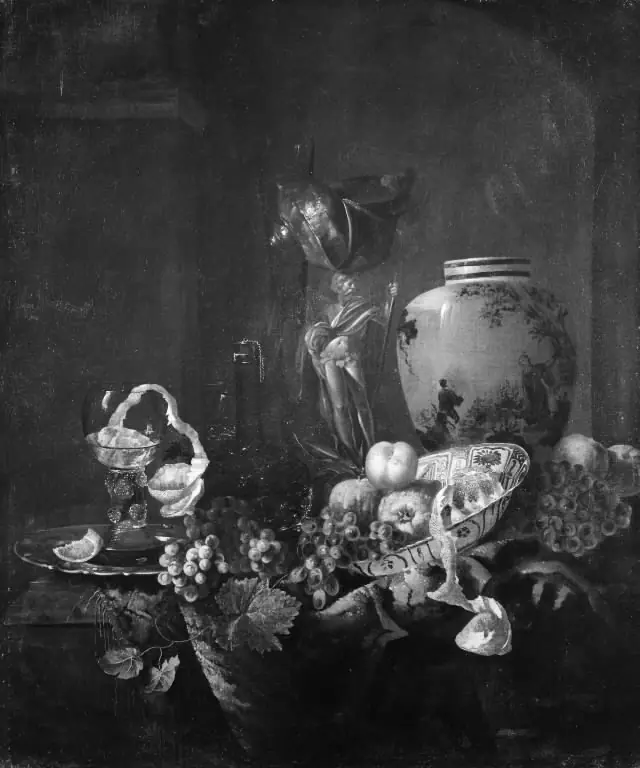
Still life is an oil painting by the Dutch Golden Age artist Pieter van den Bosch. It dates from 1655 and is held in the collection of the Kröller-Müller Museum.
About this work
Overview
Painted in 1655 by Pieter van den Bosch, this oil on panel still life presents three humble objects: a loaf of bread, a carrot, and a Gouda clay pipe.
Painted in 1655 by Pieter van den Bosch, this oil on panel still life presents three humble objects: a loaf of bread, a carrot, and a Gouda clay pipe. Arranged plainly on a surface against a dark background, the composition avoids ornamentation, focusing instead on quiet presence. The work resides in the Kröller-Müller Museum, where its restrained tone aligns with Dutch Golden Age traditions of domestic introspection.
Subject & Meaning
The objects—bread, carrot, and pipe—carry no overt symbolic narrative but evoke daily sustenance and quiet habit. Their simplicity invites reflection on ordinary life rather than moral allegory. The absence of luxury or abundance suggests a deliberate choice to honor the unadorned, grounding the viewer in material reality without embellishment or grandeur.
Technique & Style
Van den Bosch employs oil paint with subtle gradations to model form, using a dark background to heighten the tactile presence of each object. Light falls gently, defining the curve of the bread, the taper of the carrot, and the ridges of the pipe. The handling is restrained, avoiding dramatic contrasts yet achieving depth through nuanced tonal shifts and careful attention to surface texture.
History & Provenance
Created in the mid-seventeenth century, the painting entered the Kröller-Müller collection in the early twentieth century through the museum’s foundational acquisitions. Its attribution to Pieter van den Bosch is supported by stylistic comparison with other known works from his oeuvre, though his output remains limited and poorly documented in historical records.
Context
This work emerges from a Dutch tradition that elevated everyday items into subjects of quiet reverence. While contemporaries like Willem Claesz Heda painted more elaborate arrangements, van den Bosch’s minimalism reflects a regional preference for understated observation. Such paintings responded to a culture that valued discipline, thrift, and the dignity of the commonplace.
Legacy
Though not widely reproduced or celebrated in mainstream art history, the painting endures as an example of restrained still life practice. Its influence lies in its quiet authority—offering a model of contemplative observation that resonates with later realist and modernist approaches to ordinary subjects, emphasizing presence over spectacle.
Artist & collection

 Still Life
 Obst- und Gemüsestillleben
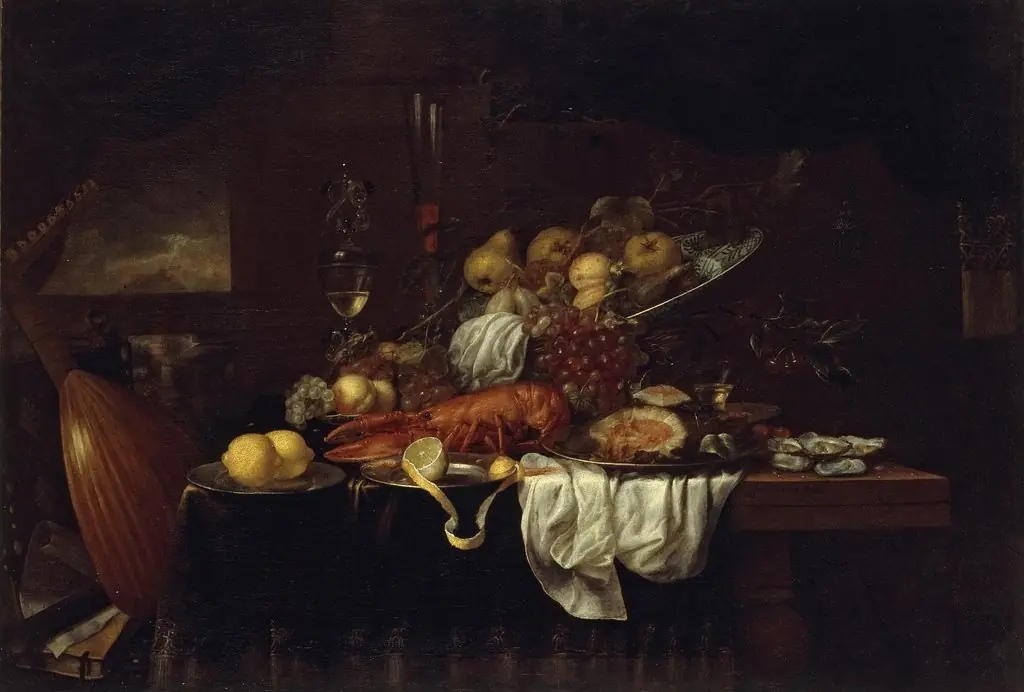 Lobster, Oysters and Fruits on the Table
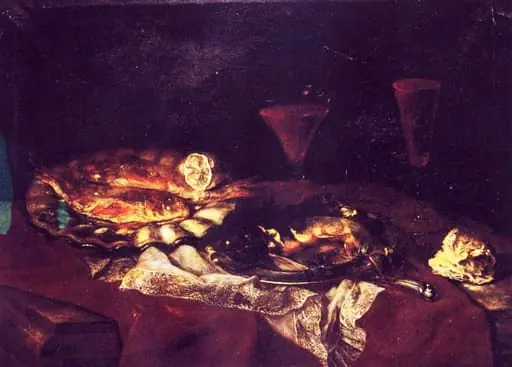 Natură moartă cu pești; pandant: Natură moartă cu scoici
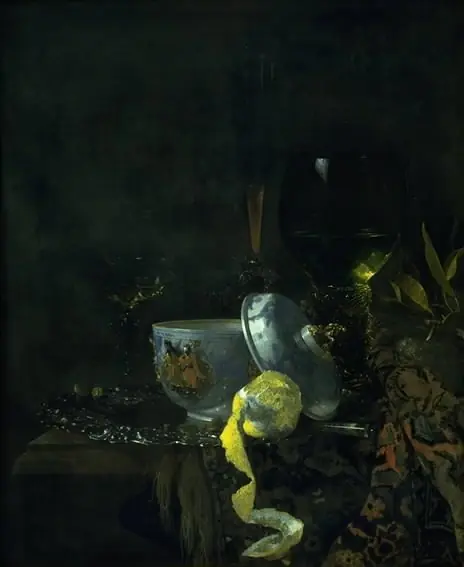 Pronk Still Life with a Chinese Sugar Bowl
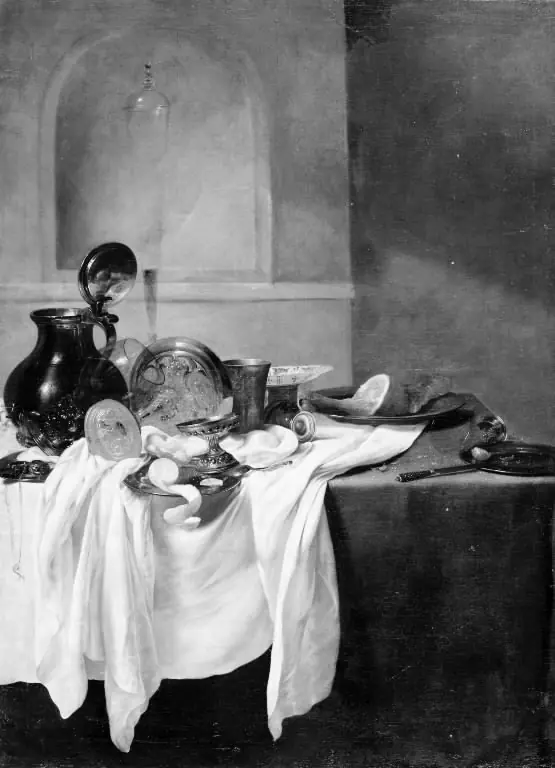 Still Life
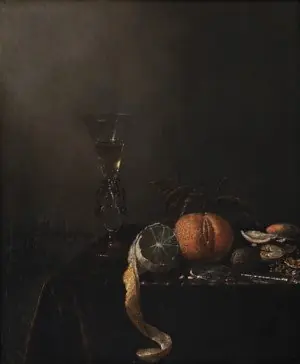 Still life with fruit and wine glass
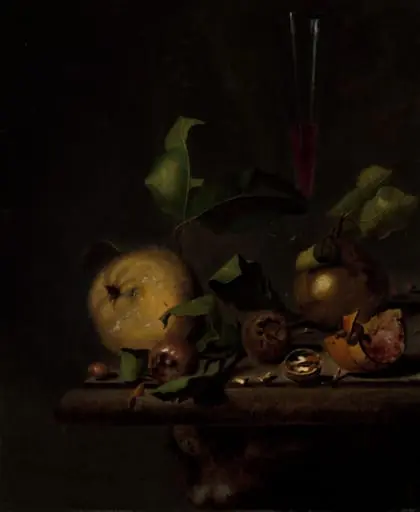 Still Life with Quinces, Medlars and a Glass
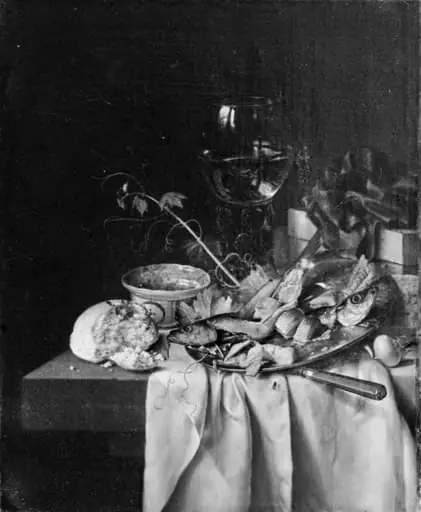 Still Life
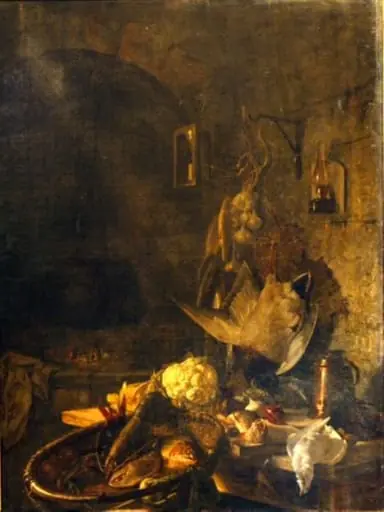 Alegorie: cele patru elemente (Pământul, Apa, Aerul, Focul)
 Flower Piece
 Still life with meat and dead birds