Artwork
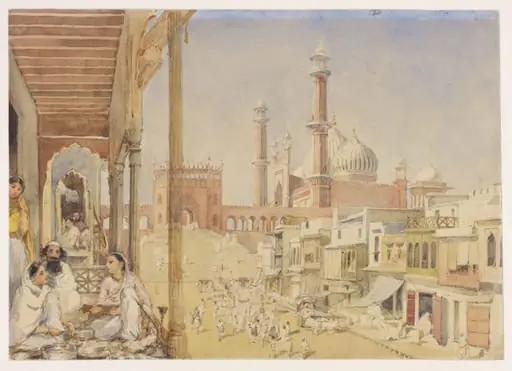
View of the bazaar at the back of the Jami Masjid, Delhi
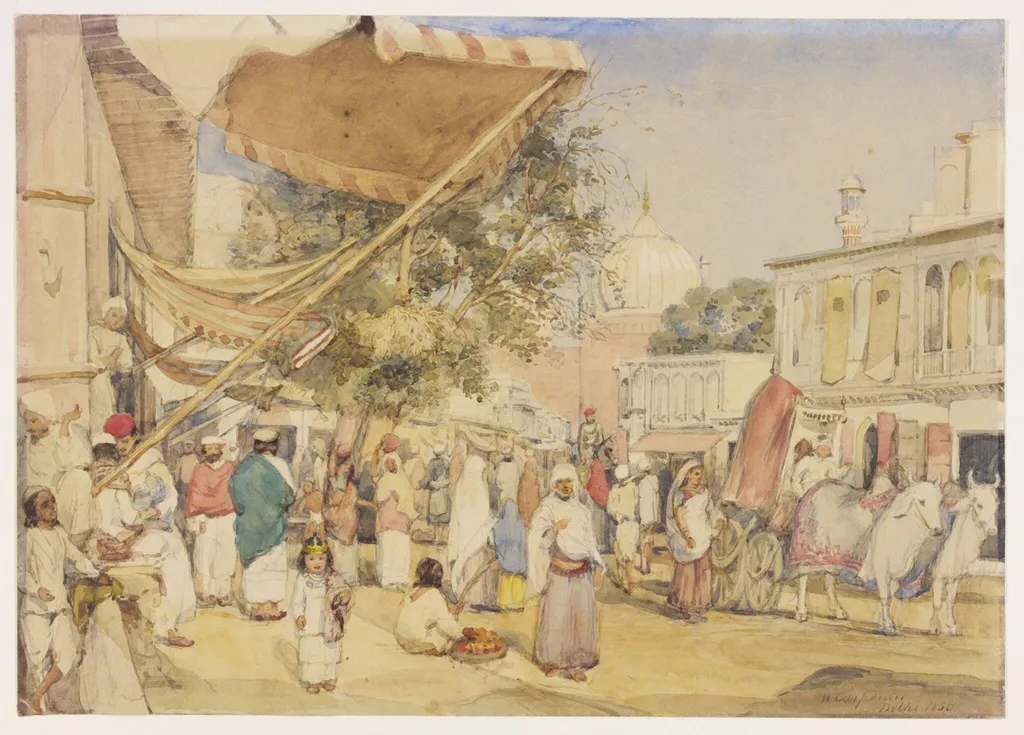
View of the bazaar at the back of the Jami Masjid, Delhi is a paint painting by the Impressionist artist William Carpenter. It dates from 1856 and is held in the collection of the Victoria and Albert Museum.
About this work
William Carpenter painted a scene of the bazaar behind the Jami Masjid in Delhi in 1856. He used paint on canvas to show daily life. His work mixes Impressionism and Realism styles.
Carpenter lived in India for years. He dressed like locals and painted portraits of rulers. This painting shows shops and people busy with trade.
Next, look up Carpenter’s other Indian scenes.
Overview
View of the bazaar at the back of the Jami Masjid, Delhi, is a painting by William Carpenter, capturing a vibrant scene of daily life in 19th-century Delhi. Executed in 1856, the work depicts the bustling market area behind one of India's most prominent mosques.
Subject & Meaning
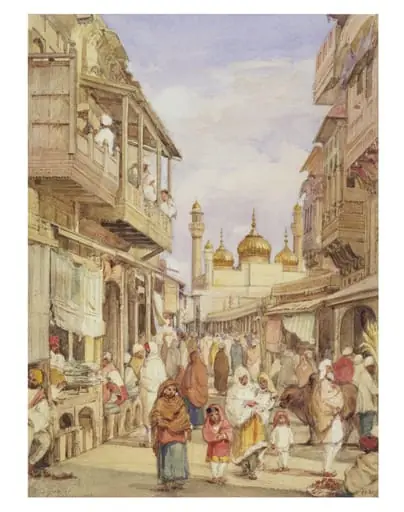
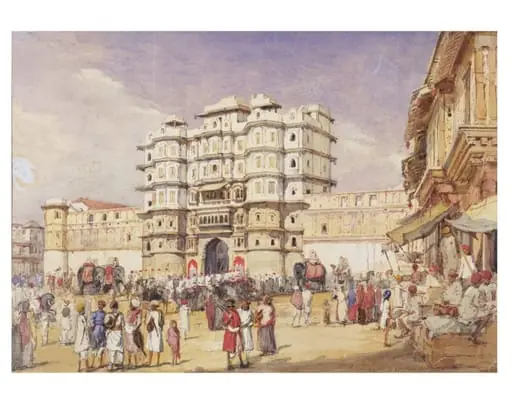
The painting focuses on the everyday activities of the local population, showcasing shops, traders, and the general populace engaged in commerce. This emphasis reflects Carpenter's interest in documenting the mundane aspects of Indian life during his time in the country.
Technique & Style
Carpenter's technique in this piece blends elements of Impressionism, evident in the capture of light and movement, with Realism, seen in the detailed depiction of costumes, architecture, and daily activities, creating a nuanced visual narrative.
History & Provenance
Painted during Carpenter's return to England in 1856, after spending several years traveling and painting in India, Sri Lanka, Kashmir, the Punjab, Afghanistan, and Rajasthan. The artist's personal experiences, including his practice of wearing local attire, likely influenced his portrayal of the scene.
Context
Created during the late Mughal period, under the shadow of the Jami Masjid (built 1644-56), the painting provides a glimpse into the economic and social fabric of Delhi during a time of transition. The Jami Masjid, a prominent landmark, serves as the backdrop for the bustling bazaar, highlighting the intersection of religious and commercial life.
Legacy
As part of Carpenter's Indian oeuvre, this painting contributes to the visual documentation of 19th-century Indian life, offering insights into the country's cultural, economic, and architectural landscape during the colonial era. His works, including portraits of local rulers and scenes of agriculture, collectively provide a comprehensive view of his observations.
Own this work as a print
Artist & collection
Artist
William Carpenter (1818–1899) was an English watercolour artist. He travelled for six or seven years in the 1850s painting scenes of India, its people and its life. The Victoria and Albert Museum bought over 280 of his…

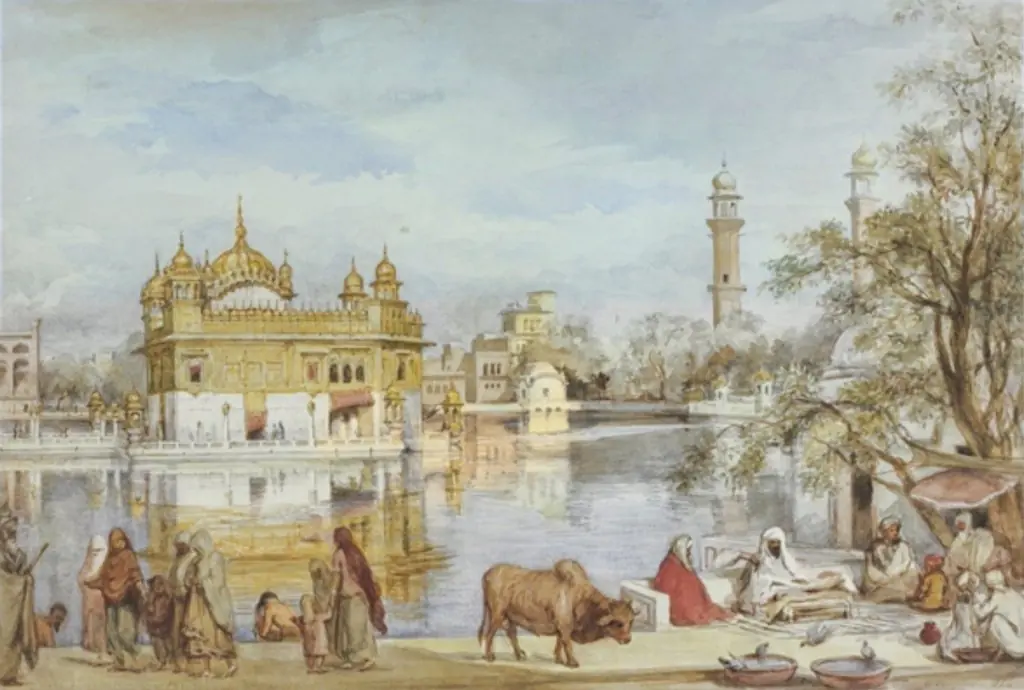 The Golden Temple, Amritsar
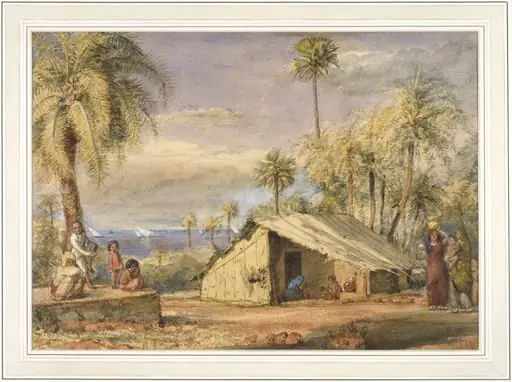 Toddywallah's hut in a grove of date palms near Breach Candy, Bombay
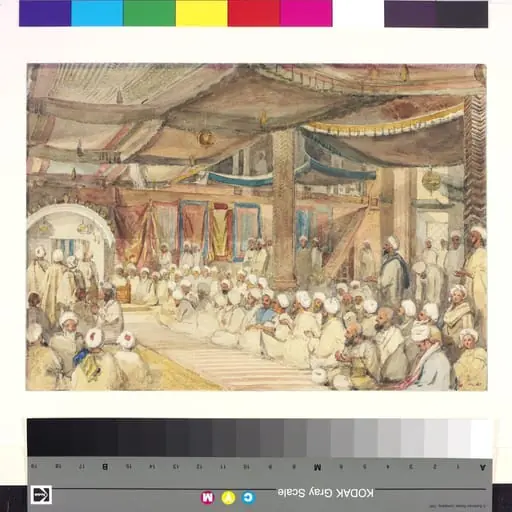 Interior of Shah Hamadan's Masjid during a religious ceremony
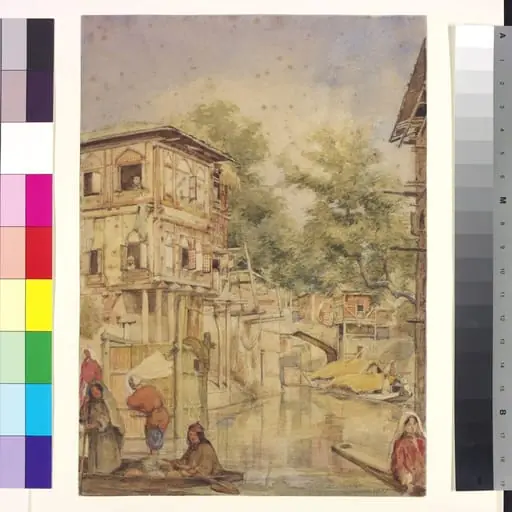 On the Mar Canal at Srinagar, Kashmir
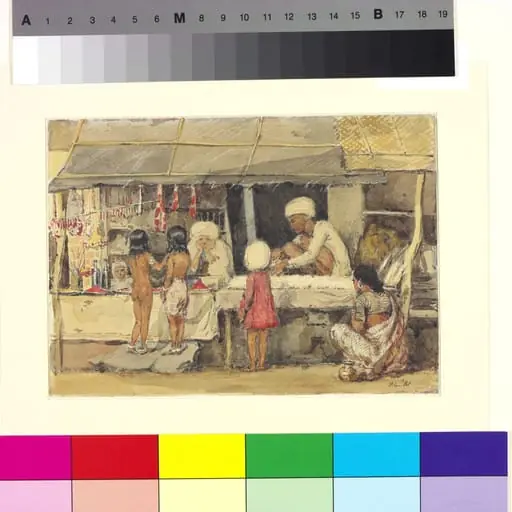 Shops for colours and flowers used at festivals, Sadr bazaar, Pune
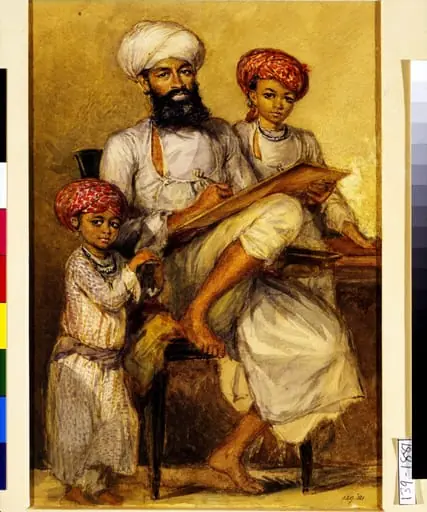 Portrait of Tara Chand, the court painter
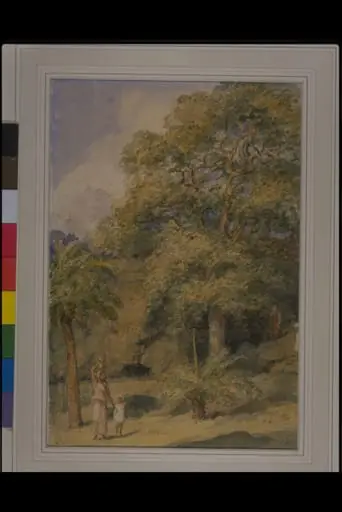 Study of a tamarind tree and date palms near Sir William Yardley's house at Breach Candy, Bombay
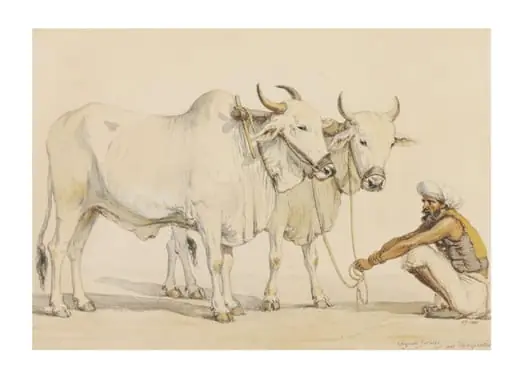 Two harnessed bullocks from Gujarat with their keeper