Artwork
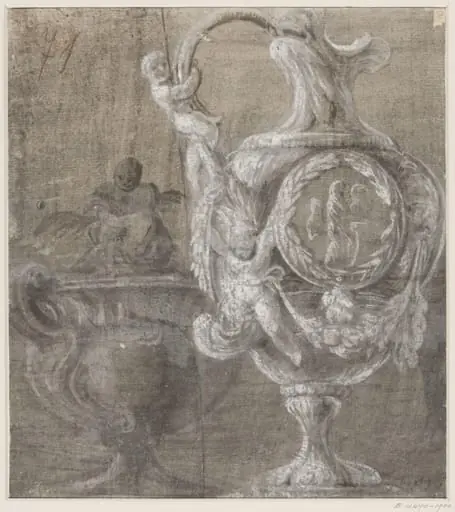
Ewer
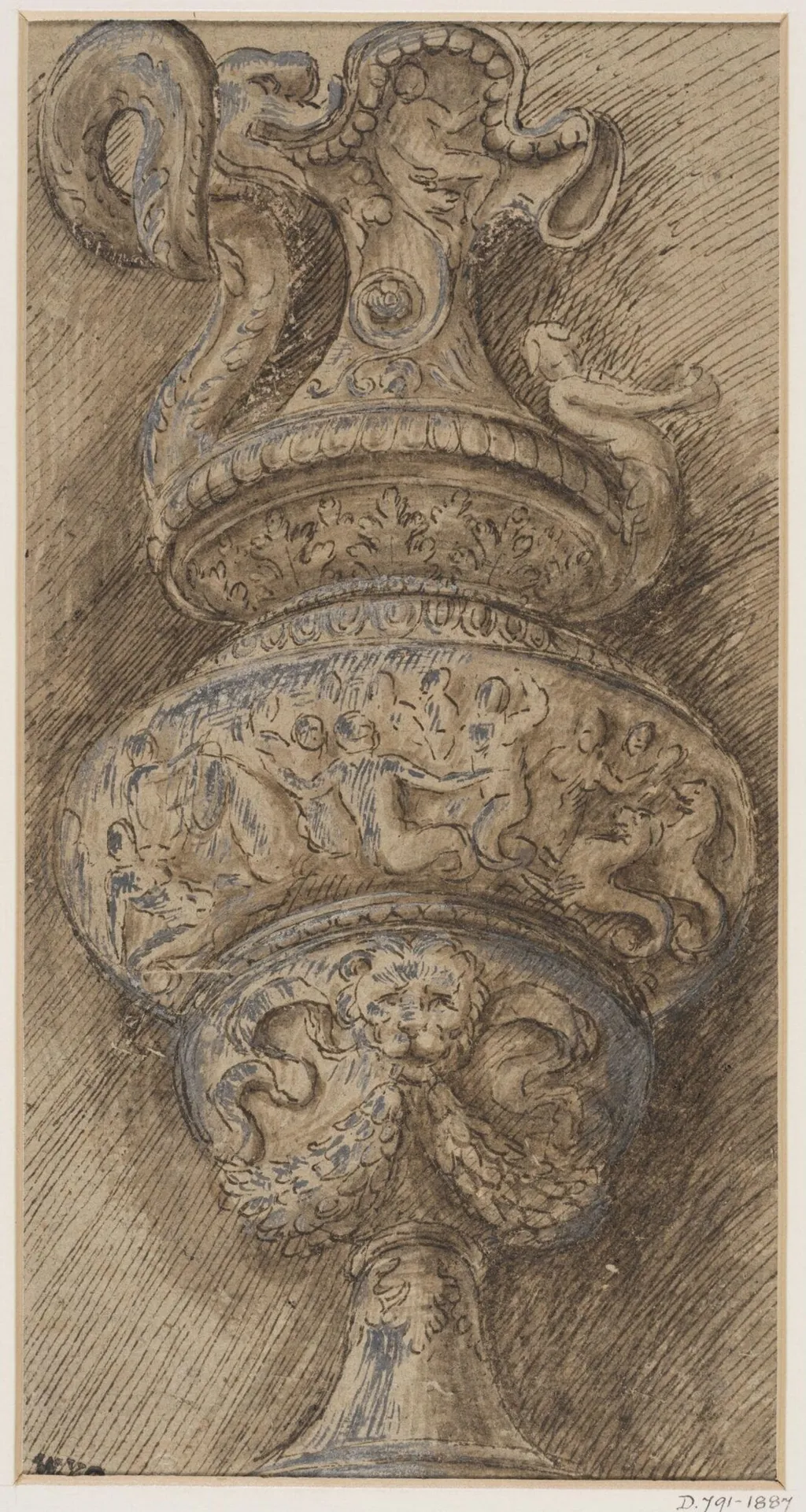
Ewer is a drawing by Polidoro da Caravaggio. It is held in the collection of the Victoria and Albert Museum.
About this work
Overview
The work is held in the collection of the Victoria and Albert Museum, where it reflects the Renaissance interest in classical forms and craftsmanship.
Created around 1550, this drawing by Polidoro da Caravaggio depicts an ornate ewer, a vessel typically used for pouring liquids. Executed in fine linear strokes, it functions as a detailed study of a decorative object rather than a fictional composition. The work is held in the collection of the Victoria and Albert Museum, where it reflects the Renaissance interest in classical forms and craftsmanship.
Subject & Meaning
The ewer is rendered with elaborate ornamentation: scrolling handles, carved foliage, and small masked faces emerge along its surface. A central band illustrates a narrative scene of figures and animals, suggesting mythological or allegorical themes common in Renaissance decorative arts. The vessel’s crowned top evokes classical prototypes, signaling its role as a symbol of refined taste and antiquarian curiosity.
Technique & Style
Polidoro employed precise, controlled linework to model volume and texture, using subtle gradations of shadow to suggest the relief of carved surfaces. Cross-hatching and fine parallel strokes build depth without wash or tone, demonstrating a disciplined approach to observational drawing. The technique reveals an artist attuned to the physical presence of metalwork and sculpted decoration.
History & Provenance
The drawing entered the Victoria and Albert Museum’s collection as part of its broader holdings in Renaissance graphic arts. Its origins prior to museum acquisition are undocumented, but its detailed rendering suggests it may have served as a preparatory study for decorative commissions or as a reference for artisans working in metal or ceramics.
Context
In mid-16th century Italy, artists often studied antique and contemporary decorative objects to inform their designs. Polidoro’s focus on the ewer aligns with a broader trend among Mannerist draftsmen who documented real artifacts to understand classical motifs and their adaptation in contemporary craft.
Legacy
This drawing exemplifies the Renaissance practice of using observation to bridge fine art and applied arts. Its meticulous line work influenced later generations of designers and draftsmen interested in the translation of three-dimensional ornament into two-dimensional records. It remains a quiet testament to the value placed on craftsmanship in artistic training.
Artist & collection


![A Deathbed Scene [recto], by Polidoro da Caravaggio](https://artifactworldgallery.com/img/polidoro-da-caravaggio--a-deathbed-scene-recto--003a0ab85138063d-w320.webp)
![Woman Seated with a Piece of Cloth [verso], by Polidoro da Caravaggio](https://artifactworldgallery.com/img/polidoro-da-caravaggio--woman-seated-with-a-piece-of-cloth-verso--ec763632d6897d6a-w320.webp)
 Covered Goblet with Winged Ball
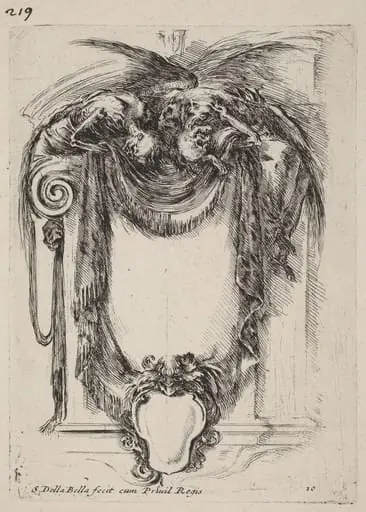 Cartouche Suspended from Corpses
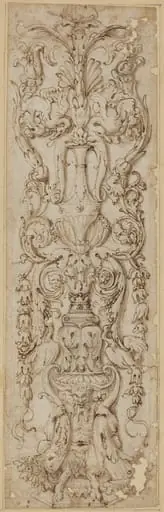 Grotesque with a Satyr
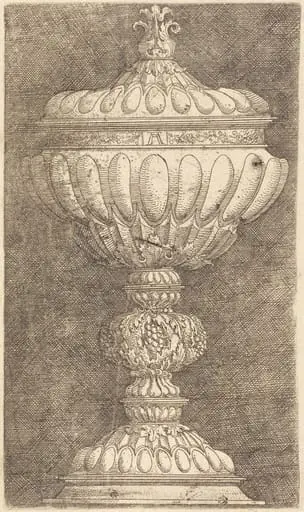 Covered Goblet with Grapes on the Stem
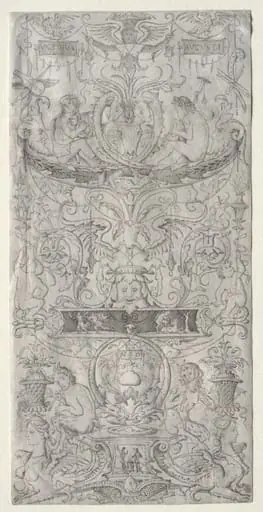 Panel of Ornament Inscribed Victoria Augusta
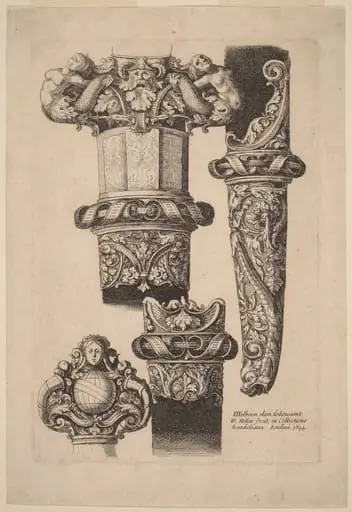 Ornamentation for a Dagger and Scabbard
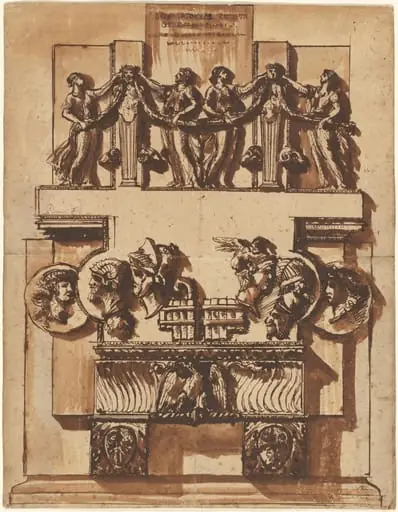 Fantasy of a Magnificent Wall Monument
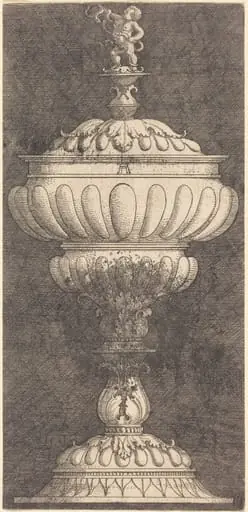 Covered Goblet with Young Hercules
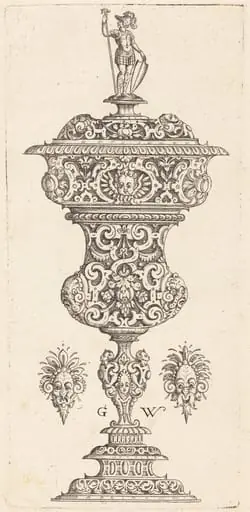 Goblet with lid surmounted by a Roman soldier
 A Fragment from an Antique Frieze
 Paradigmata Graphics Variorum Artificum
 Design for a ewer and a vase