Artwork
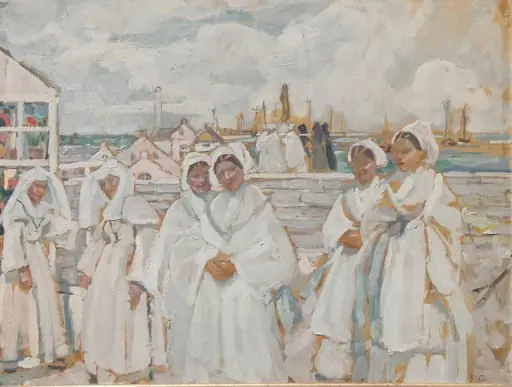
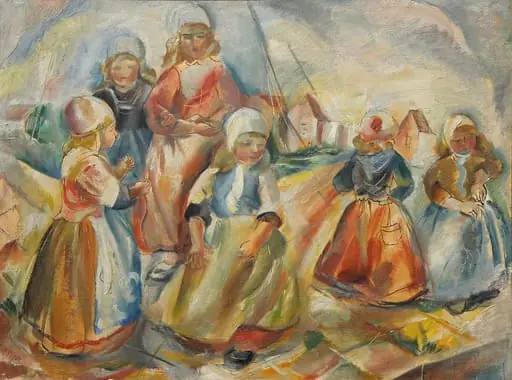
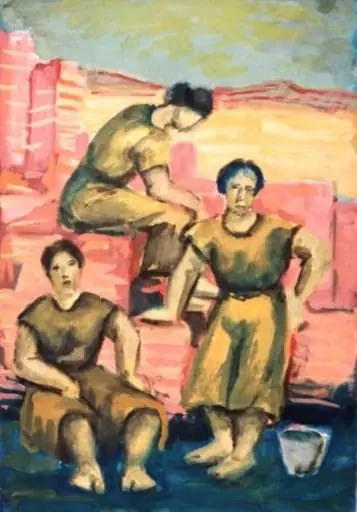
Trei femei bretone
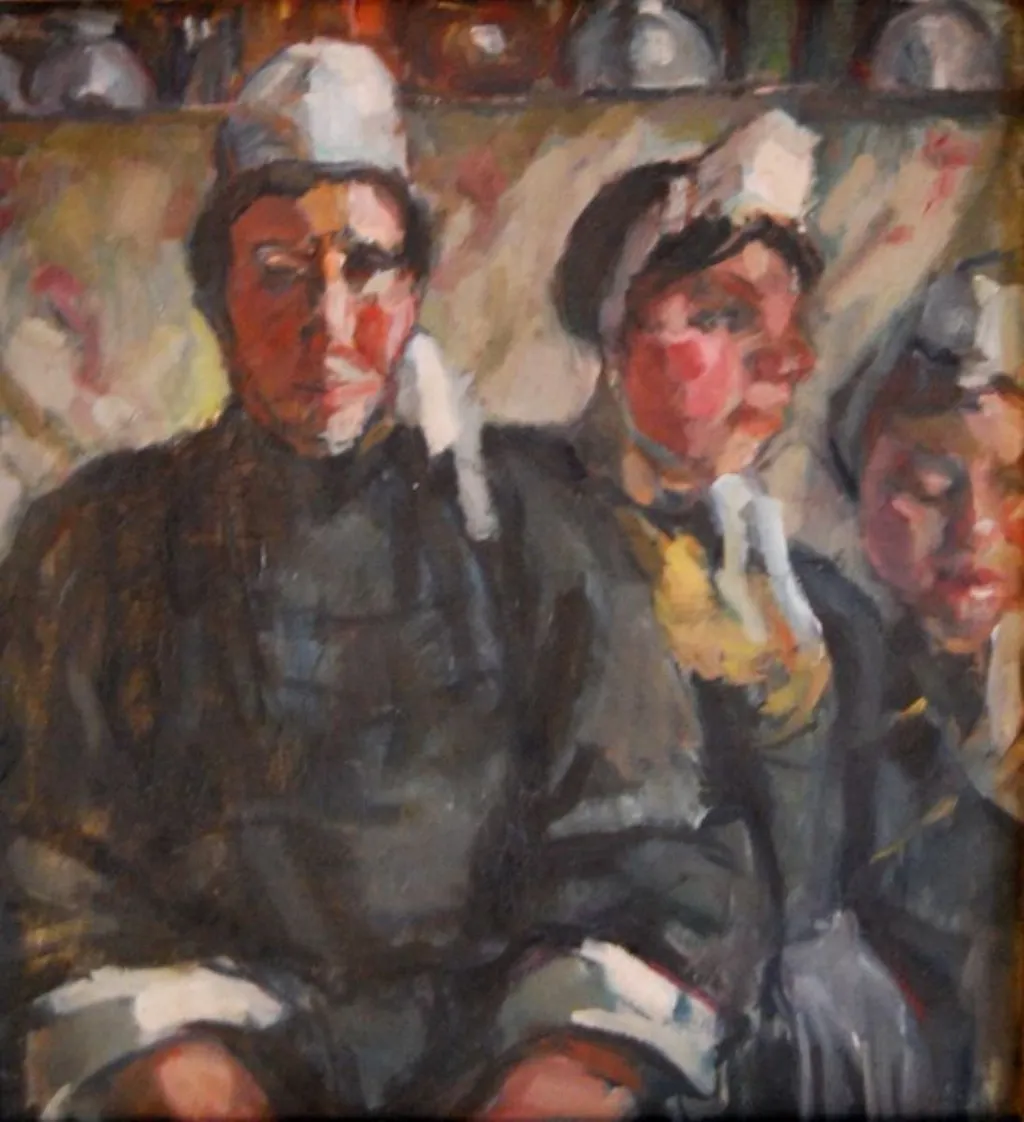
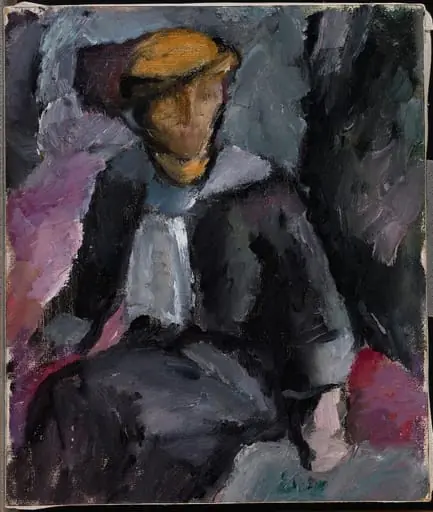
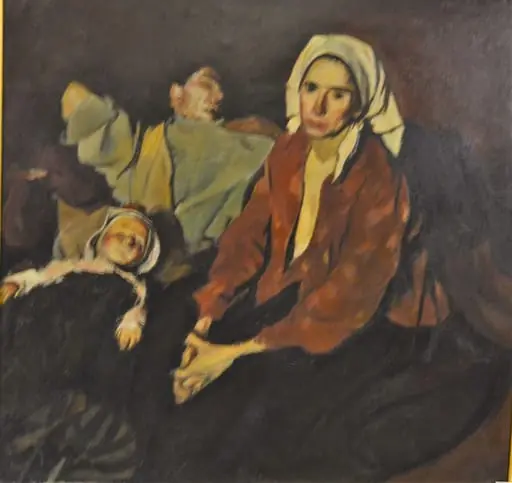
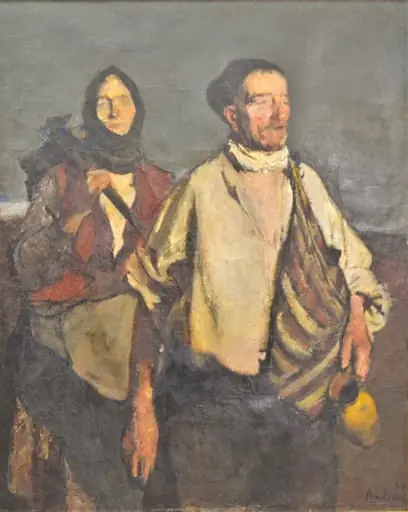
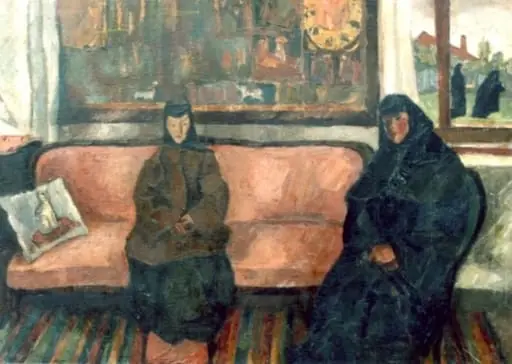
Trei femei bretone is an unspecified painting by Elena Popea. It dates from 1920 and is held in the collection of the Octavian Goga Memorial Museum.
About this work
Overview
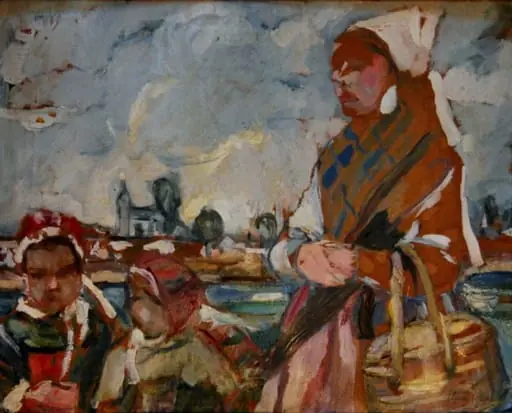
Painted around 1920 by Elena Popea, a Romanian Modernist of Austro-Hungarian origin, *Trei femei bretone* captures three women in a quiet, intimate grouping.
Painted around 1920 by Elena Popea, a Romanian Modernist of Austro-Hungarian origin, *Trei femei bretone* captures three women in a quiet, intimate grouping. The work reflects Popea’s engagement with early 20th-century European styles, blending elements of Impressionism, Expressionism, and Cubism. It is part of a larger series of figurative works centered on everyday life, and is currently held in the Museum of Ethnography’s collection.
Subject & Meaning
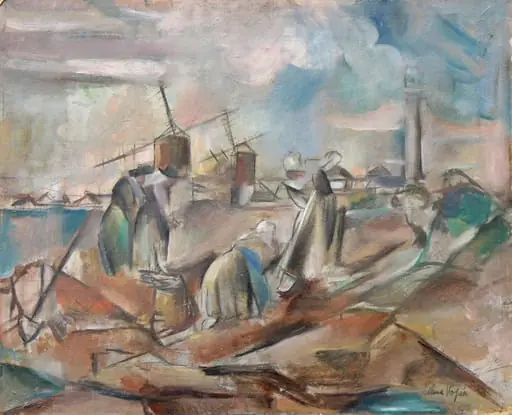
The painting depicts three women seated closely, their expressions solemn and their postures restrained. Dressed in dark garments with white headscarves, they appear engaged in a moment of stillness, perhaps after labor or during a pause in communal activity. The yellow bundle held by one figure suggests a domestic or functional object, grounding the scene in practical life rather than idealized representation.
Technique & Style
Popea employs thick, visible brushstrokes to build form and texture, a hallmark of impasto. The background dissolves into muted, indistinct shapes, drawing focus to the figures. Lighting is deliberately uneven, casting parts of the faces into shadow and enhancing the emotional gravity of the scene. The style merges observational realism with expressive distortion, reflecting influences from multiple modernist movements.
History & Provenance
Created during Popea’s active period in Romania, the painting entered the collection of the Museum of Ethnography in the decades following its completion. Its preservation there aligns with the institution’s focus on cultural and folk traditions, though the work’s modernist approach distinguishes it from conventional ethnographic artifacts. Its provenance remains tied to Romanian art circles of the interwar era.
Context
In early 20th-century Romania, artists like Popea sought to reconcile local subjects with international avant-garde trends. *Trei femei bretone* reflects this tension: the figures’ attire suggests Breton or rural Romanian dress, while the technique aligns with broader European modernism. The painting contributes to a shift in Romanian art toward psychological depth and formal experimentation.
Legacy
Though not widely exhibited beyond institutional collections, the painting remains a significant example of Popea’s contribution to Romanian Modernism. It illustrates how female artists of the period engaged with both regional identity and cosmopolitan styles. Its continued presence in the Museum of Ethnography underscores its role as a bridge between ethnographic documentation and modernist expression.
Artist & collection
Artist
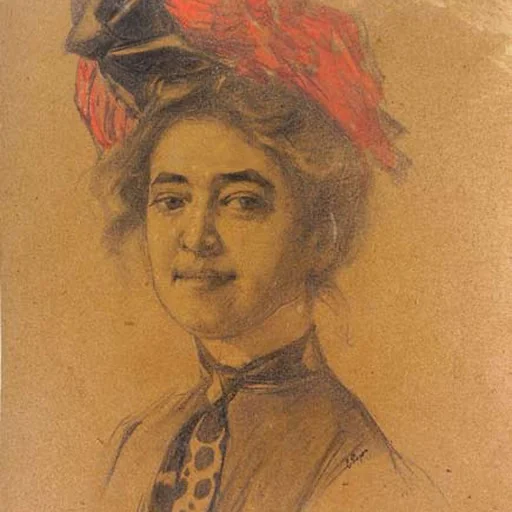
Elena Popea (15 April 1879, Brașov – 19 June 1941, Bucharest) was an Austro-Hungarian-born Romanian Modernist painter whose influences included Impressionism, Expressionism and Cubism.