Artwork
Calavera of Francisco Madero, from Calavera Maderista
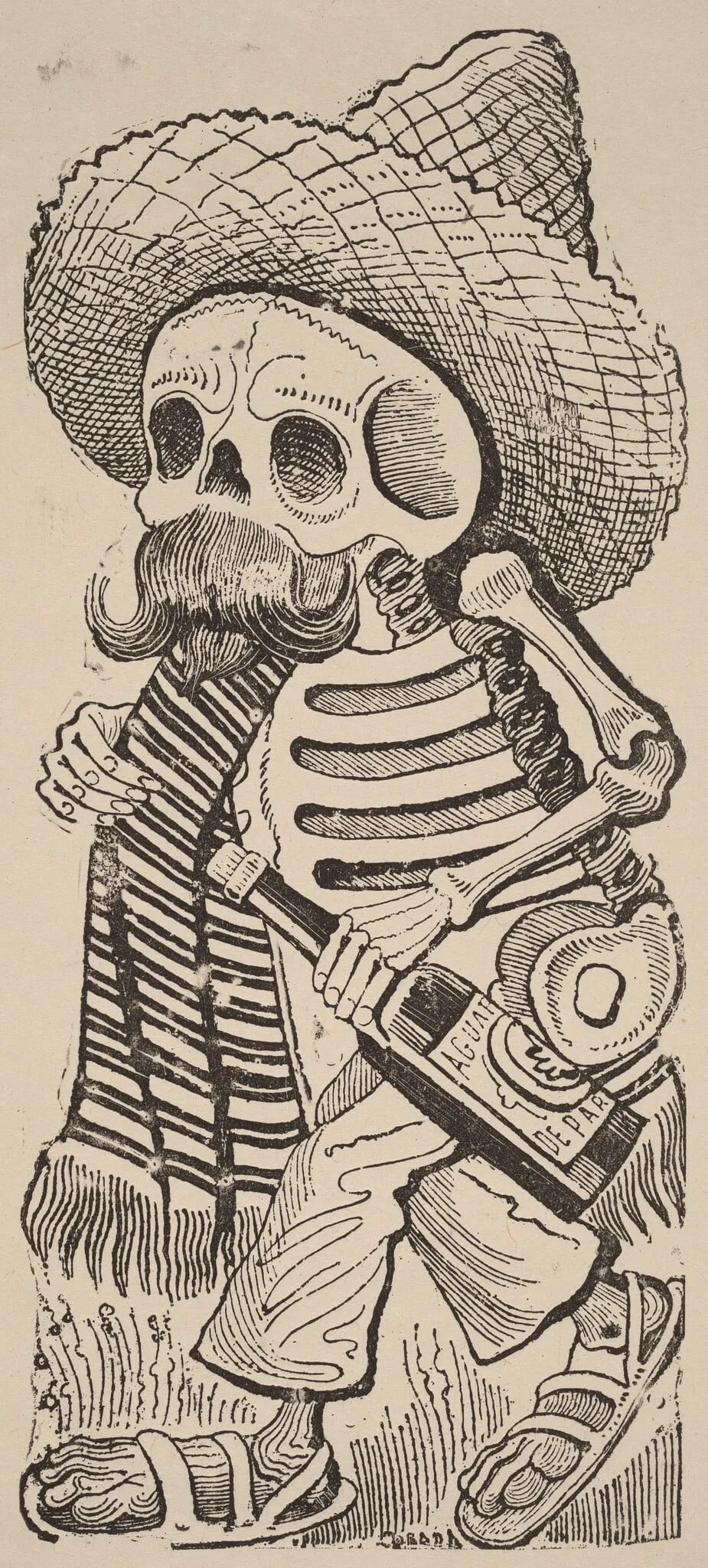
Calavera of Francisco Madero, from Calavera Maderista is an ink print by José Guadalupe Posada. It dates from 1944 and is held in the collection of the National Gallery of Art. The work is a zinc relief etching printed on China paper, depicting a skeletal figure dressed in a striped shirt and sombrero.
About this work
The skeleton's clothing and accessories are detailed, with visible stripes on his shirt and a label on the bottle he is holding.
This image shows a skeleton wearing a sombrero and a striped shirt, holding a bottle of "Agua de Par" in his right hand. The skeleton's left hand is resting on his hip, and he has a mustache and a goatee. The skeleton is facing to the left, and the background of the image is a light beige color.
The skeleton's clothing and accessories are detailed, with visible stripes on his shirt and a label on the bottle he is holding. The overall style of the image is reminiscent of traditional Mexican art, with bold lines and simple shapes.
The image is a relief etching on china paper, created by José Guadalupe Posada in 1944. To learn more about Posada's work, you can look up the artist José Guadalupe Posada.
Overview
The work is a zinc relief etching printed on China paper, depicting a skeletal figure dressed in a striped shirt and sombrero. The skeleton holds a bottle labeled “Agua de Par” in its right hand, while its left hand rests on its hip. Rendered in bold outlines against a light beige background, the image reflects the graphic simplicity characteristic of early twentieth‑century Mexican printmaking.
Subject & Meaning
The figure represents a calavera, a stylized skull commonly used in Mexican Day of the Dead imagery, here associated with former president Francisco Madero. By portraying Madero as a skeleton, the artist comments on mortality and the fleeting nature of political power, a recurring theme in satirical Mexican visual culture.
Technique & Style
Posada employed a relief etching process, incising the design into a zinc plate before pressing it onto the paper. The composition relies on stark, unmodulated lines and flat areas of color, emphasizing graphic clarity over realistic detail. The striped shirt and sombrero are rendered with minimal shading, reinforcing the work’s folk‑art aesthetic.
History & Provenance
Created in 1944, the piece belongs to the series titled “Calavera Maderista,” which revisits the legacy of Madero through the calavera motif. It is attributed to José Guadalupe Posada, a prolific Mexican printmaker whose images circulated widely in popular prints and broadsheets during the early 1900s.
Context
The image emerges from a tradition of political satire in Mexico, where caricatured skeletons served as a vehicle for critique. Posada’s calaveras often appeared in inexpensive pamphlets, making social commentary accessible to a broad audience and reflecting the turbulent post‑revolutionary climate.
Artist & collection


 Untitled
 Dance of Death: The Old Man
 American Singer (Chanteur américain)
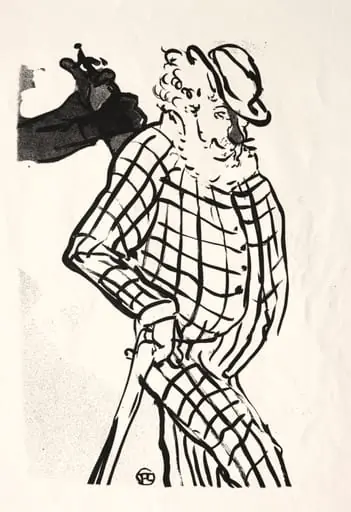 Le Café-concert: Chanteur Americain
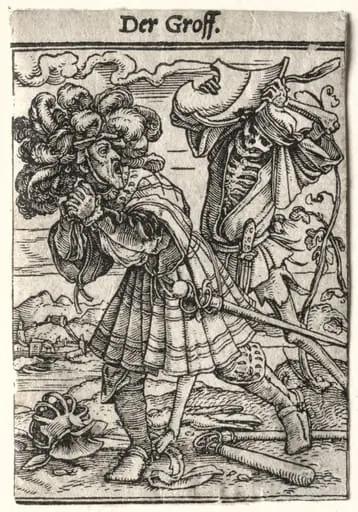 Dance of Death: The Count
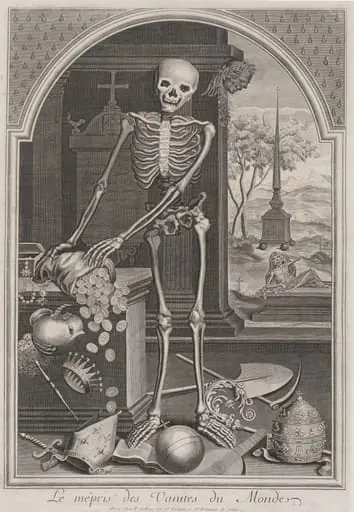 Death with Worldly Vanities
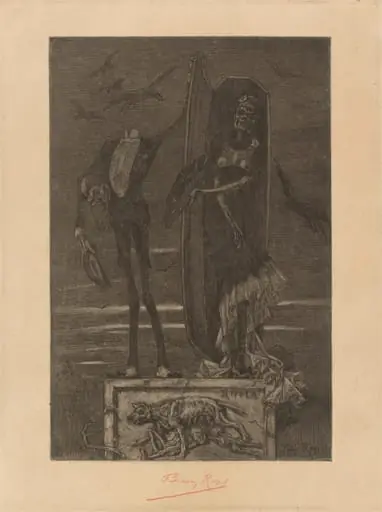 Le Vice suprème: Frontispiece
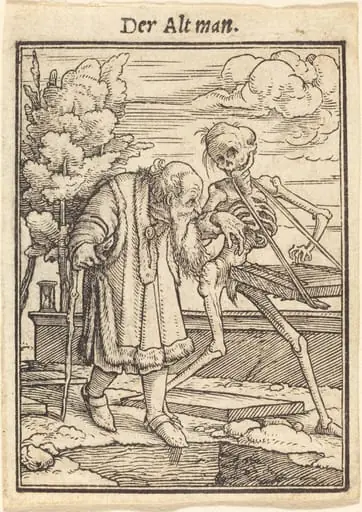 Der Alt man (The Old Man)
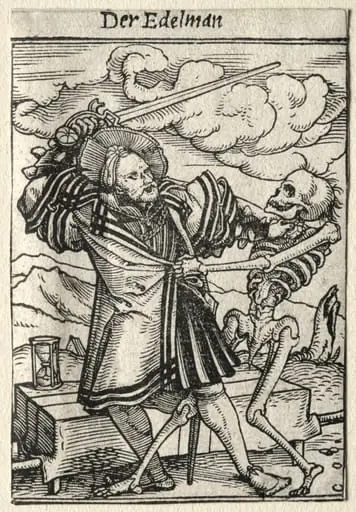 Dance of Death: The Nobleman
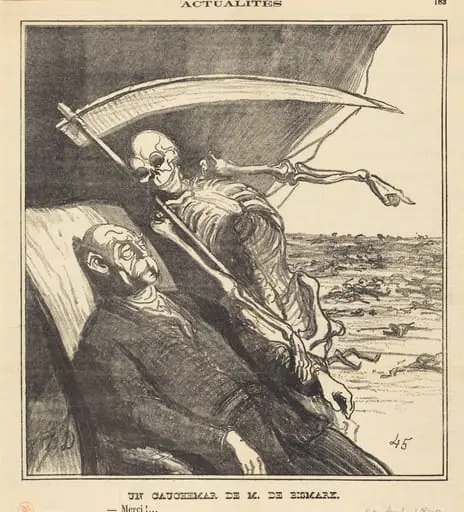 Un cauchemar de M. Bismarck
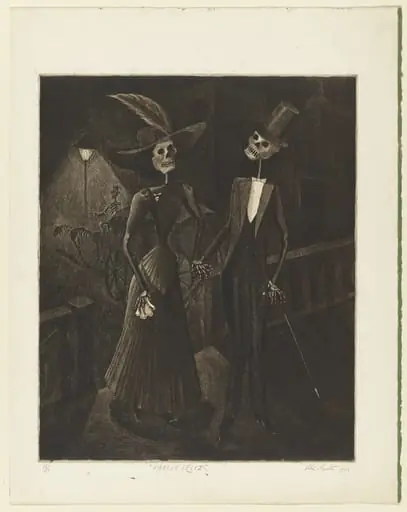 Untitled
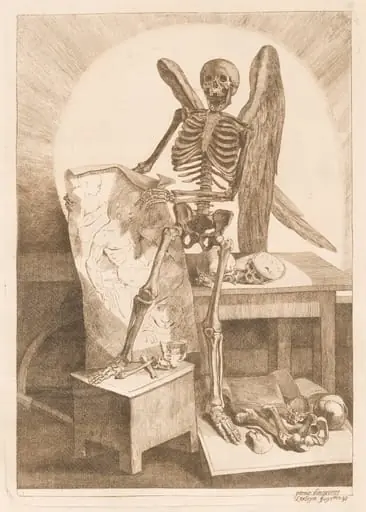 A Winged Skeleton Holding an Anatomical Drawing