Artwork
Portrait of Ibrahim, a Muslim from Sennar
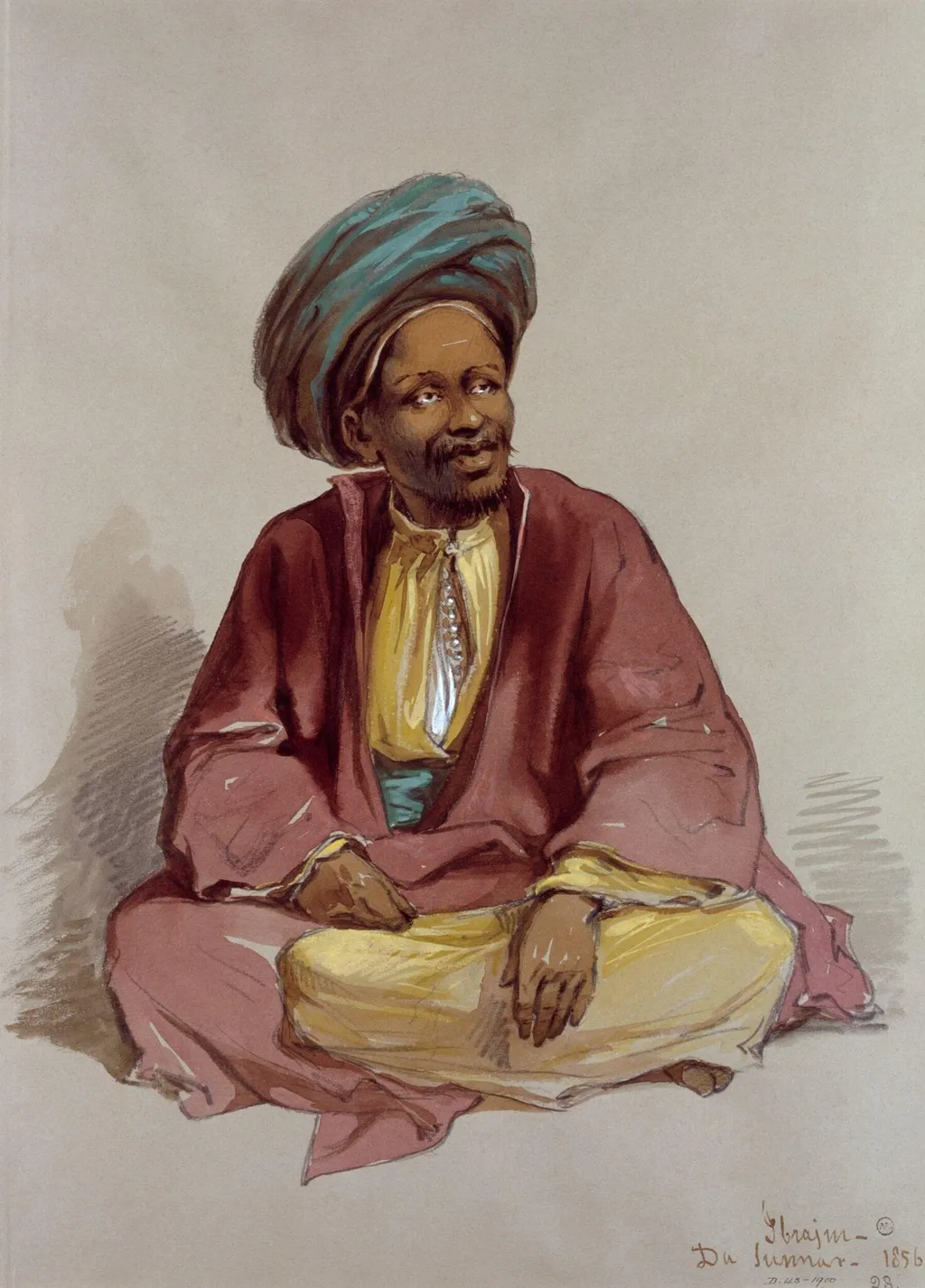
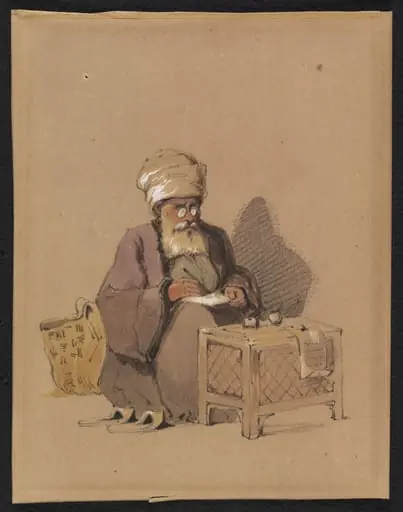
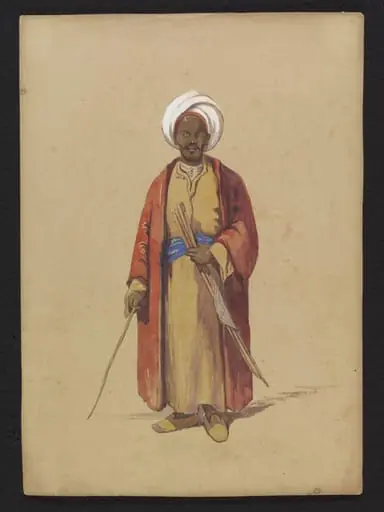
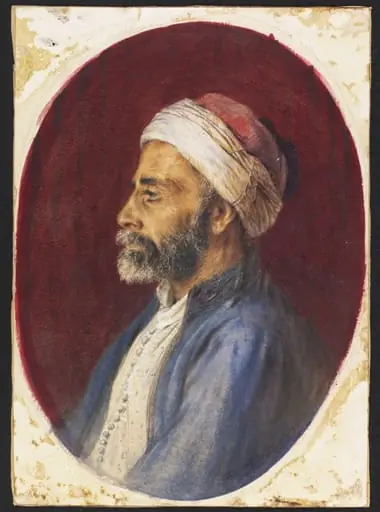
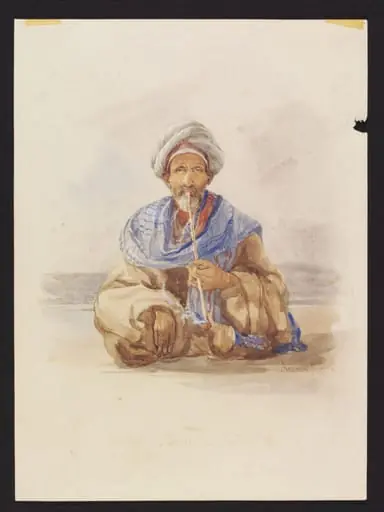
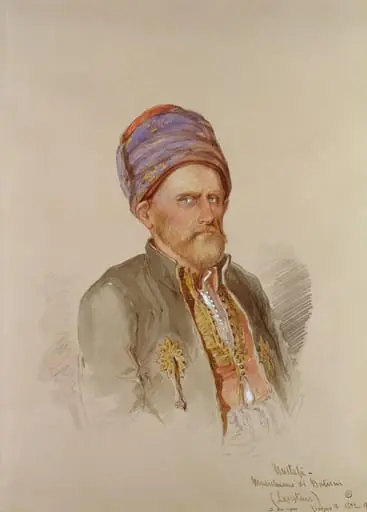
Portrait of Ibrahim, a Muslim from Sennar is a watercolor work on paper by the Impressionist artist Aloysius Rosarius Amadeus Raymondus Andreas Preziosi. It dates from 1856 and is held in the collection of the Victoria and Albert Museum. Painted in 1856, this watercolour portrait depicts Ibrahim, a Muslim man from Sennar, a trading hub on the Blue Nile in present-day Sudan.
About this work
This is a watercolour portrait from 1856. It shows a man named Ibrahim, who was a Muslim from Sennar in Sudan. Sennar was a hot, busy trade city on the way to Cairo.
Preziosi painted this during a time when European artists were just starting to travel to Africa. His work mixes impressionist softness with realist detail.
Look up the Victoria and Albert Museum next.
Overview
Created by the Italian artist Alessandro Preziosi, the work emerged during a period when European artists began documenting life in North and East Africa.
Painted in 1856, this watercolour portrait depicts Ibrahim, a Muslim man from Sennar, a trading hub on the Blue Nile in present-day Sudan. Created by the Italian artist Alessandro Preziosi, the work emerged during a period when European artists began documenting life in North and East Africa. The medium and scale suggest a study made for personal or ethnographic interest rather than public display.
Subject & Meaning
Ibrahim is portrayed with quiet dignity, his identity tied to his origin in Sennar, a city long known for its role in trans-Saharan commerce. As a Muslim from a region recently absorbed into Egyptian control, his presence in the portrait reflects the cultural intersections of the time. The image does not idealize or exoticize; instead, it offers a restrained, individualized representation amid broader European curiosity about African societies.
Technique & Style
Preziosi employed watercolour with a delicate touch, blending soft washes for skin tones and fabric with precise linework to define facial features and headwear. The technique balances atmospheric lightness with careful observation, avoiding overt romanticism. The background remains unadorned, focusing attention on the subject’s expression and attire, suggesting an ethnographic intent grounded in direct observation.
History & Provenance
The portrait was created during Preziosi’s travels in the eastern Mediterranean and Sudanese regions, following the Egyptian conquest of Sennar in 1821. It entered the collection of the Victoria and Albert Museum in London, where it remains as part of a broader group of 19th-century works documenting non-European subjects. Its survival reflects early institutional interest in cross-cultural visual records.
Context
In the mid-19th century, European artists increasingly ventured into regions under Ottoman or Egyptian influence, producing visual records of local populations. Sennar, though diminished from its former kingdom status, remained a cultural crossroads. Preziosi’s work aligns with a wave of ethnographic portraiture that sought to capture regional identities, often shaped by colonial expansion and shifting trade networks.
Legacy
The portrait stands as a quiet example of early photographic-era visual anthropology, predating widespread use of the camera in the region. It contributes to a historical archive of African individuals depicted with relative autonomy, avoiding caricature. Today, it serves as a material witness to the complex encounters between European observers and African communities during a period of imperial reconfiguration.
Artist & collection
Artist
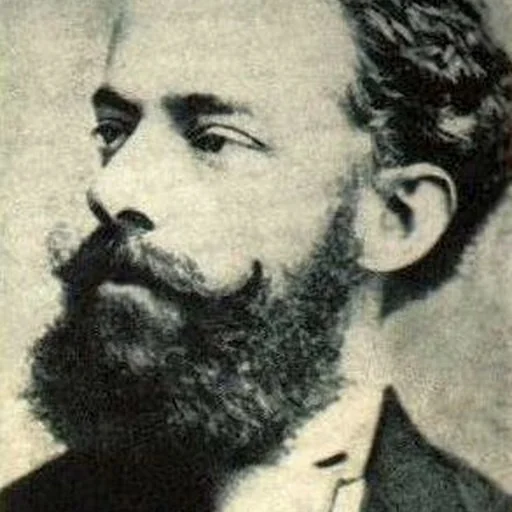
Aloysius Rosarius Amadeus Raymondus Andreas Preziosi
Amedeo Preziosi (2 December 1816 – 27 September 1882) was a Maltese painter and traveler known for his watercolours and prints of Constantinople, the Balkans, Ottoman Empire, and Romania.

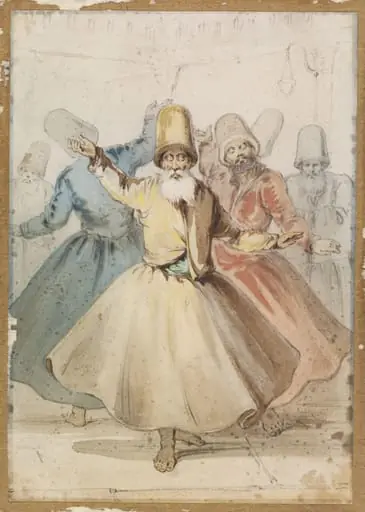
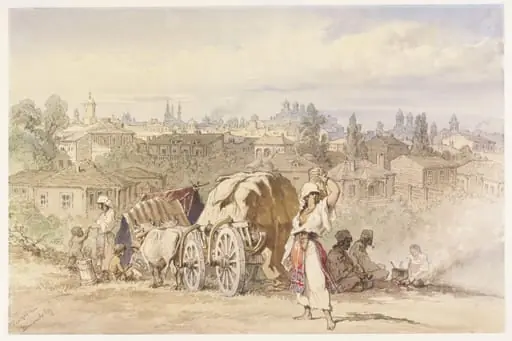
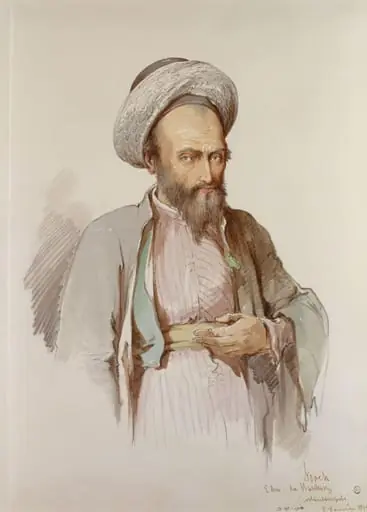
![Portrait of Trehem[?]Walid 'Abdullah, an Arab from Iraq, by Aloysius Rosarius Amadeus Raymondus Andreas Preziosi](https://artifactworldgallery.com/img/aloysius-rosarius-amadeus-raymondus-andreas-preziosi--portrait-of-trehem-walid-abdullah-an-arab-from-iraq--2476a3692d0929a5-w320.webp)
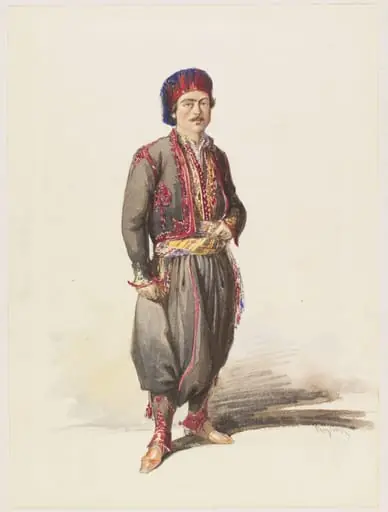
![A Seller of Milk-puddings [Mahallebi], by Aloysius Rosarius Amadeus Raymondus Andreas Preziosi](https://artifactworldgallery.com/img/aloysius-rosarius-amadeus-raymondus-andreas-preziosi--a-seller-of-milk-puddings-mahallebi--3da9fd2db017402d-w320.webp)