Artwork
Sf. Prooroc Ilie
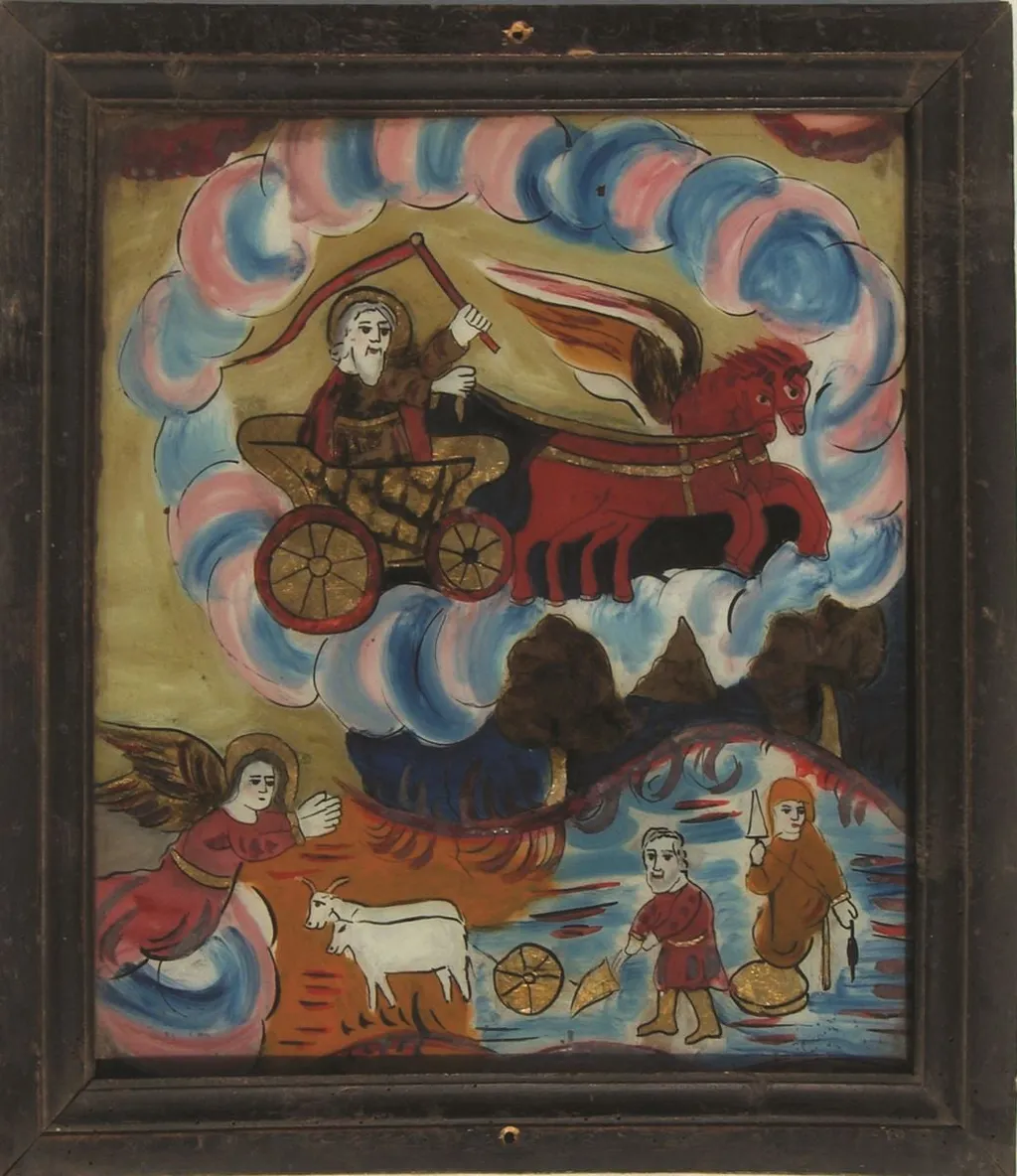
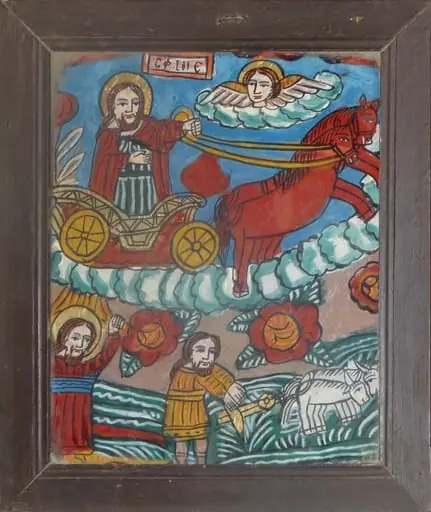
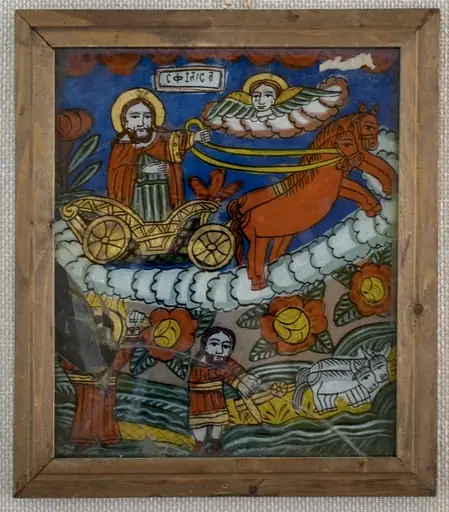
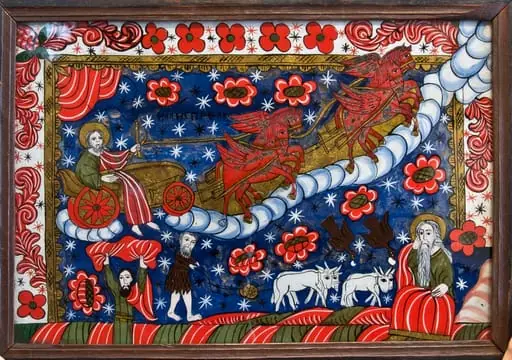
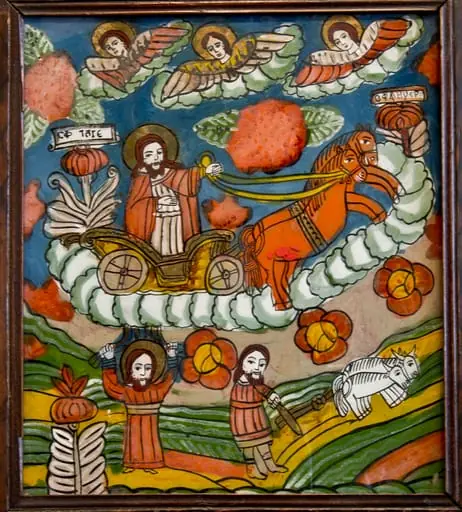
Sf. Prooroc Ilie is a drawing by Maria Prodan. It is held in the collection of the Alba Iulia Unification National Museum. This image depicts the biblical prophet Elijah ascending to heaven in a fiery chariot, as described in the Second Book of Kings.
About this work
Overview
This image depicts the biblical prophet Elijah ascending to heaven in a fiery chariot, as described in the Second Book of Kings.
This image depicts the biblical prophet Elijah ascending to heaven in a fiery chariot, as described in the Second Book of Kings. The scene is rendered with dynamic movement and vivid color, emphasizing divine intervention. The composition draws attention upward, guiding the viewer’s eye from the earthly figures below to the ascending prophet, reinforcing the spiritual narrative through visual momentum.
Subject & Meaning
The central figure is Elijah, a prophet taken alive into heaven by a whirlwind. His chariot, drawn by red horses and wreathed in flame, symbolizes divine power and transcendence. Below, an angel gestures toward the ascent, acting as a celestial messenger. The three figures on the ground—holding a goat, basket, and staff—represent ordinary witnesses to the miraculous, grounding the event in human experience.
Technique & Style
The painting employs bold, sweeping lines and high-contrast hues—deep blues, pinks, and reds—to convey motion and divine energy. Forms are simplified yet expressive, with minimal detail in the figures to emphasize symbolic action over realism. The swirling sky and flattened perspective create a sense of otherworldly drama, typical of devotional imagery that prioritizes spiritual impact over naturalistic accuracy.
History & Provenance
The work originates from a tradition of Eastern Orthodox iconography, where prophetic ascents were common subjects. Though its exact origin and artist are undocumented, its stylistic features align with 18th- to 19th-century Balkan or Anatolian religious panels. It likely served as a devotional object in a church or private chapel, intended to inspire awe and reinforce theological narratives.
Context
In Christian and Jewish traditions, Elijah’s ascension signifies divine favor and the continuity of prophecy. This image reflects a broader visual culture in which sacred stories were communicated through symbolic imagery, especially in communities with low literacy. The dramatic composition and vivid colors were designed to evoke emotional and spiritual responses, making theological concepts accessible through visual storytelling.
Legacy
This image contributes to a long-standing visual language in religious art that uses motion, celestial elements, and witness figures to depict transcendence. While not widely known outside regional traditions, its stylistic choices echo in later folk and liturgical art across Eastern Europe and the Levant, preserving a mode of sacred narrative that values symbolic clarity over realism.
Artist & collection
Artist
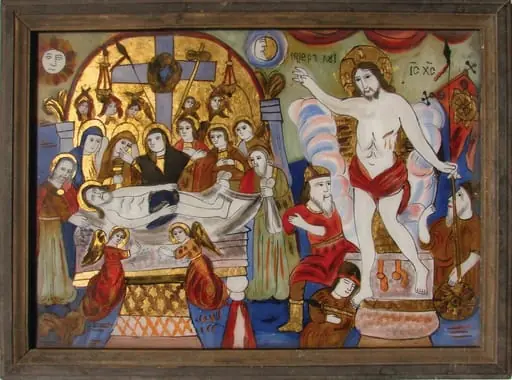
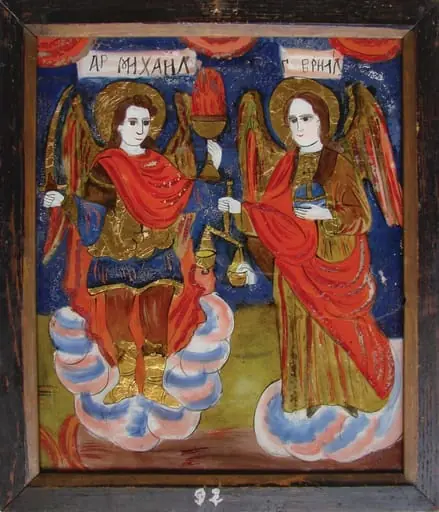
Maria Prodan's work belongs to a traditional era of religious art. She painted "Sfinții Mihail și Gavril" and drew "Prohodul și Învierea lui Iisus". These pieces, along with "Iisus Hristos arhiereu și învățător,…
Museum
Alba Iulia Unification National Museum
Continue through works from the same source collection.