Artwork
Iisus Hristos Mare Arhiereu și Învățător
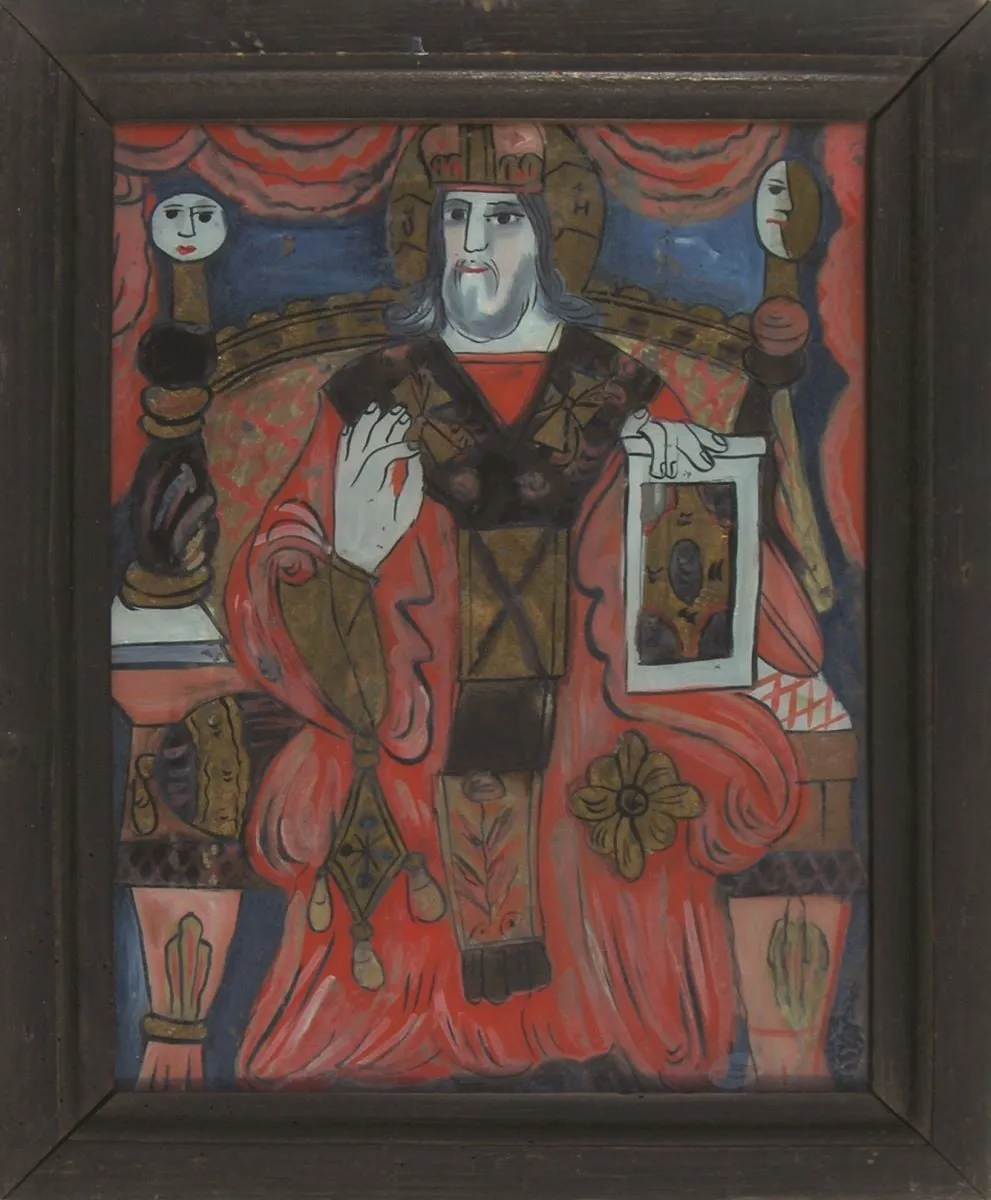
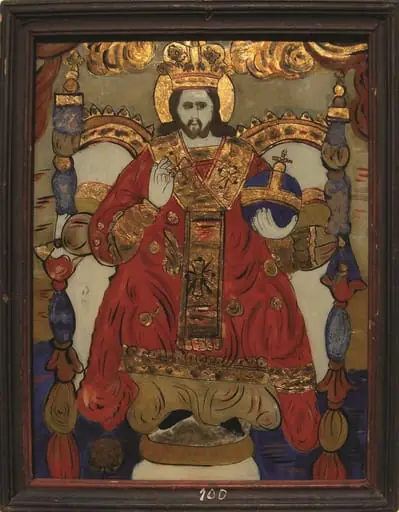
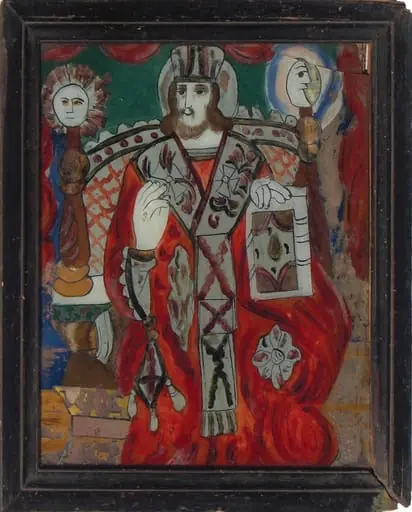
Iisus Hristos Mare Arhiereu și Învățător is a drawing by Petru Prodan. It is held in the collection of the Alba Iulia Unification National Museum. This image depicts a solemn, towering figure in vivid red garments, standing beneath a blue sky streaked with red clouds.
About this work
Overview
The composition uses flat, unmodulated colors and lacks perspective or shading, emphasizing symbolic presence over naturalism.
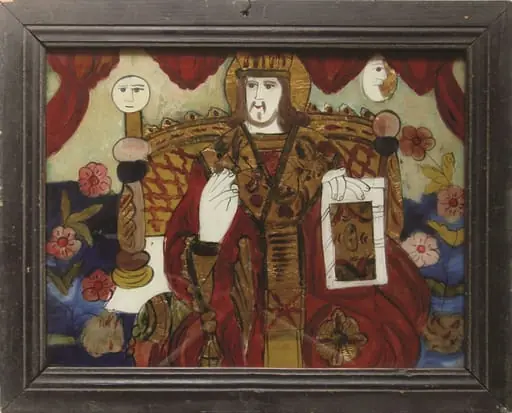
This image depicts a solemn, towering figure in vivid red garments, standing beneath a blue sky streaked with red clouds. The figure, crowned and with hands raised, holds a small framed portrait resembling a human face. Two simplified facial forms float symmetrically on either side. The composition uses flat, unmodulated colors and lacks perspective or shading, emphasizing symbolic presence over naturalism.
Subject & Meaning
The central figure is identified as Jesus Christ as High Priest and Teacher, a title rooted in Orthodox Christian tradition. The raised hands suggest blessing or invocation, while the framed portrait may represent Christ’s dual nature—divine and human. The floating faces likely symbolize divine witnesses or apostles. The imagery conveys spiritual authority rather than earthly narrative.
Technique & Style
The work employs a flat, decorative style with bold, unshaded areas of red and blue. Forms are simplified, lacking volume or depth, and spatial relationships are non-naturalistic. The background consists of abstract geometric shapes, reinforcing a hieratic, icon-like structure. This approach aligns with traditional Eastern Christian iconography, prioritizing spiritual resonance over realism.
History & Provenance
The painting originates from a religious context in Eastern Europe, likely created for liturgical use or private devotion. Its stylistic features suggest production within a regional icon-painting tradition, possibly in the 19th or early 20th century. Exact origin and artist remain undocumented, but its form reflects enduring ecclesiastical conventions in Orthodox communities.
Context
This image belongs to a broader tradition of Orthodox Christian icons that depict Christ in majesty, often as Pantocrator or High Priest. Such images were used to mediate the divine in worship, emphasizing theological truths over individual expression. The simplified forms and symbolic colors reflect doctrinal priorities, not aesthetic innovation, aligning with centuries-old liturgical visual language.
Legacy
The painting continues to function as a devotional object within Orthodox communities, preserving visual formulas passed down through generations. While not widely known outside religious circles, it exemplifies the resilience of traditional iconography in the face of modern artistic shifts. Its enduring form underscores the role of sacred imagery in sustaining spiritual identity.
Artist & collection
Artist
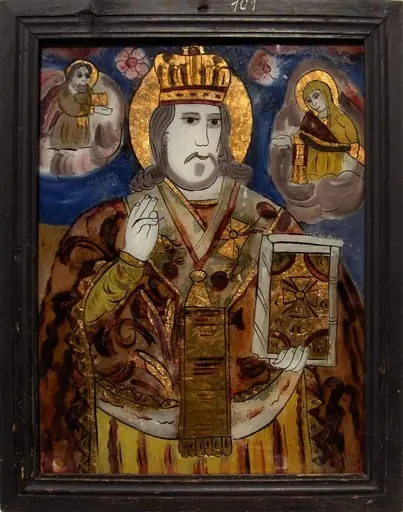
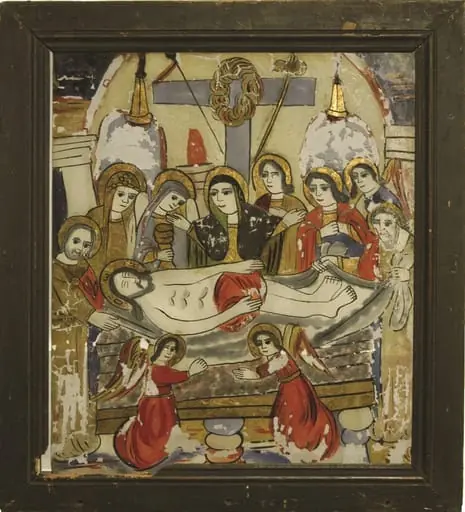
Petru Prodan painted religious scenes in the icon tradition. His works include *Sf. Nicolae* and *Prohodul lui Iisus*, showing saints and biblical figures in gold-leaf settings. The figures are stiff and frontal,…
Museum
Alba Iulia Unification National Museum
Continue through works from the same source collection.