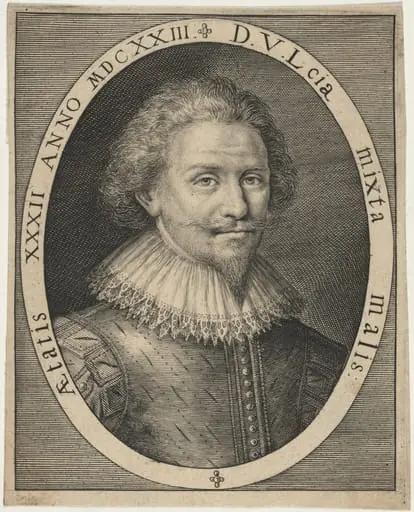
Artwork
Frederick Henry of Nassau
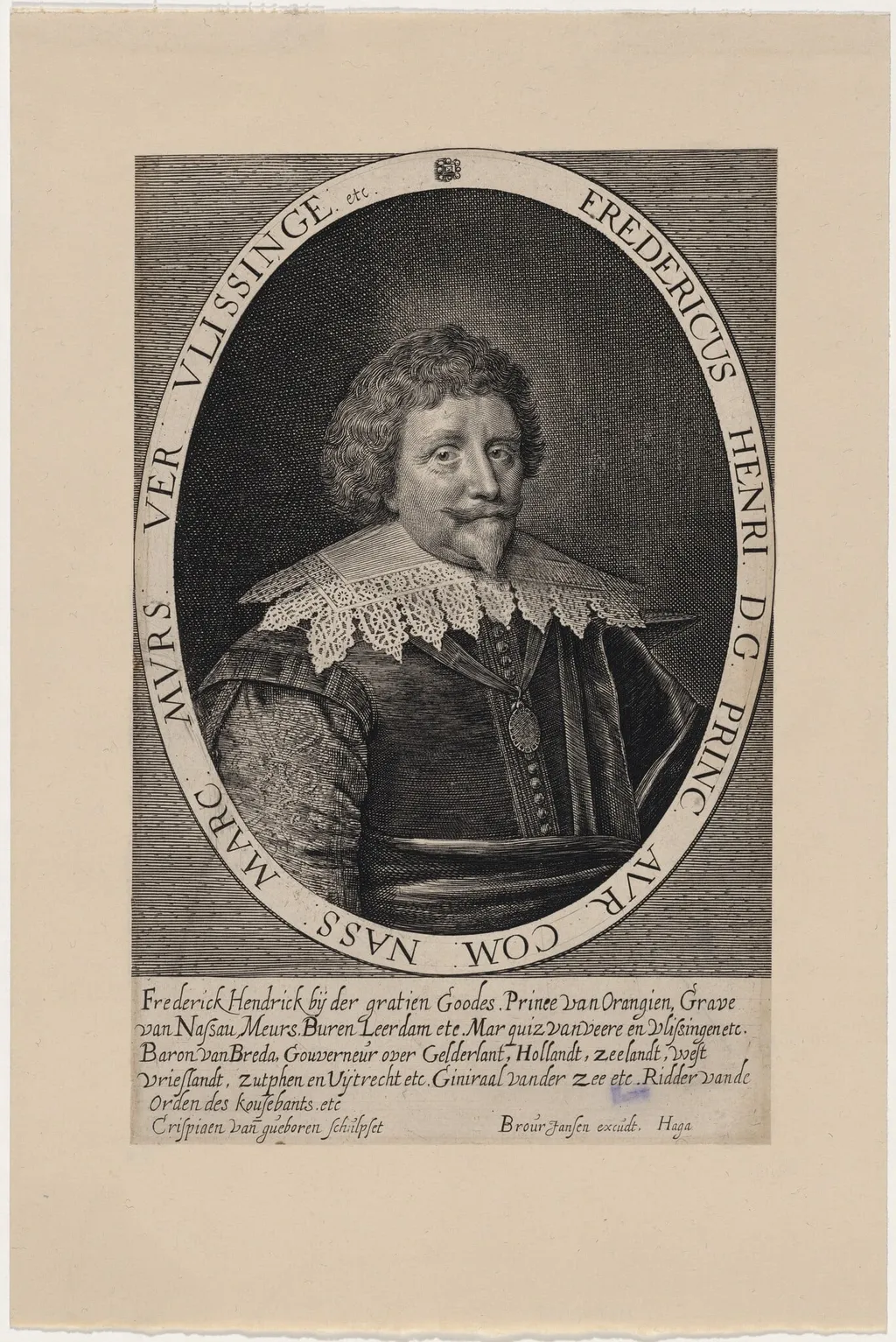
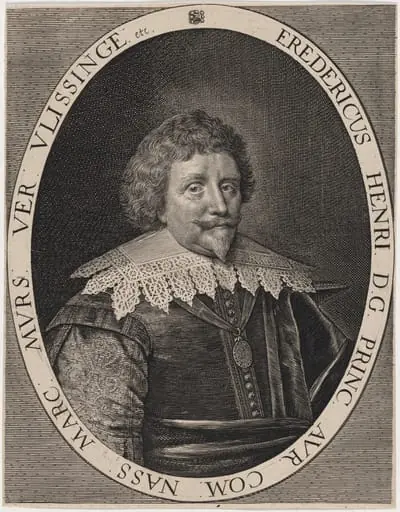
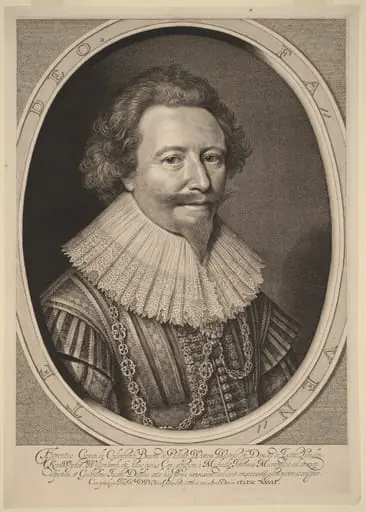
Frederick Henry of Nassau is an ink print by the Baroque artist Crispyn van den Queboorn. It dates from 1628 and is held in the collection of the National Gallery of Art.
About this work
Overview
This 1628 engraving by Crispyn van den Queboorn depicts Frederick Henry of Nassau, a prominent Dutch statesman and military leader. Rendered in monochrome, the portrait follows the conventions of early 17th-century printmaking, emphasizing clarity and formal dignity. The image is contained within a circular frame, a common format for commemorative portraits in printed form during this period.
Subject & Meaning
Frederick Henry is portrayed with solemn composure, dressed in the formal attire of a nobleman: a high lace collar and a dark doublet.
Frederick Henry is portrayed with solemn composure, dressed in the formal attire of a nobleman: a high lace collar and a dark doublet. His hand rests lightly on a hat, a gesture suggesting authority and restraint. The surrounding inscriptions list his titles, reinforcing his political and aristocratic status. The plain background directs focus entirely to the figure, underscoring his public identity rather than personal setting.
Technique & Style
Executed in engraving, the portrait relies on fine incised lines on a metal plate to create tonal variation and texture. The lace collar and fabric folds are rendered with meticulous cross-hatching, while the face is modeled with subtle gradations. The circular border and surrounding text are carefully integrated, reflecting the precision expected in official portraiture. The style is restrained, prioritizing clarity over ornamentation.
History & Provenance
Created in 1628, the print likely served to disseminate Frederick Henry’s image across the Dutch Republic during his rise as stadtholder. Such engravings were commonly distributed to affirm leadership and unify public perception. Van den Queboorn, known for his reproductive prints, produced this work under the patronage or commission of those aligned with the House of Orange-Nassau.
Context
In the early 1600s, engraved portraits were vital tools for political communication in the Dutch Republic, where print culture flourished. Frederick Henry’s image, circulated widely, helped consolidate his authority amid ongoing conflict with Spain. The format—circular with inscribed titles—echoes earlier heraldic traditions adapted for the age of print, blending nobility with emerging public media.
Legacy
This engraving remains a representative example of how Dutch leadership was visually codified in the early modern period. Though not widely exhibited today, it contributes to the historical record of how political figures were portrayed in print. Its technical precision and formal composition reflect the values of order and dignity central to the Republic’s self-image.
Artist & collection