Artwork
Princess Henrietta Catharina, Sister of William II of Orange
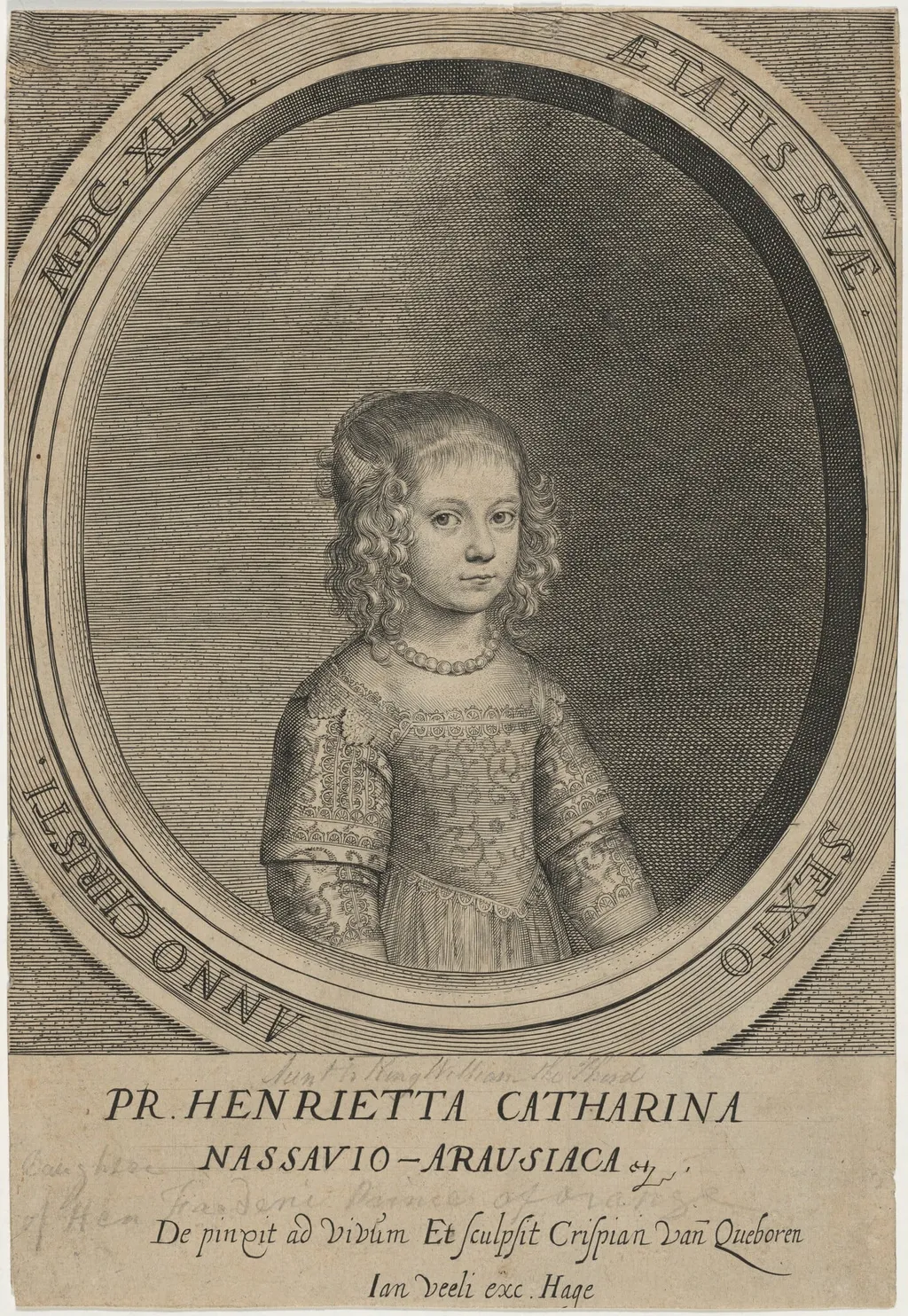
Princess Henrietta Catharina, Sister of William II of Orange is an ink print by the Baroque artist Crispyn van den Queboorn. It dates from 1628 and is held in the collection of the National Gallery of Art.
About this work
Overview
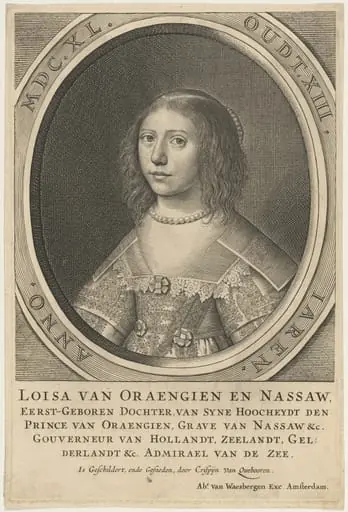
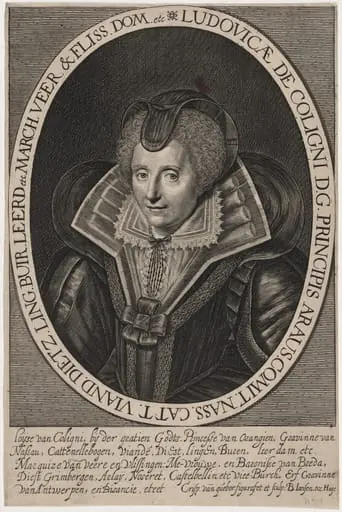
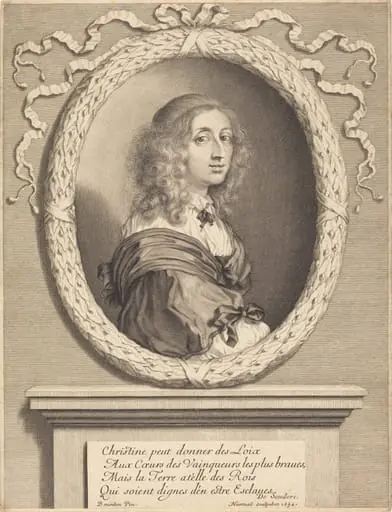
This 1628 engraving by Crispyn van den Queboorn depicts Princess Henrietta Catharina, daughter of Maurice of Nassau and sister to William II of Orange. Rendered in monochrome, the portrait emphasizes precision and restraint, typical of Dutch printmaking of the period. The image was likely produced for distribution among noble circles, serving both as a likeness and a symbol of dynastic identity.
Subject & Meaning
The plain background directs focus to her figure, reinforcing the portrait’s function as a formal representation rather than a narrative scene.
The princess is portrayed with a composed, solemn demeanor, reflecting the expected decorum of aristocratic women in the early 17th century. Her attire—high collar, intricate lace cuffs, and pearl necklace—signals her status and adherence to courtly fashion. The plain background directs focus to her figure, reinforcing the portrait’s function as a formal representation rather than a narrative scene.
Technique & Style
Van den Queboorn employed fine, controlled lines to model form and texture, particularly in the lace and hair. The crisscrossed hatching around the figure creates subtle tonal gradations, enhancing volume without color. Engraving on metal required meticulous planning; each line was incised by hand, making this work a testament to the engraver’s skill and patience in reproducing delicate details.
History & Provenance
Created in 1628, the print emerged during a period of political consolidation within the House of Orange. As a member of the ruling family, Henrietta Catharina’s image would have circulated among allies and courtiers to affirm lineage and legitimacy. While specific early ownership records are sparse, such portraits were commonly collected by European nobility and institutions.
Context
In the Dutch Republic, portraiture in print form allowed for wider dissemination of elite likenesses than painted versions. Engravings like this one served as tools of political visibility, especially for women whose public roles were limited. Van den Queboorn’s work aligns with a broader tradition of Dutch printmakers who translated courtly imagery into accessible, reproducible formats.
Legacy
Though not widely known today, the engraving exemplifies the technical rigor and social function of early modern printmaking. It preserves a visual record of a lesser-documented noblewoman and reflects how familial identity was visually constructed in a republic where monarchy was formally absent but dynastic prestige remained potent.
Artist & collection