Artwork
Cană ce are corpul bitronconic și baza îngustată. Prezintă toartăde formă semicirculară. Decorul este dominat de motive geometrice și este compus dintr-o succesiune de linii curbe și puncte. Cromatică: fond: brun; motive: cărămiziu; verde; alb; roșu.
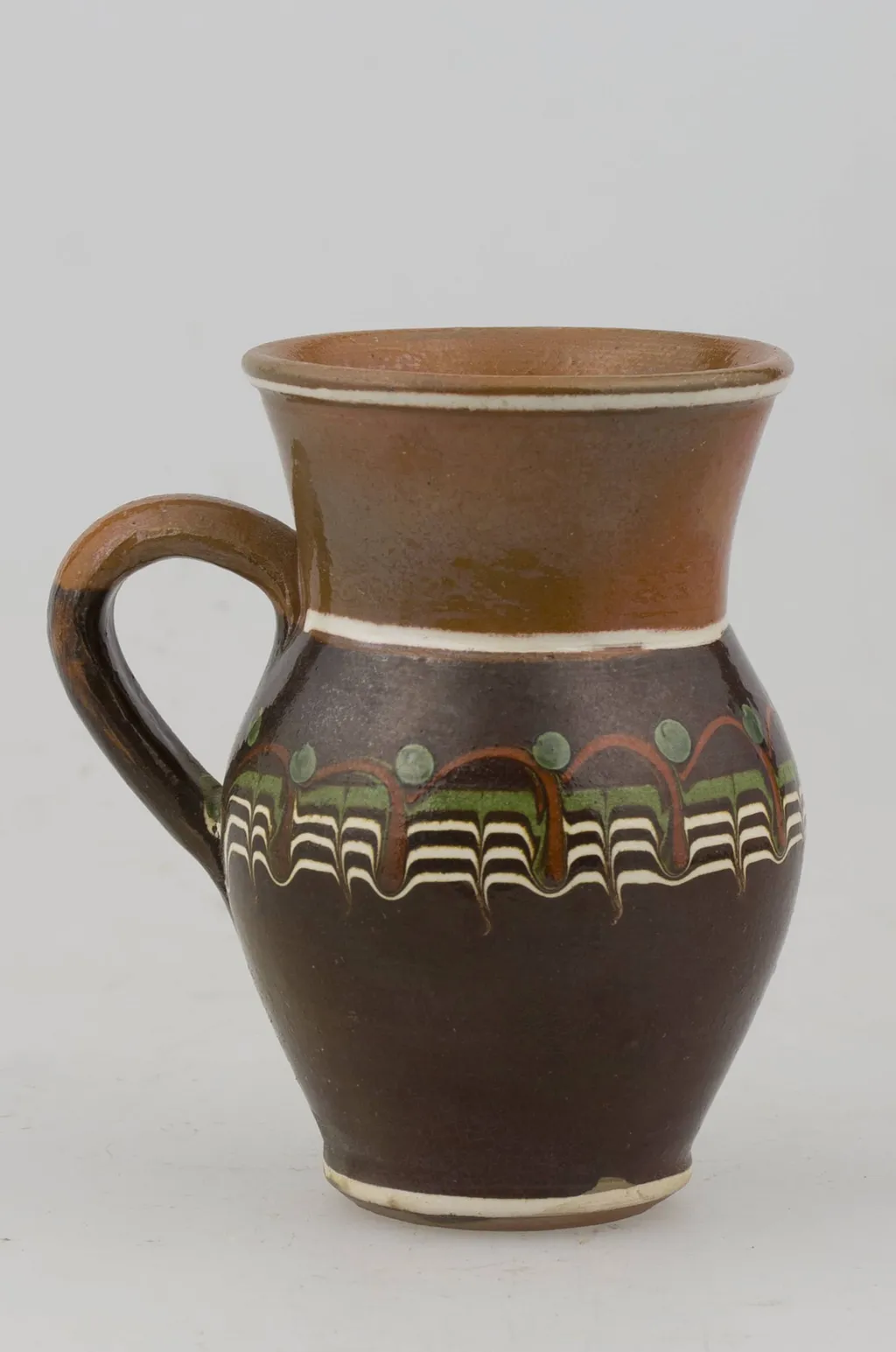
Cană ce are corpul bitronconic și baza îngustată. Prezintă toartăde formă semicirculară. Decorul este dominat de motive geometrice și este compus dintr-o succesiune de linii curbe și puncte. Cromatică: fond: brun; motive: cărămiziu; verde; alb; roșu. is a photography by Răducanu Ion. It is held in the collection of the ASTRA National Museum Complex. The object is a ceramic jug featuring a slightly flared, trumpet‑like silhouette that widens toward the rim.
About this work
Overview
The object is a ceramic jug featuring a slightly flared, trumpet‑like silhouette that widens toward the rim. Its body is composed of a dark brown base, while the upper portion lightens to an orange‑tinged hue. A simple, narrow handle attaches to the side, and the overall form is compact yet distinctive.
Subject & Meaning
The decorative program consists of a semicircular band encircling the vessel, filled with curvilinear lines and punctuated by dots. The geometric motifs, rendered in green, white, and red against the brown background, suggest a stylized, possibly symbolic language that emphasizes rhythm and balance.
Technique & Style
The jug is executed in a bitronic (biconical) shape, a form common in regional pottery traditions. The surface treatment involves painted geometric patterns applied after the firing, using mineral pigments that produce the vivid green, white, and red accents while preserving the earthy tone of the clay.
History & Provenance
The piece originates from a collection of everyday ceramic ware that has been recognized for its aesthetic qualities. It is documented within the holdings of a museum of ethnography, where such utilitarian objects are preserved as examples of cultural craftsmanship.
Context
The jug reflects a broader tradition of functional pottery that doubles as decorative art, typical of the region’s domestic material culture. Its geometric ornamentation aligns with similar motifs found on contemporary vessels, indicating shared visual vocabularies among local artisans.
Artist & collection
Artist
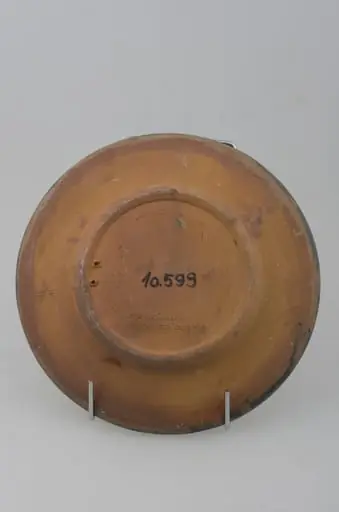
Ion Răducanu made earth-toned ceramics marked with tight geometric patterns. His green-glazed jar features stacked rings around the body and a white zig-zag on the neck, while the back shows his name and “Oboga jud.…

 Farfurie de formă tronconică cu pereții rotunjiți, marginea oblică, lată și buza crestată. Decor cu motive geometrice pe margine: linii frânte și curbe; pete de culoare; central prezintă o floare stilizată. Cromatică: fond: verde; motive: brun; verde deschis; alb.
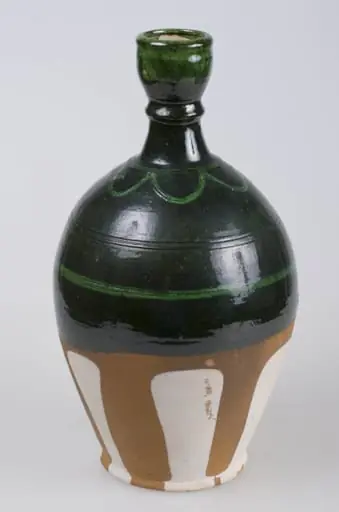 Vasul este zvelt și înalt, cu baza îngustă ce se lărgește spre pântecul vasului înălțat, gâtul subțire și lung, buza mai groasă și lată. De jumătatea gâtului se prinde toarta cu țâț printr-un guler. Jumătatea de jos este nesmălțuită și prezintă dungi verticale, de vopsea albă. Jumătatea de sus este smălțuită în verde închis. Decorul este format dintr-un brâu de semicercuri în jurul gâtului - două dungi paralele pe pântec realizat prin incizie de culoare verde închis. Cromatică: alb; maro; verde.
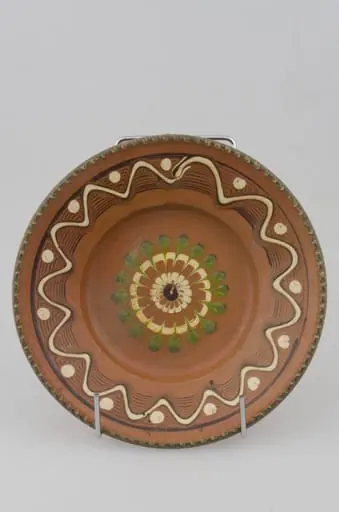 Farfurie cu pereții rotunjiți, marginea oblică lată și buza crestată. Prezintă decor geometric pe margine: linii frânte și curbe; pete de culoare; central avem o floare stilizată. Cromatică: fond: maro; motive: verde; alb.
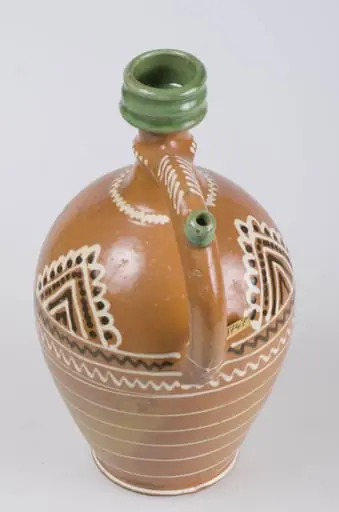 Vasul este zvelt și înalt, cu baza îngustă ce se lărgește spre pântecul vasului situat în partea de sus a lui, gâtul subțire, buza vasului largă, în trei trepte suprapuse, smălțuită verde. Până spre pântecul vasului, de la bază, opt linii circulare, paralele (în ultimele două a fost pictat motivul valului). Pe pântecul vasului decor geometric în alb și maro închis. Gâtul vasului marcat de un zig-zag alb. Toarta este decorată cu puncte și linii albe. Cromatică: maro; verde; alb.
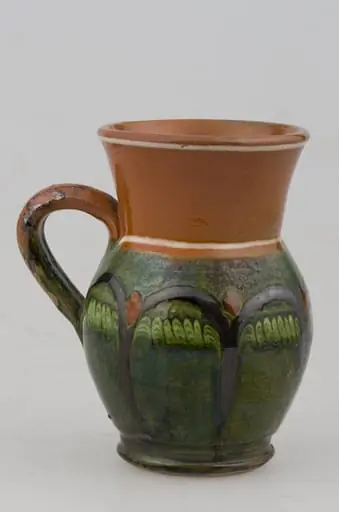 Vas bitonconic ce are corpul ușor bombat, buza lată și evazată. Prezintă o toartă decorată cu linii curbe și puncte; aceleași motive se găsesc și pe corpul ulcelei. Smălțuită la interior și la exterior. Cromatică: verde; negru; brun; alb.
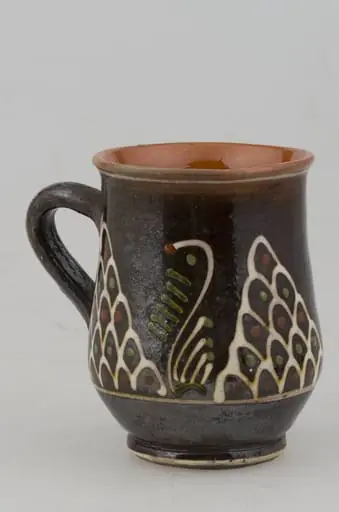 Cană cu corpul ușor bombat și buza evazată. Prezintă o toartă ce pleacă de la aproximativ doi centimetri sub buză până în jumătatea inferioară, pe maximul diametrului corpului. Decorat format din linii curbe, puncte și motive vegetale stilizate. Smălțuită la interior și la exterior. Cromatică: fond: brun; motive: verde; roșu; alb.
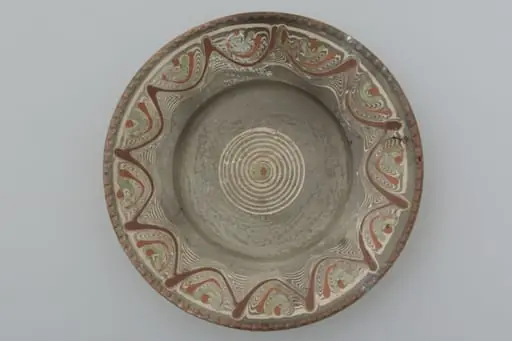 Farfurie cu pereții rotunjiti, marginea oblică lată cu buza crestată. Decor geometric pe margine: linii frânte și curbe, sugerând imaginea unui soare sau flori; pete de culoare; jirăvire. Pe fundul vasului dispusă o spirală cu o bulină verde și un punct maro în mijloc. Baza inelară perforată pentru introducerea unei sfori în vederea atârnării. La posterior, pe fund ștanțat ”Răducanu Ion Oboga jud. Olt''. Cromatică: fond: brun; motive: verde; alb; maro.
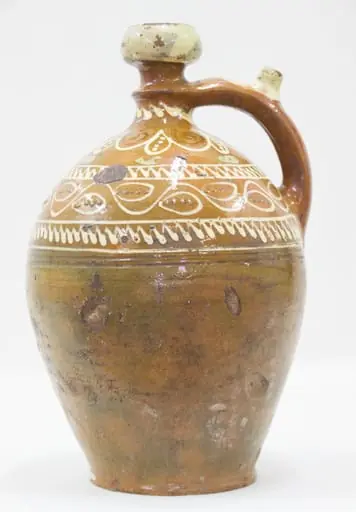 Ulcior de formă bitronconică cu gura îngustă și rotundă, cu o toartă și un orificiu pentru scurgerea lichidului, smălțuit și decorat pe jumătatea superioară cu motive vegetale (ghirlande) și geometrice (spirale; patru cercuri concentrice cu o linie șerpuită între ele).Cromatică: maro (fond), decor - galben, bej, alb, verde. Jumătatea inferioară a obiectului este nesmălțuită.
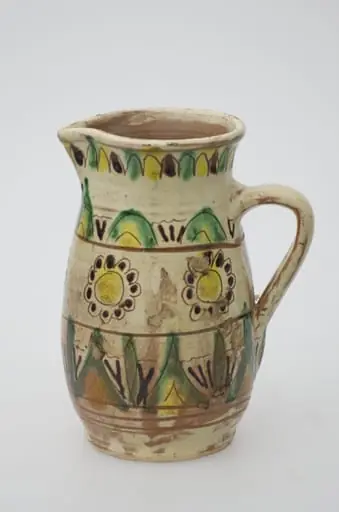 Recipient tronconic smălțuit, pe bază inelară, de formă aproximativ ovoidală cu gura largă prevăzută cu cioc. Prezintă toartă laterală. Decor delimitat de trei linii dispuse circular, ilustrând șiruri de linii arcuite, triunghiuri, semiovaluri, buline maron înscrise în cercuri. Cromatică: fond: alb; motive: verde, galben, maron.
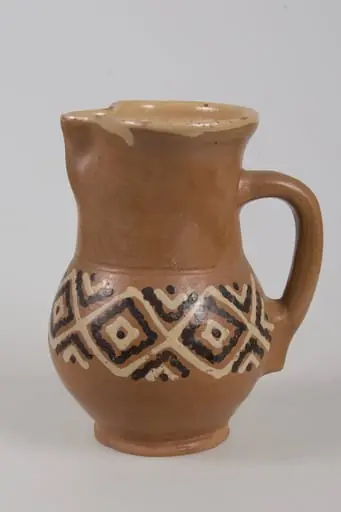 Vas din lut de formă sferoidală cu inel la bază, gât înalt și drept, cu toartă prinsă între gât și mijlocul vasului. Capătul inferior al toartei are un pinten. Angobat in interior cu smalț la exterior și interior. Decor cu motive geometrice: brâu de romburi pictat cu corn in hume naturale; două dungi imprimate cu piaptănul. Prezintă cioc de scurgere. Cromatică: fond: alb-crem în interior; cărămiziu în exterior; motive: alb; negre.
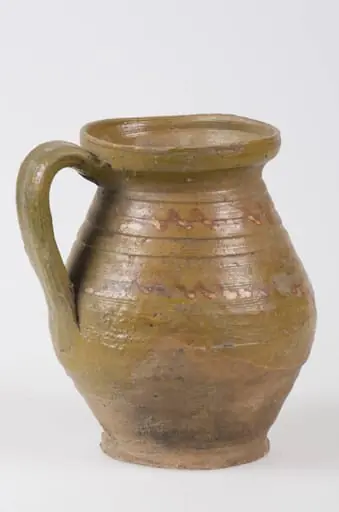 Vas bitronconic cu gât scurt și foarte profilat, cu gura înaltă și dreaptă. Prezintă o toartă care pleacă de sub buză și se unește cu corpul sub zona diametrului maxim. Este smălțuit în interior și la exterior (parțial nesmălțuit în partea de jos). În partea superioară prezintă un decor geometric realizat din cinci linii incizate și două linii în val pictate. Toarta este decorată cu puncte. Cromatică: fond: cărămiziu și pe alocuri verziu; motive: alb; maroniu. Prezintă uzură funcțională.
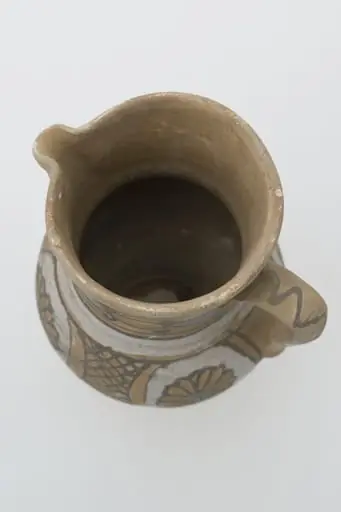 Cană de vin de formă bitronconică cu gâtul lung și buză dreaptă cu cioc. Registrele ornamentale se succed de jos în sus, delimitate de cercuri concentrice, și prezintă pe corpul vasului motive florale și geometrice sub formă de hașură întrerupte de partea de sus de o zonă cerc alb mai gros și mai apoi continuat cu cercuri concentrice ce delimitează de mijloc și de sub buză două cercuri albe groase (angoba). Cromatică: fond: alb; cărămiziu; motive: maro; gri; albastru.
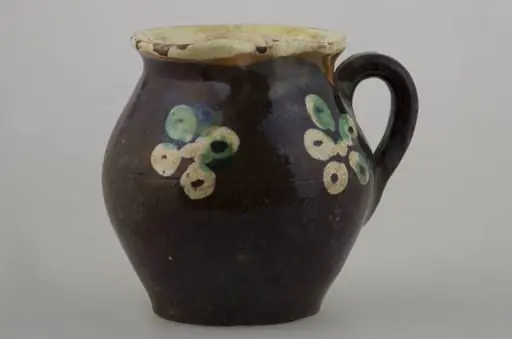 Vas de lut de mici dimensiuni de formă bitronconică și cu cioc de scurgere a apei la partea superioară cu gât scurt și buza evazată. Prevăzută cu o toartă care pornește de pe umărul vasului și se unește cu corpul sub diametrul maxim. Smălțuită în interior și exterior. În jumătatea superioară este decorată de o parte și de alta a torții cu motive florale: flori cu patru respectiv cinci petale. Toarta este decorată cu o linie albă. Cromatică: interior: alb; exterior: maro; motive: alb; verde.
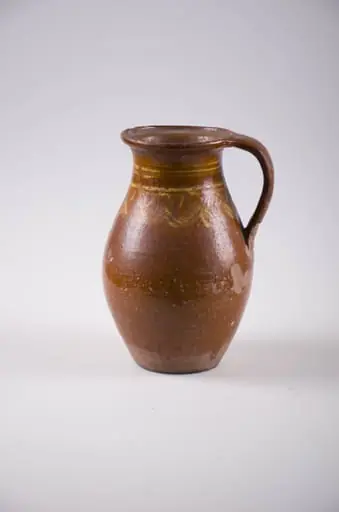 Oală de formă bitronconică cu buza evazată și cu o toartă. Decorată cu ornamente în formă de semicercuri dispuse în jurul gâtului. Este smălțuită pe toată suprafața exterioară. Cromatică: fond: cărămiziu; motive: galben.
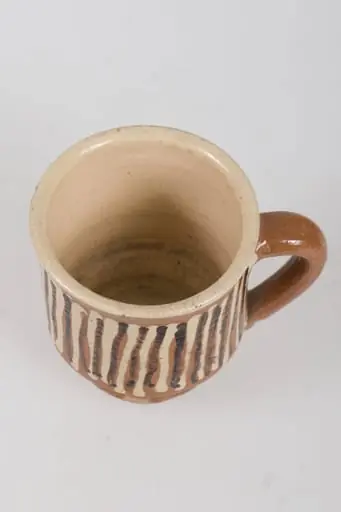 Vas de formă cilindrică cu baza puțin mai îngustă. Prezintă o toartă prinsă de sub gură și până la bază. Angobat cu albeală în interior și exterior. Smălțuit în interior și exterior. Decorul este compus din motive geometrice: dungi paralele albe și negre trase cu cornul pe pereți.