Artwork
Maharaja of Rewa and Sardars
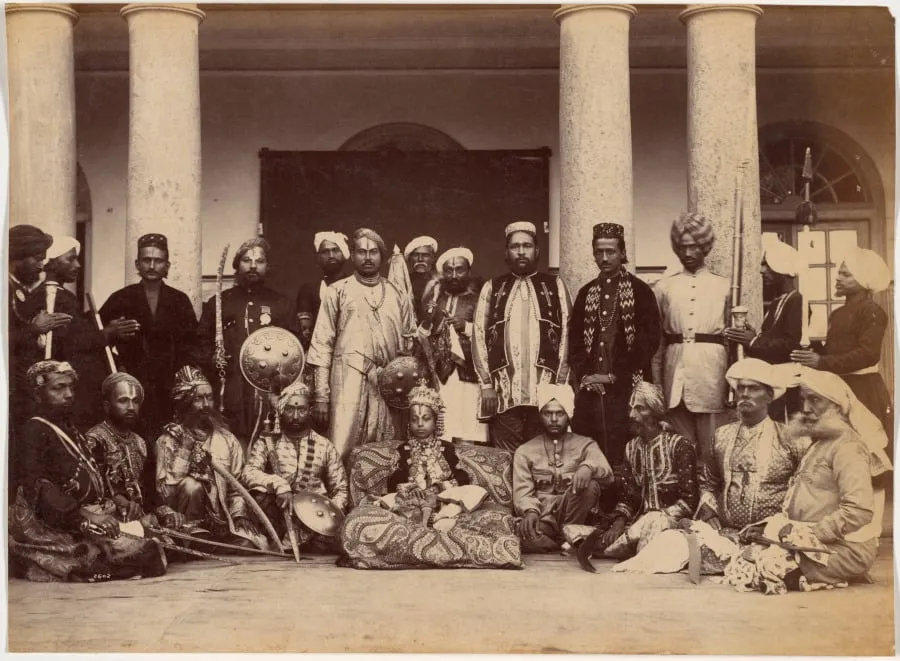
Maharaja of Rewa and Sardars is a photography by the Impressionist artist Raja Deen Dayal. It dates from 1886 and is held in the collection of the Cleveland Museum of Art.
About this work
Overview
This photograph by Raja Deen Dayal depicts the Maharaja of Rewa seated prominently at the center, surrounded by sardars (military officials), within an architecturally adorned setting featuring arches and pillars. The composition emphasizes the Maharaja's importance through spatial arrangement.
Subject & Meaning
The image contrasts the Maharaja's central position of power with the blend of cultural influences in the scene. While the Maharaja and his attendants wear traditional attire, the educational setting incorporates Western elements, reflecting the post-1858 British policy of combining Western and local education for Indian rulers.
Technique & Style
Deen Dayal employs compositional hierarchy to convey social hierarchy, placing the Maharaja front and center. The photograph's setting, with its arches, pillars, and mix of traditional and Western educational tools, adds depth to the portrayal of cultural intersection.
History & Provenance
Created after 1858, this photograph reflects the era's British influence on Indian education and governance. The specific history of the photograph's creation and ownership is not detailed here, but its context situates it within the late 19th-century Indian princely states under British rule.
Context
The photograph is set against the backdrop of the British Empire's increased influence over India post-1858, particularly in educating Indian rulers in both European and local cultures. This duality is visually represented in the educational scene depicted.
Artist & collection

Artist
Raja Lala Deen Dayal, famously known as Raja Deen Dayal) was an Indian photographer.

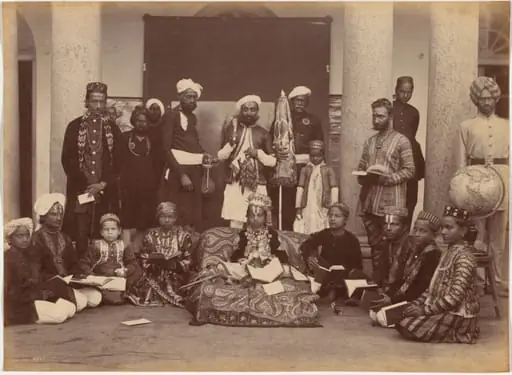 Maharaja of Rewa and Classmates
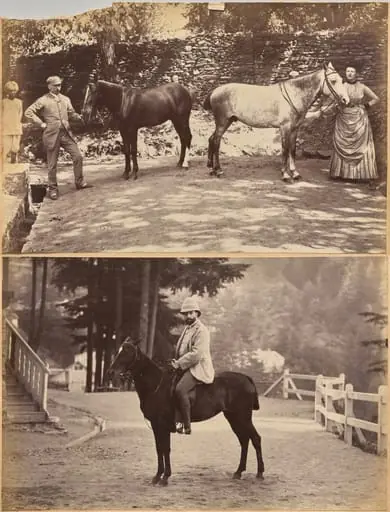 Col. F. G. Oldham (recto, top); Mr. Nowell, Shimla (recto, bottom)
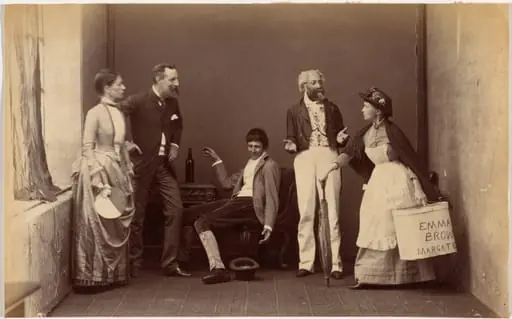 Fancy Group, Indore I
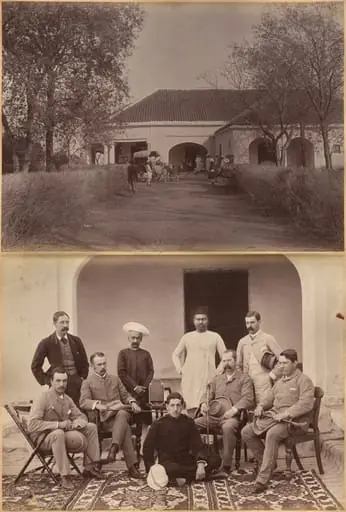 Civil officers at Jhansi (recto); Mr. William's House, Jhansi (verso)
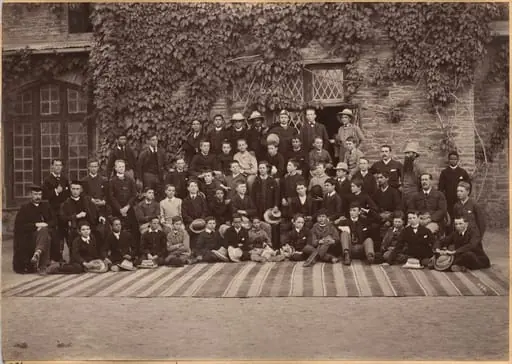 Middle Class Students and Staff, Bishop Cotton School, Shimla (verso)
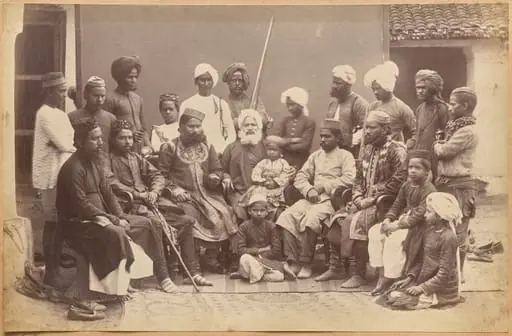 Mowhri Rahman Alli Khan family, Rewa (recto, bottom)
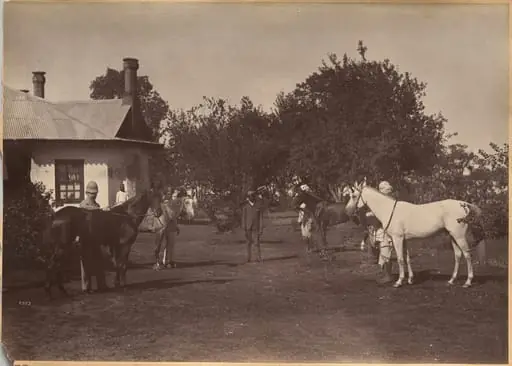 Lord William Beresford's horses
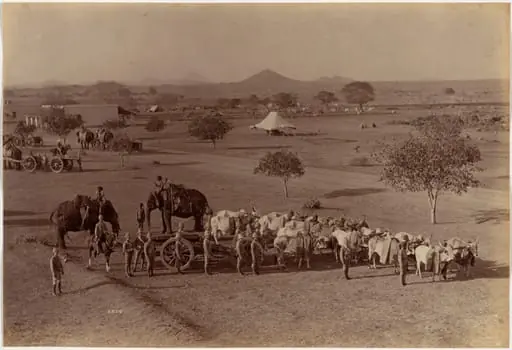 Heavy Field Battery, Jhansi
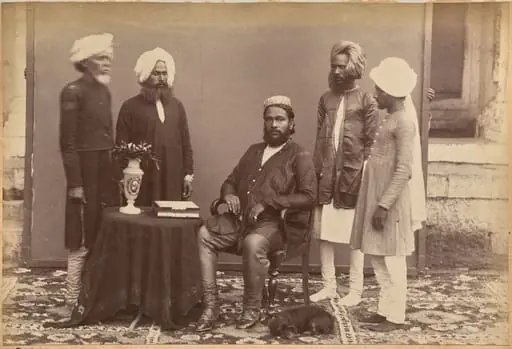 Ramkishore Singh, Rewa (recto, top)
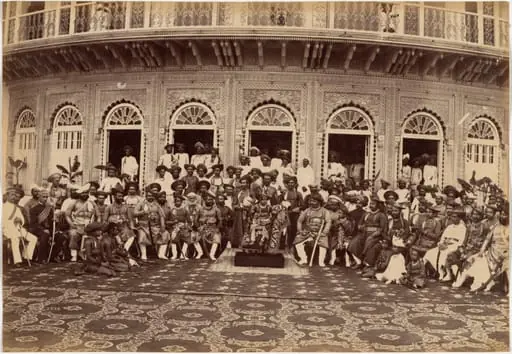 Maharaja Scindia, Nobles, and High Officials, Gwalior
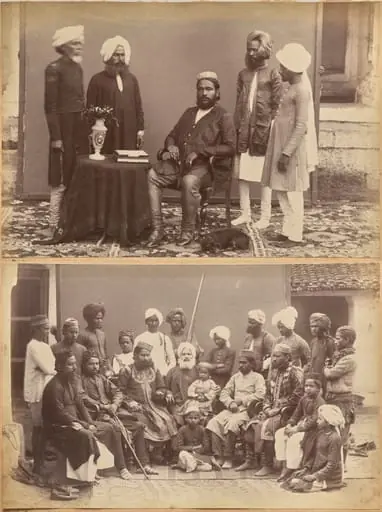 Ramkishore Singh, Rewa (recto, top); Mowhri Rahman Alli Khan family, Rewa (recto, bottom)
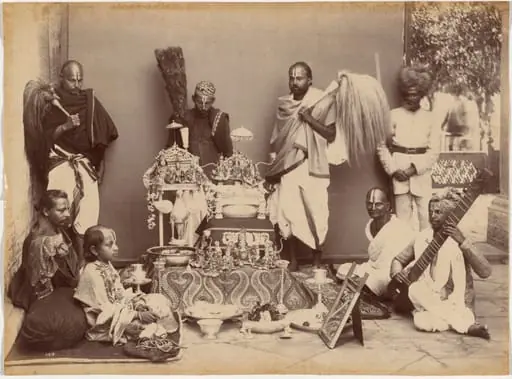 Maharaja of Rewa in Prayer
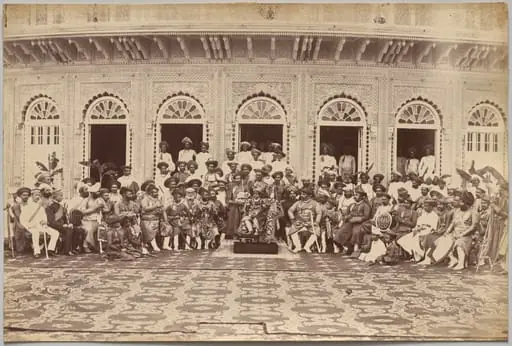 Maharaja of Scindia, nobles, and high officials, Gwalior
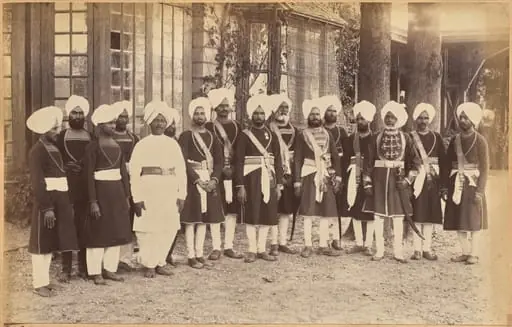 Servants of His Honor the Gov. of Punjab
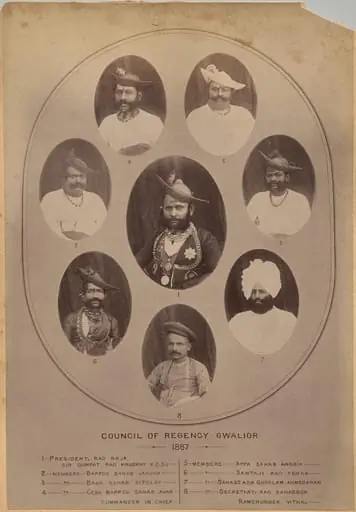 Council of Regency, Gwalior
 Ramkishore Singh of Rewa