Artwork
Iris curtopetala
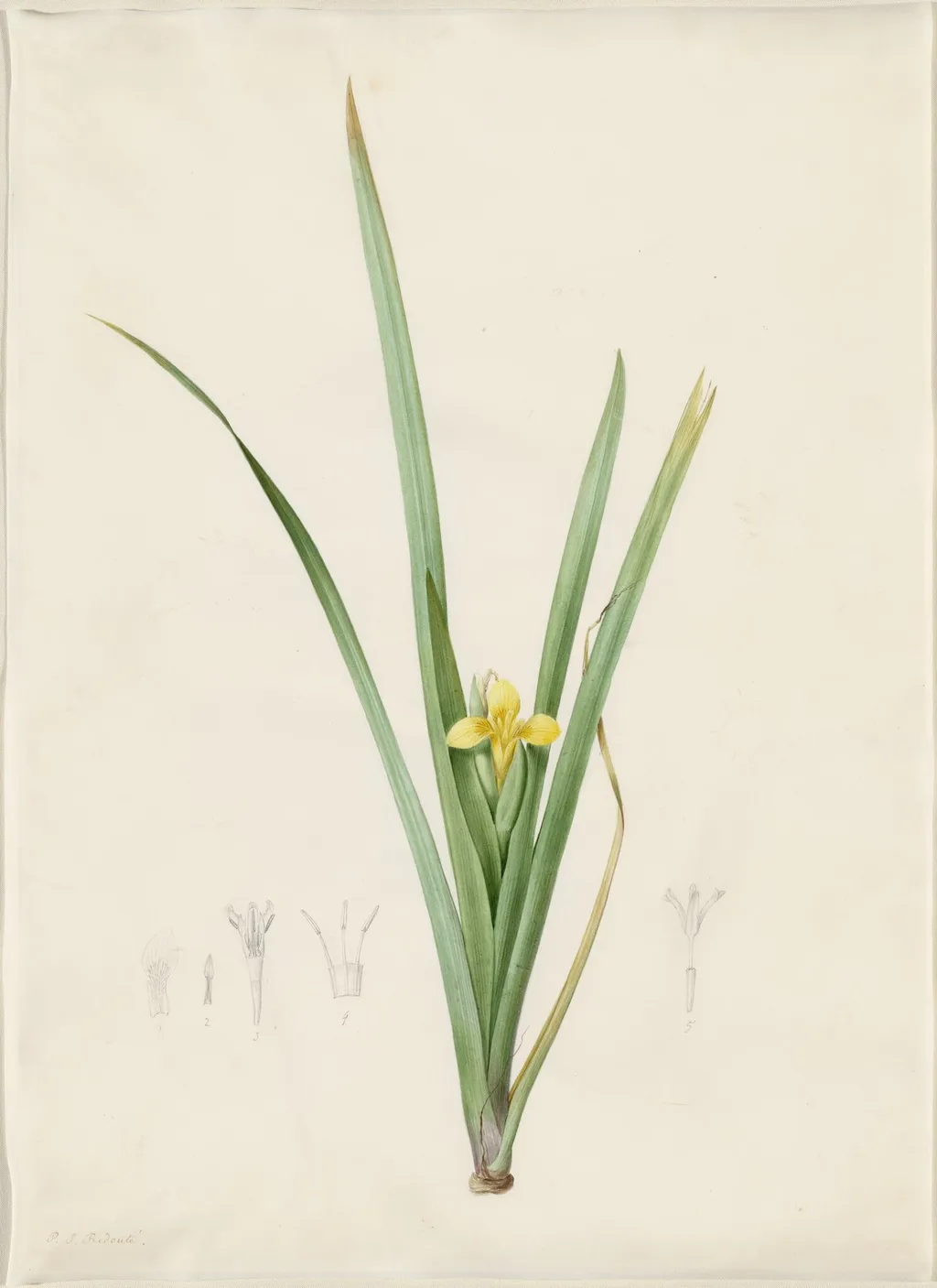
Iris curtopetala is a watercolor drawing by the Romanticist artist Pierre Joseph Redouté. It dates from 1809 and is held in the collection of the National Gallery of Art.
About this work
Overview
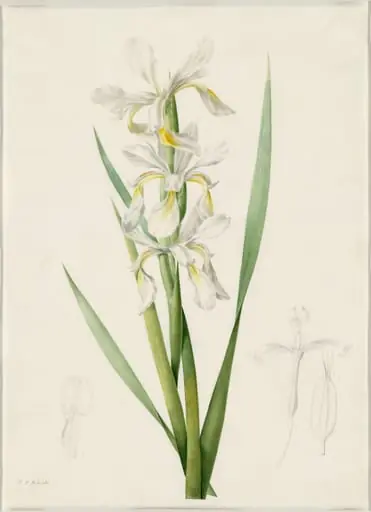
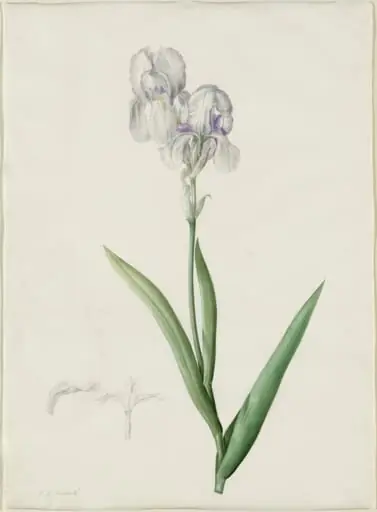
Iris curtopetala is a drawing created by Pierre-Joseph Redouté in 1809 using watercolor and graphite on vellum. It is a detailed illustration of an iris plant, showcasing the artist's skill in botanical art.
Subject & Meaning
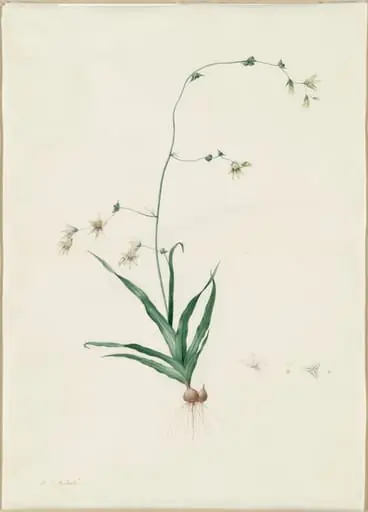
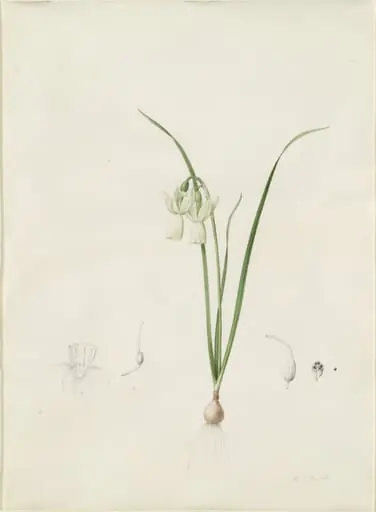
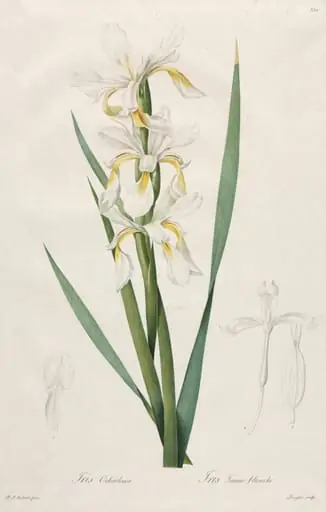
The drawing depicts a single iris plant with yellow petals and green leaves against a plain white background. Additional sketches of iris parts, such as buds and roots, are visible in the corners, highlighting the plant's various features.
Technique & Style
Redouté's work is characterized by precise renderings of botanical subjects. He employed watercolor and graphite to capture the intricate details of the iris, including the veins on its leaves and the shape of its petals, demonstrating a style typical of scientific illustrations.
History & Provenance
The drawing is part of the National Gallery of Art's collection in Washington. Redouté, who worked as an official court artist to Marie Antoinette, continued his career through significant historical events, including the French Revolution.
Artist & collection
Artist
Pierre-Joseph Redouté (French pronunciation: , 10 July 1759 – 19 June 1840), was a painter and botanist from the Austrian Netherlands, known for his watercolours of roses, lilies and other flowers at the Château de…