Artwork
Sowerbaea juncea
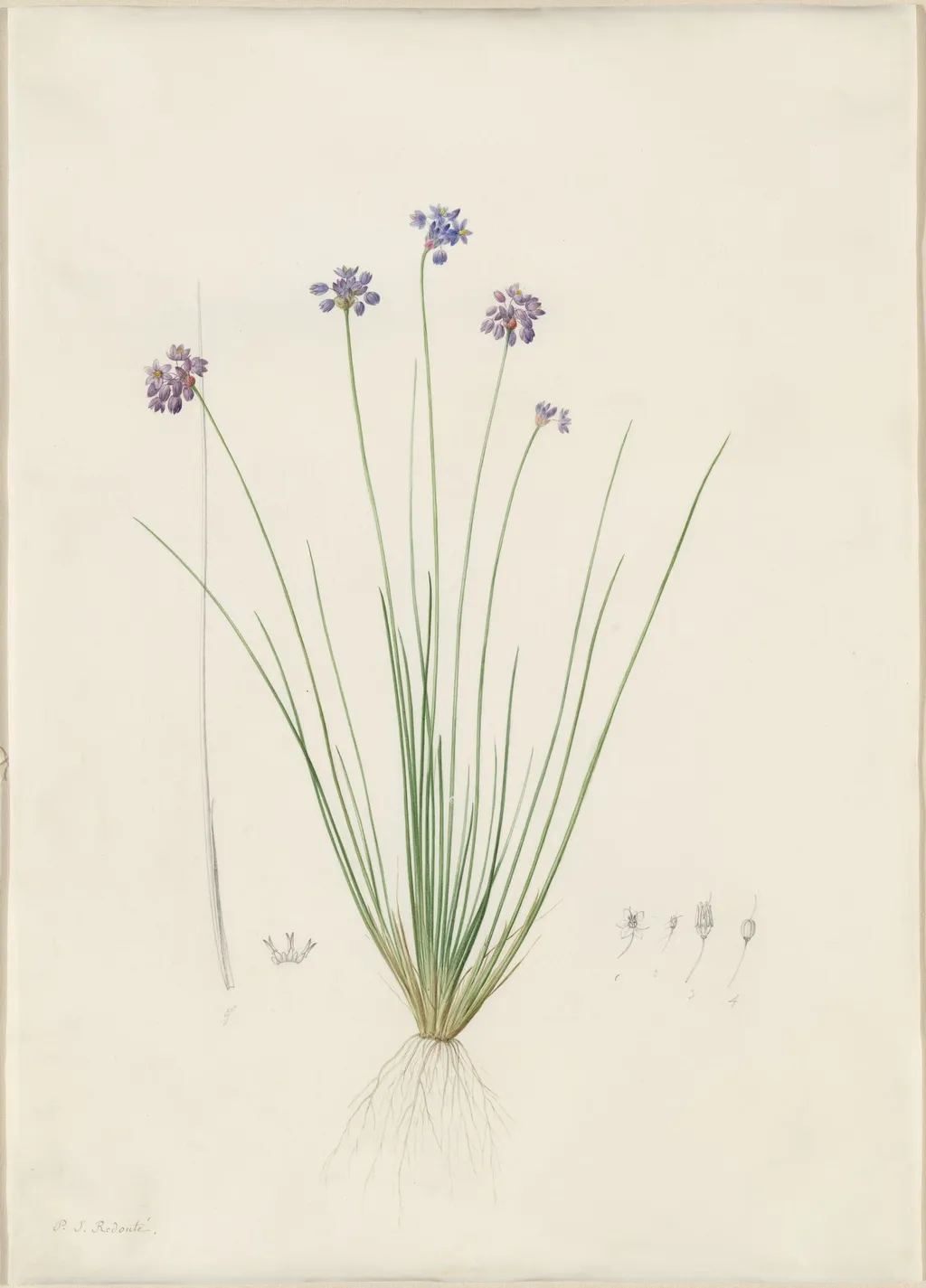
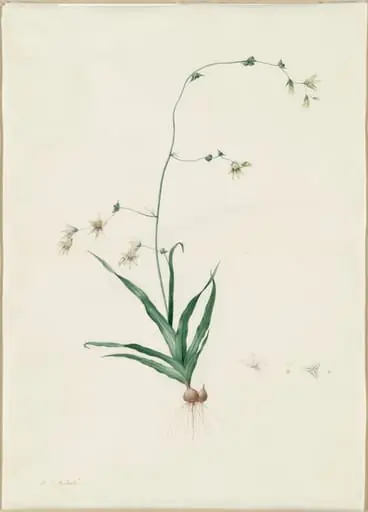
Sowerbaea juncea is a watercolor drawing by the Romanticist artist Pierre Joseph Redouté. It dates from 1809 and is held in the collection of the National Gallery of Art.
About this work
Overview
Created in 1809, this drawing depicts Sowerbaea juncea, a native Australian plant, rendered in watercolor and graphite on vellum by Pierre-Joseph Redouté.
Created in 1809, this drawing depicts Sowerbaea juncea, a native Australian plant, rendered in watercolor and graphite on vellum by Pierre-Joseph Redouté. The work belongs to a larger series of botanical studies produced during his tenure as a scientific illustrator. Redouté’s method combined artistic precision with scientific rigor, capturing botanical specimens with attention to anatomical detail. The piece is held in the National Gallery of Art’s collection in Washington, D.C.
Subject & Meaning
The drawing presents a complete specimen of Sowerbaea juncea, including its slender, grass-like stems, clustered purple florets, and exposed root system. Each element is rendered with clinical clarity, suggesting an intent to document rather than decorate. Small auxiliary sketches in the corner indicate comparative analysis, reinforcing the work’s role in botanical classification. The image serves as a visual record, useful for identification and study in an era before photography.
Technique & Style
Redouté employed soft watercolor washes to suggest the plant’s natural tones, layered with fine graphite lines to define structure and texture. The vellum surface allowed for delicate revisions and subtle gradations. Roots, stems, and florets are rendered with equal care, reflecting a commitment to accuracy over aesthetic flourish. Tiny supplementary studies in the margins reveal a process of observation and refinement, typical of scientific illustration at the time.
History & Provenance
Redouté, trained in the Austrian Netherlands, became a favored illustrator for French royal and imperial patrons, including Marie Antoinette and Joséphine Bonaparte. This work dates from the post-revolutionary period, when botanical documentation remained a priority for scientific institutions. The drawing entered the National Gallery of Art’s collection through established provenance, likely as part of a larger archive of botanical studies acquired for its scientific and artistic value.
Context
In the early 19th century, botanical illustration was a vital tool for naturalists cataloging newly encountered flora. Redouté’s work aligned with global efforts to classify plant species, often commissioned by institutions or collectors. His illustrations were not merely artistic but served as reference materials for horticulturists and scientists. The precision of his technique reflected broader Enlightenment ideals of empirical observation and systematic knowledge.
Legacy
Redouté’s drawings, including this one, set a standard for botanical accuracy in the pre-photographic era. Though his engravings are more widely reproduced, his original watercolors remain valued for their immediacy and detail. This piece contributes to a body of work that continues to inform botanical studies and art history, illustrating the intersection of science and visual representation in the Age of Exploration.
Own this work as a print
Artist & collection
Artist
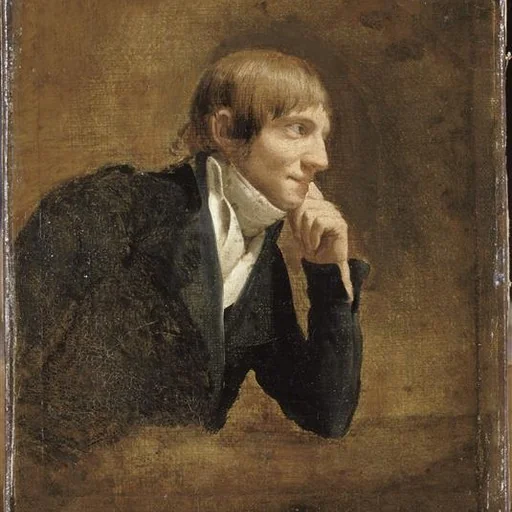
Pierre-Joseph Redouté (French pronunciation: , 10 July 1759 – 19 June 1840), was a painter and botanist from the Austrian Netherlands, known for his watercolours of roses, lilies and other flowers at the Château de…

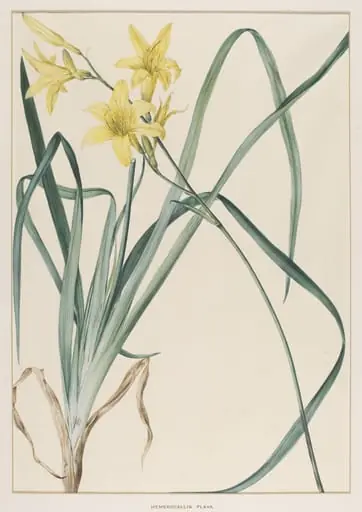 Hemerocallis Flava
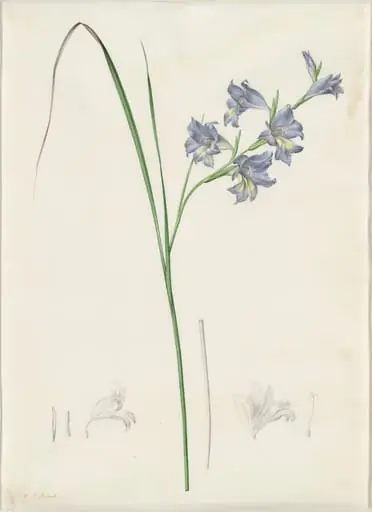 Gladiolus ringens
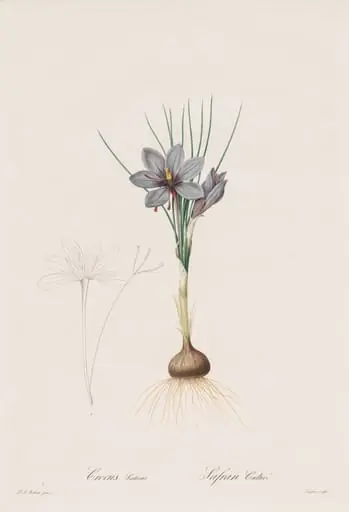 Les Liliacées: Crocus Sativus
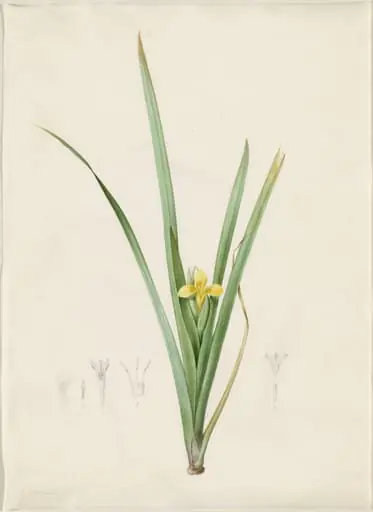 Iris curtopetala
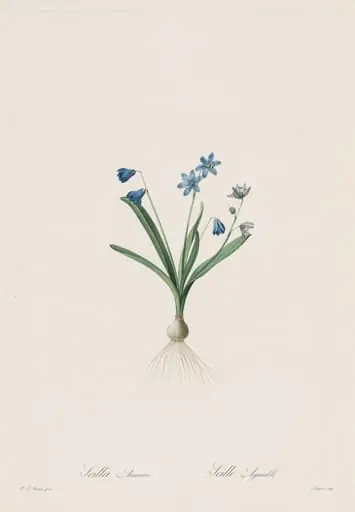 Les Liliacées: Scilla amaena
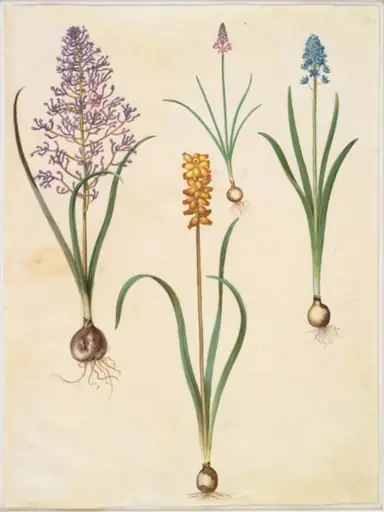 Muscari comosum (fjerhyacint); Scilla autumnalis (høst-skilla); Hyacinthoides italica (italiensk klokkeskilla); Muscari macrocarpum (gul perlehyacint)
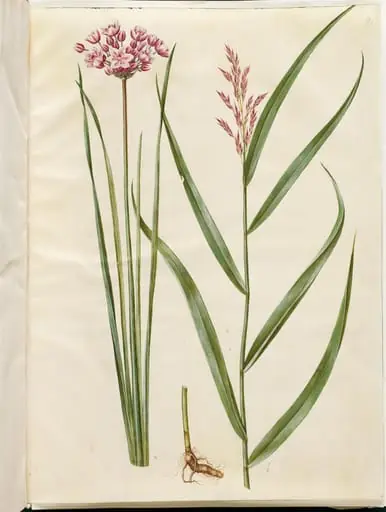 Butomus umbellatus (brudelys); Phragmites australis (almindelig tagrør)
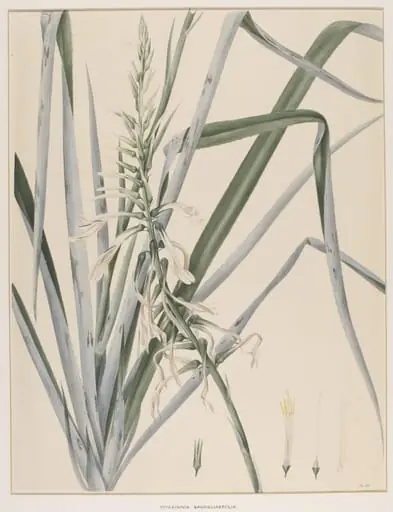 Pitcairnia Bromeliaefolia
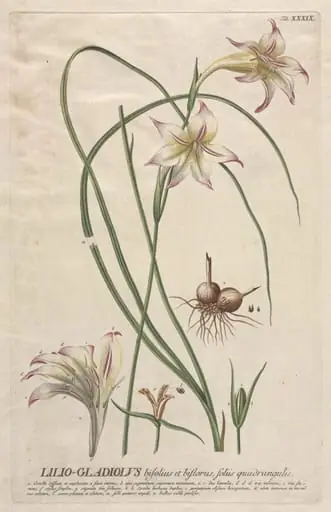 Plantae Selectae: No. 39 - Lilio-Gladiolus