Artwork
Liber Veritatis: No. 135, A Landscape, with Buildings, Mercury Stealing Admetuss' Cattle from Apollo
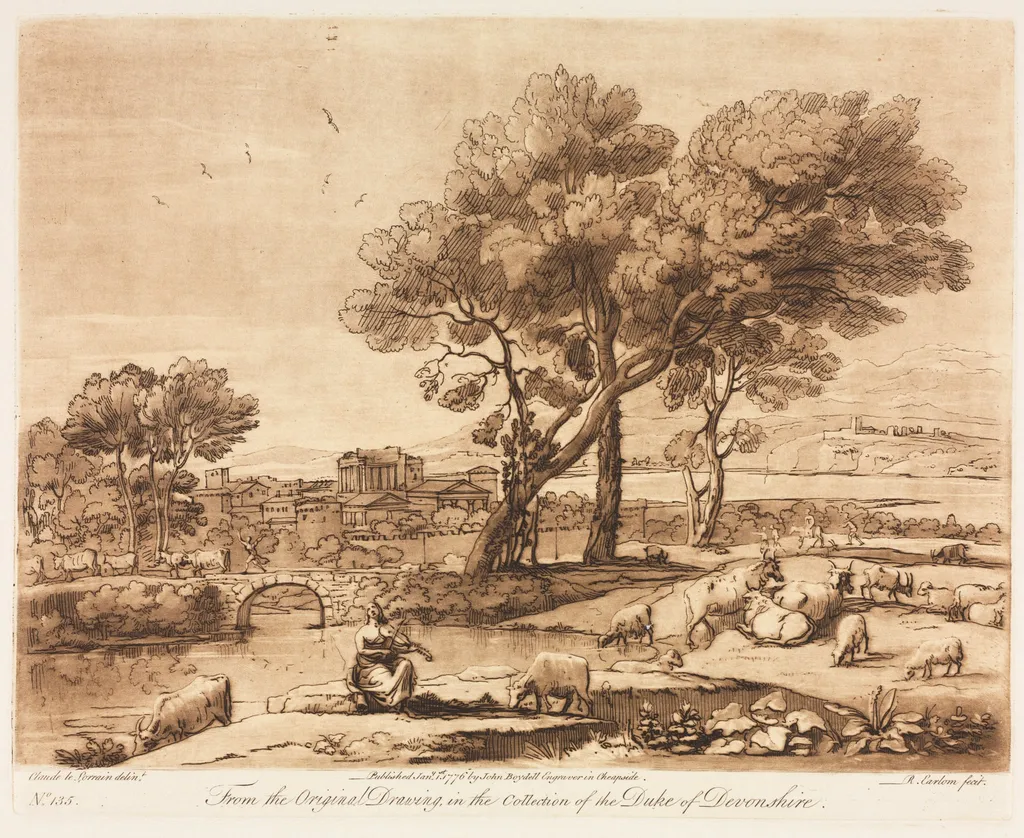
Liber Veritatis: No. 135, A Landscape, with Buildings, Mercury Stealing Admetuss' Cattle from Apollo is a print by the Romanticist artist Richard Earlom. It dates from 1776 and is held in the collection of the Cleveland Museum of Art.
About this work
Overview
This print, numbered 135 in the Liber Veritatis series, was produced by Richard Earlom in 1776. It is a reproductive engraving based on a drawing by Claude Lorrain, capturing a pastoral scene infused with mythological narrative. The work resides in the collection of The Cleveland Museum of Art, where it exemplifies 18th-century British printmaking’s engagement with classical landscape traditions.
Subject & Meaning
Though the act is one of deception, the composition emphasizes stillness: grazing sheep, a lone figure playing a flute, and calm waters.
The scene depicts Mercury, disguised as a shepherd, stealing cattle from Apollo’s herd. Though the act is one of deception, the composition emphasizes stillness: grazing sheep, a lone figure playing a flute, and calm waters. The mythological element is subtly integrated into the landscape, inviting contemplation rather than drama, reflecting Claude’s preference for harmony over narrative intensity.
Technique & Style
Earlom employed mezzotint to achieve subtle gradations of light and atmosphere, mimicking the tonal richness of Claude’s original drawings. Soft transitions between shadow and haze unify the composition, while fine linework defines architectural details and foliage. The technique enhances the serene mood, aligning with the classical ideal of landscape as a contemplative space rather than a stage for action.
History & Provenance
The print is part of Earlom’s Liber Veritatis series, commissioned to reproduce Claude Lorrain’s drawings held by the Duke of Devonshire. Created between 1774 and 1777, the series aimed to preserve and disseminate Claude’s compositions. This particular plate was engraved in 1776 and later entered the Cleveland Museum of Art’s collection through established acquisition channels in the 20th century.
Context
In late 18th-century Britain, Claude Lorrain’s landscapes were highly esteemed among collectors and artists. Earlom’s engravings made these works accessible beyond aristocratic collections, influencing landscape aesthetics and the growing interest in classical themes. The integration of myth into serene natural settings reflected Enlightenment-era ideals of order, beauty, and moral reflection in nature.
Legacy
Earlom’s Liber Veritatis prints became reference points for artists and connoisseurs, shaping perceptions of Claude’s oeuvre for generations. Though the original drawings were dispersed, these engravings preserved their compositions and tonal qualities. The series remains a key document in the history of printmaking and the transmission of continental artistic ideals in Britain.
Own this work as a print
Artist & collection

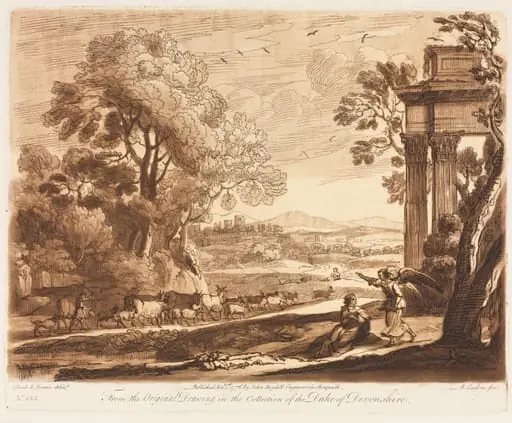 Liber Veritatis: No. 133, A Landscape, with Cattle, and the Angel Comforting Hagar
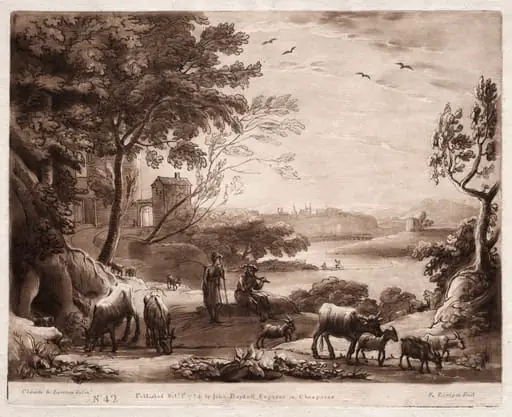 Liber Veritatis: No. 42, A River Landscape with a Shepherd and Shepherdess and a Herd of Cattle
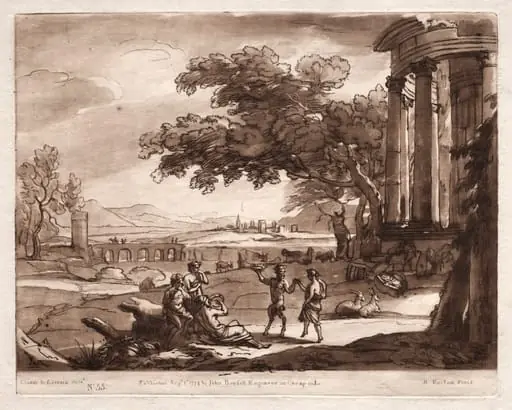 Liber Veritatis: No. 55, A Landscape with a Temple and a Nymph and Satyr Dancing
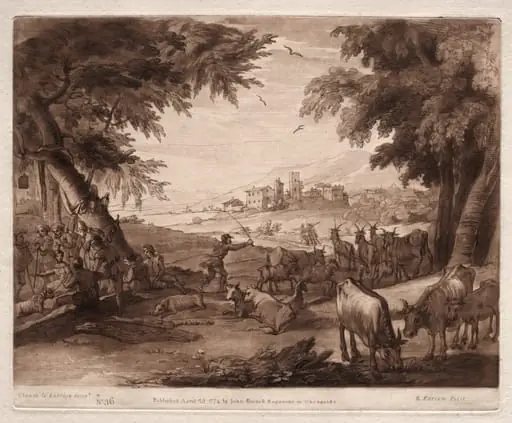 Liber Veritatis: No. 36, Pastoral Scene with Villagers and a Herd of Oxen and Goats
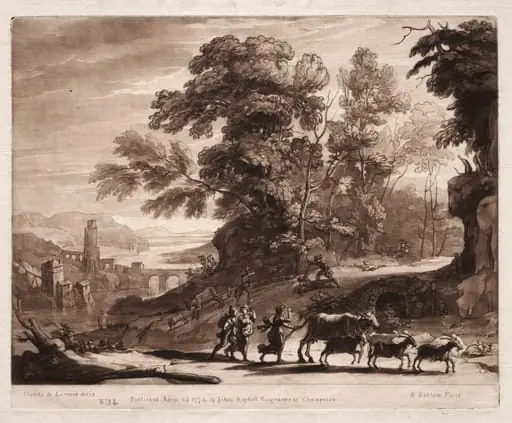 Liber Veritatis: No. 34, Peasants with Cattle attacked by Bandits
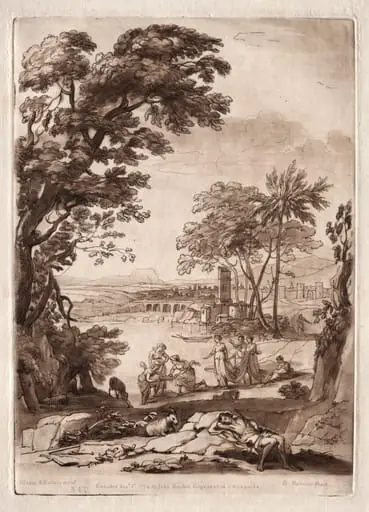 Liber Veritatis: No. 47, A River Scene with the Finding of Moses
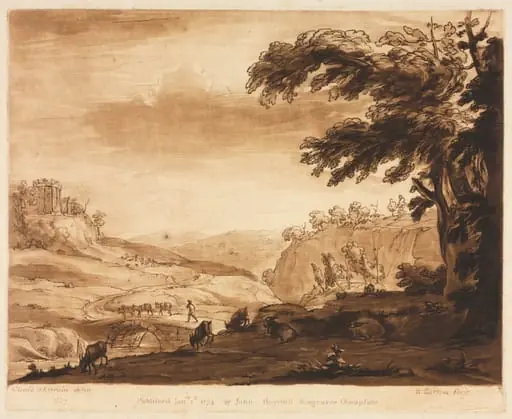 Liber Veritatis: No. 7, An Island Scene of a Mountainous Country with Cattle
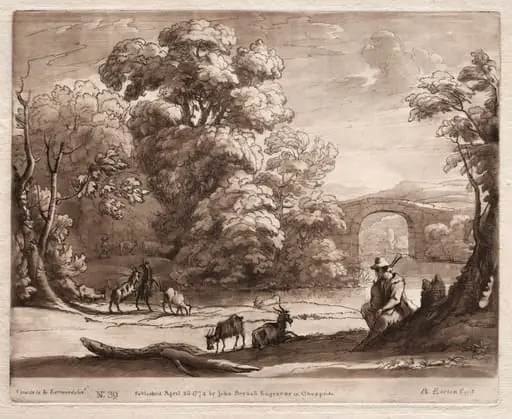 Liber Veritatis: No. 39, A Landscape with Herdsman Playing a Bagpipe and Goats Browsing
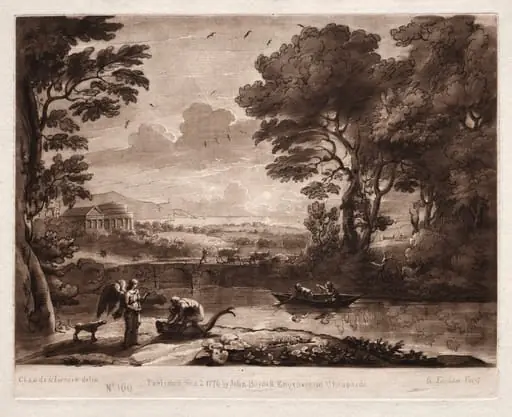 Liber Veritatis: No. 160, Tobias and the Angel
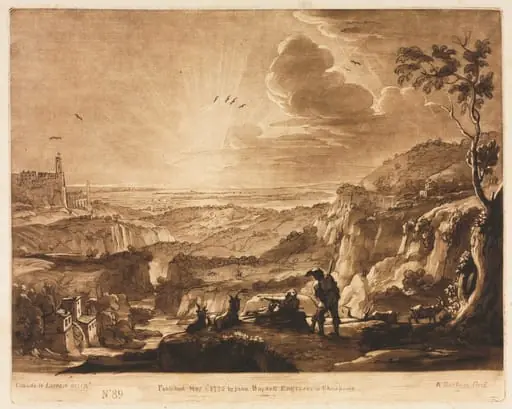 Liber Veritatis: No. 89, View of a Mountainous Extended Country