Artwork
Aphrodite
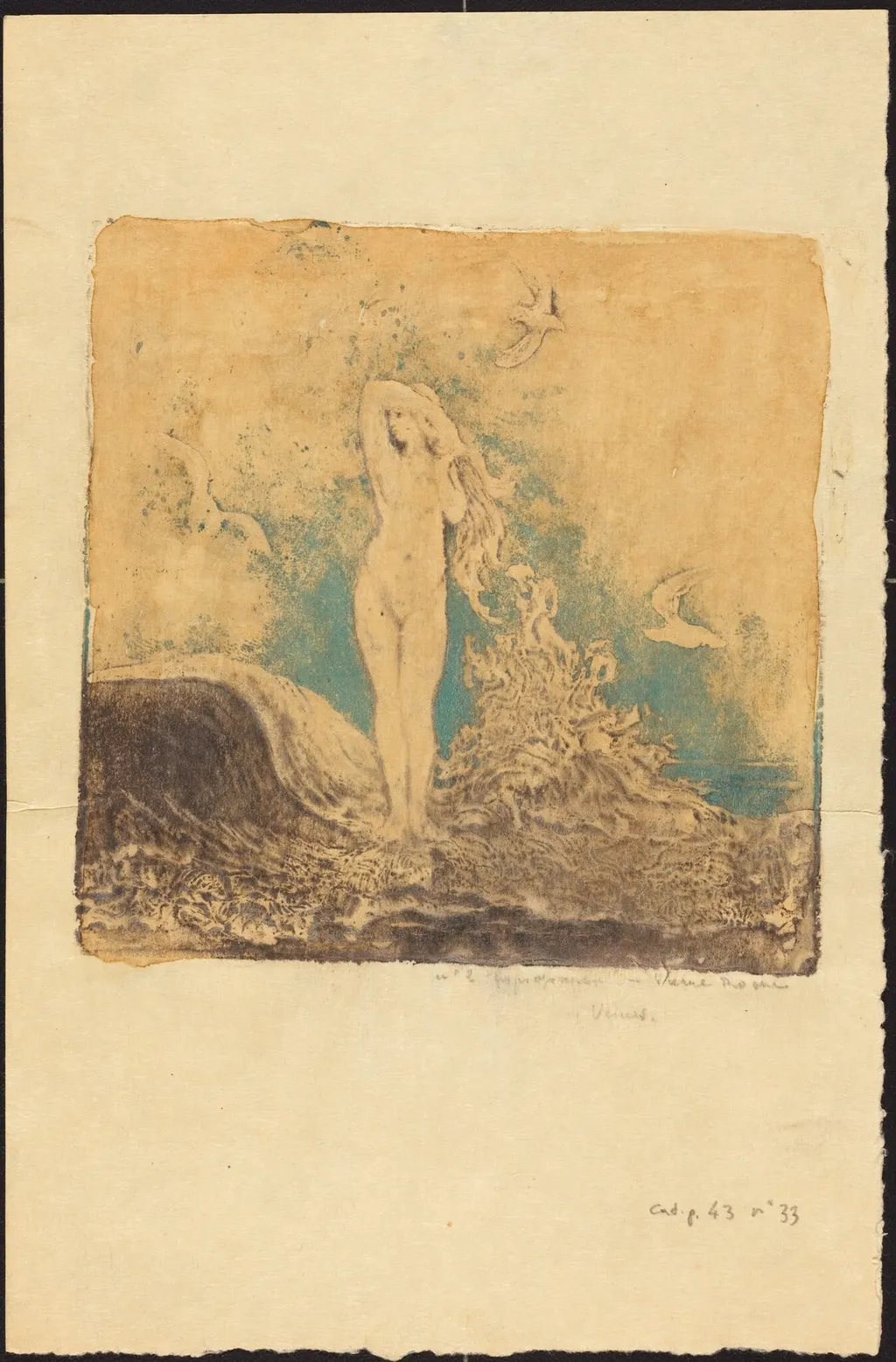
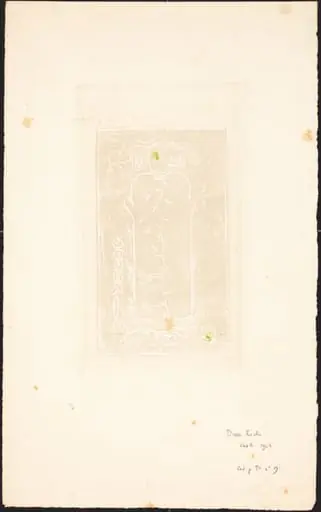
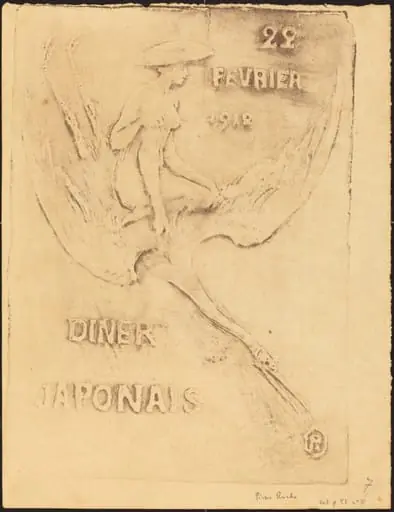
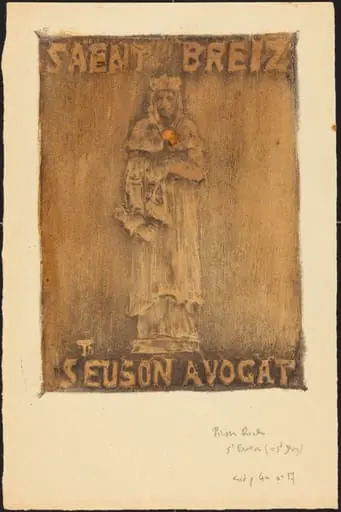
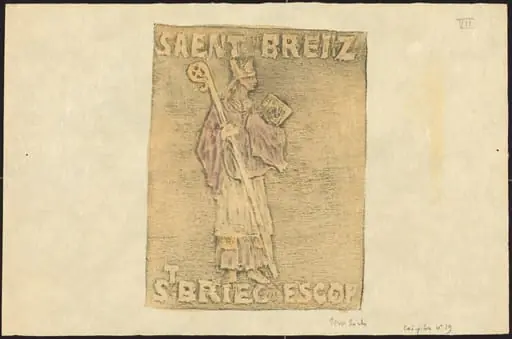
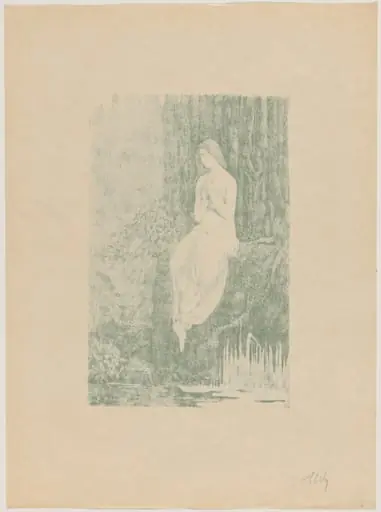
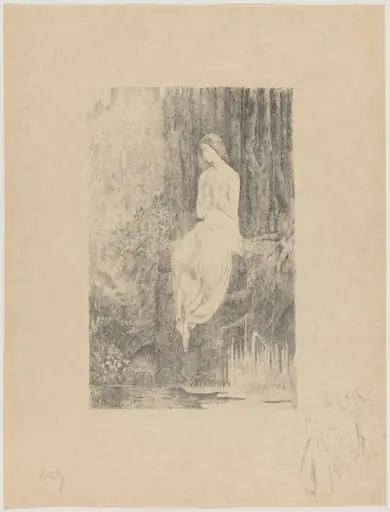
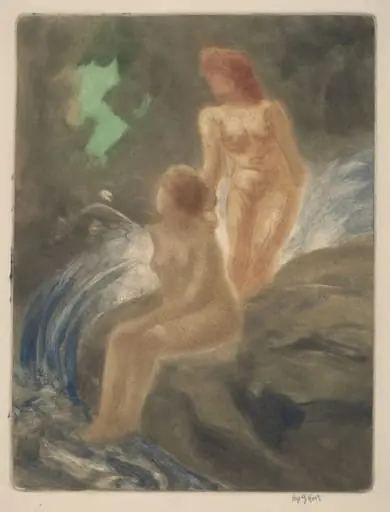
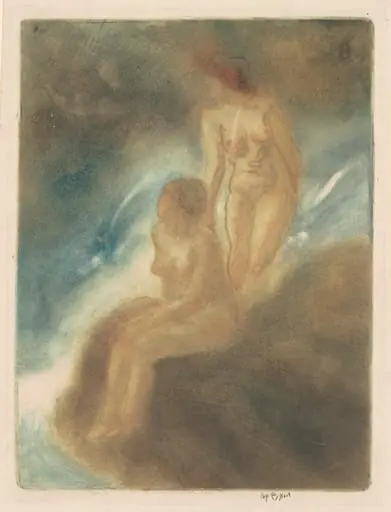
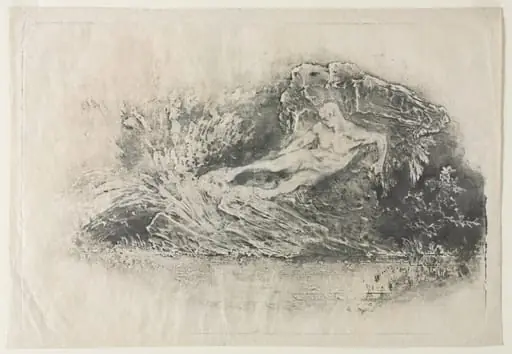
Aphrodite is a print by Pierre Roche. It dates from 1914 and is held in the collection of the National Gallery of Art.
About this work
Overview
The work emerges from his broader engagement with classical subjects and academic traditions.
Pierre Roche, a French artist trained in both science and the visual arts, produced *Aphrodite* in 1914 using the gypsograph process—a technique involving chalk or plaster-based media on paper. Known for his work across sculpture, painting, and medal design, Roche applied his sculptural sensibility to this print, favoring atmospheric suggestion over precise definition. The work emerges from his broader engagement with classical subjects and academic traditions.
Subject & Meaning
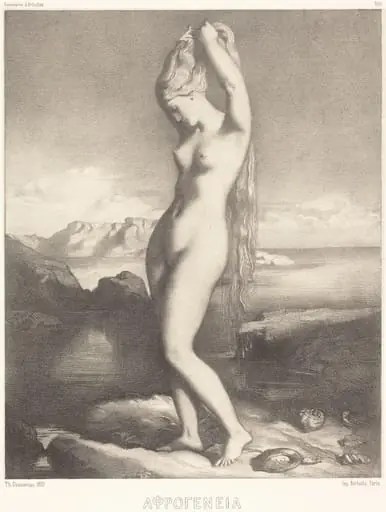
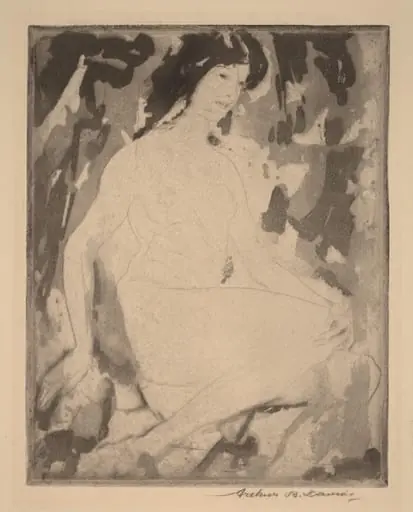
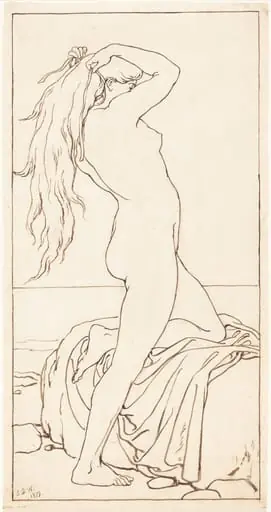
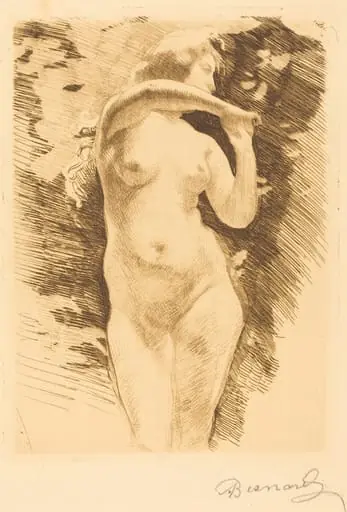
The figure represents Aphrodite, the Greek goddess of love, depicted in a solitary, ethereal stance on a coastal margin. Her form is simplified, with flowing hair and smooth contours that evoke timeless idealism. The sparse surroundings—faint waves, a hazy sky—emphasize her otherworldliness rather than narrative detail. The image invites contemplation of mythic presence rather than storytelling, aligning with late 19th-century symbolic tendencies.
Technique & Style
Roche employed gypsograph, a medium that allowed soft, smudged lines and muted tonal gradations. The figure is rendered with minimal detail, using light, gestural strokes that dissolve into the textured paper. Subtle chiaroscuro models the form without harsh contrasts, enhancing the ghostly quality. The aged, stained surface and irregular edges contribute to a sense of temporal distance, reinforcing the mythic subject’s detachment from the present.
History & Provenance
Created during Roche’s mature period, *Aphrodite* reflects his transition from medical and chemical studies to a full-time artistic career. He studied at the Académie Julian under Alfred Roll and exhibited regularly at the Paris Salon. While the print’s early ownership is undocumented, its existence aligns with Roche’s known output of intimate, non-commissioned works that complemented his public sculptures and fountains.
Context
In early 20th-century France, classical mythology remained a fertile ground for artists seeking to reconcile tradition with modern sensibilities. Roche’s approach, less monumental than his sculptural commissions, mirrors a broader trend among Symbolists and Post-Impressionists who favored introspective, atmospheric interpretations over grand narratives. His use of gypsograph situates him within a niche of printmakers exploring tactile, ephemeral media.
Legacy
Though not widely reproduced, *Aphrodite* exemplifies Roche’s ability to translate sculptural form into delicate graphic language. The work stands as a quiet counterpoint to his larger public commissions, revealing a personal engagement with myth and material. Its preservation offers insight into the range of practices among artists who moved fluidly between disciplines in the decades before World War I.
Artist & collection

Artist
Pierre Roche (Paris, 2 August 1855 – Paris, 18 January 1922), pseudonym of Pierre Henry Ferdinand Massignon, was a French sculptor, painter, ceramist and medallist.