Artwork
Notre Dame du Folgoet (Our Lady of Folgoet)
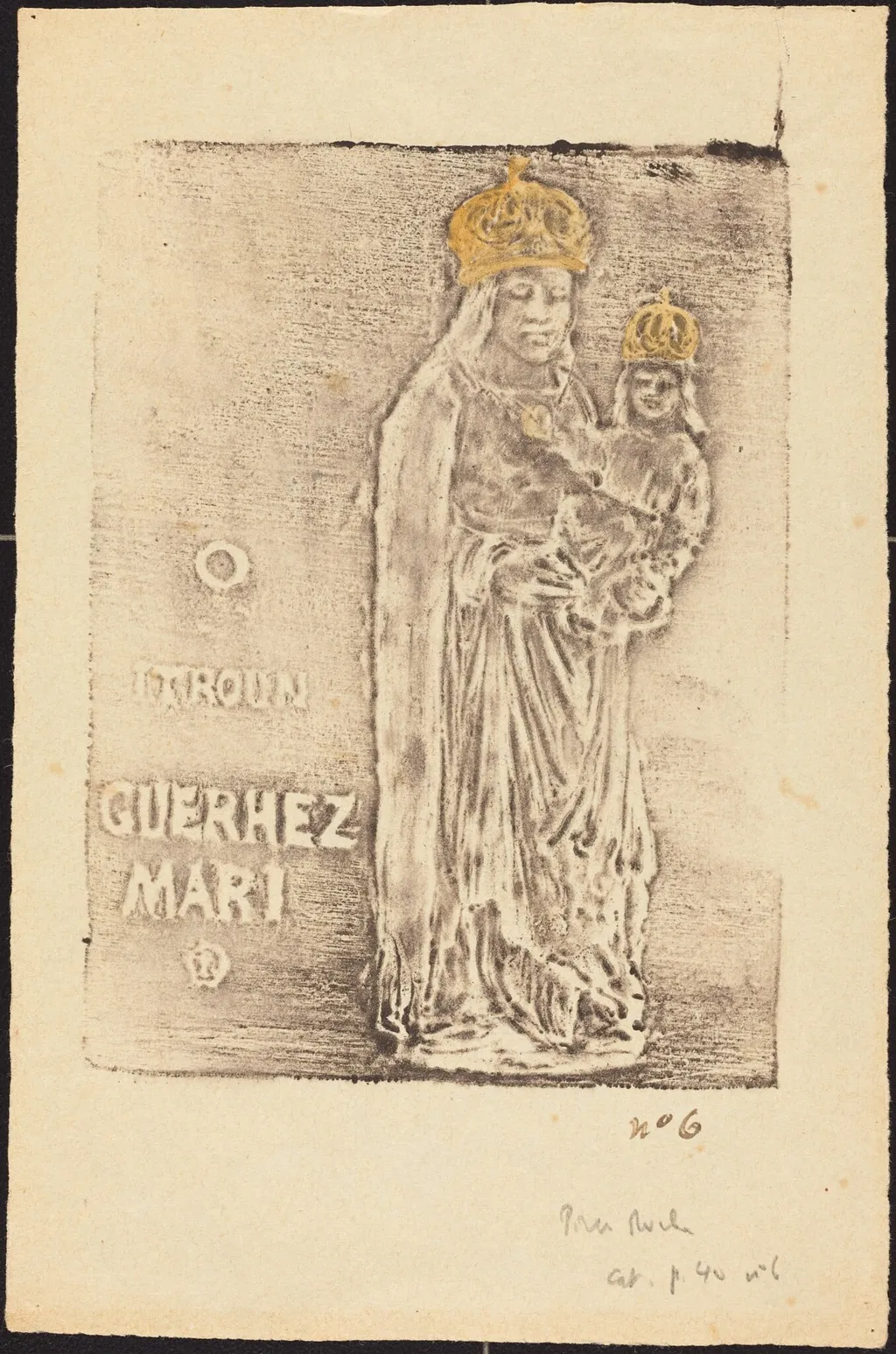
Notre Dame du Folgoet (Our Lady of Folgoet) is a print by the Impressionist artist Pierre Roche. It dates from 1888 and is held in the collection of the National Gallery of Art.
About this work
Notre Dame du Folgoet is a painting by Pierre Roche.
It's a work from the late 19th or early 20th century, blending Realism and Impressionism styles.
The artist's use of Gypsograph medium is notable, as it's not a commonly used technique, but I don't know much about it.
You can learn more about Impressionism at the National Gallery of Art, Washington.
Overview
This work emerged during a period of active exhibition at the Paris Salon, between 1884 and 1889.
Pierre Roche, born Pierre Henry Ferdinand Massignon, produced Notre Dame du Folgoet in 1888 using the gypsograph technique—a rare form of relief printing in plaster. This work emerged during a period of active exhibition at the Paris Salon, between 1884 and 1889. Roche’s background in painting at the Académie Julian and his later engagement with sculpture informed his multidisciplinary approach, blending tactile materiality with pictorial composition.
Subject & Meaning
The subject is the Virgin Mary as venerated at the pilgrimage site of Folgoët in Brittany. Roche’s depiction avoids overt theatricality, instead presenting a quiet, devotional figure rooted in regional religious tradition. The choice of subject reflects both personal piety and the broader 19th-century revival of interest in Breton cultural identity, though the work does not engage in overt nationalism or sentimentality.
Technique & Style
Gypsograph, a relief printing method using plaster, allowed Roche to achieve subtle tonal gradations and textured surfaces uncommon in traditional printmaking. The medium’s sculptural qualities echo his training in both painting and sculpture, resulting in a hybrid form that blurs boundaries between two- and three-dimensional art. The style leans toward Realism with soft, atmospheric touches, avoiding the chromatic intensity of Impressionism while retaining observational precision.
History & Provenance
Created in 1888, the work was made during Roche’s most active exhibition years, when he regularly showed at the Paris Salon. His transition from painter to sculptor, influenced by Jules Dalou, coincided with his exploration of unconventional materials. The gypsograph technique was experimental and rarely adopted, making this print a singular artifact of his technical curiosity rather than part of a broader movement.
Context
In late 19th-century France, regional religious imagery experienced renewed attention amid cultural debates over identity and modernity. Roche’s focus on a Breton Marian shrine aligns with broader artistic interest in local traditions, even as urban centers embraced industrial and aesthetic innovation. His use of an obscure print medium suggests a deliberate distancing from mainstream artistic trends in favor of personal experimentation.
Legacy
Notre Dame du Folgoet remains a quiet testament to Roche’s interdisciplinary practice and his willingness to explore marginal techniques. Though not widely reproduced or studied, it exemplifies the era’s quiet resistance to artistic categorization. The work’s obscurity reflects its niche status—not as a landmark, but as a personal inquiry into material, devotion, and form.
Artist & collection

Artist
Pierre Roche (Paris, 2 August 1855 – Paris, 18 January 1922), pseudonym of Pierre Henry Ferdinand Massignon, was a French sculptor, painter, ceramist and medallist.

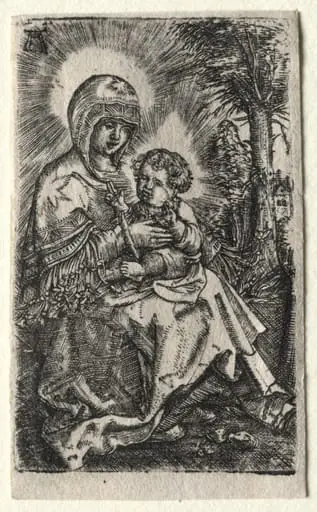 The Beautiful Virgin of Ratisbon in a Landscape
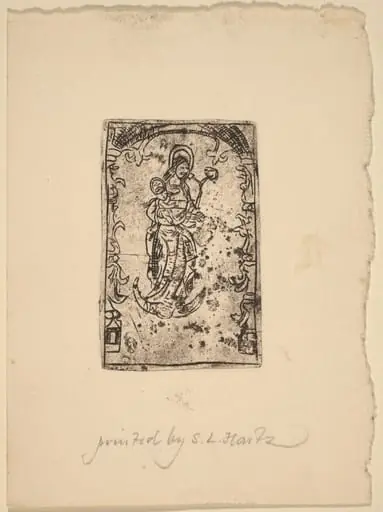 Madonna and Child
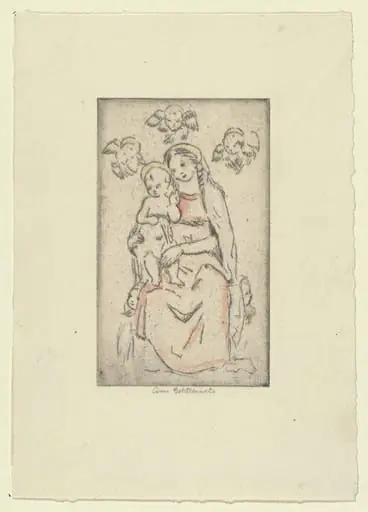 Untitled
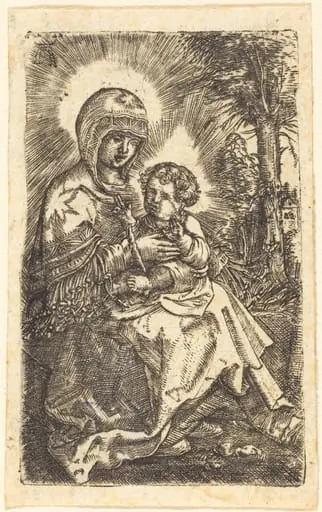 The Beautiful Virgin of Regensburg Seated in a Landscape
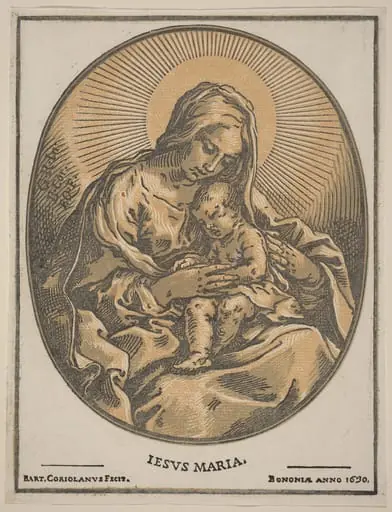 Virgin and Child
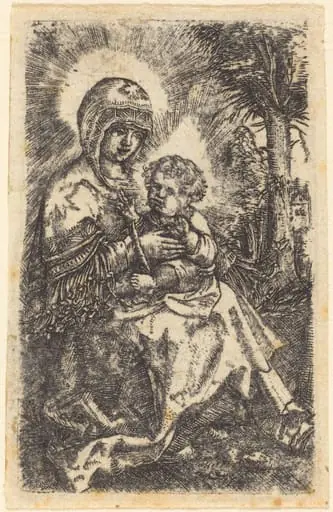 The Beautiful Virgin of Regensburg Seated in a Landscape
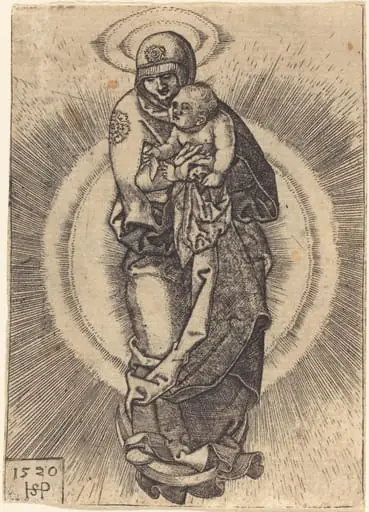 The Virgin and Child on the Crescent
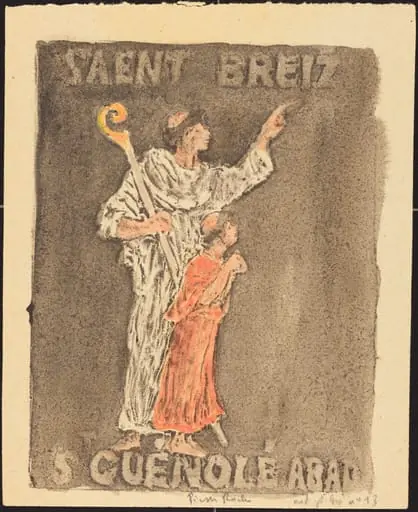 Saint Guenole
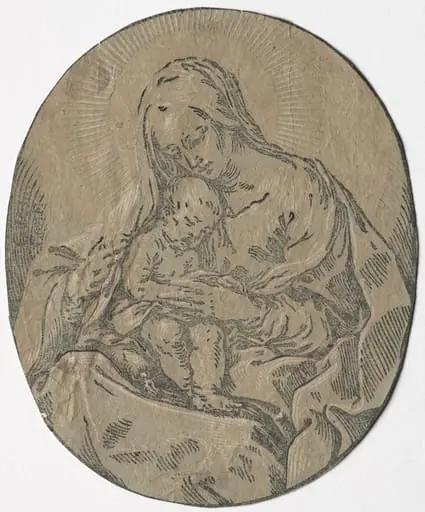 Madonna and Child
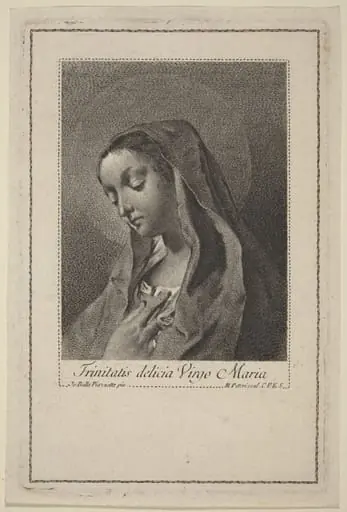 Trinitatis delicia Virgo Maria
 MacBeth
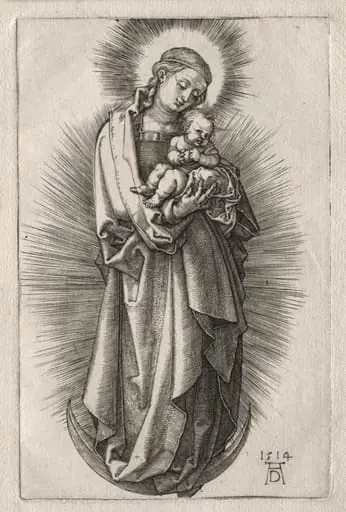 The Virgin with Hairband on a Crescent Moon