Artwork
Alexander Setting Fire to Persepolis
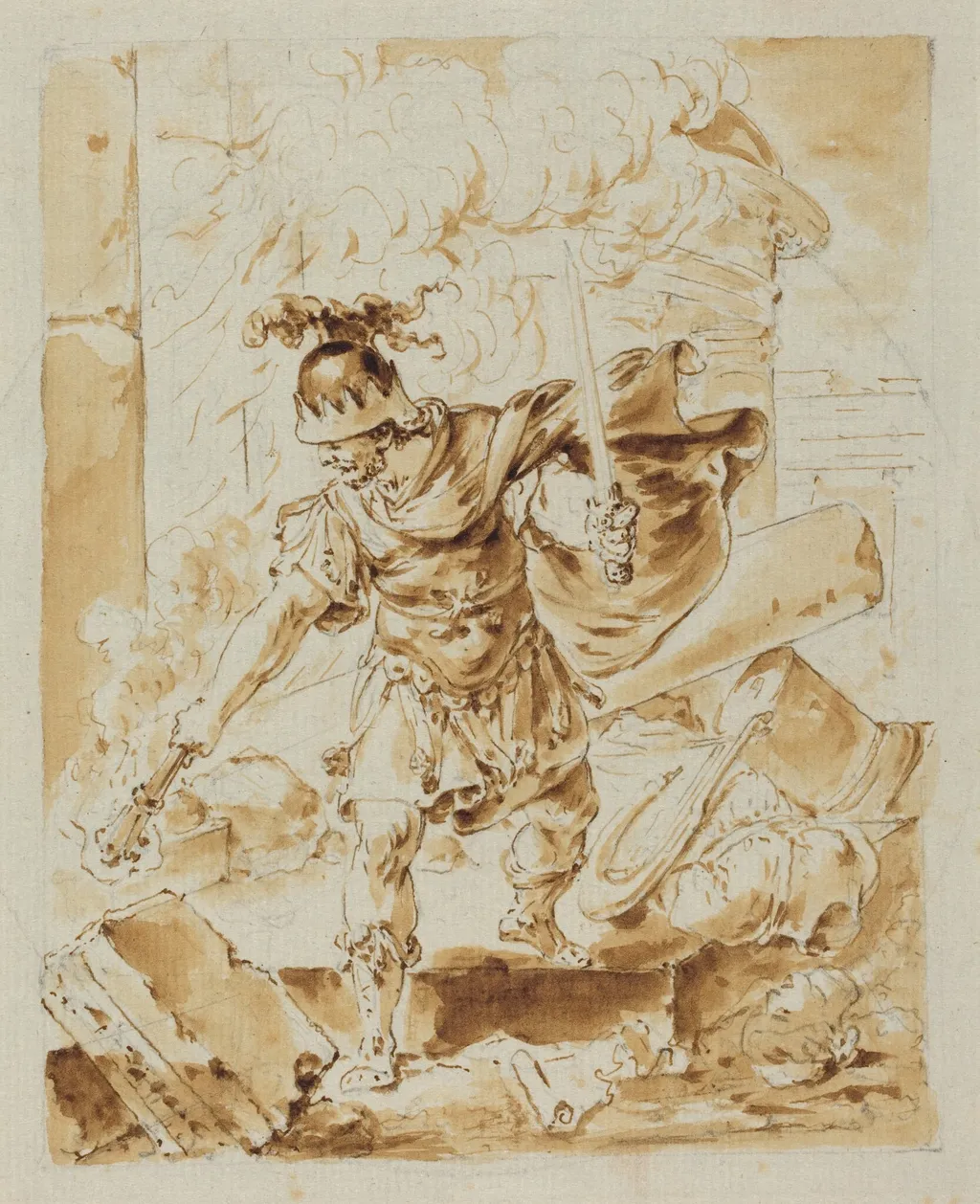
Alexander Setting Fire to Persepolis is an ink drawing by the Baroque artist Bernhard Rode. It dates from 1761 and is held in the collection of the National Gallery of Art.
About this work
Overview
Created in 1761 by the Prussian artist Bernhard Rode, this drawing captures a pivotal moment from Alexander the Great’s campaign against the Persian Empire.
Created in 1761 by the Prussian artist Bernhard Rode, this drawing captures a pivotal moment from Alexander the Great’s campaign against the Persian Empire. Executed in pen and brown ink with wash over graphite on laid paper, the work exemplifies Rode’s skill in translating historical narratives into dynamic compositions. Its spontaneous, energetic execution suggests it may have been a preparatory study for a larger painting, reflecting the artist’s interest in dramatic historical subjects.
Subject & Meaning
The scene depicts Alexander the Great at the moment he sets fire to Persepolis, the ceremonial capital of the Achaemenid Empire. Clad in armor and wielding a torch and spear, he strides forward with forceful motion, while a fallen figure lies nearby. The act symbolizes the destruction of Persian royal authority and the assertion of Macedonian dominance. Rode’s portrayal emphasizes decisive action, aligning with Enlightenment-era fascination with heroic agency and the consequences of conquest.
Technique & Style
Rode employed loose, rapid pen strokes and layered brown washes to convey movement and atmosphere. The graphite underdrawing guides the composition, while the washes create a smoky, ochre-toned haze that suggests flames and ruin. Jagged, expressive lines define the background, evoking collapsing architecture and chaos. The figure’s twisting pose and billowing cloak heighten the sense of kinetic energy, characteristic of a sketch designed to capture immediacy rather than polished finish.
History & Provenance
Bernhard Rode, director of the Berlin Academy of the Arts, produced this work during his tenure in the Prussian capital, where he engaged with Enlightenment intellectuals such as Lessing and Nicolai. The drawing likely emerged from his broader project of illustrating historical and moral themes for an educated audience. Though its early ownership is undocumented, its survival reflects its value as a study within Rode’s oeuvre and as a testament to 18th-century German engagement with classical antiquity.
Context
In mid-18th-century Berlin, historical subjects were reinterpreted through Enlightenment lenses—emphasizing reason, power, and moral consequence. Rode’s depiction of Alexander aligns with contemporary debates about empire, destruction, and legacy. The drawing’s emphasis on individual agency and dramatic action resonates with the era’s interest in heroic narratives, even as it subtly invites reflection on the cost of conquest, a theme echoed in the writings of his intellectual peers.
Legacy
Rode’s drawing stands as a representative example of German historical drawing in the late Baroque tradition, bridging academic discipline and expressive spontaneity. While not widely exhibited in his lifetime, it contributed to a broader visual discourse on antiquity that influenced later historical painting in Central Europe. Its emphasis on motion and emotional intensity helped shape the aesthetic language of 18th-century narrative drawing beyond mere illustration.
Artist & collection
Artist
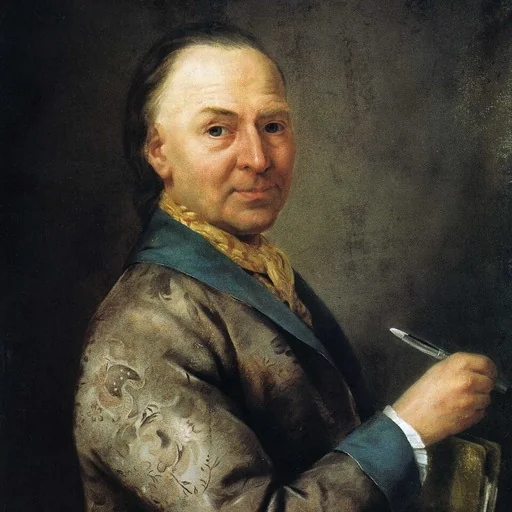
Bernhard Rode (25 July 1725 – 28 June 1797) was a Prussian artist and engraver well known for portraying historical scenes and allegorical works.

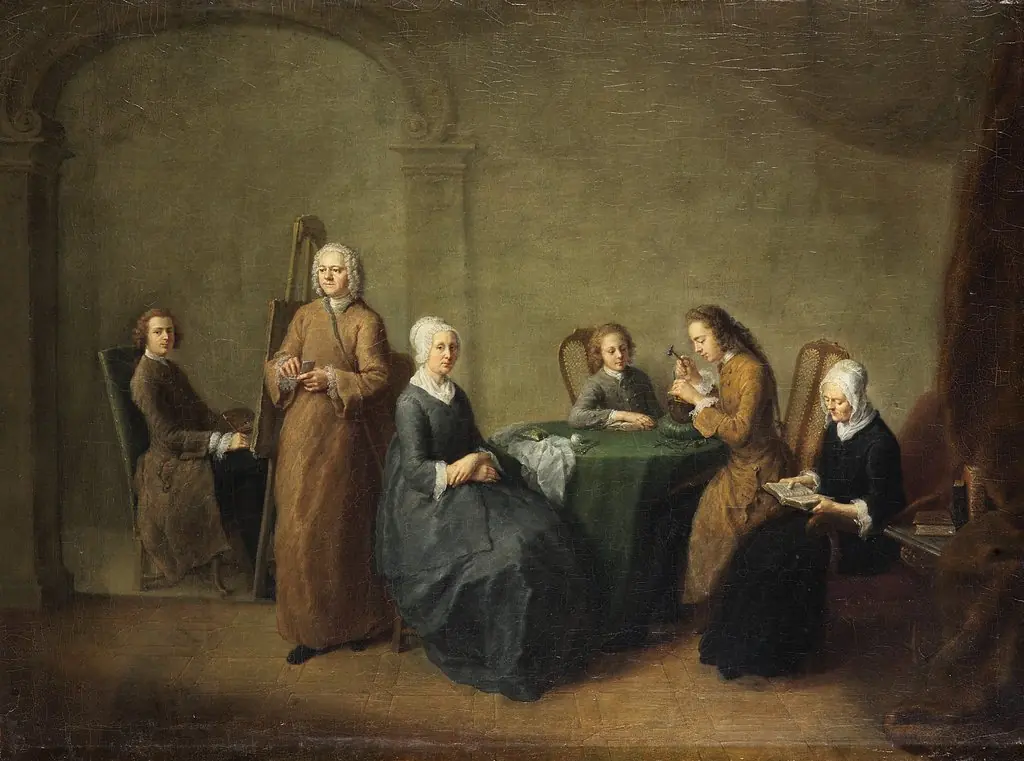 The Artist with his Family
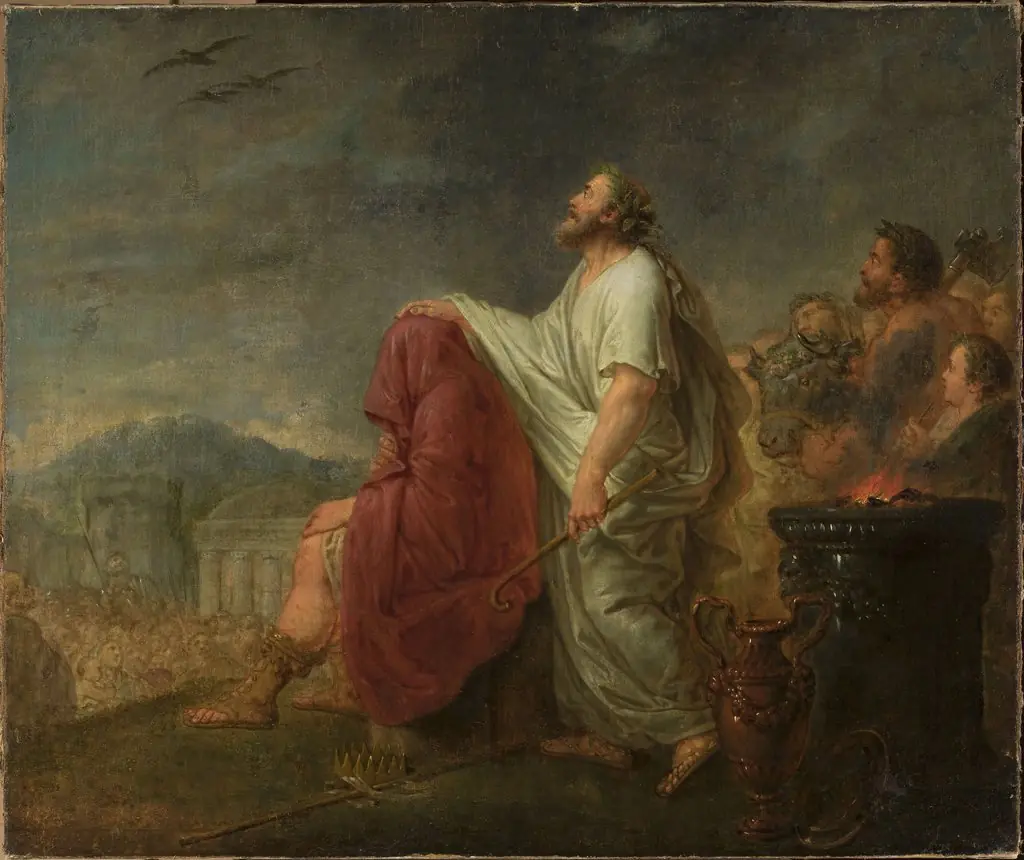 Ancient scene of sacrifice
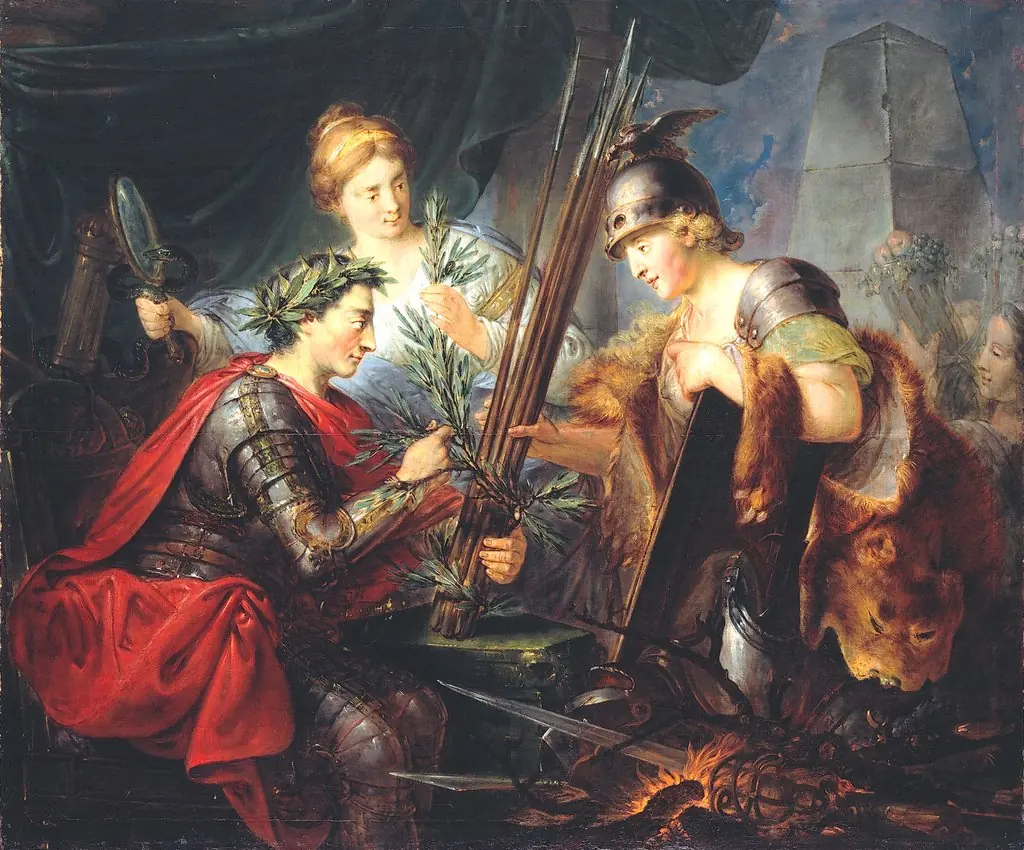 Allegory of Frederick the Great as the founder of the German Prince League
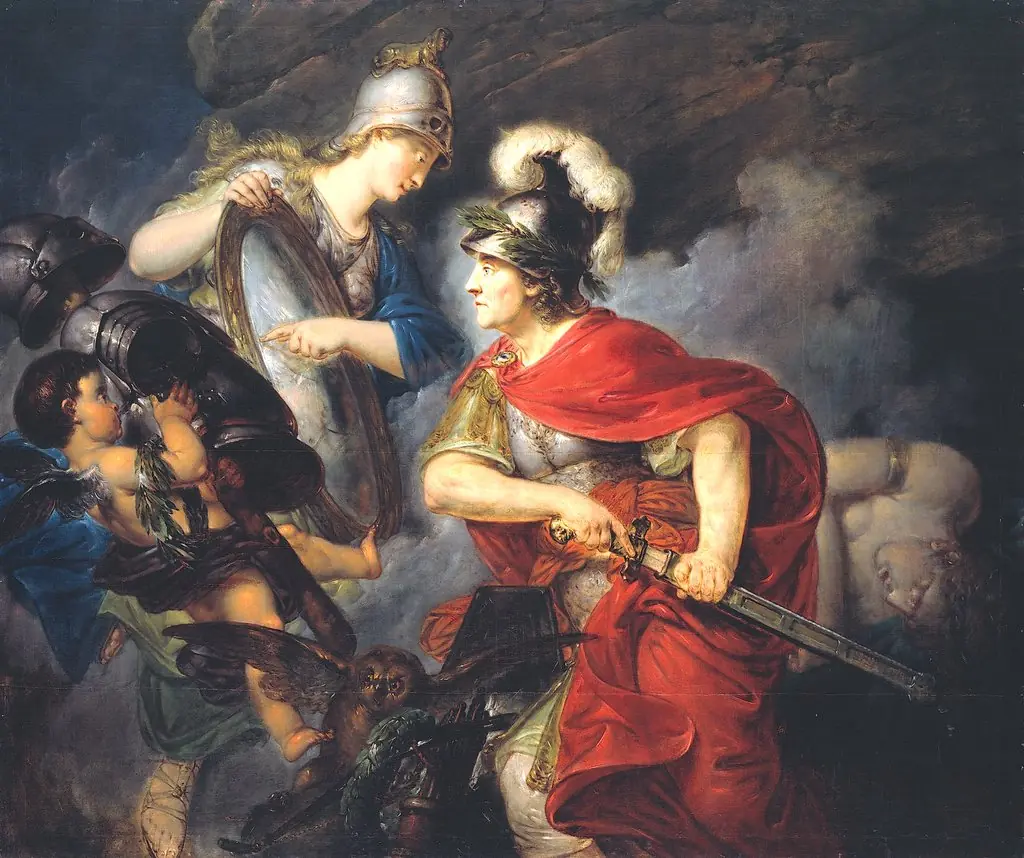 Allegory of Frederick the Great as Perseus
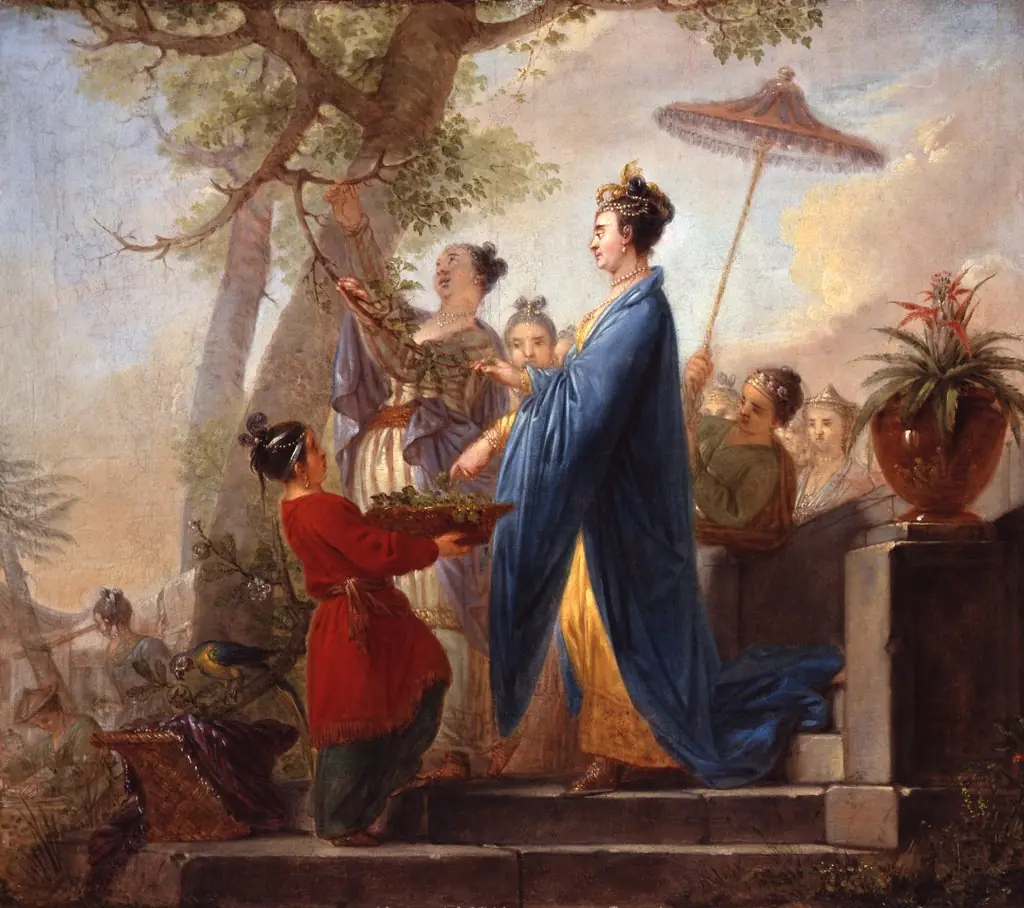 The Empress of China Picks the First Mulberry Leaves in Honour of Silk Cultivation
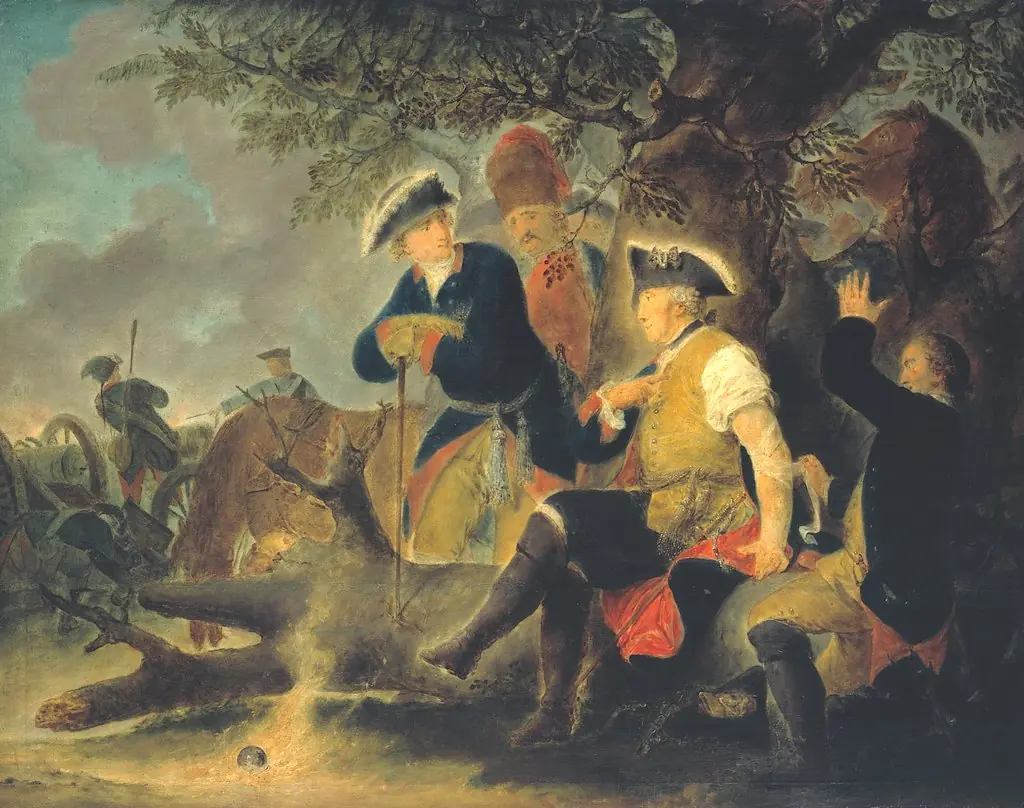 Friedrich und der Feldscher
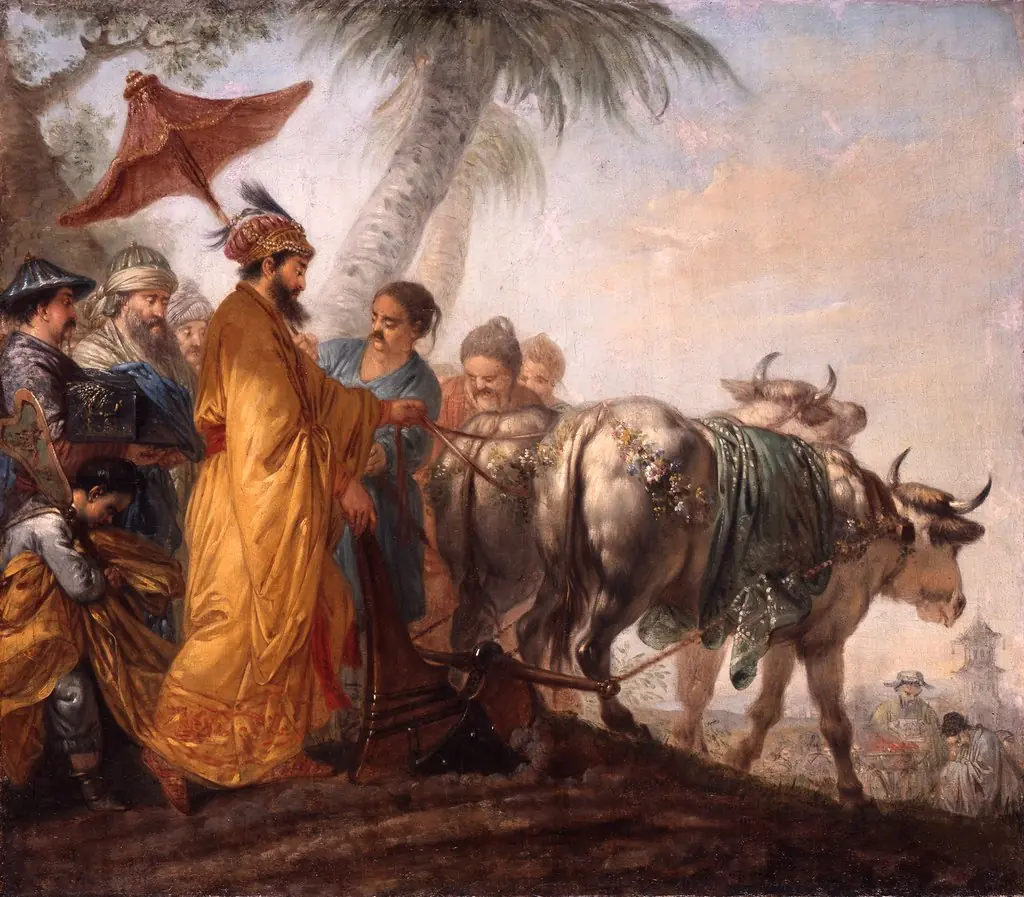 The Emperor of China Ploughs the First Furrow in Honour of Agriculture
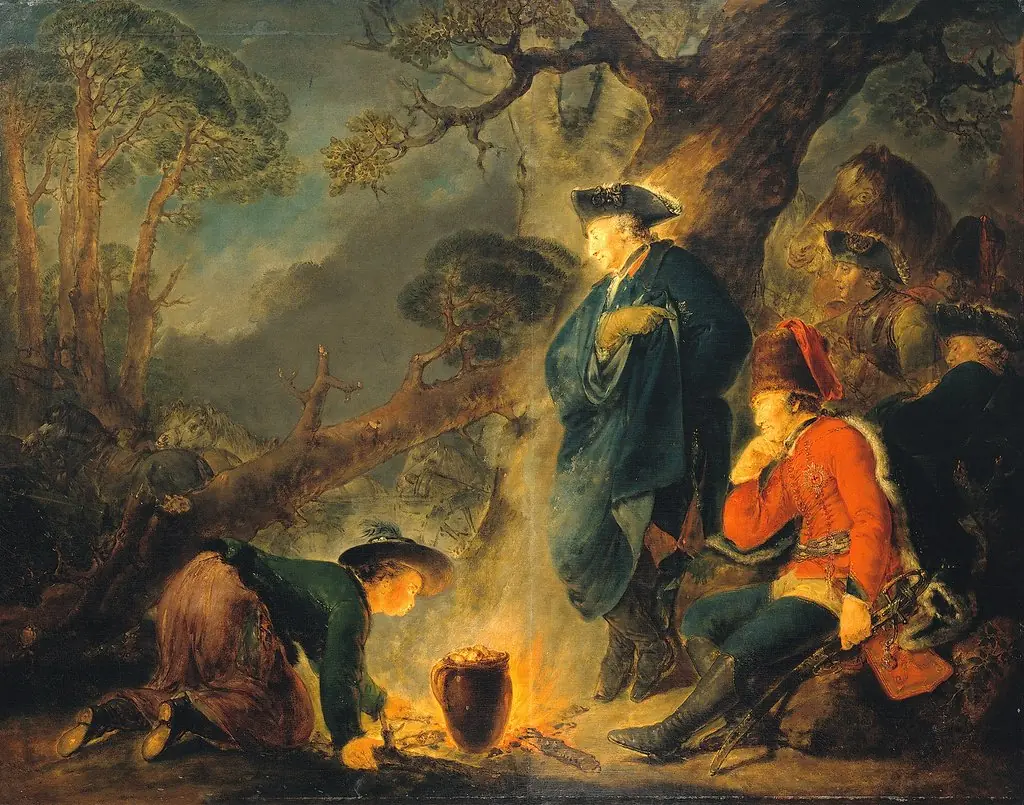 Frederick the Great before the Battle of Torgau
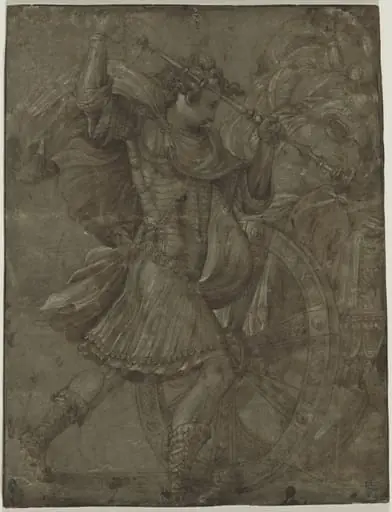 Man in Armor beside a Chariot
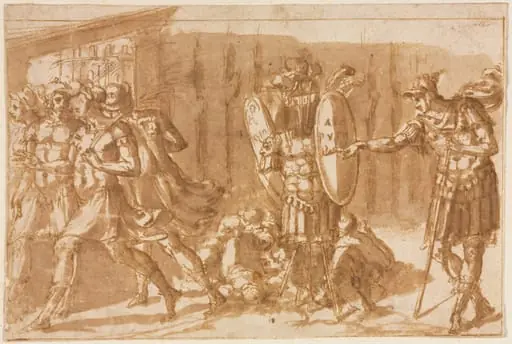 Victorious Soldiers with Trophy
 The Resurrection
 Minerva, Mars and Venus after Jacopo Tintoretto’s painting in the Sala dell’Anticollegio, Doge’s Palace, Venice
 Crucifixion of Saint Peter
 Warrior with a Shield and Torch
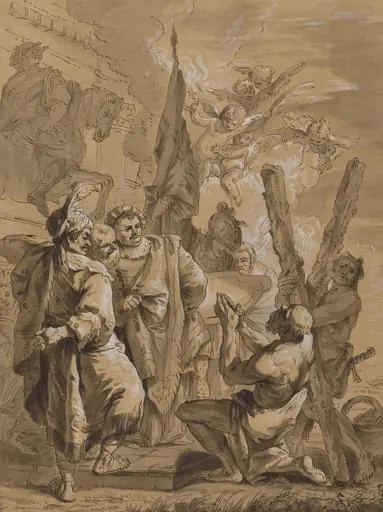 Martyrdom of Saint Andrew
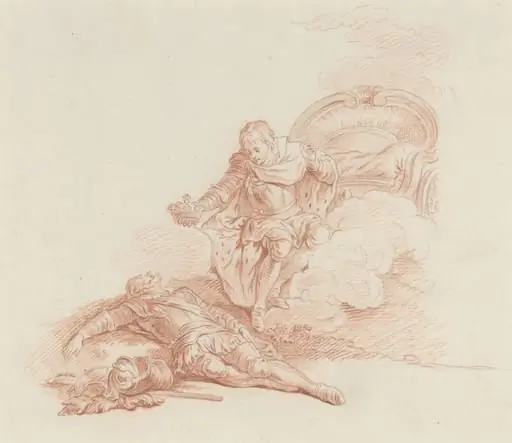 Regne, dit-il, triomphe et sois en tout mon fils
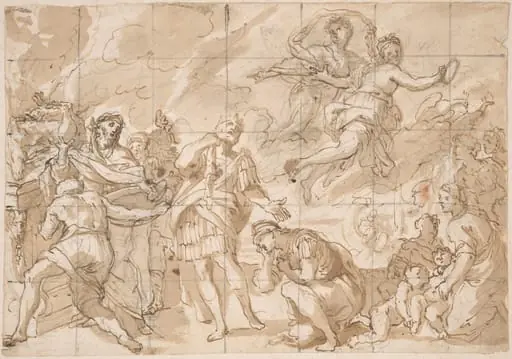 The Sacrifice of Iphigenia
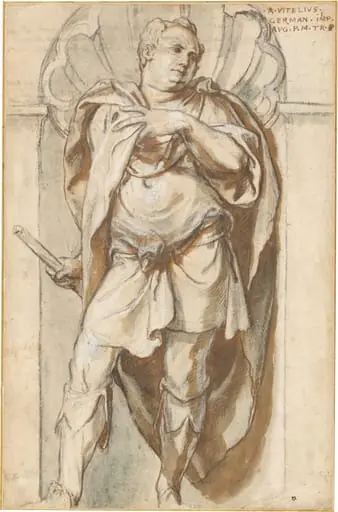 The Emperor Aulus Vitellius
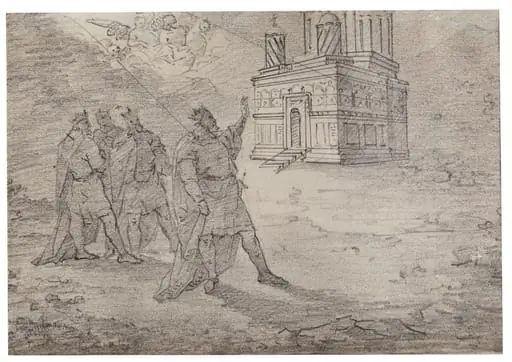 Neagoe Basarab în fața mânăstirii Curtea de Argeș
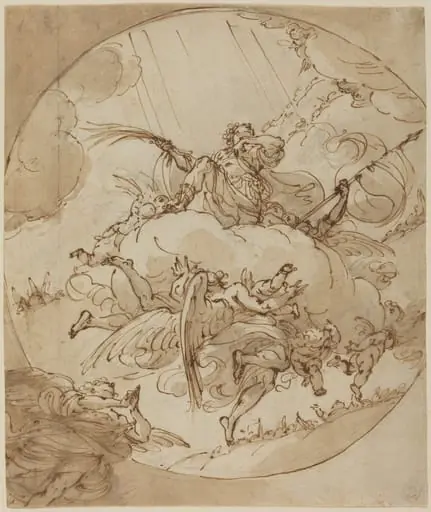 The Apotheosis of San Vitale