Artwork
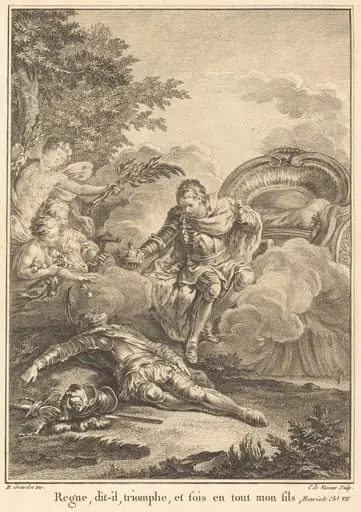
Regne, dit-il, triomphe et sois en tout mon fils
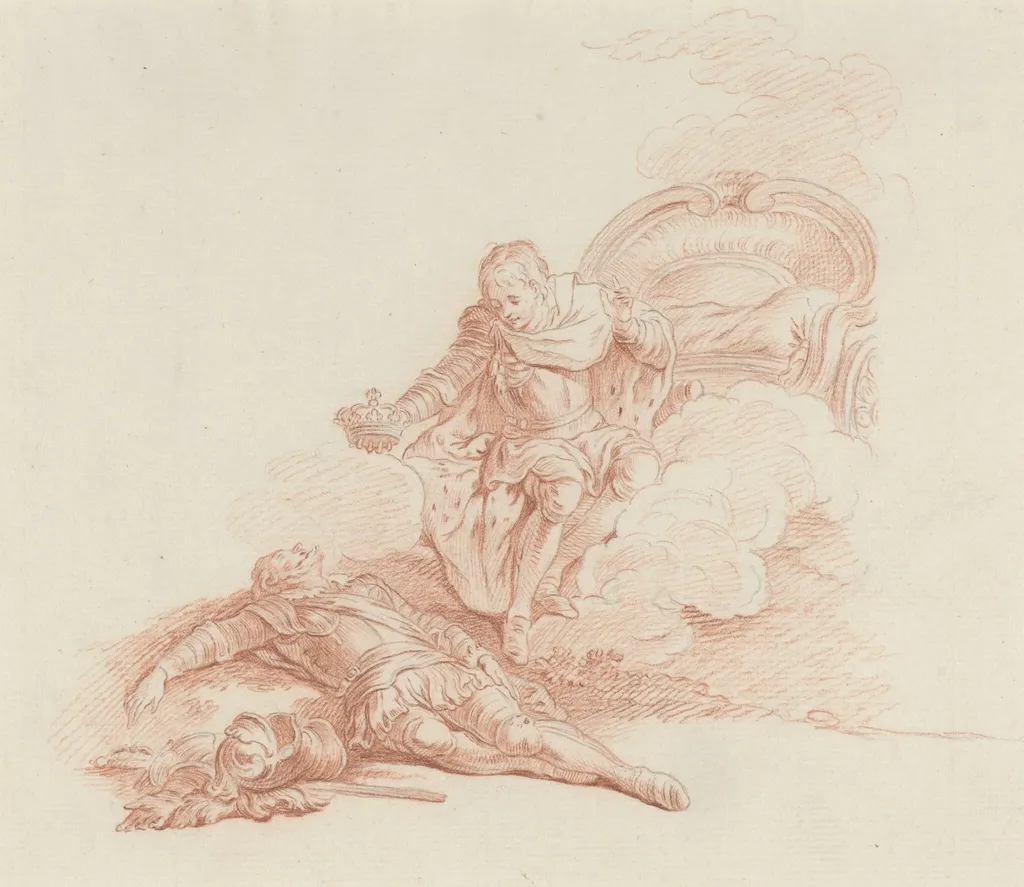
Regne, dit-il, triomphe et sois en tout mon fils is a graphite drawing by the Baroque artist Hubert François Gravelot. It dates from 1736 and is held in the collection of the National Gallery of Art. Created in 1736, this drawing by Hubert‑François Gravelot combines red chalk and graphite on laid paper.
About this work
Overview
Though appearing spontaneous, the sketch retains a high level of detail, characteristic of Gravelot’s preparatory studies.
Created in 1736, this drawing by Hubert‑François Gravelot combines red chalk and graphite on laid paper. The composition presents a lively scene rendered with fluid lines that suggest movement and depth, while the warm hue of the red chalk lends the work a subtle tonal richness. Though appearing spontaneous, the sketch retains a high level of detail, characteristic of Gravelot’s preparatory studies.
Subject & Meaning
The image depicts an active figure or group engaged in a dynamic gesture, implied by the swift, gestural strokes. The title, translating roughly to “Reign, he says, triumph and be all my son,” hints at a moral or allegorical theme, possibly celebrating filial duty or victorious inheritance, though the exact narrative remains open to interpretation.
Technique & Style
Gravelot employs a limited palette of red chalk for tonal modeling, complemented by graphite for line work and shading. The use of laid paper provides a textured ground that interacts with the media, enhancing the drawing’s tactile quality. The handling reflects Rococo sensibilities: elegant, ornamental, and imbued with a light, airy rhythm.
History & Provenance
Born in Paris, Gravelot relocated to London in 1732, where he quickly became a central figure in the diffusion of French Rococo aesthetics within British decorative arts. This drawing, dated shortly after his arrival, exemplifies the preparatory material he produced for book illustrations and ornamental designs that shaped eighteenth‑century taste across the Channel.
Context
During the early eighteenth century, British patrons increasingly sought French artistic models, and Gravelot’s work served as a conduit for that cultural exchange. His role as a drawing‑master and illustrator allowed him to influence a generation of designers, making this piece both a personal study and a testament to the broader transnational flow of style that defined the period.
Artist & collection

Artist
Hubert-François Bourguignon, commonly known as Gravelot (26 March 1699 – 20 April 1773), was a French engraver, a famous book illustrator, designer and drawing-master.

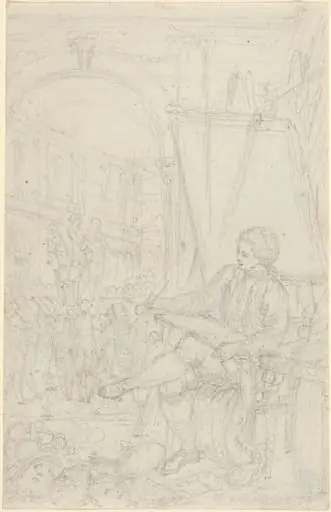 Self-Portrait
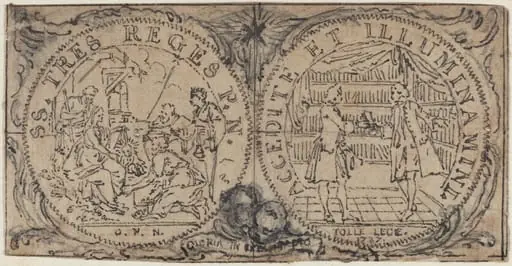 Ornamental Medallions with the Adoration of the Magi and Two Bibliophiles
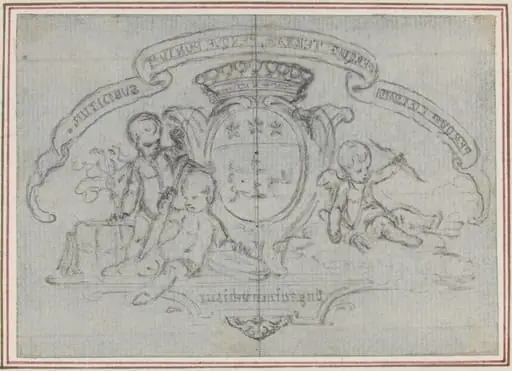 Coat of Arms with Three Putti
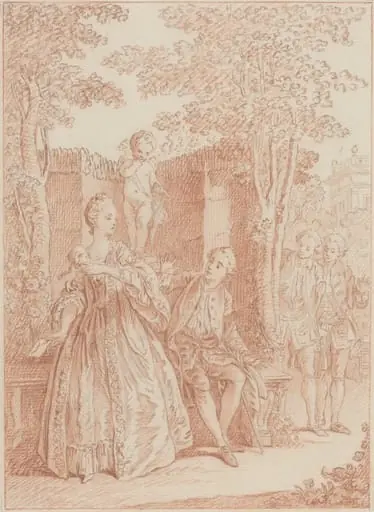 Oui, je la connais Traitre, et je connais ton Coeur
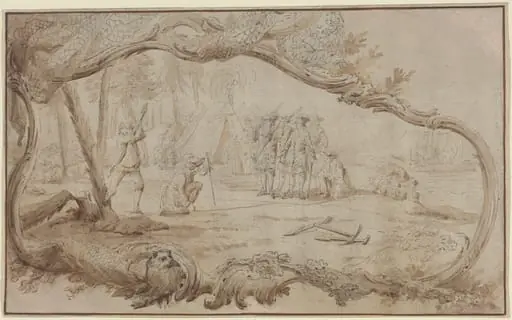 The Landing of the Dutch Expedition Party in New York
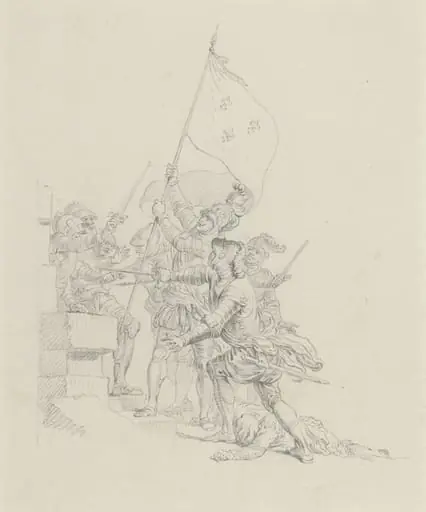 Il monte: il a déjà de ses mains triomphantes...
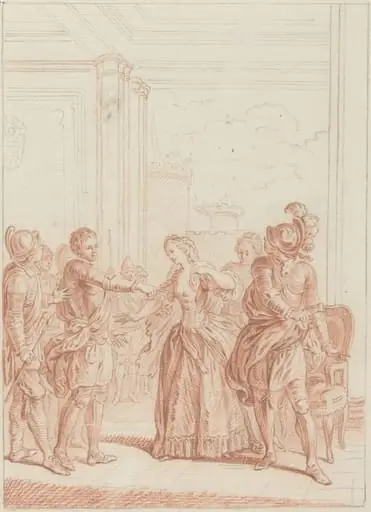 Je suis vengé de toi: l'on te hait, et l'on m'aime
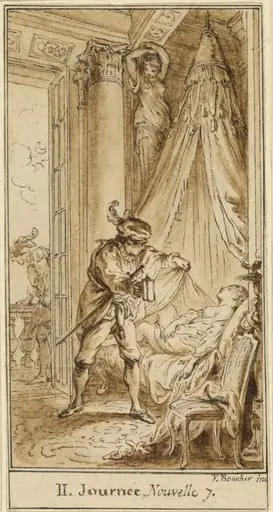 Second Day, Seventh Story: The Duke of Athens Contemplating the Sleeping Princess Alatiel
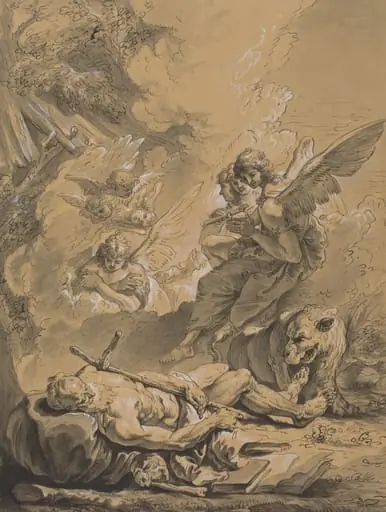 Death of Saint Jerome
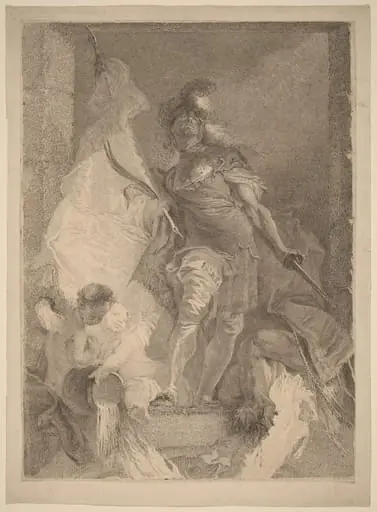 Saint Florian
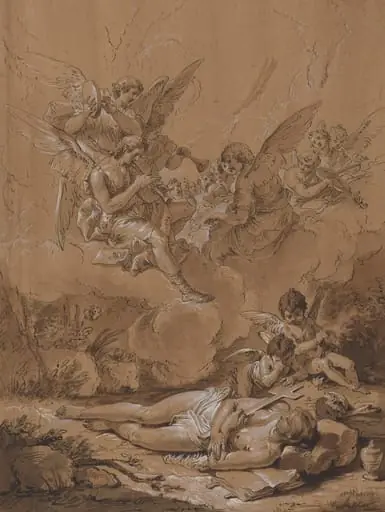 Death of the Magdalene
 Capriccio Derived from Salvator Rosa's "Figurine"
 Masinissa and Sophonisba
 Clap of Thunder
 Alexander Setting Fire to Persepolis
 A Captn of Banditti Sending Out a Party
 Warrior with a Shield and Torch
 Venus as a Huntress Appearing to Aeneas and Achates
 The Dream of Saint Joseph
 Regne, dit-il, triomphe, et sois en tout mon fils