Artwork
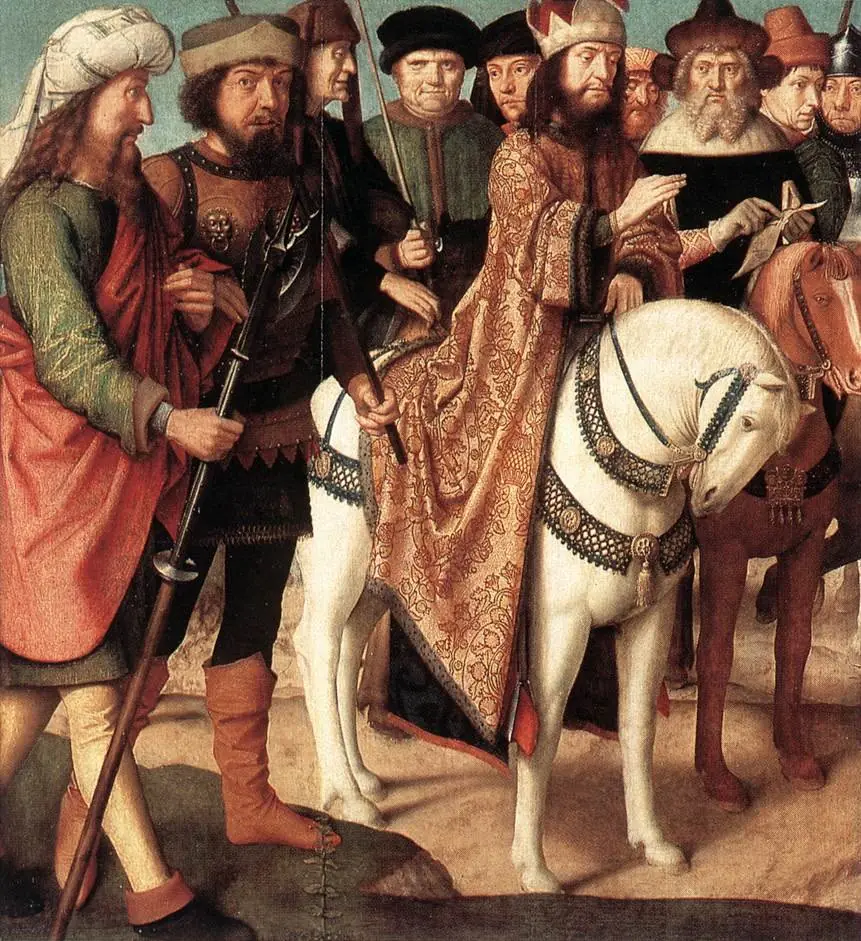
Fragment with group of men
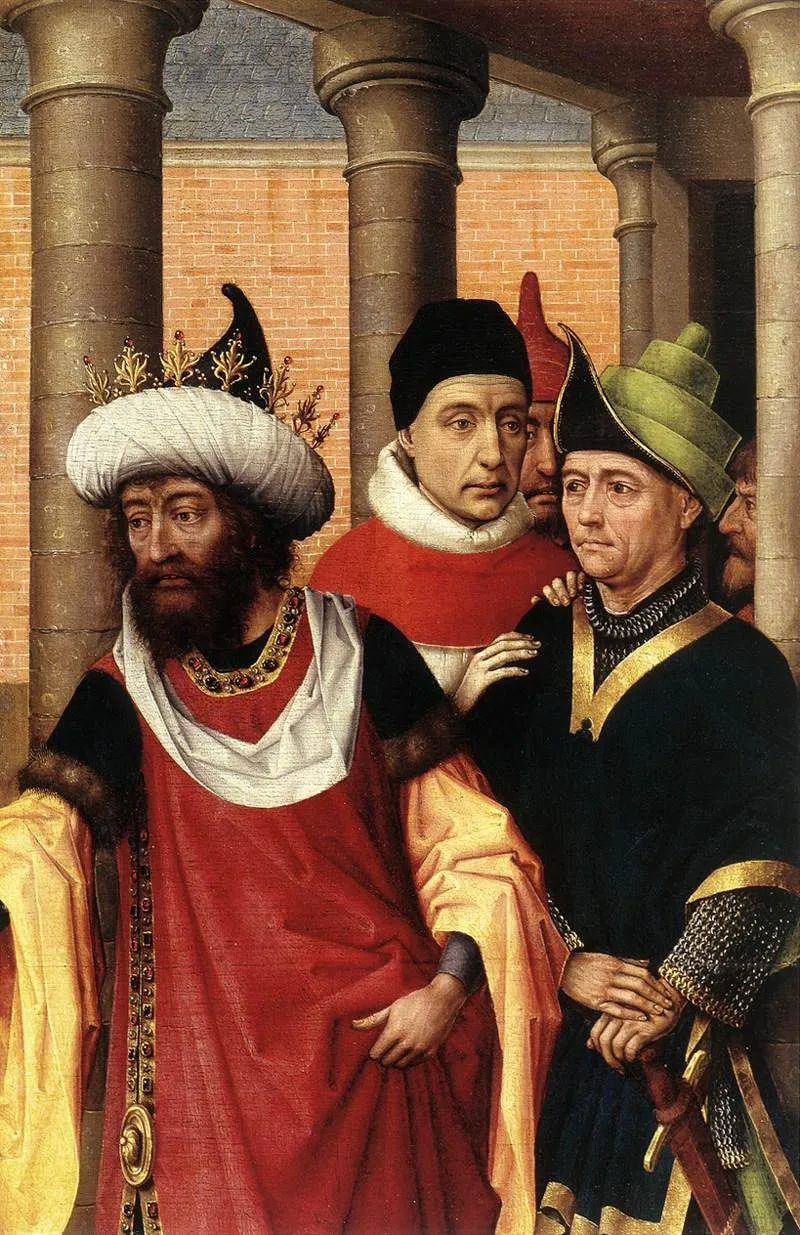
Fragment with group of men is an oil painting by the Northern Renaissance artist Rogier van der Weyden. It dates from 1424 and is held in the collection of the Royal Museums of Fine Arts of Belgium.
About this work
Overview
Though only a portion of the original work survives, it retains the refined detail and emotional restraint typical of his style.
This oil painting fragment dates to 1424 and originates from a larger religious composition by Rogier van der Weyden, a leading figure in early Netherlandish art. Though only a portion of the original work survives, it retains the refined detail and emotional restraint typical of his style. The fragment was likely part of a triptych or altarpiece commissioned for a devotional setting, reflecting the period’s integration of sacred narrative with secular realism.
Subject & Meaning
The scene depicts a group of men in elaborate attire, possibly representing biblical or saintly figures in a moment of contemplation. Their varied gazes and clasped hands suggest introspection or prayer, aligning with the devotional purpose of the original work. The inclusion of a turban and distinctive headwear may imply cultural diversity or symbolic references to Eastern figures, common in medieval religious iconography to denote wisdom or antiquity.
Technique & Style
Van der Weyden employed oil paint to achieve subtle gradations of light and texture, particularly in the folds of fabric and the rendering of skin tones. The figures are arranged with careful spatial logic, their postures conveying quiet dignity. Background elements like the brick wall and blue roof are rendered with precision but remain secondary, emphasizing the psychological presence of the figures over architectural detail.
History & Provenance
The fragment was once part of a multi-panel altarpiece, likely dismantled or damaged over time. It entered the collection of the Royal Museums of Fine Arts of Belgium, where it has been preserved as a significant example of early 15th-century Netherlandish painting. Its survival offers insight into the scale and structure of van der Weyden’s lost commissions, many of which were commissioned by Burgundian elites.
Context
Created during the Northern Renaissance, this work reflects the era’s shift toward naturalism and emotional depth in religious art. Van der Weyden’s patrons, including Philip the Good, sought imagery that combined spiritual gravity with lifelike representation. The attention to individualized faces and luxurious textiles underscores the growing importance of portraiture and material culture in devotional commissions of the time.
Legacy
Though incomplete, this fragment exemplifies van der Weyden’s influence on later Netherlandish painters through his mastery of expressive gesture and refined technique. It contributes to scholarly understanding of how large-scale altarpieces were composed and how individual panels functioned within broader religious narratives. Its preservation allows continued study of early oil painting methods and devotional aesthetics in the Low Countries.
Artist & collection
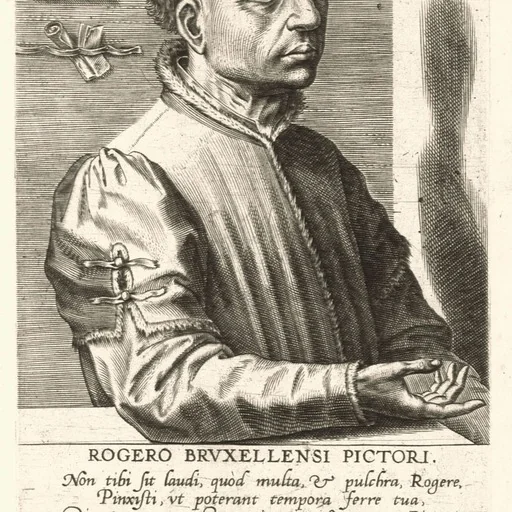
Artist
Rogier van der Weyden (Dutch: ; 1399 or 1400 – 18 June 1464), initially known as Roger de la Pasture (French: ), was an early Netherlandish painter whose surviving works consist mainly of religious triptychs,…

Museum
Royal Museums of Fine Arts of Belgium
Continue through works from the same source collection.
 Pilate's Dispute with the High Priest
 Saint Vincent Panels, fifth panel
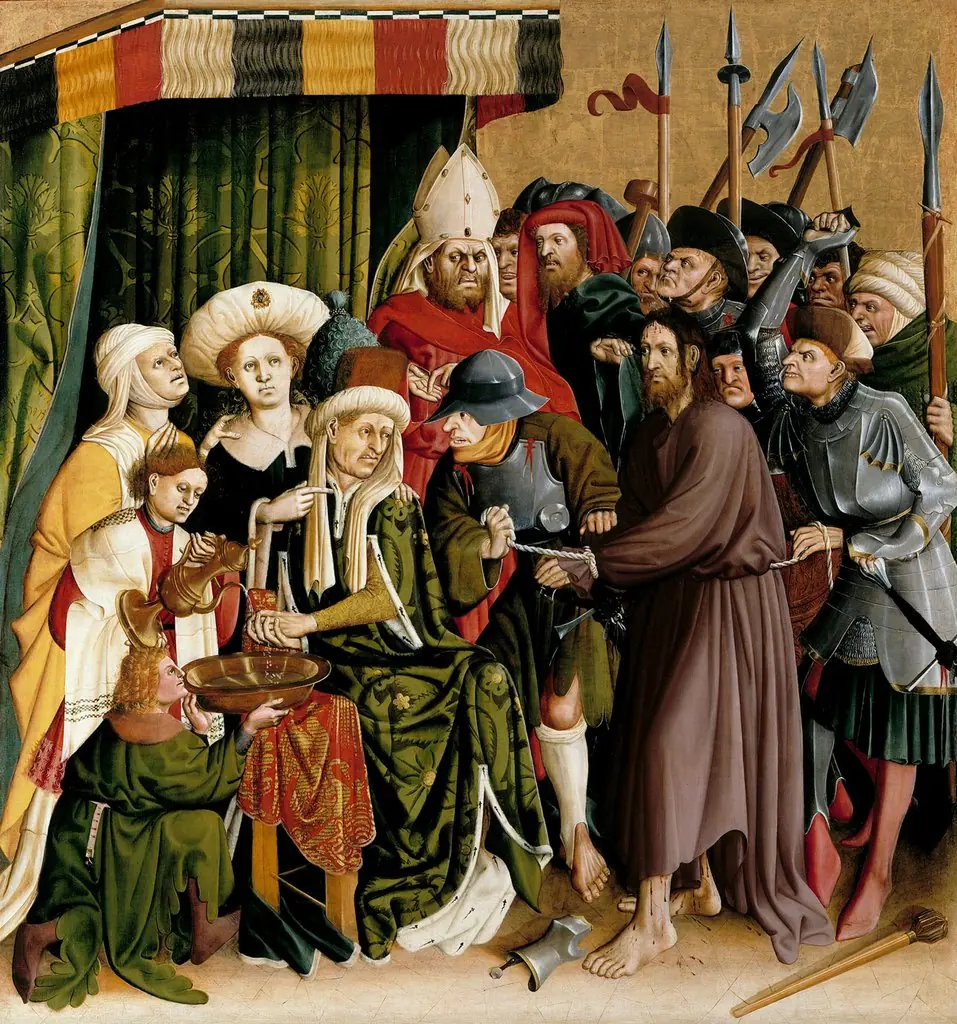 Christ before Pilate
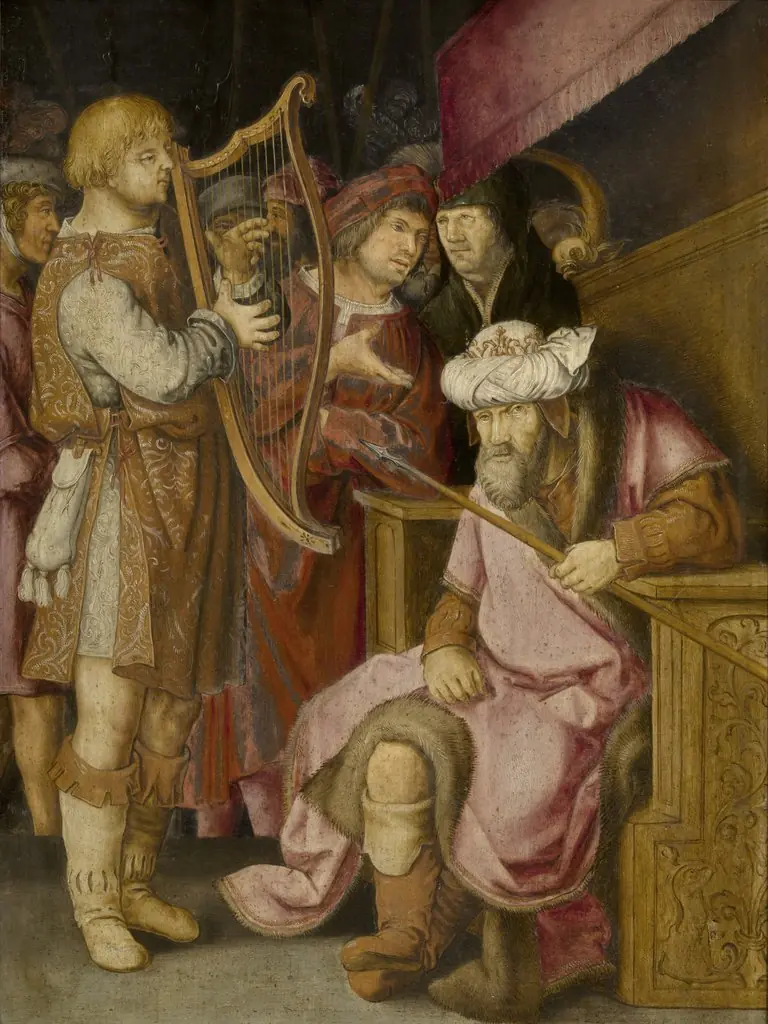 David Playing his Harp for Saul
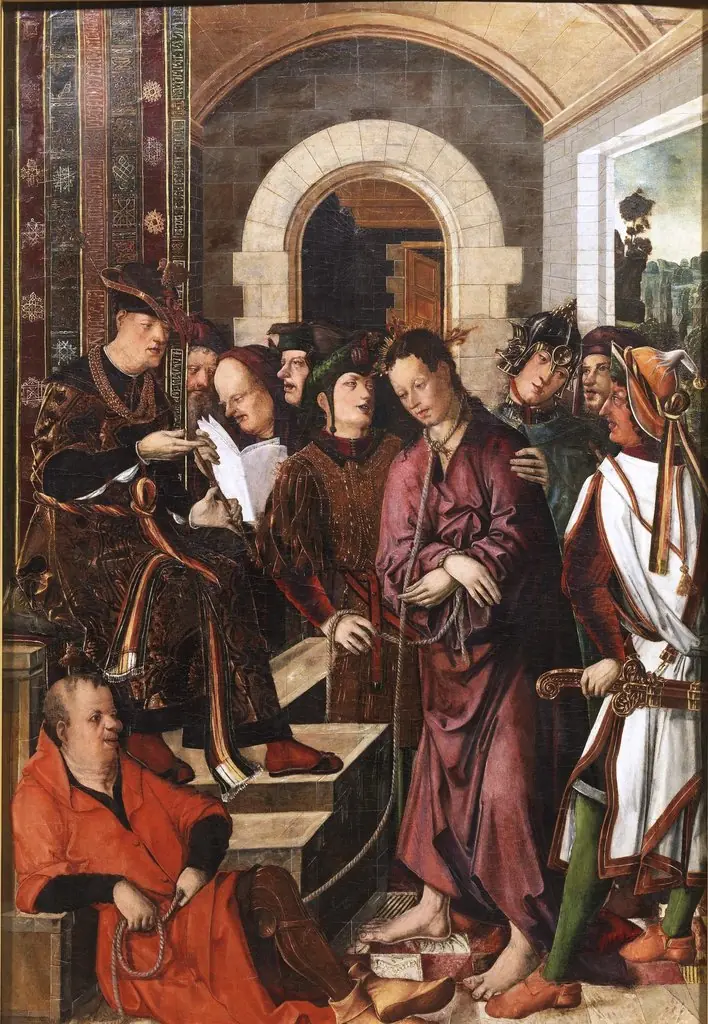 Christ before Pilate
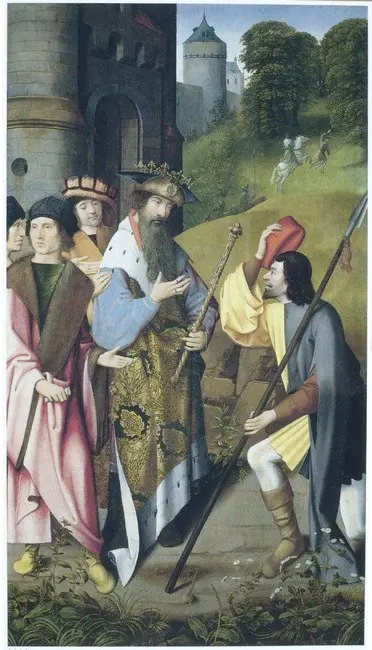 The King’s Spies Bring Him News of Dymphna’s Hideout
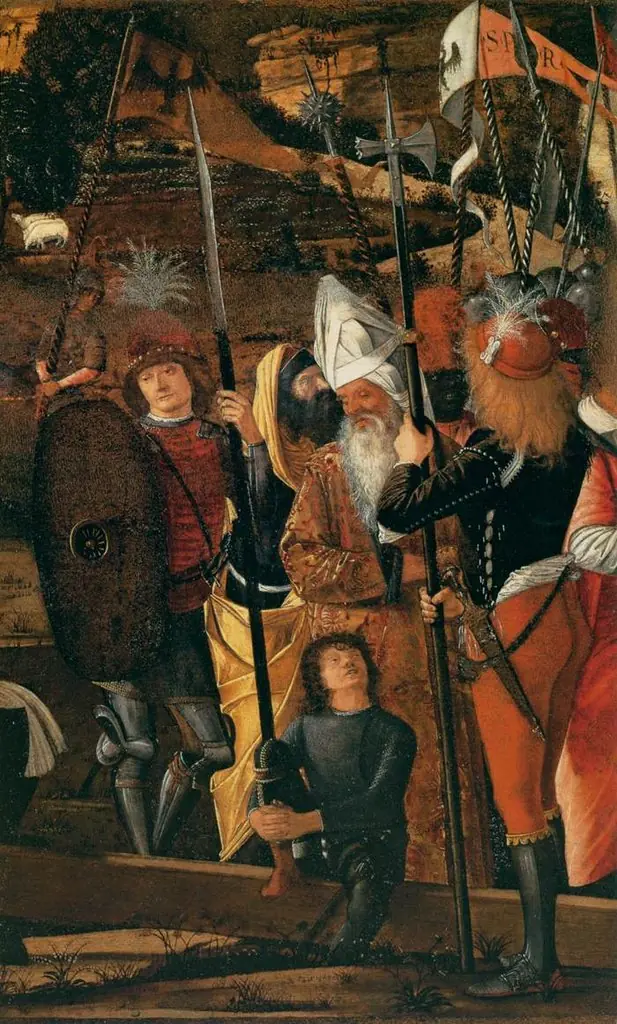 Group of Soldiers and Men in Oriental Costume
 King Solomon Receiving the Queen of Sheba
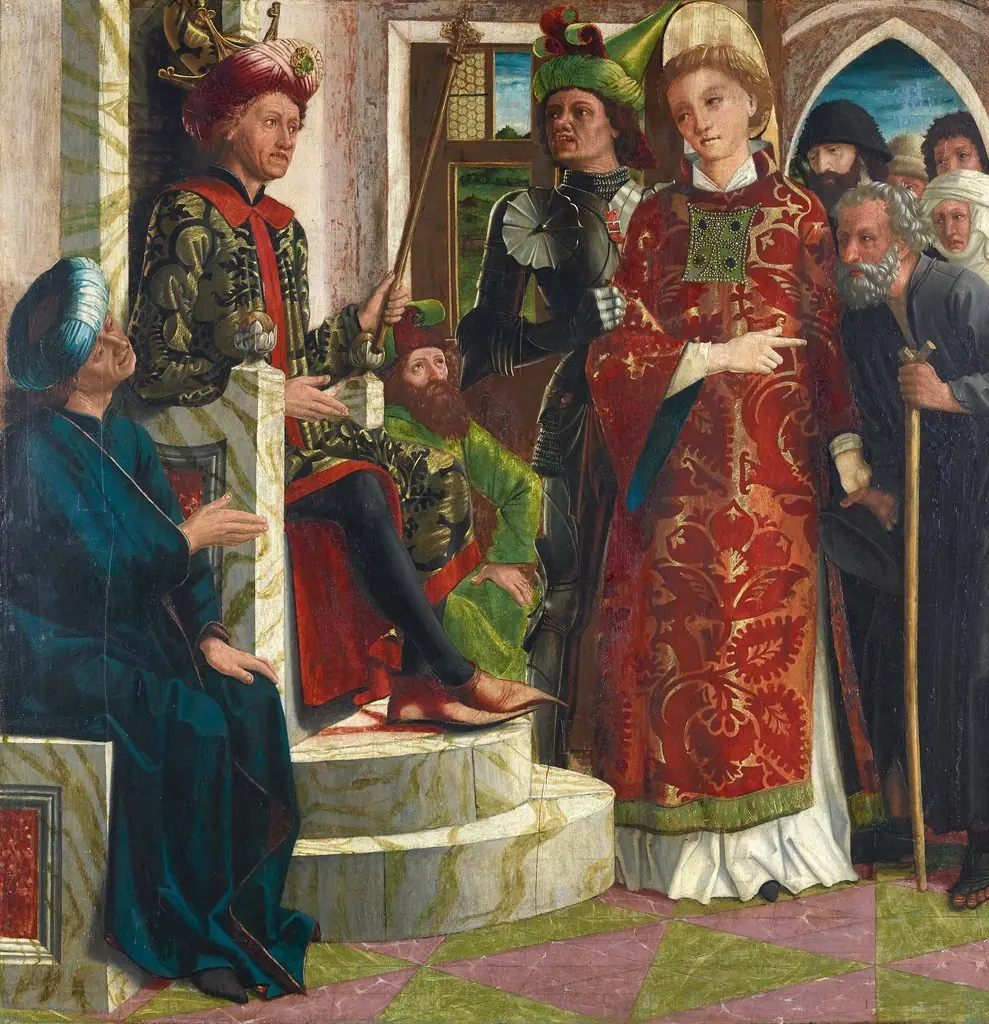 Der hl. Laurentius vor Kaiser Decius
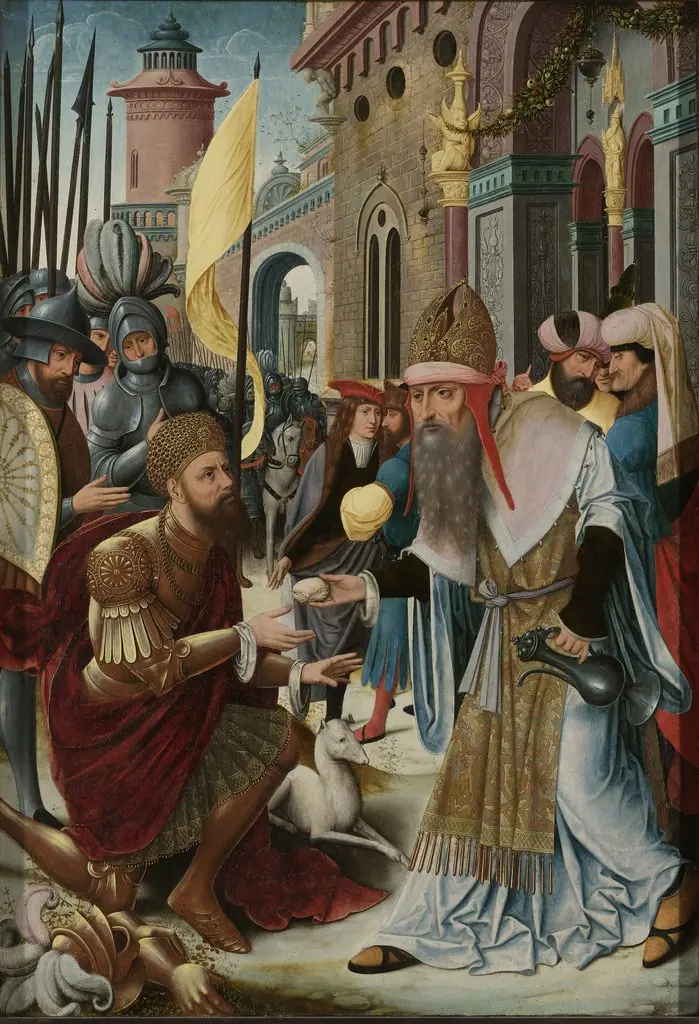 Left wing of an altarpiece with the meeting of Abraham and Melchizedek (inner wing) and Synagoga (outer wing)
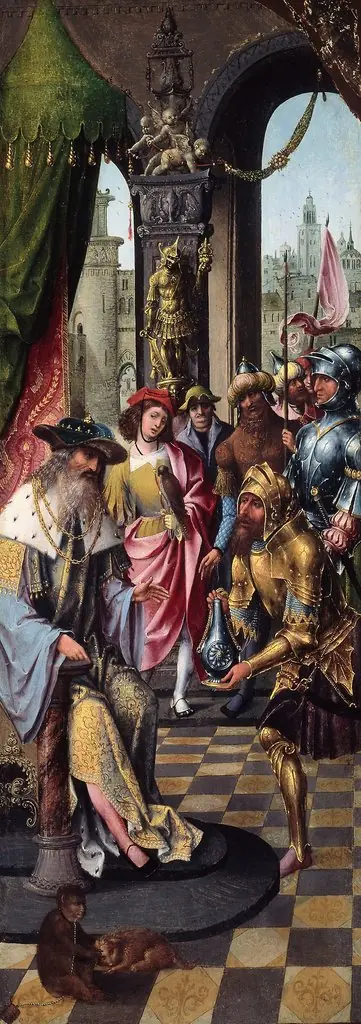 King David Receiving the Cistern Water of Bethlehem
 King David Receiving the Cistern Water of Bethlehem