Artwork
Columba-Altar: Darbringung im Tempel
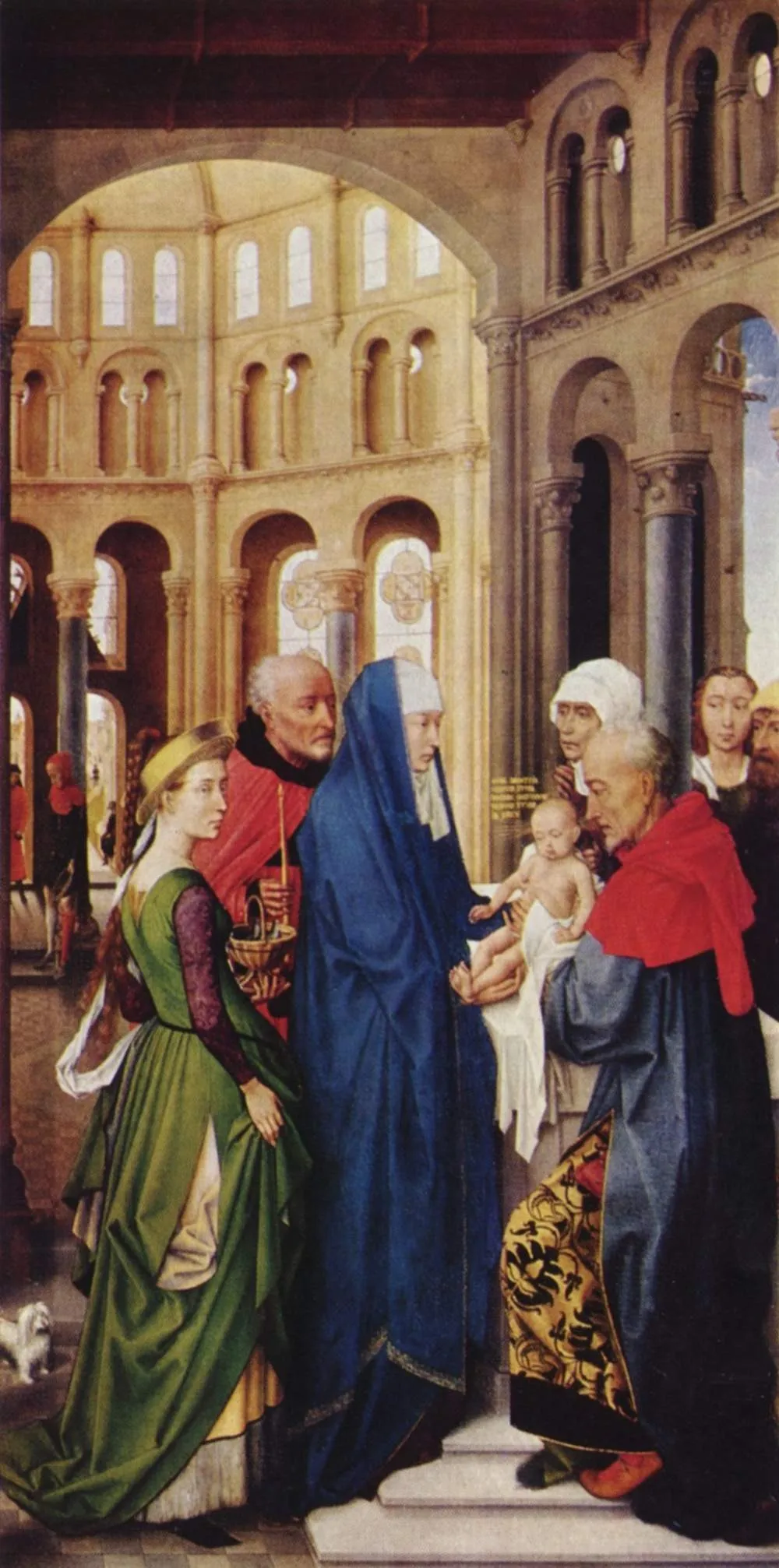
Columba-Altar: Darbringung im Tempel is an oil painting by the Northern Renaissance artist Rogier van der Weyden. It dates from 1455 and is held in the collection of the Bavarian State Painting Collections.
About this work
Overview
The altarpiece now belongs to the collection of the Alte Pinakothek in Munich.
Created in 1455 by the early Netherlandish painter Rogier van der Weyden, the work known as the Columba‑Altar: Darbringung im Tempel is an oil‑on‑panel triptych. It presents the biblical episode of the Presentation of Christ in the Temple, rendered in the detailed, emotionally resonant manner characteristic of the northern Renaissance. The altarpiece now belongs to the collection of the Alte Pinakothek in Munich.
Subject & Meaning
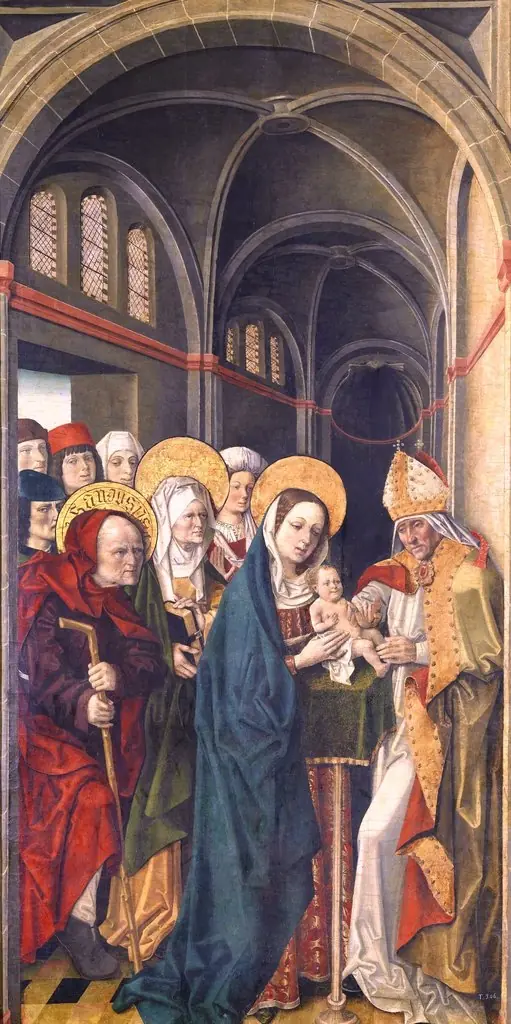
The central panel shows a solemn gathering around the Virgin Mary, who holds the infant Christ. Attendants in richly colored robes stand beneath arched windows and columns, emphasizing the sacred space of the temple. The composition underscores themes of devotion and the fulfillment of prophecy, inviting contemplation of the infant’s divine mission.
Technique & Style
Van der Weyden employed oil paint to achieve luminous blues, greens, and reds, allowing subtle gradations of light and shadow. Visible brushwork creates a textured surface, while careful chiaroscuro models the figures, giving them a three‑dimensional presence. The facial expressions and gestures convey a restrained yet palpable emotional intensity.
History & Provenance
The altarpiece was likely commissioned by the Burgundian duke Philip the Good, a frequent patron of van der Weyden’s religious works. After remaining in private or ecclesiastical hands for several centuries, it entered the Alte Pinakothek’s holdings, where it has been displayed as part of the museum’s early Netherlandish collection.
Context
Produced during the height of the northern Renaissance, the piece reflects the period’s shift toward naturalistic detail and individualized emotion in devotional art. Van der Weyden’s approach combines the precise observation of Flemish painting with the theological concerns of the Burgundian court, situating the work within both artistic and political currents of mid‑15th‑century Europe.
Artist & collection
Artist
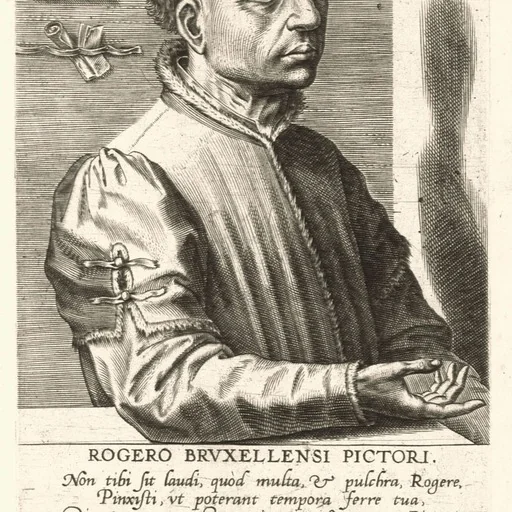
Rogier van der Weyden (Dutch: ; 1399 or 1400 – 18 June 1464), initially known as Roger de la Pasture (French: ), was an early Netherlandish painter whose surviving works consist mainly of religious triptychs,…

 The Circumcision
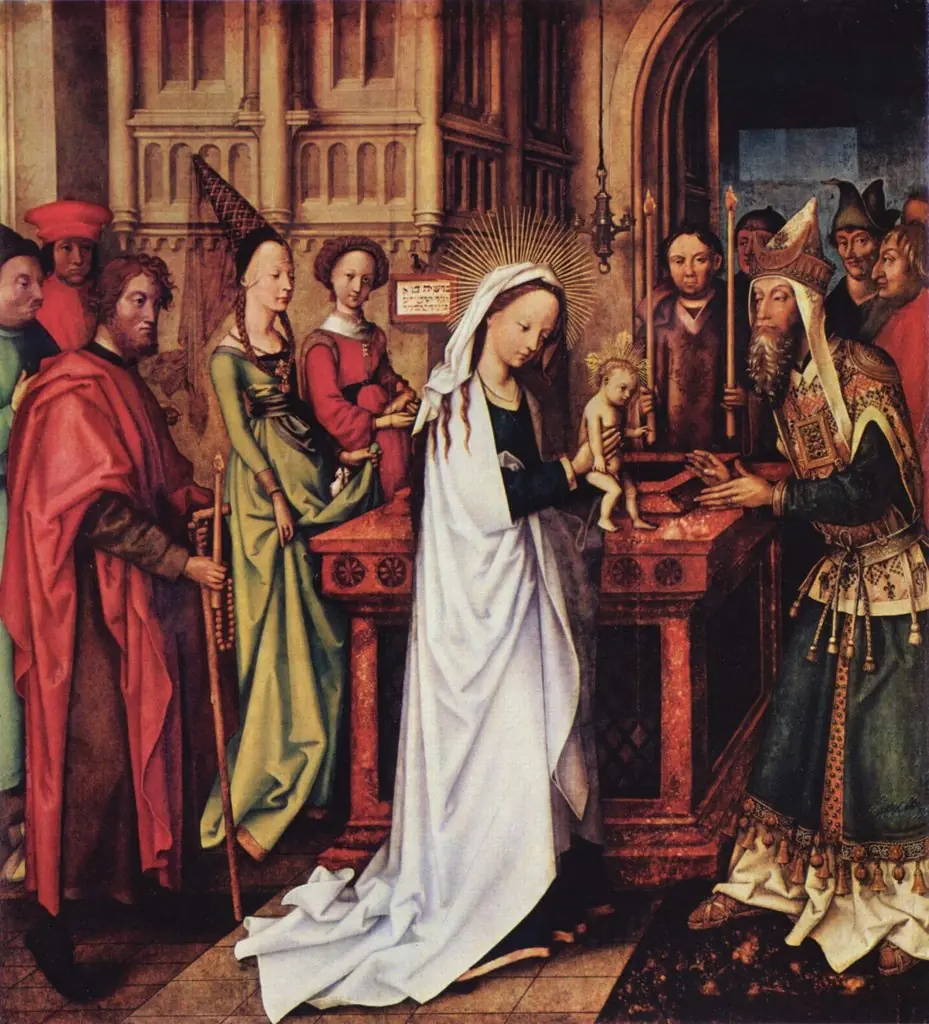 Presentation of Christ Child in the temple
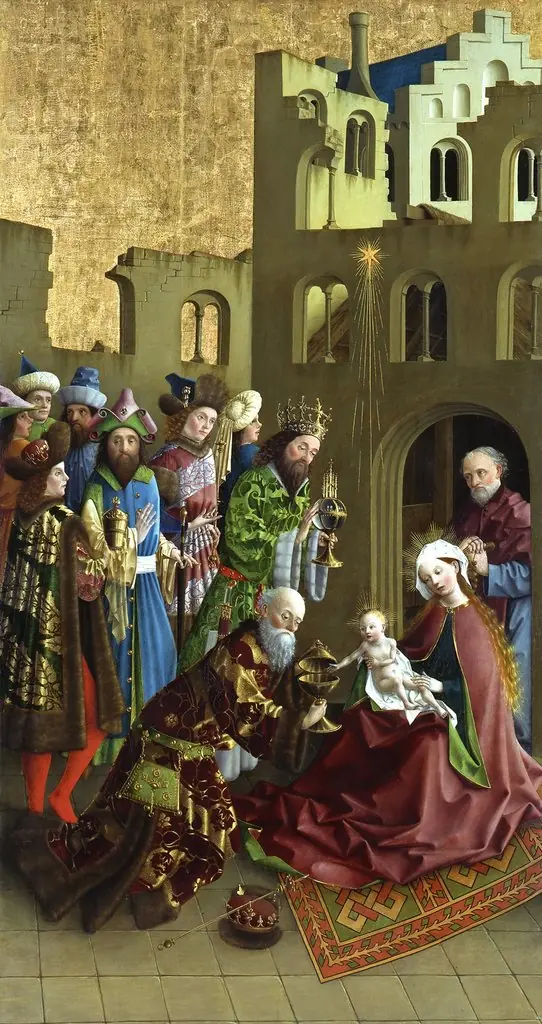 Darmstadt Altarpiece: The Epiphany
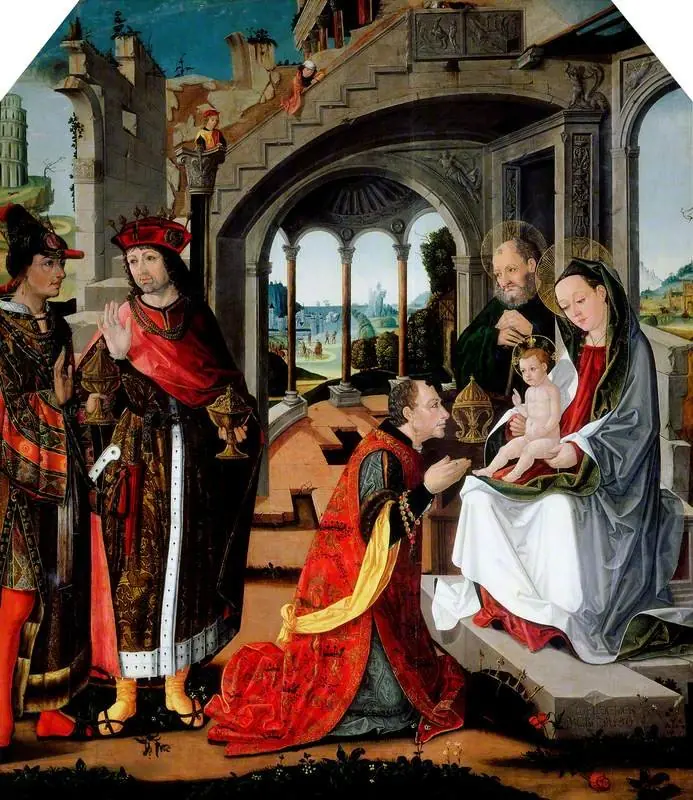 The Adoration of the Magi
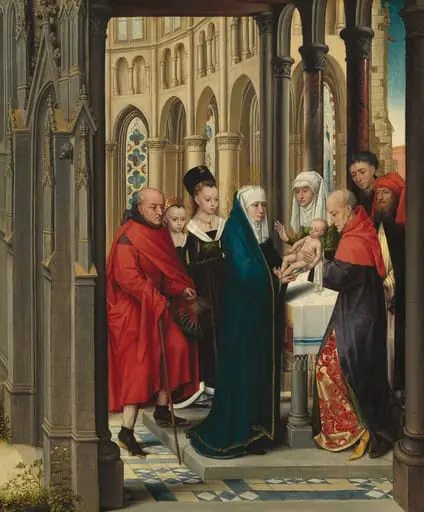 The Presentation in the Temple
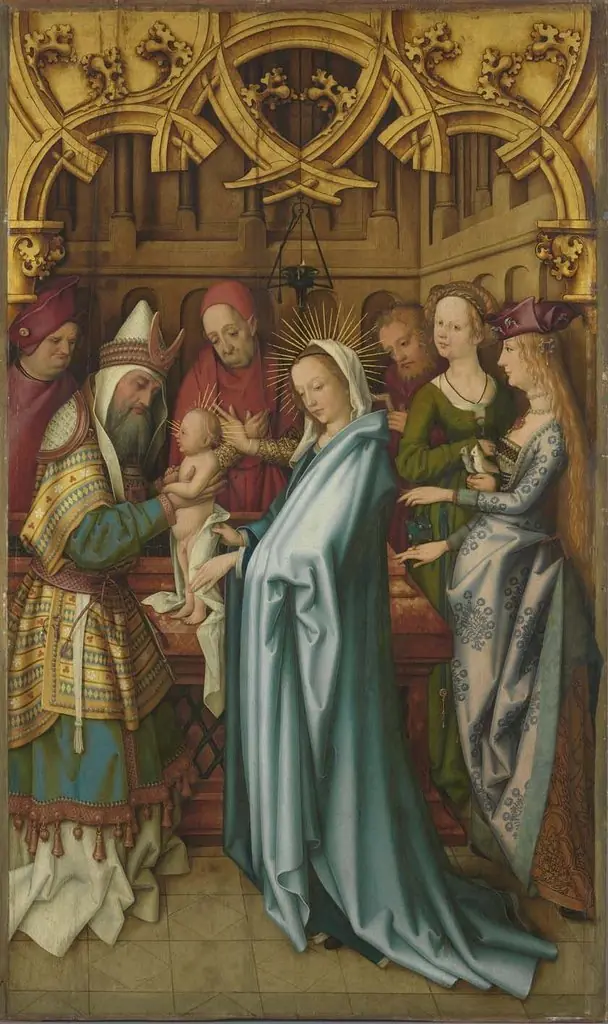 Kaisheimer Altar: Darbringung im Tempel
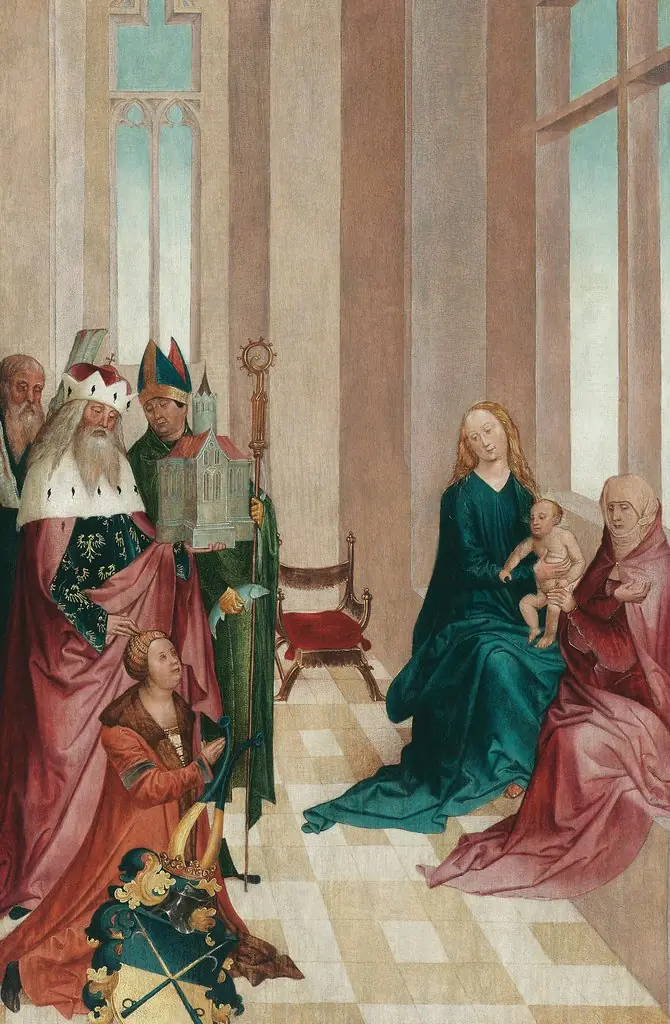 Anna Selbdritt
 Adoration of the Magi
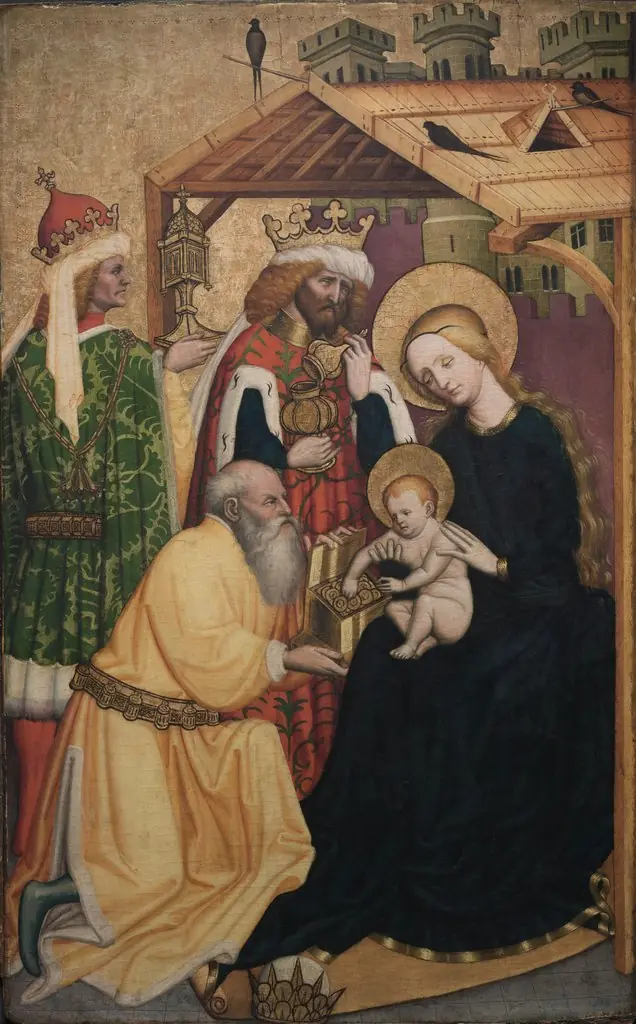 Adoration of the Magi
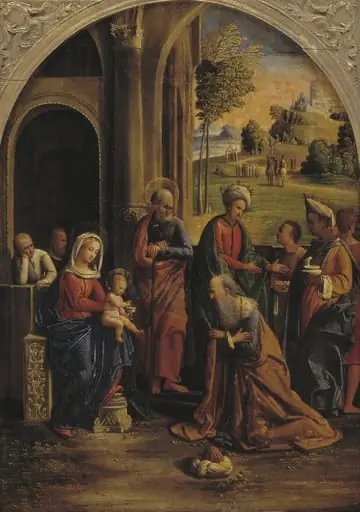 The Adoration of the Kings
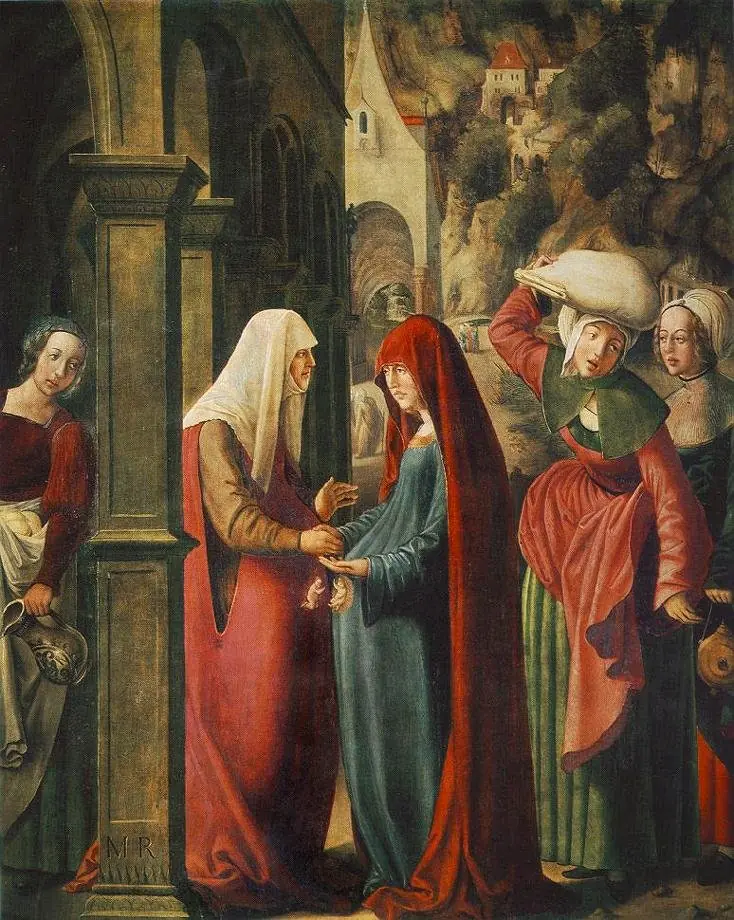 Meeting of Mary and Elisabeth
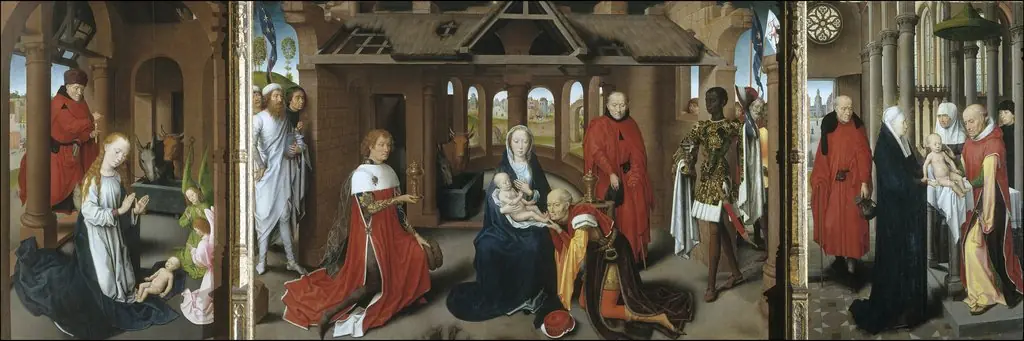 Adoration of the Magi Triptych