Artwork
The Altar of St. John
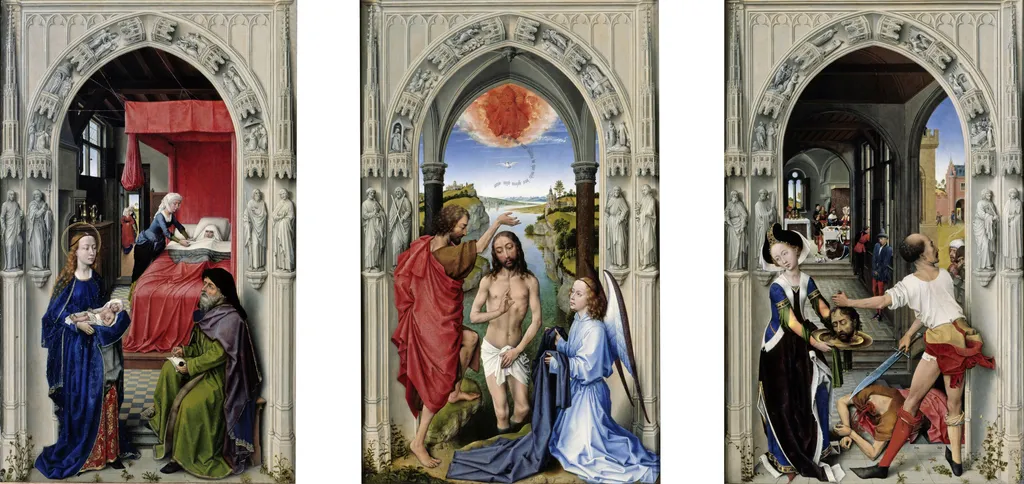
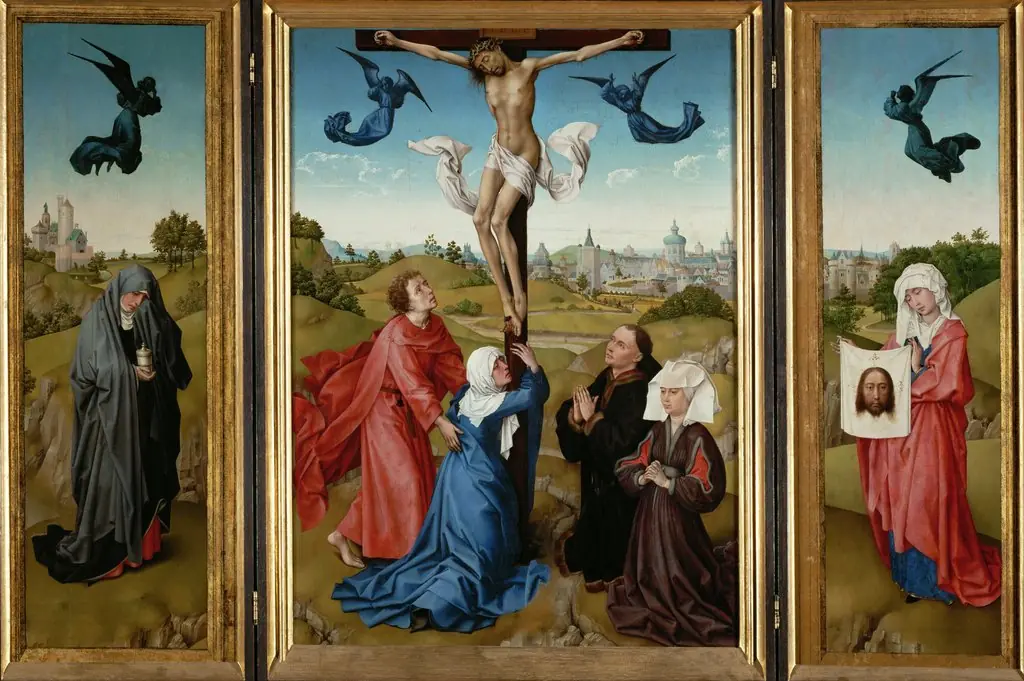
The Altar of St. John is an oil painting by the Northern Renaissance artist Rogier van der Weyden. It dates from 1455 and is held in the collection of the Gemäldegalerie Berlin.
About this work
The work shares symbolic motifs and format with van der Weyden’s earlier Miraflores Altarpiece, linking the two pieces in theme and intention.
The Altar of St. John is a triptych painted in oil on oak panel around 1455 by Rogier van der Weyden. It belongs to the Early Netherlandish period and is now displayed in Berlin. The work shares symbolic motifs and format with van der Weyden’s earlier Miraflores Altarpiece, linking the two pieces in theme and intention. It even appeared in the 1980 BBC Two series 100 Great Paintings, giving it a bit of television fame. If you’re curious about where you can see it, look up the museum: Gemäldegalerie Berlin.
Overview
Created around 1455, the Altar of St John is a three‑panel oil painting on oak, executed by the Early Netherlandish artist Rogier van der Weyden. The work is presently housed in the Gemäldegalerie in Berlin and exemplifies the artist’s mature style in religious triptychs.
Subject & Meaning
The central panel depicts a devotional scene centered on Saint John, surrounded by attendant figures and symbolic elements that reinforce his theological role. The surrounding wings contain complementary iconography that together convey a narrative of piety and intercession.
Technique & Style
Van der Weyden employed oil on oak to achieve fine detail and subtle tonal transitions, characteristic of the Netherlandish tradition. The composition balances a clear, linear arrangement with a luminous colour palette, allowing intricate textures in garments and architectural settings to emerge.
History & Provenance
The altarpiece was likely commissioned for a devotional setting in the mid‑15th century and later entered the Berlin collection, where it has remained since the early 20th century. Its documented exhibition history includes a feature in the 1980 BBC Two series “100 Great Paintings.”
Context
The piece shares compositional and symbolic motifs with van der Weyden’s earlier Miraflores Altarpiece, indicating a continuity of thematic concerns in his work. Both altarpieces employ a triptych format to structure narrative and devotional focus, reflecting contemporary liturgical practices.
Own this work as a print
Artist & collection
Artist
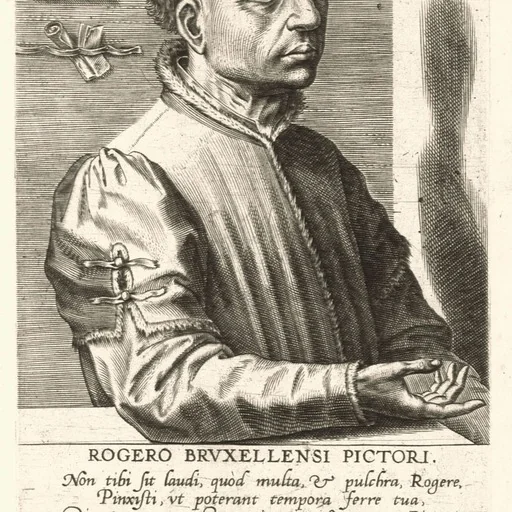
Rogier van der Weyden (Dutch: ; 1399 or 1400 – 18 June 1464), initially known as Roger de la Pasture (French: ), was an early Netherlandish painter whose surviving works consist mainly of religious triptychs,…

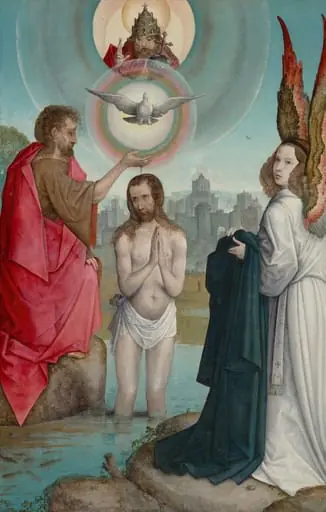 The Baptism of Christ
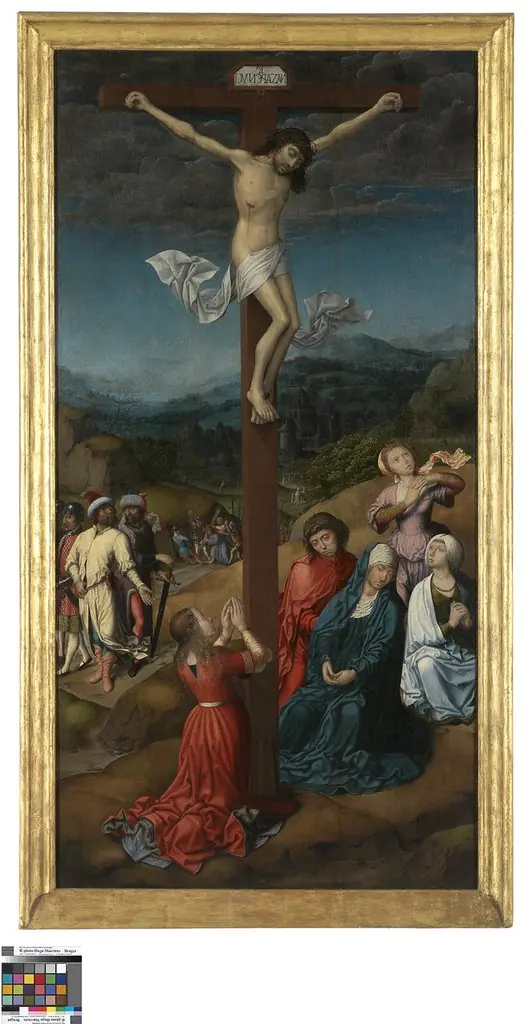 Crucifixion
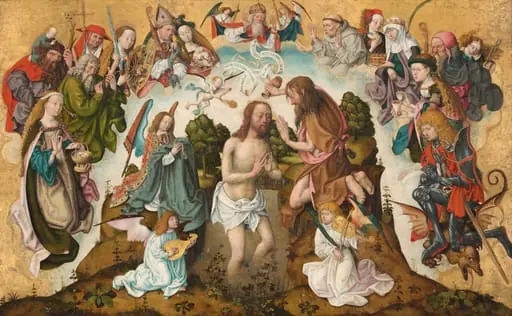 The Baptism of Christ
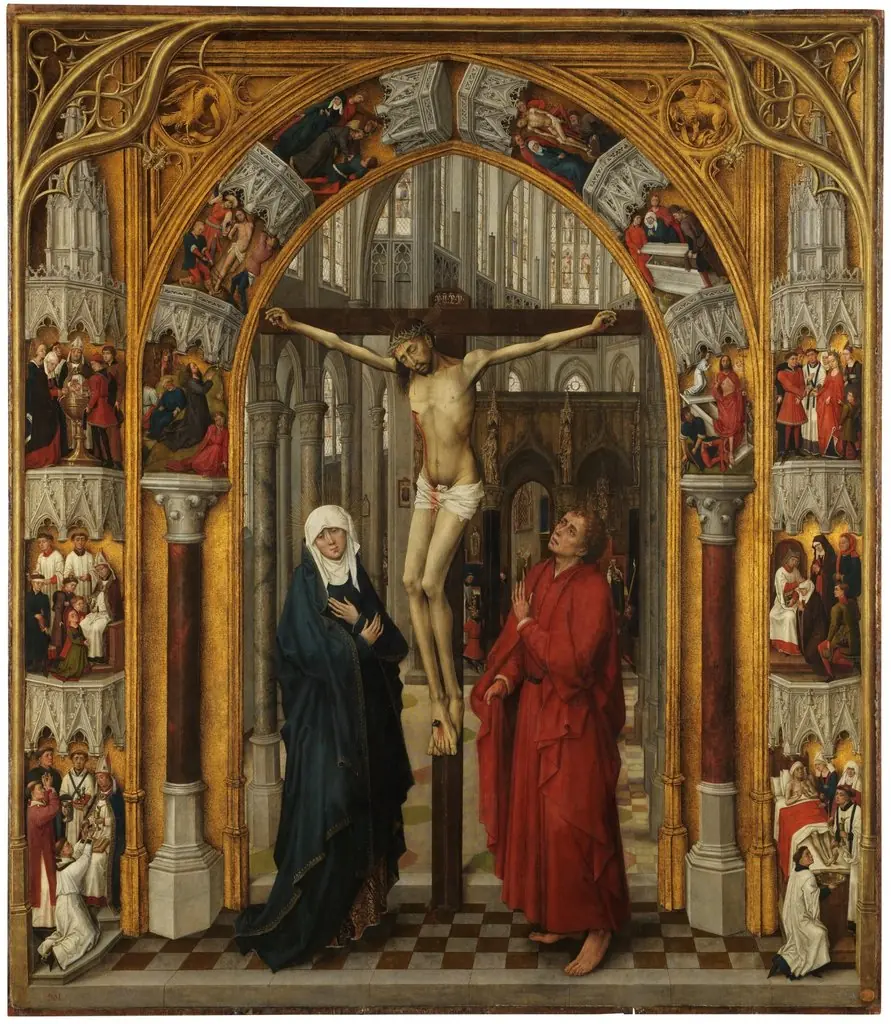 Redemption Triptych: The Crucifixion
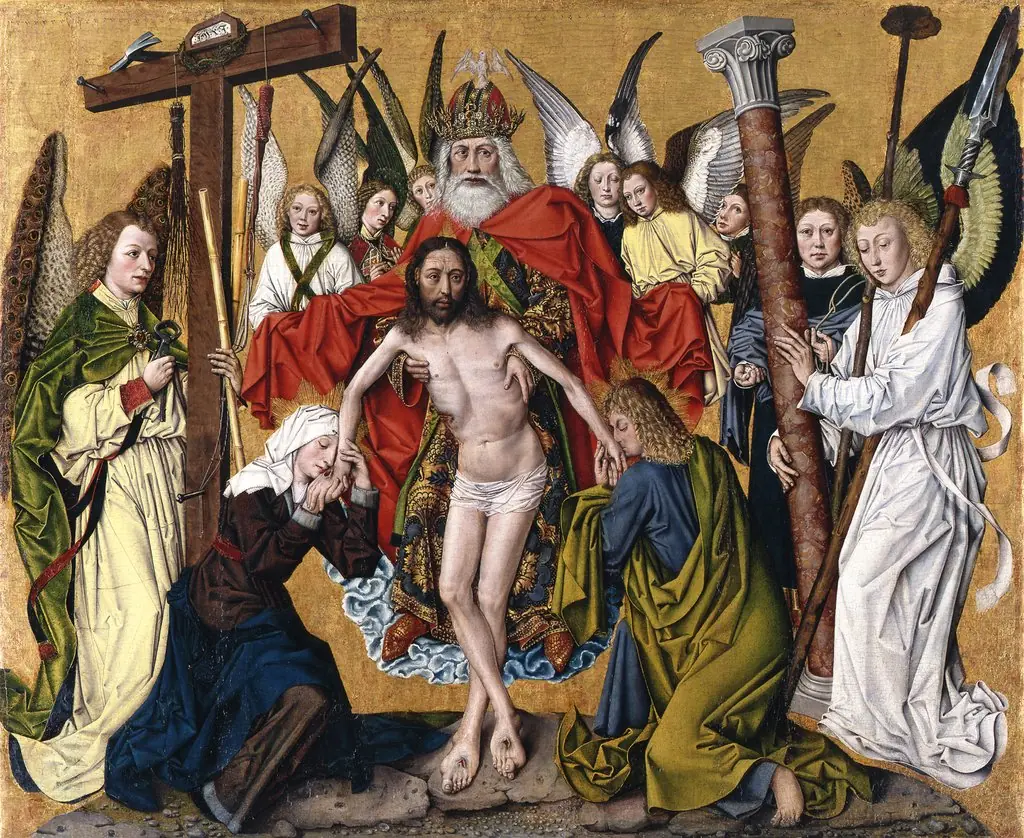 The Throne of Mercy with the Virgin, St. John, and Angels with the Arma Christi
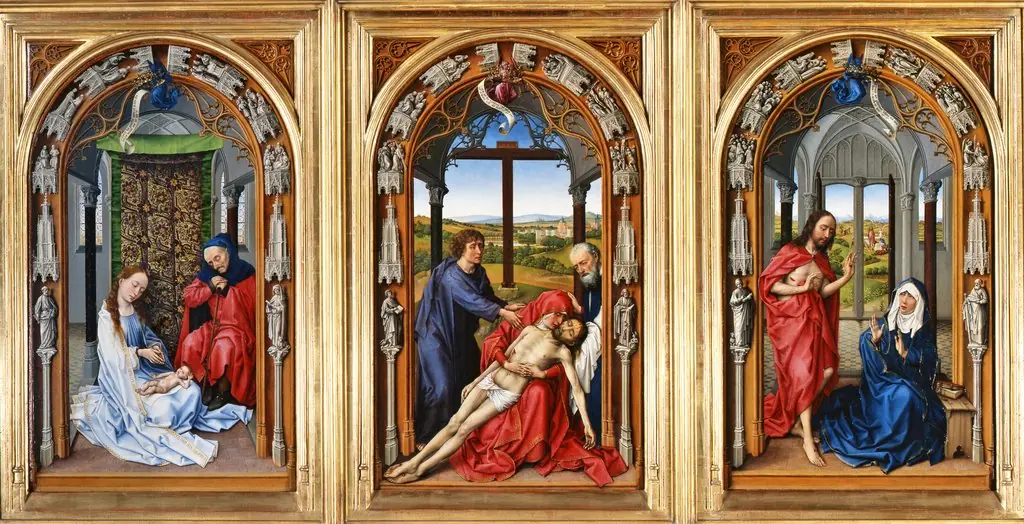 Miraflores Altarpiece
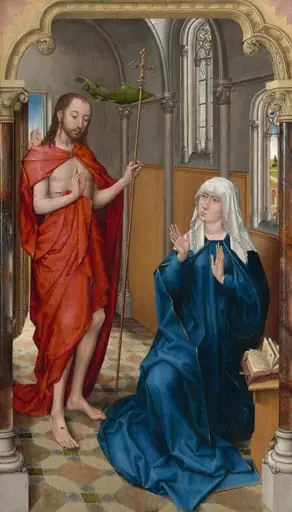 Christ Appearing to the Virgin
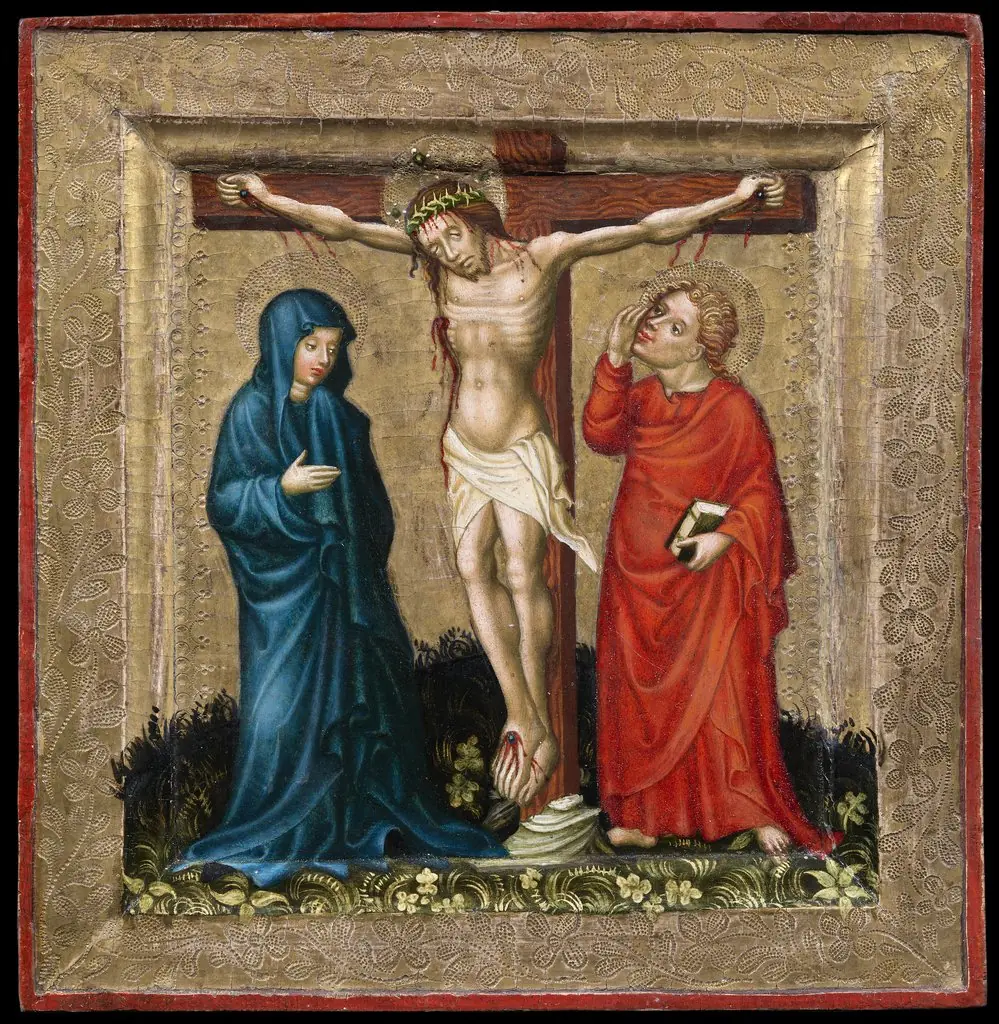 Christ on the Cross with the Virgin Mary and John
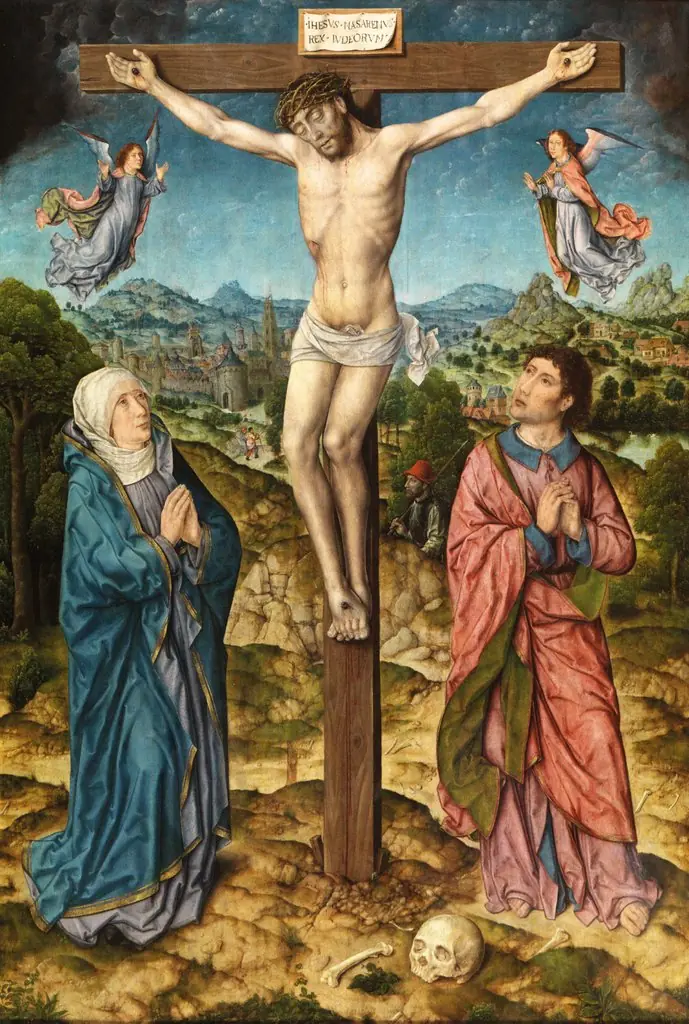 The Crucifixion
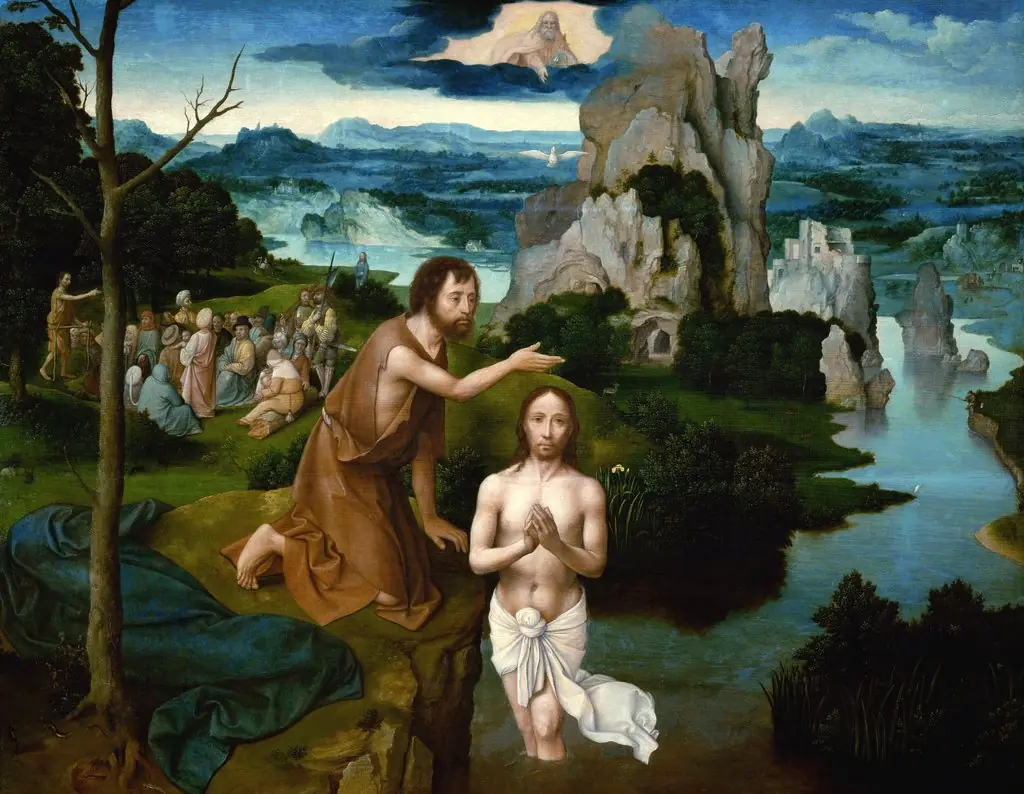 The Baptism of Christ
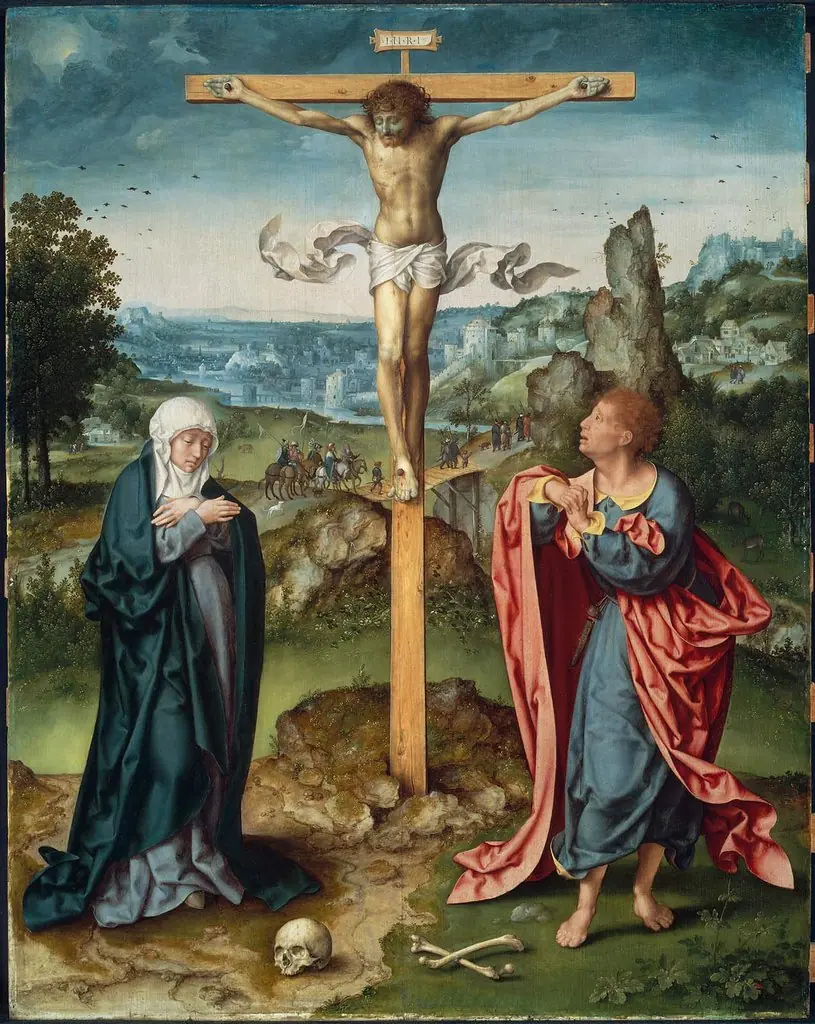 The Crucifixion
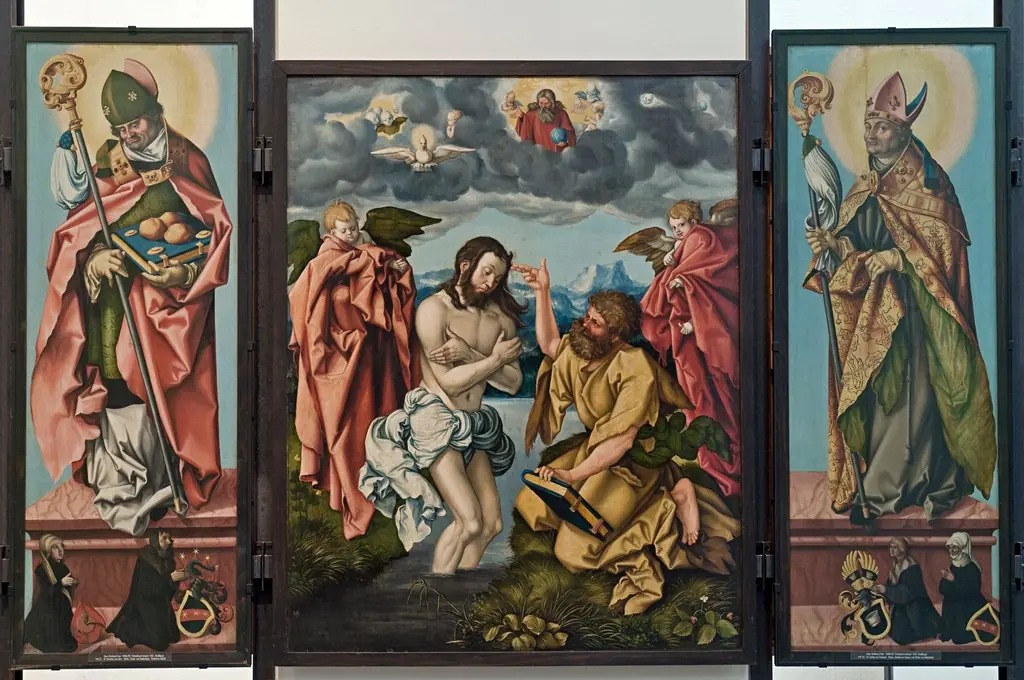 Saint John Altarpiece