Artwork
The Last Judgment
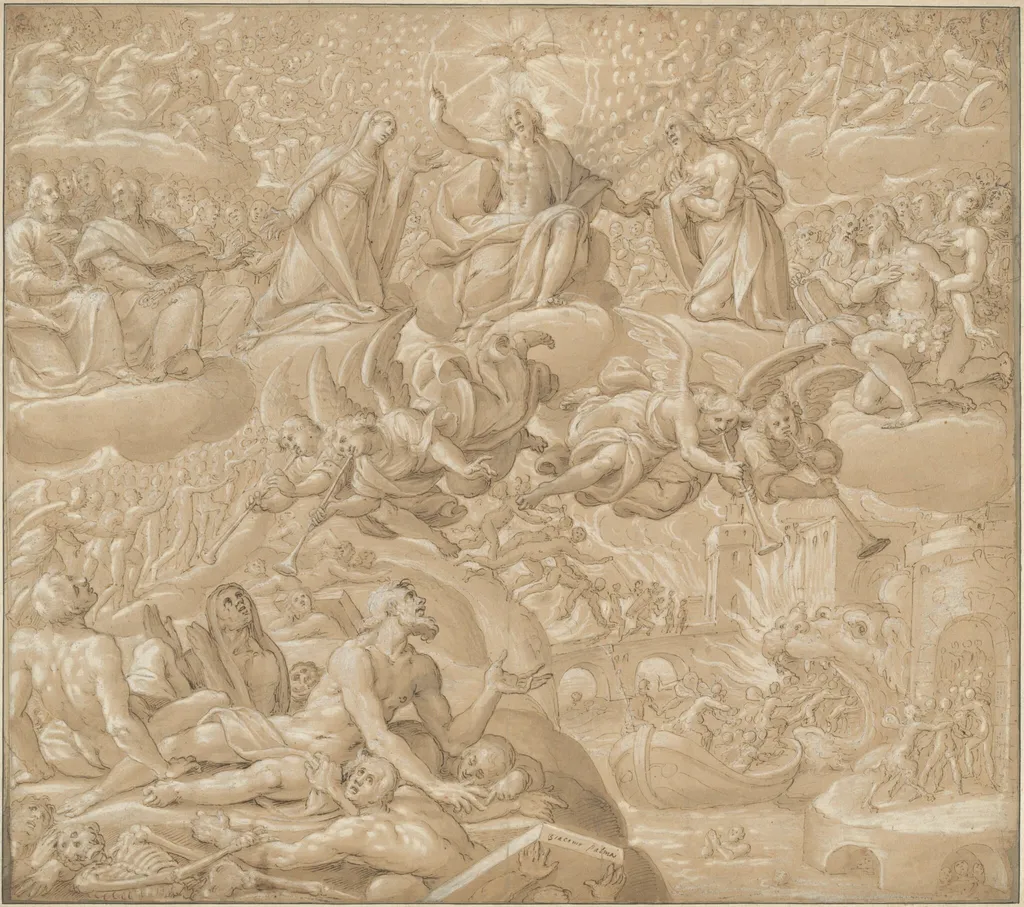
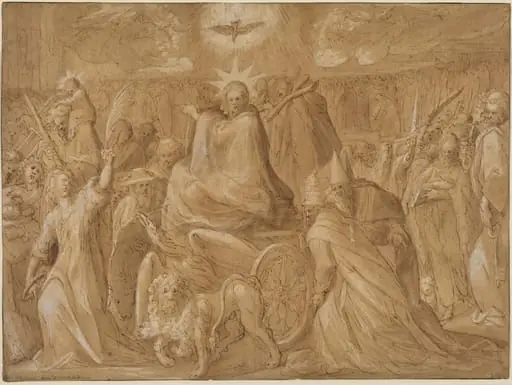
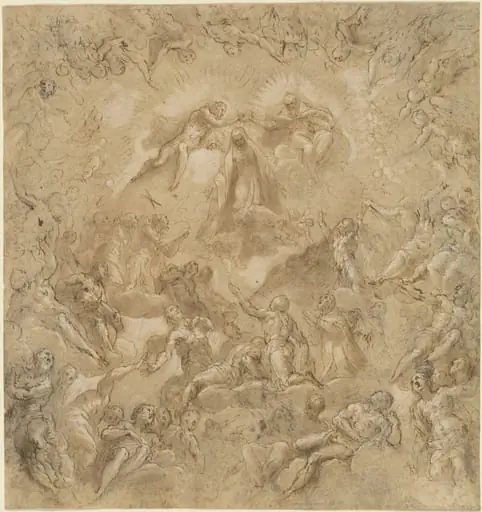
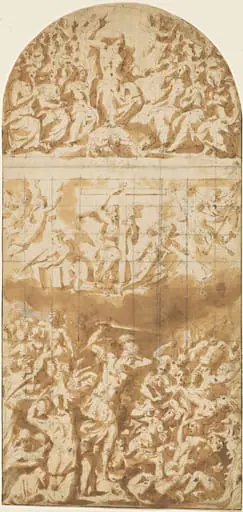
The Last Judgment is an ink drawing by the Baroque artist Giovanni Mauro della Rovere. It dates from 1614 and is held in the collection of the National Gallery of Art.
About this work
Overview
Giovanni Mauro della Rovere’s 1614 drawing, titled The Last Judgment, presents a complex, multi‑figure composition on brown‑prepared paper. Executed with pen, brown ink, brush work, brown wash, and white heightening over graphite underdrawings, the piece is mounted on an eighteenth‑century backing, reflecting a layered approach to material preparation.
Subject & Meaning
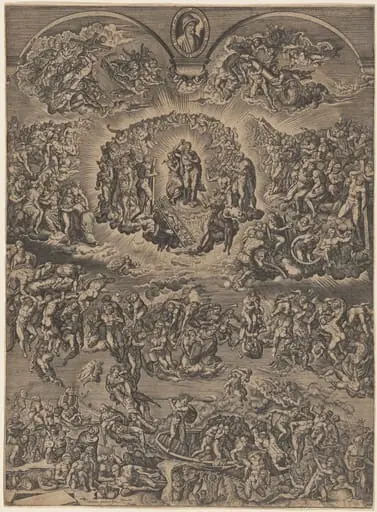
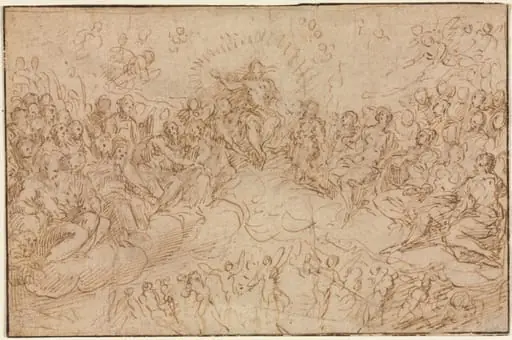
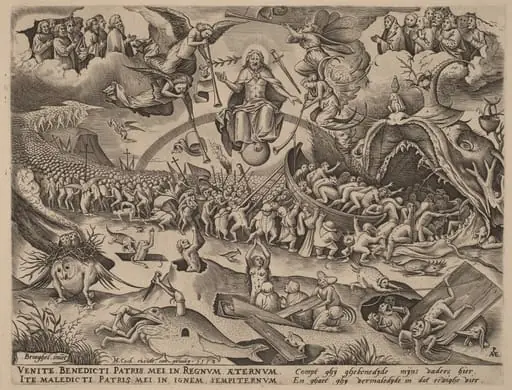
The central figure of Christ presides over a bustling scene of souls in transition: some ascend toward a luminous heaven, while others are drawn downward into a shadowy abyss. The juxtaposition of upward and downward movement visualizes the theological dichotomy of salvation and damnation inherent in the eschatological theme.
Technique & Style
Della Rovere combines fine pen lines with broader ink washes to model volume, while selective white heightening accentuates highlights and creates a sense of depth. The underlying graphite sketch remains visible in places, revealing the artist’s preparatory process and contributing to the drawing’s textured surface.
History & Provenance
Created in 1614, the drawing later received an eighteenth‑century mount, indicating continued appreciation and preservation across centuries. Its provenance prior to this mounting is not documented, but the later framing suggests it entered a collection that valued historic religious drawings.
Context
The work belongs to a period when devotional drawings served both as study pieces for artists and as portable meditations for private devotion. Della Rovere’s treatment aligns with contemporary Counter‑Reformation visual strategies, emphasizing moral urgency through vivid, dramatic representation of the final judgment.
Artist & collection