Artwork
The French Barracks
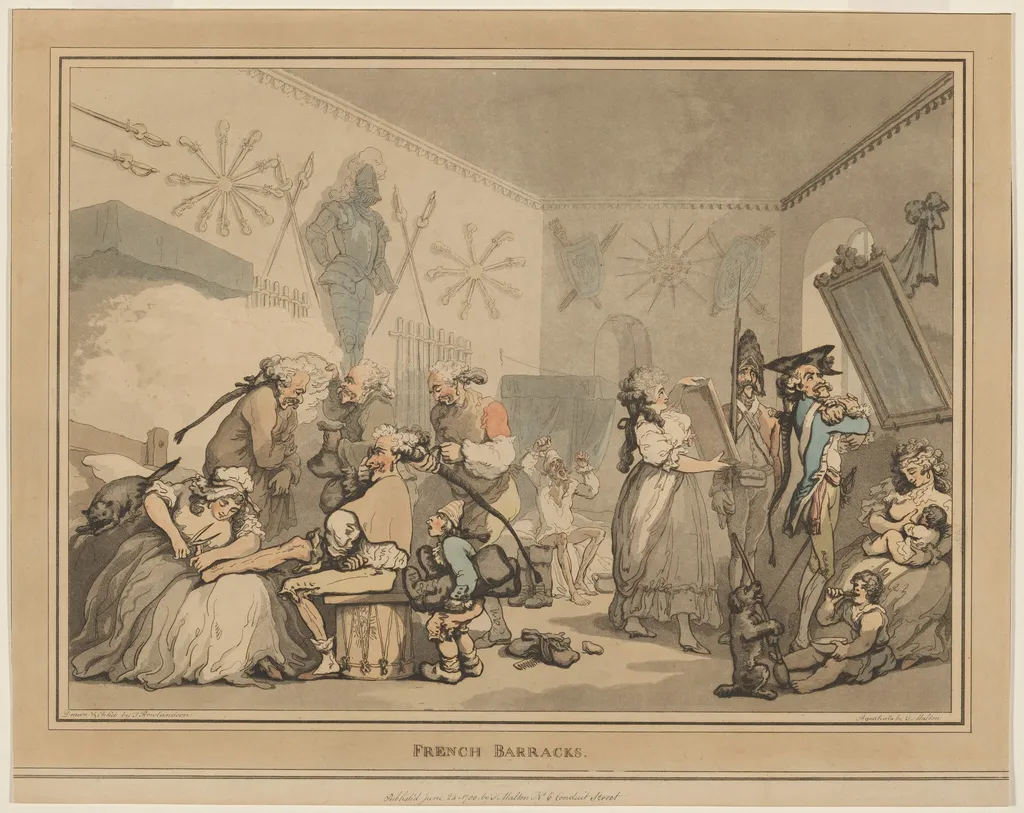
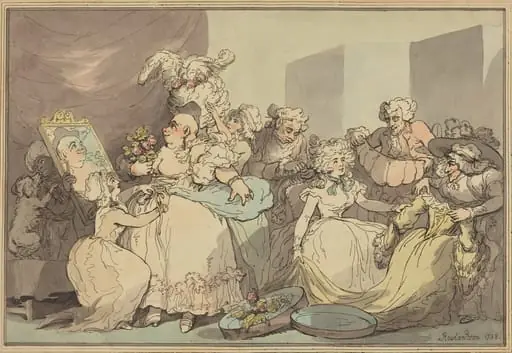
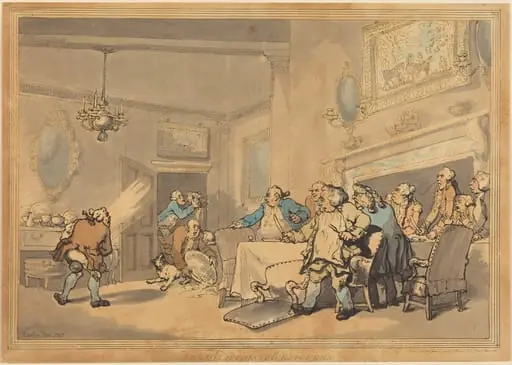
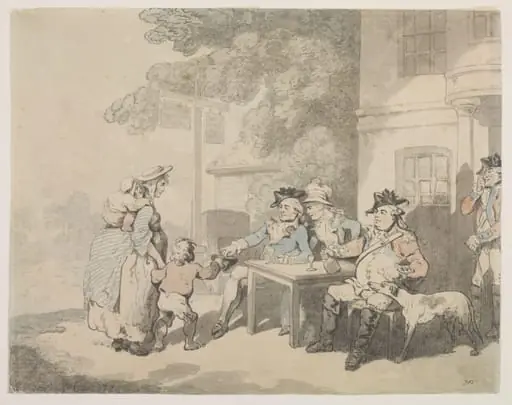
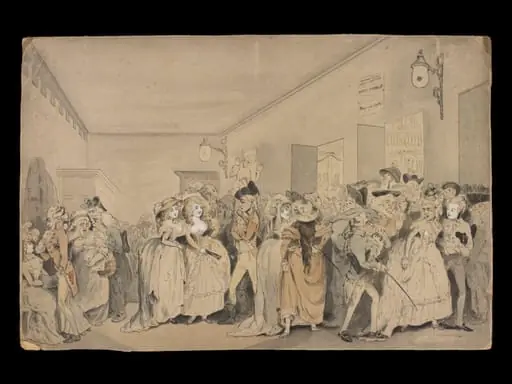
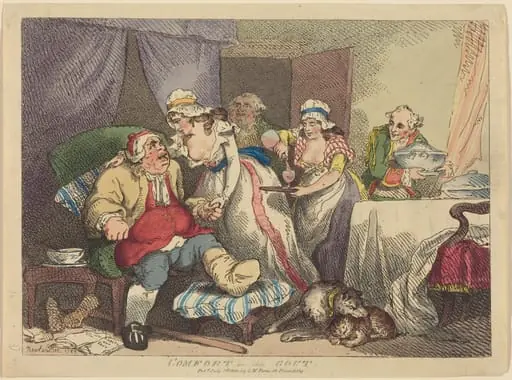
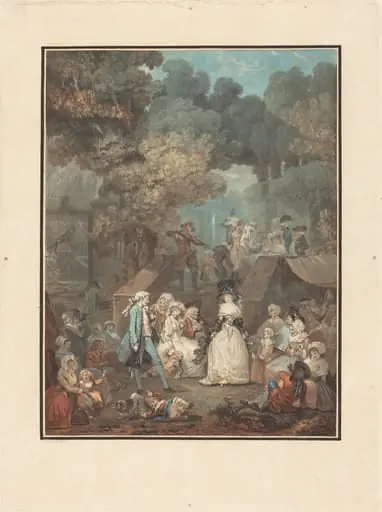
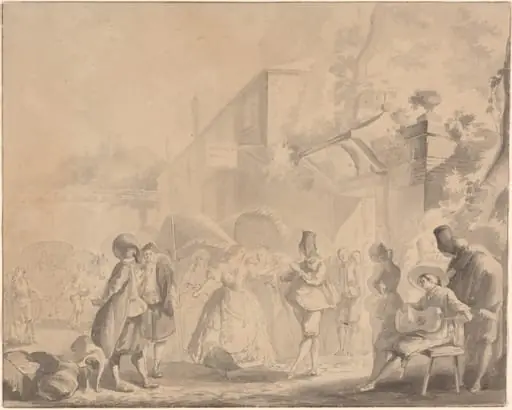
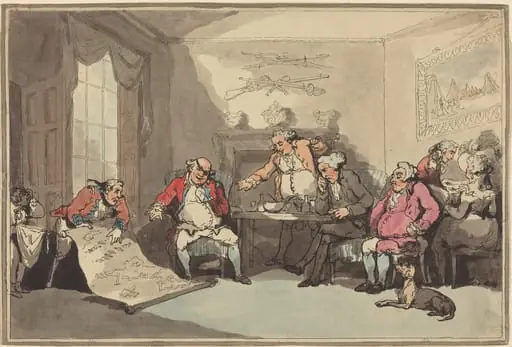
The French Barracks is an ink print by the Romanticist artist Thomas Rowlandson. It dates from 1791 and is held in the collection of the National Gallery of Art.
About this work
Overview
Its satirical tone targets the perceived excesses of the French officer class during a period of political tension between France and Britain.
Created in 1791, this hand-colored etching with aquatint by Thomas Rowlandson depicts French military officers in a lavishly furnished interior, preparing for a ceremonial parade. The work belongs to the print medium and exists as a proof impression on laid paper. Its satirical tone targets the perceived excesses of the French officer class during a period of political tension between France and Britain.
Subject & Meaning
The scene portrays French officers in ornate attire, surrounded by luxurious furnishings, emphasizing their indulgence and formality. By contrasting this with the known austerity of British military quarters, Rowlandson critiques French aristocratic militarism. The humor lies not in caricature alone, but in the implied moral judgment: elegance as a sign of decadence rather than discipline.
Technique & Style
Rowlandson employed etching and aquatint to achieve tonal gradations and textured surfaces, enhanced by delicate hand coloring. The aquatint allowed for subtle shading in fabrics and walls, while fine lines defined facial expressions and details of uniform. The style blends realism with gentle exaggeration, characteristic of late 18th-century British satirical printmaking, prioritizing narrative clarity over dramatic intensity.
History & Provenance
Produced during the early years of the French Revolution, the print reflects British public sentiment toward France’s monarchy and military elite. As a proof, it likely preceded commercial editions, possibly used for review or private distribution. The work entered the public domain through the passage of time and lack of copyright renewal, now held in institutional collections without restrictive ownership claims.
Context
In the early 1790s, Britain viewed revolutionary France with suspicion, and satirical prints served as political commentary. Rowlandson’s work aligned with a broader tradition of visual satire targeting foreign customs. The depiction of French opulence contrasted with British ideals of practicality and restraint, reinforcing national identity through visual comparison during a time of diplomatic and ideological rivalry.
Legacy
The print remains a representative example of Georgian-era political satire in print form. Though not widely exhibited today, it contributes to scholarly understanding of how visual media shaped public perceptions of foreign nations. Its technical execution and thematic focus influenced later illustrators who used print to interrogate social and military norms.
Artist & collection
Artist
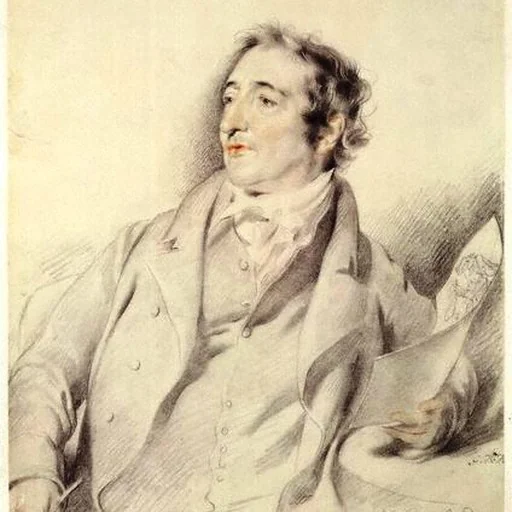
Thomas Rowlandson (; 13 July 1757 – 21 April 1827) was an English artist and caricaturist of the Georgian Era, noted for his political satire and social observation.