Artwork
衝立、虎図、文具一式|Desk Screen, Writing Set, Painting of Tiger, and Mounting Paraphernalia, from Spring Rain Surimono Album (Harusame surimono-jō, vol. 1)
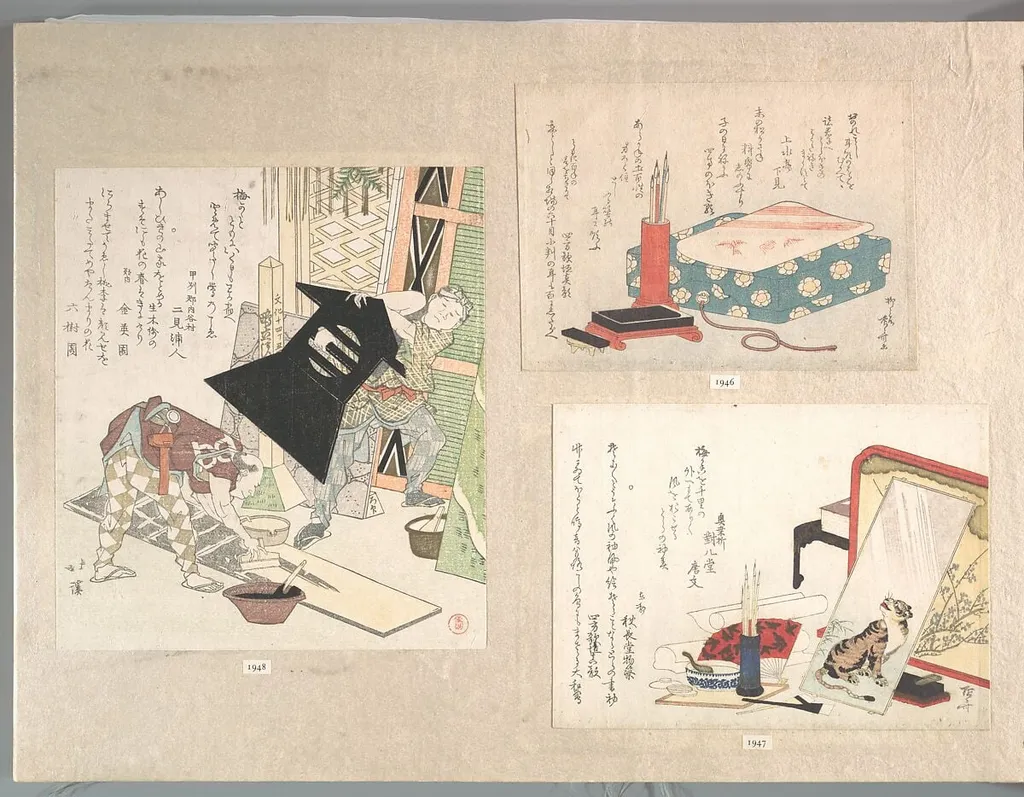
衝立、虎図、文具一式|Desk Screen, Writing Set, Painting of Tiger, and Mounting Paraphernalia, from Spring Rain Surimono Album (Harusame surimono-jō, vol. 1) is an ink print by the Romanticist artist Ryūryūkyo Shinsai. It dates from 1818 and is held in the collection of the Metropolitan Museum of Art. The work consists of three small privately issued woodblock prints assembled in an album titled *Spring Rain* (Harusame surimono‑jō, vol.
About this work
Overview
The work consists of three small privately issued woodblock prints assembled in an album titled *Spring Rain* (Harusame surimono‑jō, vol. 1). Executed around 1818 by the Edo‑period artist Ryūryūkyo Shinsai, the prints depict a desk screen, a writing set, and a tiger beside a scholar’s desk. They are part of the Metropolitan Museum of Art’s collection.
Subject & Meaning
The images present a quiet scholarly scene: a cloaked figure illuminates a tabletop with a lantern, a red brush holder and writing box sit beside a folded fan, and a tiger rests beside ink brushes, suggesting a juxtaposition of literary activity and the natural world. The composition reflects the Edo elite’s appreciation for both calligraphy and the symbolic power of the tiger.
Technique & Style
Created as surimono, the prints employ fine woodblock carving combined with hand‑applied ink and color on paper, allowing for intricate details such as the tiger’s striped tail and the precise arrangement of brushes. The limited edition nature of surimono enabled the artist to achieve a high level of refinement not typical of mass‑produced ukiyo‑e.
History & Provenance
Shinsai produced these prints as personalized gifts for acquaintances rather than for commercial distribution, a common practice for surimono in the early nineteenth century. The album later entered the collection of the Metropolitan Museum of Art, where it is catalogued as part of their Japanese prints holdings.
Context
During the late Edo period, literati culture flourished among merchant and samurai patrons who valued objects that combined aesthetic appeal with scholarly function. The inclusion of a tiger—a motif associated with courage and protection—alongside writing implements underscores the period’s intertwining of artistic taste and moral symbolism.
Artist & collection

 Untitled
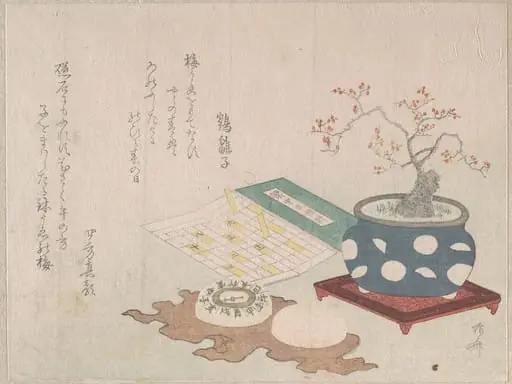 鉢梅、懐中日時計、羅針盤|Bonsai Plum, Compass, and Pocket Sundial with Design of Calendar, from Spring Rain Surimono Album (Harusame surimono-jō, vol. 3)
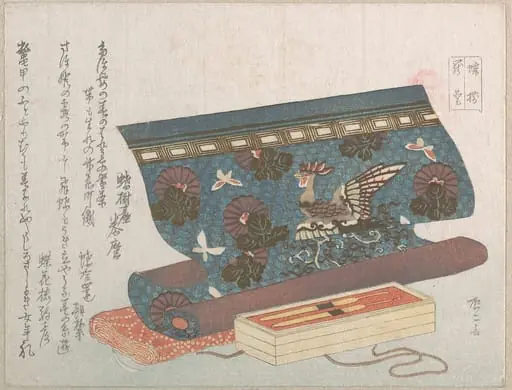 『蝶揃・寵愛』帯と簪|Roll of Cloth for an Obi and Tortoise-shell Hair Ornaments (“Presents for One’s Beloved”), from the Butterfly Series, from Spring Rain Surimono Album (Harusame surimono-jō, vol. 3)
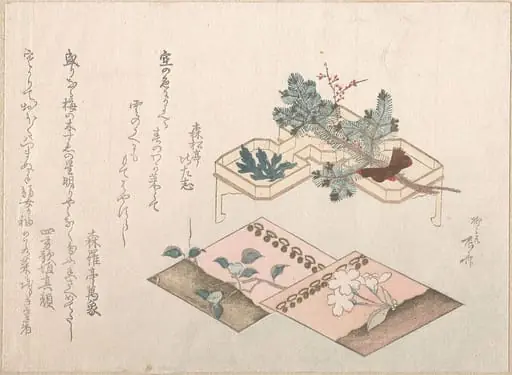 『春雨集』 摺物帖柳々居辰斎画 若松|Spring Rain Collection (Harusame shū), vol. 2: Pine Shoots and Accoutrements for New Year’s Celebrations
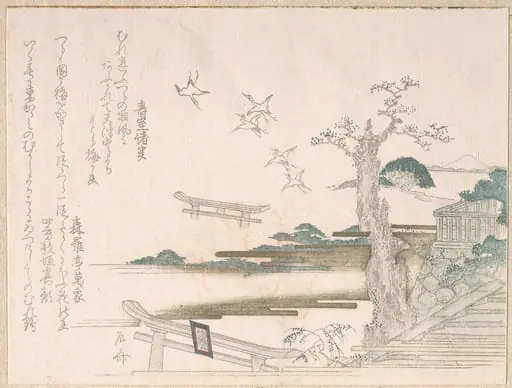 『春雨集』 摺物帖柳々居辰斎画 鎌倉の鶴岡八幡宮に鶴|Spring Rain Collection (Harusame shū), vol. 2: Cranes at Tsurugaoka Hachimangō Shrine in Kamakura
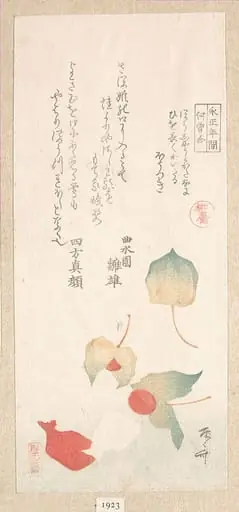 Untitled
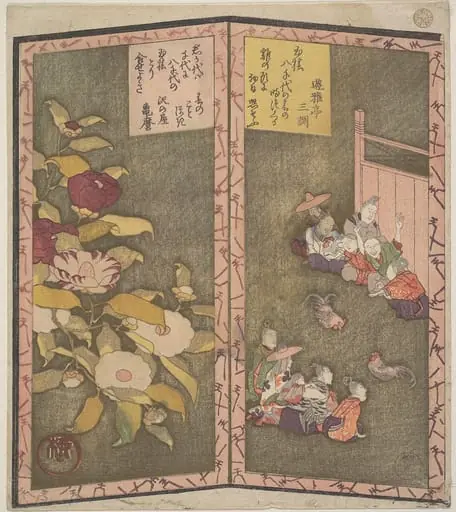 Untitled
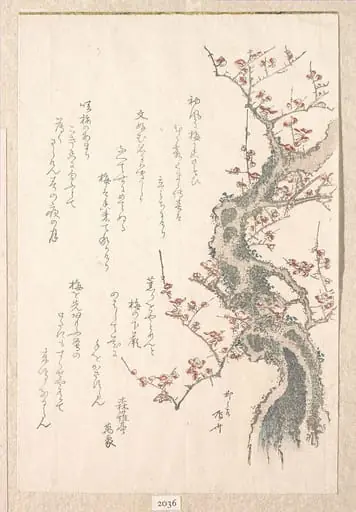 『春雨集』 摺物帖柳々居辰斎画 紅梅|Spring Rain Collection (Harusame shū), vol. 1: Plum Tree in Bloom
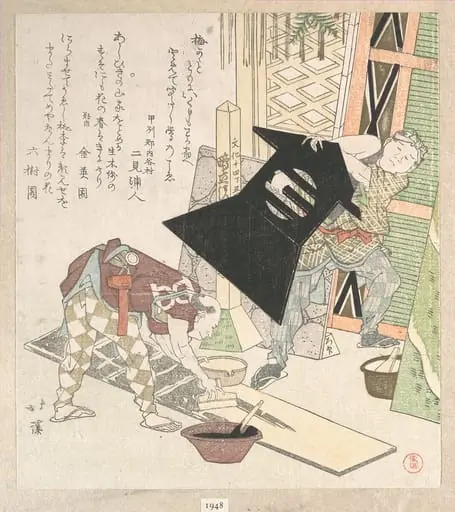 元日仕度|Preparations for the New Year, from Spring Rain Surimono Album (Harusame surimono-jō, vol. 1)
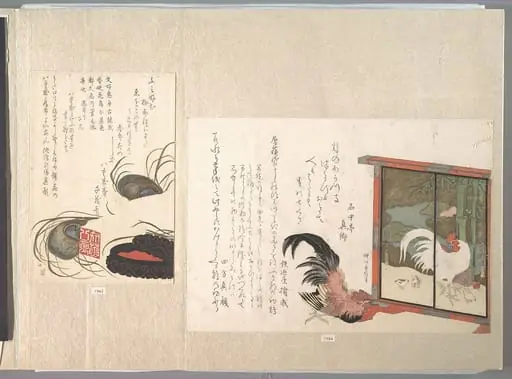 印鑑と朱に孔雀羽根|Seal-stone and Seal-ink with Peacock Feathers, from Spring Rain Surimono Album (Harusame surimono-jō), vol. 1
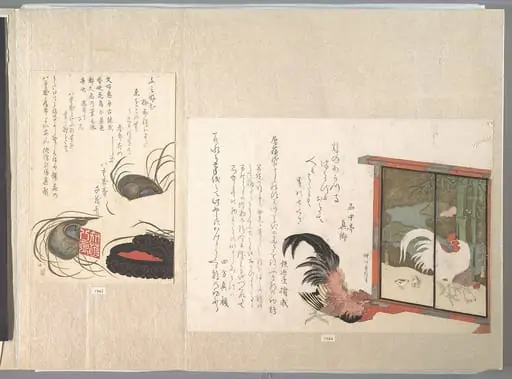 鶏図衝立を見る鶏|Cock Eyeing a Free-standing Screen Painted with Cock, Hen, and Chicks, from Spring Rain Surimono Album (Harusame surimono-jō), vol. 1
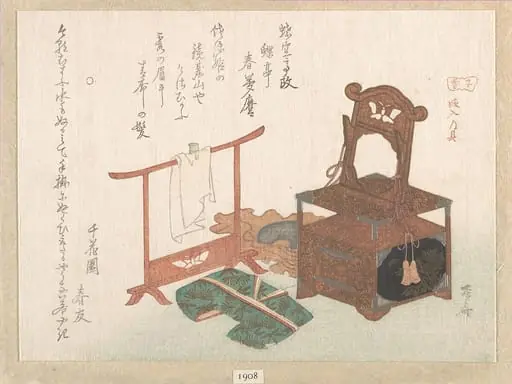 柳々居辰斎画 子春 嫁入の具『春雨集』 摺物帖|Accoutrements for a Bride, from the Spring Rain Collection (Harusame shū), vol. 1
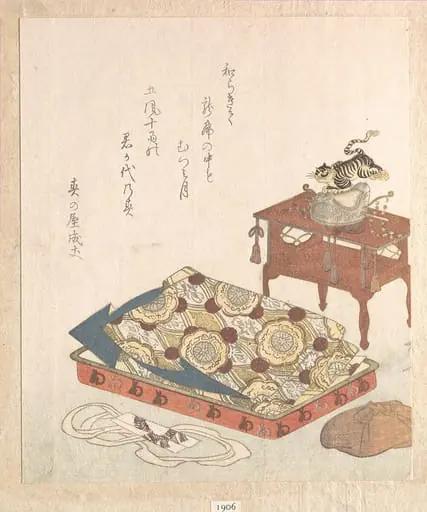 舞楽衣装『春雨集』 摺物帖|Costume for Bugaku Court DanceFrom the Spring Rain Collection (Harusame shū), vol. 1
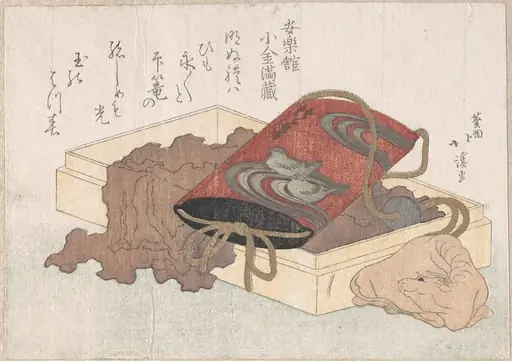 印籠と牛根付『春雨集』 摺物帖|Lacquer Inrō with Waterbirds and Ox-shaped Netsuke in a BoxFrom the Spring Rain Collection (Harusame shū), vol. 3
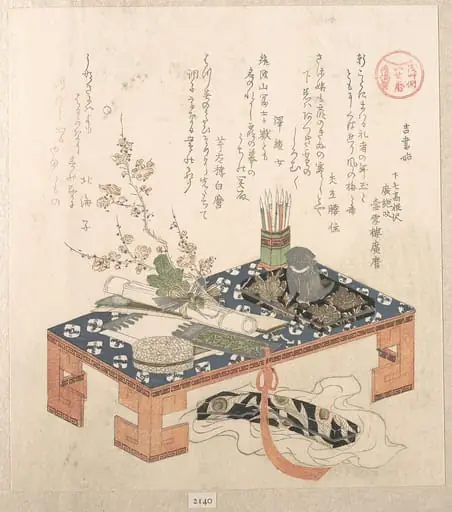 『浅草側いせ暦』 文房具と梅熨斗『春雨集』 摺物帖 |“Desk with Writing Set and Plum Flowers,” from the series Ise Calendars for the Asakusa Group (Asakusa-gawa Ise goyomi)From the Spring Rain Collection (Harusame shū), vol. 2