Artwork
Untitled
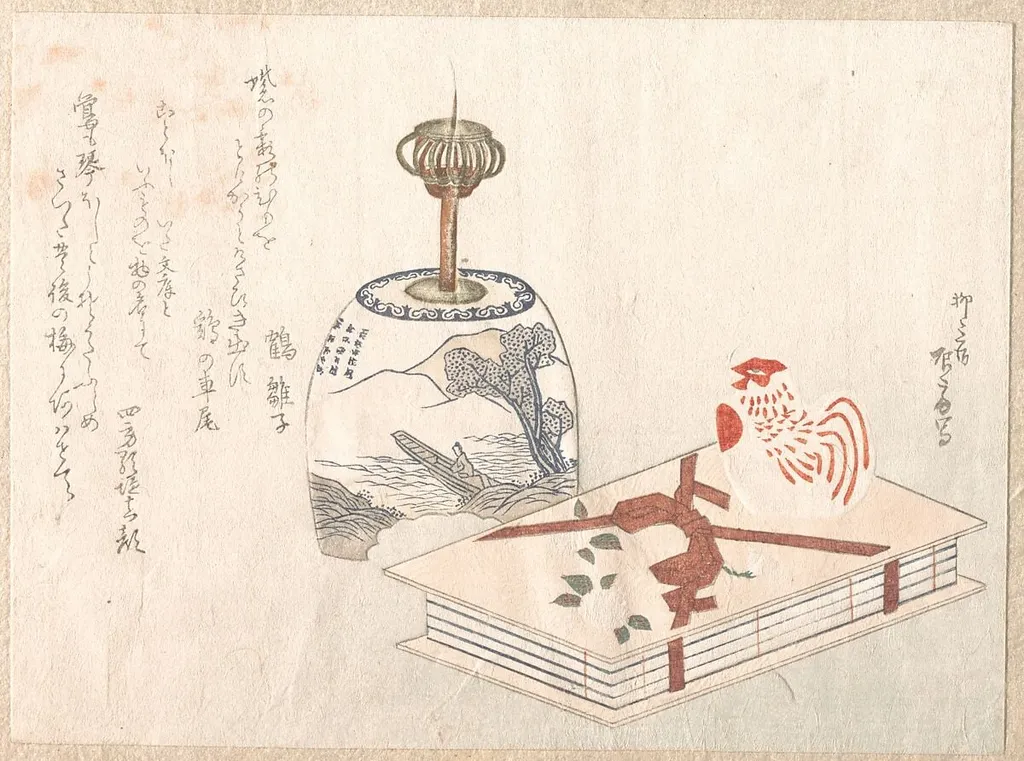
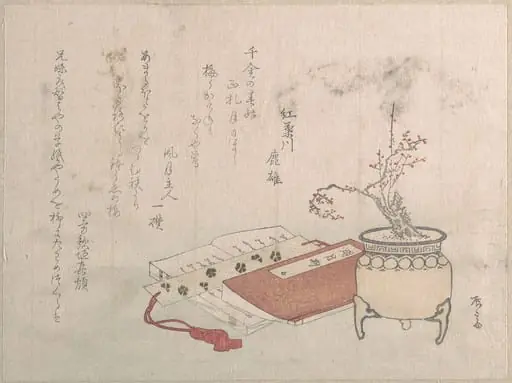
Untitled is an ink print by the Romanticist artist Ryūryūkyo Shinsai. It dates from 1813 and is held in the collection of the Metropolitan Museum of Art.
About this work
Overview
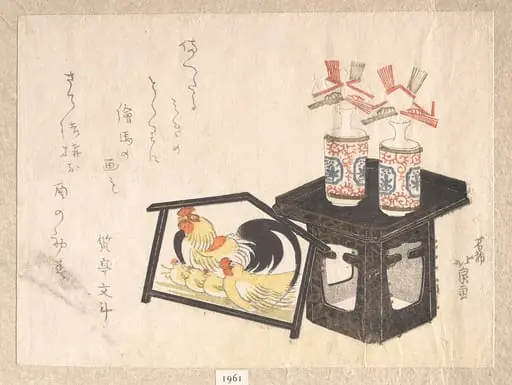
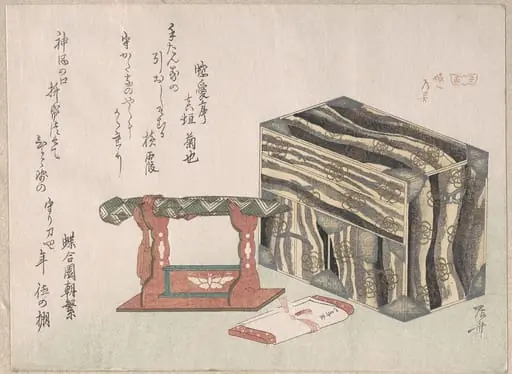
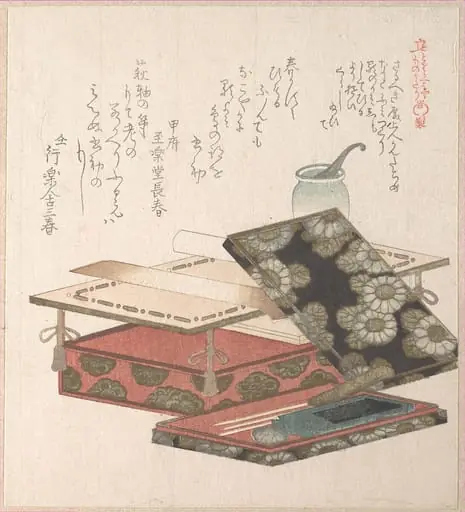
This woodblock print, created around 1813 by Ryūryūkyo Shinsai, belongs to the surimono genre—luxury prints commissioned for special occasions. Executed in ink and subtle color on paper, it presents a still life arrangement with quiet precision. The work is part of The Metropolitan Museum of Art’s collection, reflecting the refined aesthetic of early 19th-century Japanese printmaking.
Subject & Meaning
Together, these elements evoke contemplation, blending domestic objects with natural imagery in a manner typical of surimono’s literary and seasonal themes.
The composition centers on a bound book topped by a red rooster, with a ceramic vase bearing a landscape scene behind it. The rooster, a symbol of vigilance and the dawn, may allude to time or seasonal change. The landscape on the vase—mountains, trees, and a boat—suggests a poetic retreat. Together, these elements evoke contemplation, blending domestic objects with natural imagery in a manner typical of surimono’s literary and seasonal themes.
Technique & Style
Rendered in muted tones of brown, tan, and soft pigment, the print employs fine linework and delicate color gradations characteristic of surimono. The woodblock technique allows for subtle texture in the book’s ribbon and the vase’s painted scene. Composition is balanced yet uncluttered, emphasizing restraint and spatial harmony. The absence of bold contrasts reinforces a sense of quiet elegance, aligning with the genre’s emphasis on subtlety over spectacle.
History & Provenance
Produced circa 1813, this print was likely commissioned by a literary or poetic society for distribution among members, as was common with surimono. It passed into the collection of The Metropolitan Museum of Art through documented acquisitions, preserving its original condition. While the artist’s full oeuvre is limited, this work exemplifies the niche but influential role of private print commissions in Edo-period visual culture.
Context
Surimono prints emerged in the late 18th century as exclusive, non-commercial artworks, often linked to poetry circles and seasonal celebrations. Unlike mass-produced ukiyo-e, they were printed in small editions for connoisseurs. This piece reflects the era’s fusion of visual art and literary culture, where everyday objects carried symbolic weight and were rendered with meticulous care to appeal to an educated, elite audience.
Legacy
Though surimono remained a specialized form, this print contributes to the broader understanding of Japanese printmaking’s diversity beyond popular ukiyo-e. Its preservation in a major Western institution underscores its value as a cultural artifact. Contemporary scholars recognize such works for their role in bridging visual art, poetry, and private ritual, offering insight into the refined tastes of Edo-period literati.
Artist & collection

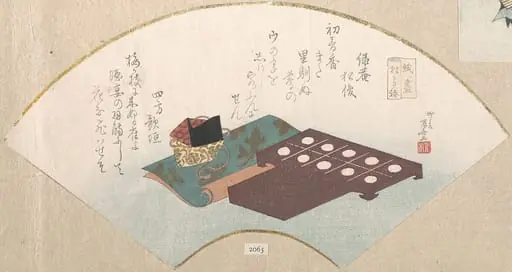 Untitled
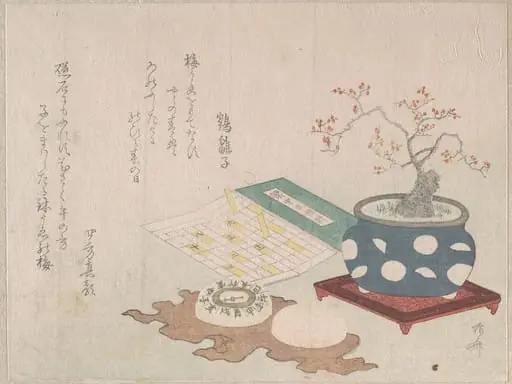 鉢梅、懐中日時計、羅針盤|Bonsai Plum, Compass, and Pocket Sundial with Design of Calendar, from Spring Rain Surimono Album (Harusame surimono-jō, vol. 3)
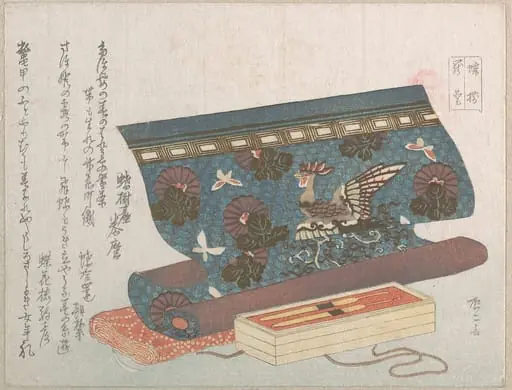 『蝶揃・寵愛』帯と簪|Roll of Cloth for an Obi and Tortoise-shell Hair Ornaments (“Presents for One’s Beloved”), from the Butterfly Series, from Spring Rain Surimono Album (Harusame surimono-jō, vol. 3)
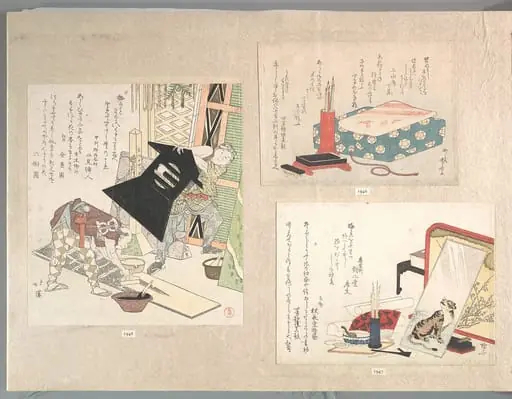 衝立、虎図、文具一式|Desk Screen, Writing Set, Painting of Tiger, and Mounting Paraphernalia, from Spring Rain Surimono Album (Harusame surimono-jō, vol. 1)
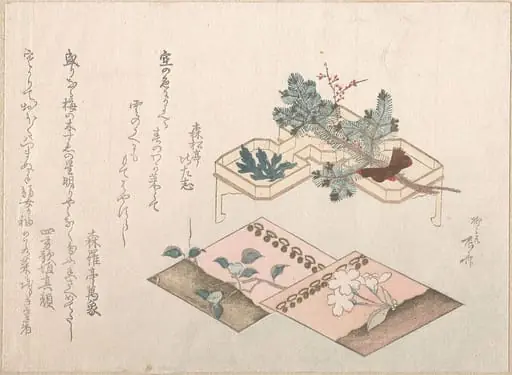 『春雨集』 摺物帖柳々居辰斎画 若松|Spring Rain Collection (Harusame shū), vol. 2: Pine Shoots and Accoutrements for New Year’s Celebrations
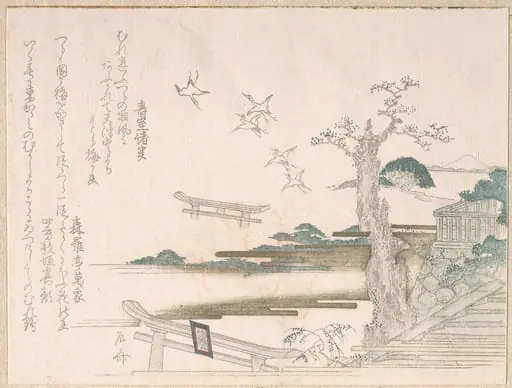 『春雨集』 摺物帖柳々居辰斎画 鎌倉の鶴岡八幡宮に鶴|Spring Rain Collection (Harusame shū), vol. 2: Cranes at Tsurugaoka Hachimangō Shrine in Kamakura
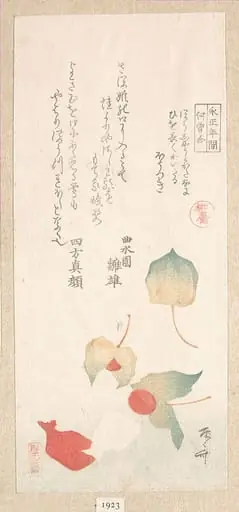 Untitled
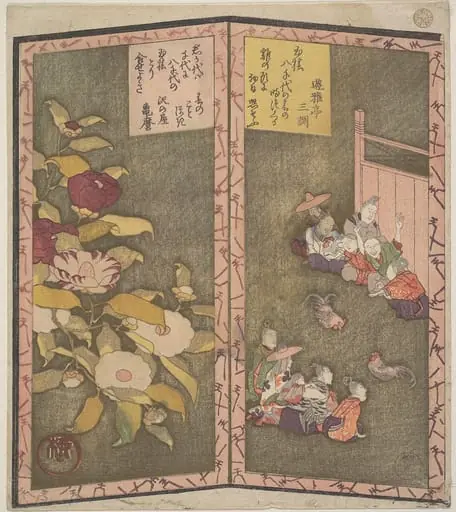 Untitled
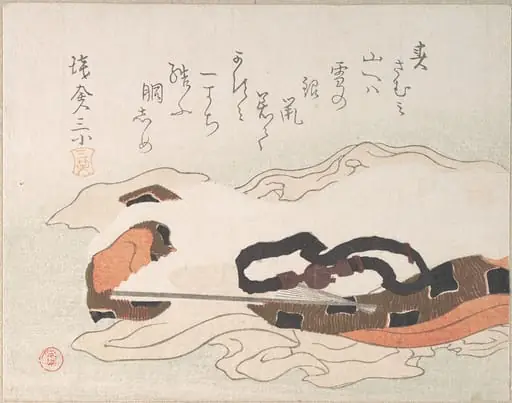 Untitled
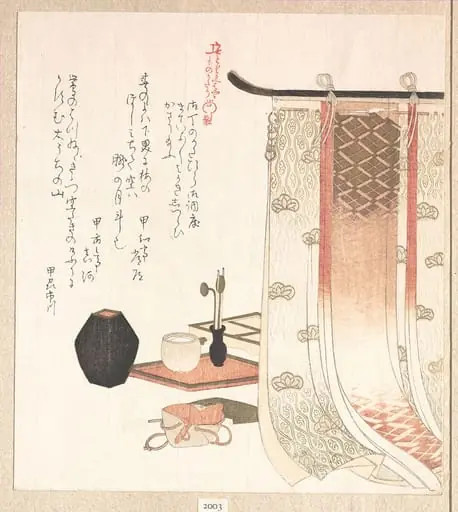 Untitled
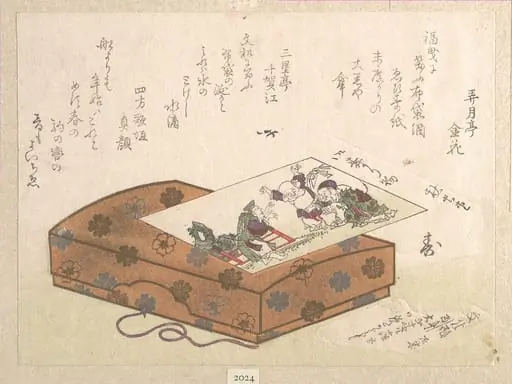 Untitled
 Untitled
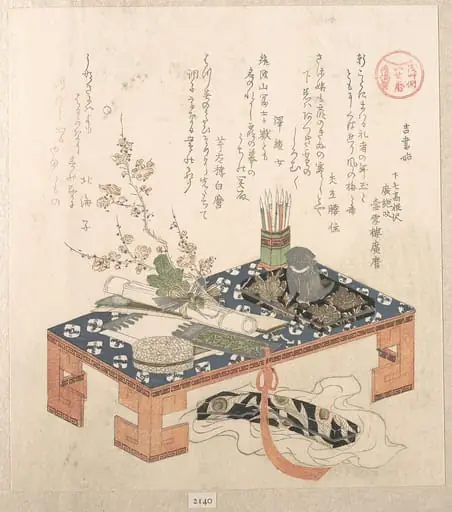 『浅草側いせ暦』 文房具と梅熨斗『春雨集』 摺物帖 |“Desk with Writing Set and Plum Flowers,” from the series Ise Calendars for the Asakusa Group (Asakusa-gawa Ise goyomi)From the Spring Rain Collection (Harusame shū), vol. 2
 Untitled
 Untitled
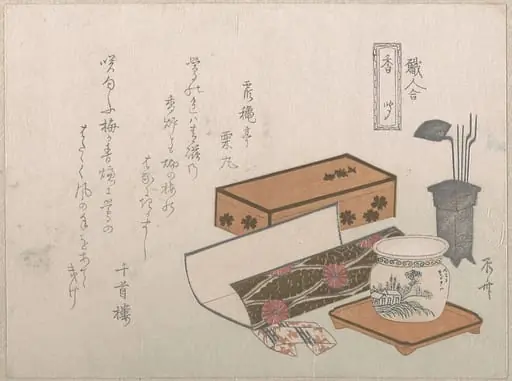 「職人合香聞 」|Utensils for the Incense Ceremony, “Incense Master” (Kōgiki), from the series An Array of Artisans
 Untitled
 Untitled