Artwork
Arashi Rikan II as Inuzuka Shino Moritaka and Nakamura Utaemon III as Inukai Kenpachi Michinobu Battling (from the series The Eight Heroes of the Satomi Clan)
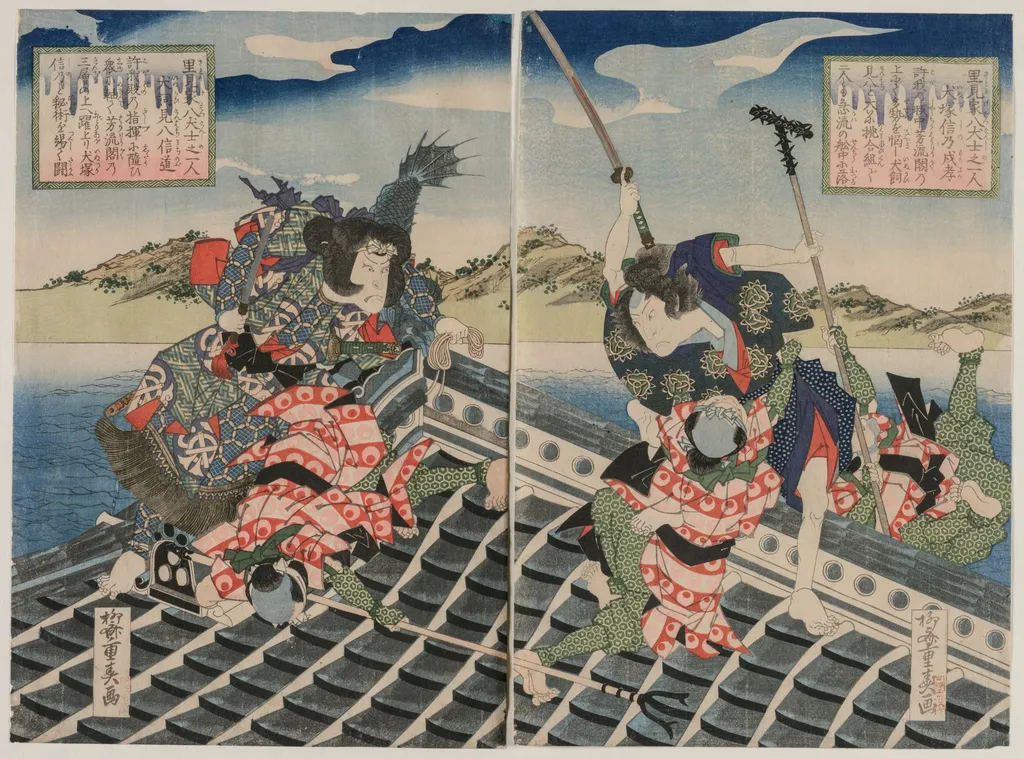
Arashi Rikan II as Inuzuka Shino Moritaka and Nakamura Utaemon III as Inukai Kenpachi Michinobu Battling (from the series The Eight Heroes of the Satomi Clan) is a print by the Romanticist artist Gyokuryūtei (Ryūsai) Shigeharu. It dates from 1834 and is held in the collection of the Cleveland Museum of Art.
About this work
Overview
Created in 1834 by Osaka‑based ukiyo‑e artist Ryūsai Shigeharu, this woodblock print belongs to the kamigata‑e tradition of actor portraits produced in the Osaka‑Kyoto area. It captures a dramatic moment from the popular kabuki drama The Eight Heroes of the Satomi Clan, showing two performers in the midst of a rooftop confrontation.
Subject & Meaning
The image presents the actors Arashi Rikan II as Inuzuka Shino Moritaka and Nakamura Utaemon III as Inukai Kenpachi Michinobu locked in combat. Their exaggerated poses and weaponry convey the tension of the climactic battle scene, reflecting the theatrical emphasis on heroic conflict and the narrative’s focus on loyalty and rivalry.
Technique & Style
Executed in the ukiyo‑e woodblock method, the print features fine line work that delineates the intricate patterns of the costumes, while a restrained palette of blues, grays and muted tones creates a somber atmosphere. The composition emphasizes diagonal movement, with one figure falling toward the edge of the roof, heightening the sense of action.
History & Provenance
Ryūsai Shigeharu, a member of the Utagawa school, was active in the early nineteenth‑century Osaka publishing scene. This work was likely issued as a promotional actor print (yakusha-e) for the theatrical run of The Eight Heroes of the Satomi Clan, a common practice for disseminating images of popular performers to audiences.
Context
Kamigata‑e prints differ from their Edo counterparts by focusing on local actors and employing a more delicate, refined aesthetic. The print reflects the vibrant kabuki culture of Osaka, where actor portraiture served both as advertisement and as a record of celebrated stage roles.
Artist & collection
Artist
Gyokuryūtei (Ryūsai) Shigeharu
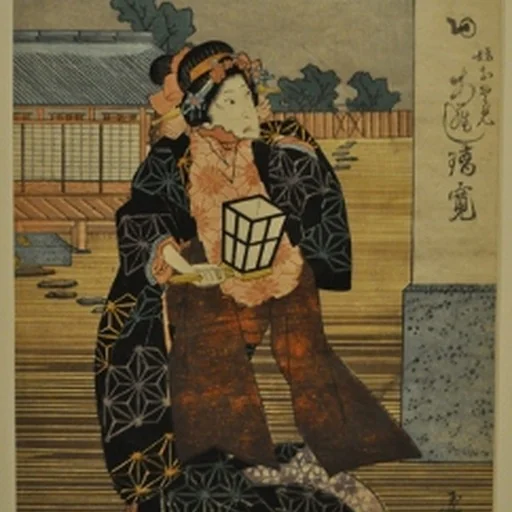
Gyokuryūtei Shigeharu spent most of his life in Osaka, where he carved woodblock prints of city life—street scenes, actors, and courtesans—just as the port town was getting louder and busier.

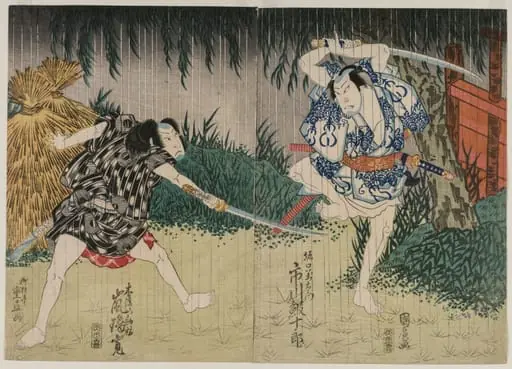 Arashi Rikan II as Kizu Kansuke; Ichikawa Ebijuro II as Horiguchi Manzaemon
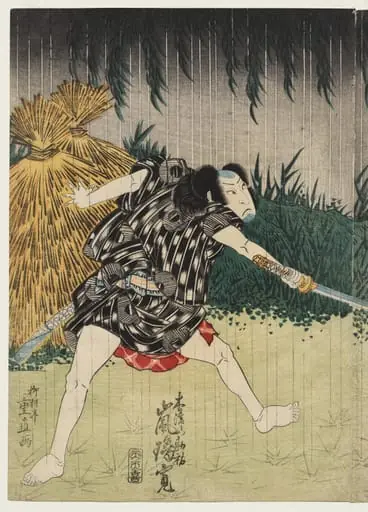 Arashi Rikan II as Kizu Kansuke
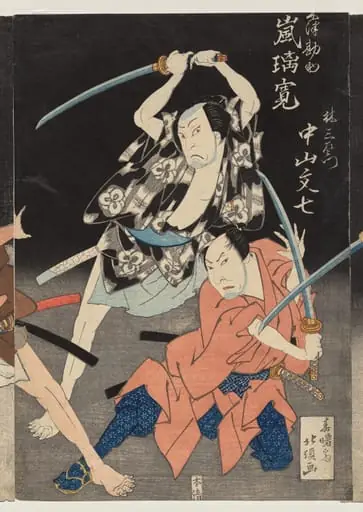 Arashi Rikan II as Kizu Kansuke and Nakayama Bunshichi III as Hayashi Sanzemon from the Kabuki Play "Eight Views of the Kizu River by Boating Song"
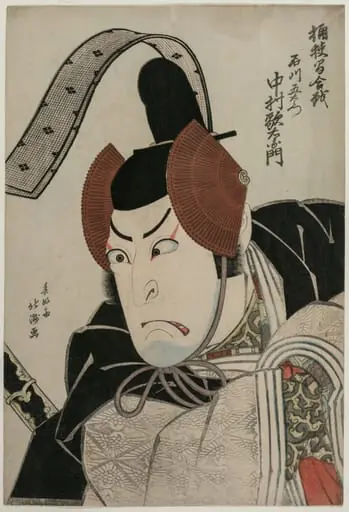 Actor Nakamura Utaemon III (Shikan) as Ishikawa Goemon at the Battle of Okehazama (Okehazama Gassen)
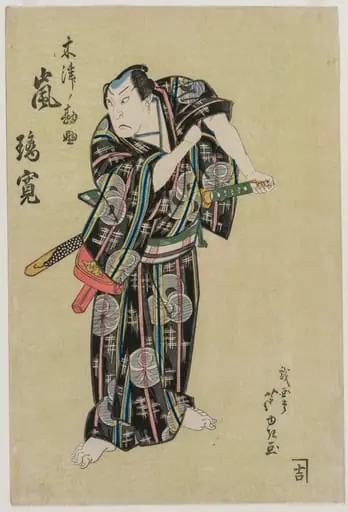 Arashi Rikan II as Kizu Kansuke
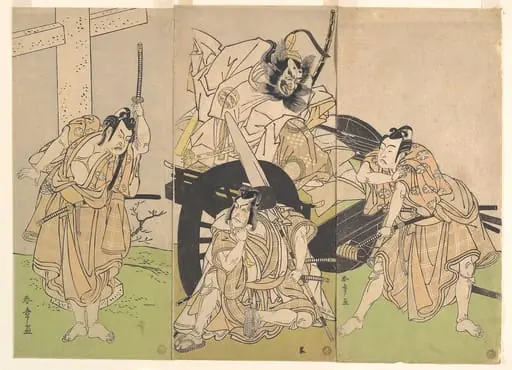 二代目市川八百藏・二代目中島三甫右衛門・三代目市川海老藏・九代目市村羽左衛門|Kabuki Actors Ichikawa Yaozō II, Nakajima Mihoemon II, Ichikawa Ebizō III, and Ichimura Uzaemon IX in the Play Sugawara’s Secrets of Calligraphy (Sugawara denju tenarai kagami)
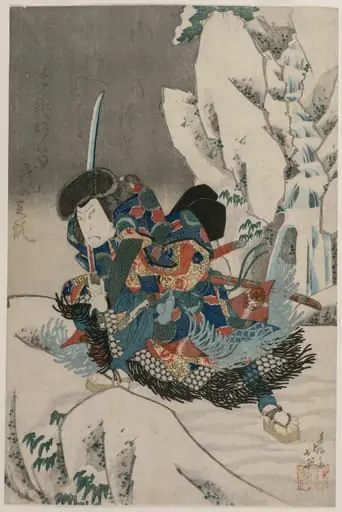 Nakamura Utaemon IV as a Warrior Standing in the Snow
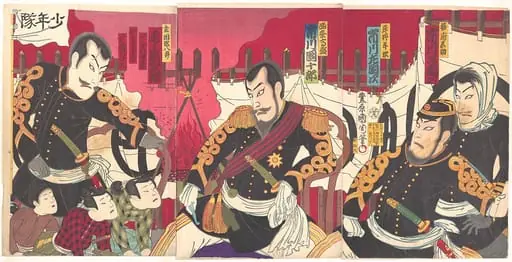 「摂府真助」「市川子團次」「岸野年秋 市川左團次」 「西条高盛 市川團十郎」 「倉田進八郎 尾上菊五郎」「正太郎 中村仲太郎」「孫市 尾上菊之介」「徳丸 市川幸作」西南雲晴朝東風|Ichikawa Kodanji as Seppu Shinsuke, Ichikawa Sadanji as Kishino Toshiaki, Ichikawa Danjūrō as Saijō Takamori, Onoe Kikugorō as Kurata Shinpachirō, Nakamura Chūtarō as Shōtarō, Onoe Kikunosuke as Magoichi, and Ichikawa Kōsaku as Tokumaru in the play Okige no kumo harau asa gochi