Artwork
Sardanapalus among the Concubines
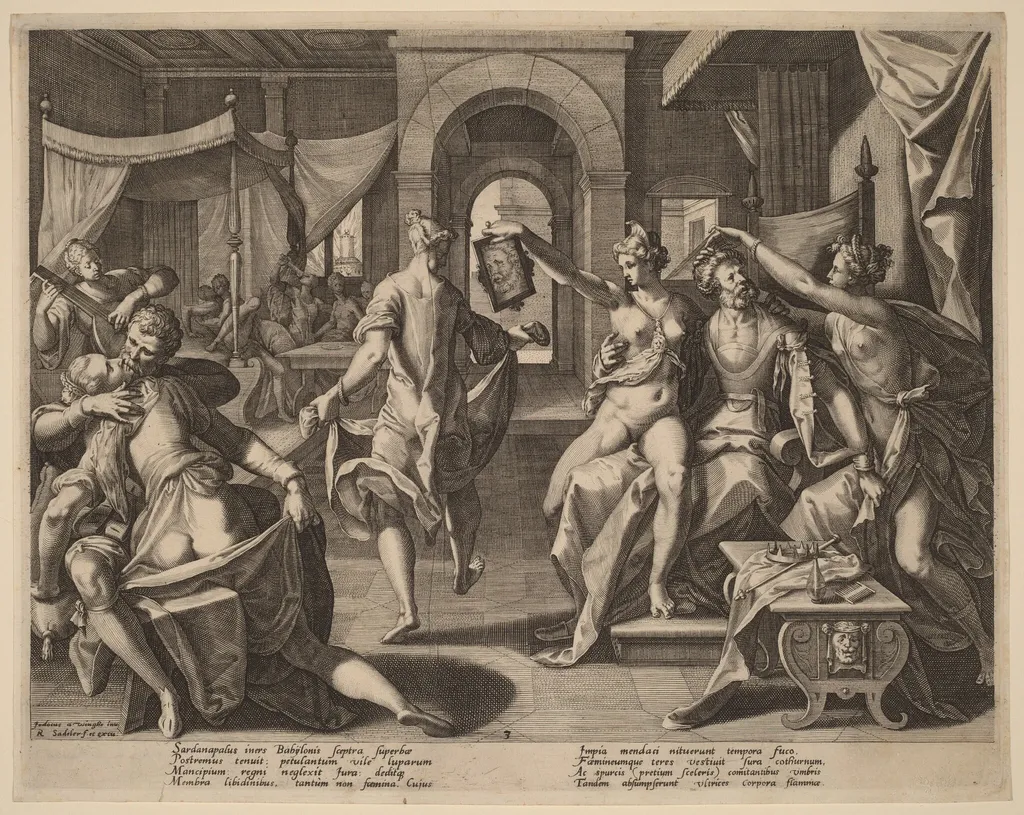
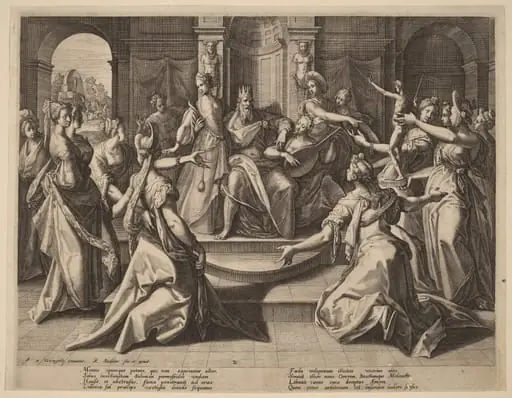
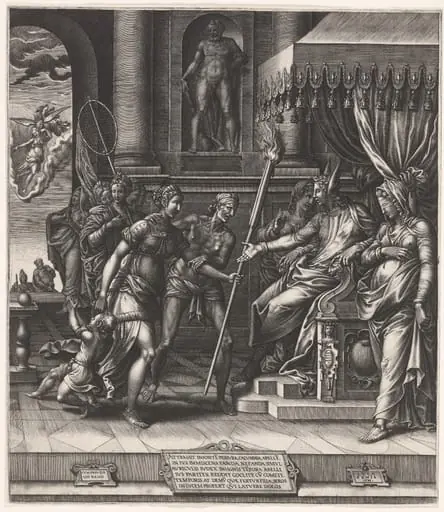
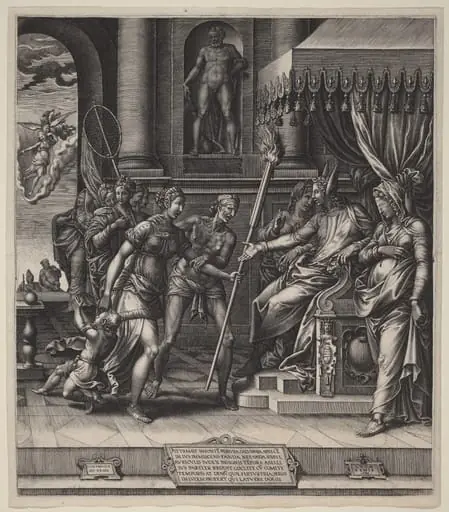
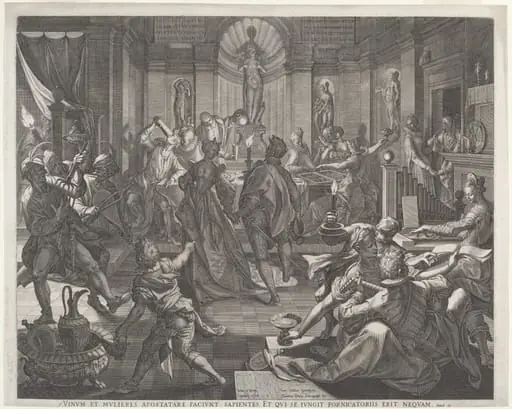
Sardanapalus among the Concubines is an ink print by the Renaissance artist Raphael Sadeler I. It dates from 1589 and is held in the collection of the National Gallery of Art.
About this work
Overview
Sardanapalus among the Concubles is a print made in 1589 by the Flemish engraver Raphael Sadeler I. Executed on laid paper, the work presents a complex, multi‑figure composition that captures a moment of heightened drama within an interior setting.
Subject & Meaning
Some of the women kneel, others reach toward the king, and a few hold objects—a mirror, a sword—suggesting themes of vanity, power, and impending destruction.
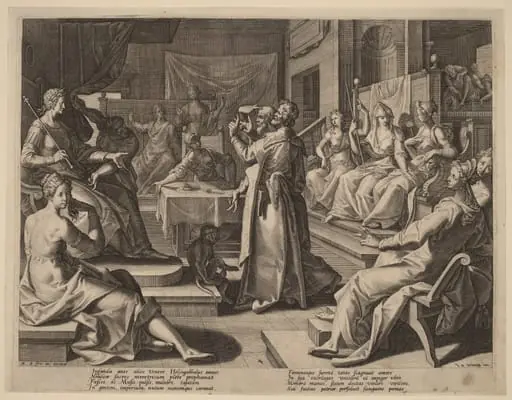
At the center of the engraving stands a nude male figure, identified as the Assyrian king Sardanapalus, surrounded by a group of women in flowing garments. Some of the women kneel, others reach toward the king, and a few hold objects—a mirror, a sword—suggesting themes of vanity, power, and impending destruction. A small child seated on the floor looks upward, adding a note of innocence amid the chaos.
Technique & Style
Sadeler employed delicate, intersecting lines to render shading and texture, giving the figures a sculptural sense of volume. The engraving’s intricate hatching creates depth in the crumbling archway and draped fabrics, while the crisp outlines convey the tension of twisted bodies in motion.
History & Provenance
The print was produced in the late sixteenth century, a period when the Sadeler family were prominent in the dissemination of Northern European prints. It likely circulated among collectors of the time, though specific ownership records are scarce.
Context
The subject draws on classical and biblical narratives that were popular in Renaissance art, portraying a legendary king’s final moments. The composition reflects the era’s fascination with dramatic historical scenes and the moralizing messages they could convey.
Artist & collection