Artwork
Louise Emilie Baronne de ***
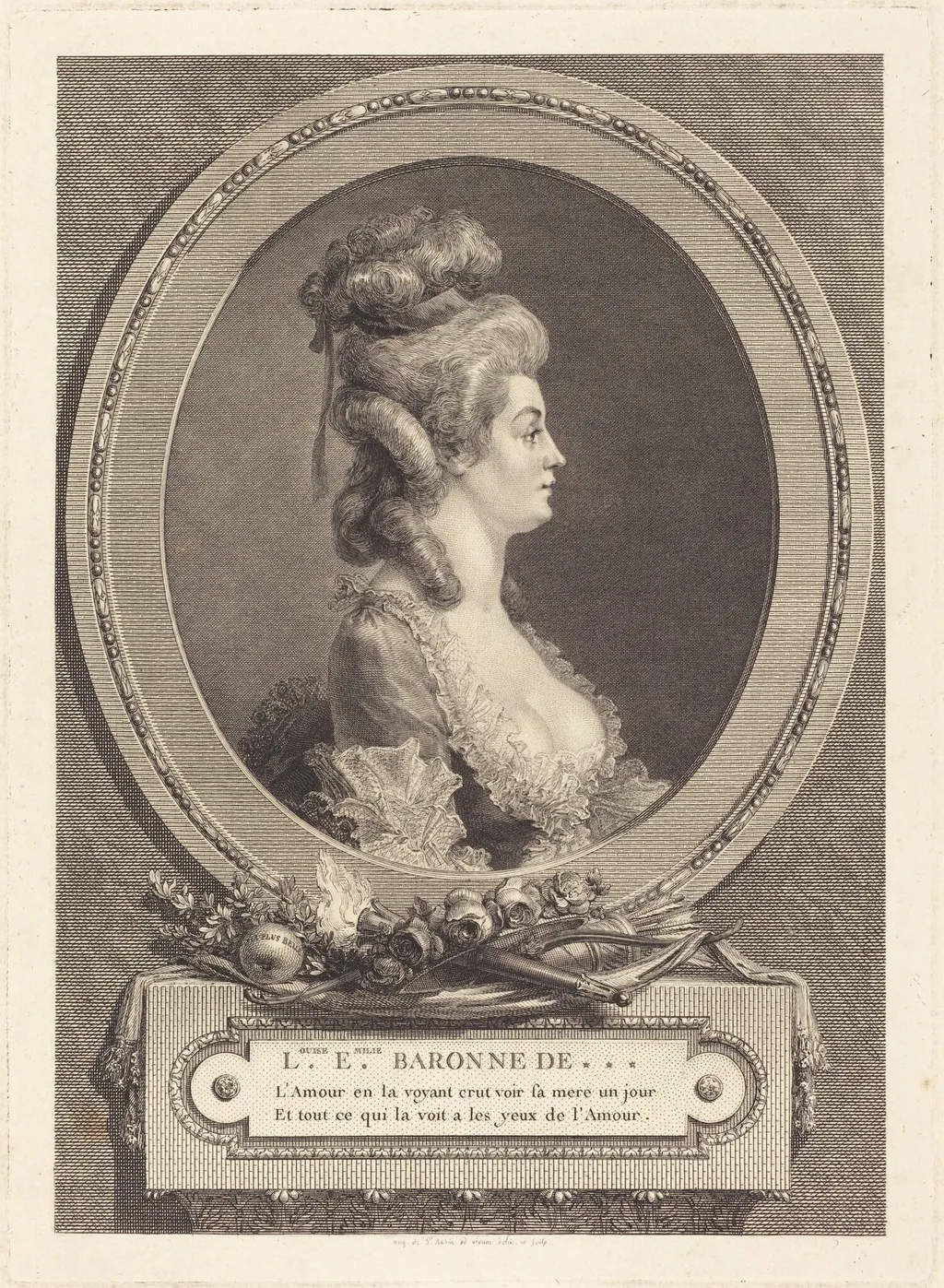
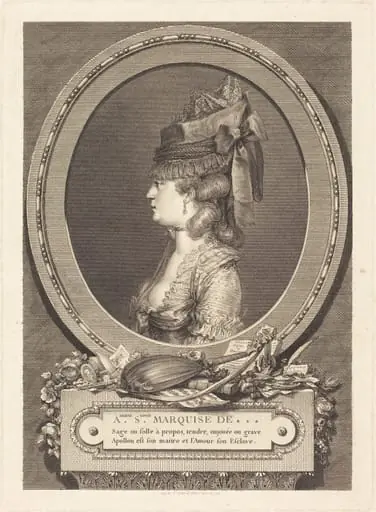
Louise Emilie Baronne de *** is an ink print by the Romanticist artist Augustin de Saint-Aubin. It dates from 1779 and is held in the collection of the National Gallery of Art.
About this work
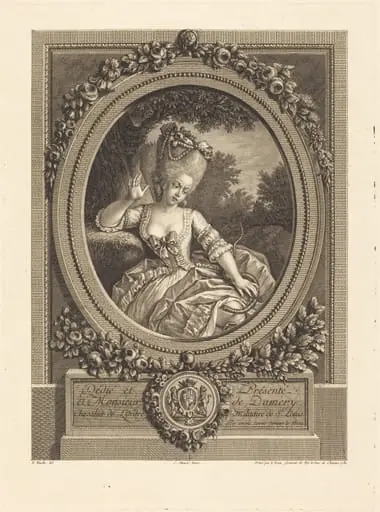
Below her, a wreath of leaves and flowers frames the image, and a banner at the bottom has some French text.
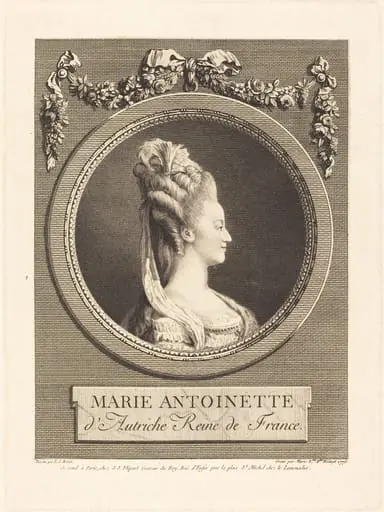
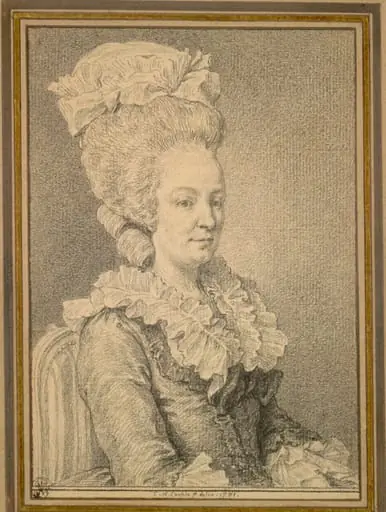
This is a black-and-white portrait of a woman with her hair styled in a tall, curly updo. She wears a lace collar and a simple dress, looking off to the side with a calm expression. Below her, a wreath of leaves and flowers frames the image, and a banner at the bottom has some French text.
The artist used fine lines to show the details of her face and hair, which is typical of etched prints. This piece was made in 1779, which was early in the Romanticism movement.
Look up etching, drypoint, aquatint to see how artists create prints like this.
Overview
Created in 1779 by Augustin de Saint-Aubin, this black-and-white print combines etching and engraving to portray Louise Emilie Baronne de ***. As a member of a prominent French artistic family, Saint-Aubin was deeply immersed in the printmaking traditions of his time. The work exemplifies the precision and refinement characteristic of late 18th-century French portraiture, capturing a noblewoman with quiet dignity through delicate line work.
Subject & Meaning
The subject is a titled French woman, identified by her title and the formal presentation of the portrait. Her composed gaze and restrained attire suggest social standing and decorum. The floral wreath framing her image and the inscribed banner at the base reinforce her identity and status, common conventions in aristocratic portraiture. The absence of overt symbolism points to a focus on personal dignity rather than allegorical narrative.
Technique & Style
Saint-Aubin employed fine etched lines to render the texture of lace, the curl of hair, and the soft contours of the face, while engraving added sharper definition to outlines and details. The tonal range is subtle, achieved through controlled line density rather than shading. This method, typical of the period, prioritized clarity and elegance, reflecting the artist’s mastery of intaglio techniques and his commitment to refined draftsmanship.
History & Provenance
The print was produced in 1779 during a period when portraiture in print flourished among French aristocratic circles. Though specific ownership records are sparse, its creation aligns with Saint-Aubin’s broader practice of documenting contemporaries for private and familial collections. It likely circulated among elite networks, serving as both a personal keepsake and a marker of social connection.
Context
Made on the cusp of the Romantic era, the work retains the formal restraint of the Ancien Régime. While Romanticism would later emphasize emotion and individuality, this portrait adheres to classical ideals of composure and order. Its production reflects the enduring role of printmaking in preserving the likenesses of the nobility before photography, and the continued influence of academic training in French artistic circles.
Legacy
Though not widely exhibited today, the print stands as a representative example of Saint-Aubin’s contribution to French graphic arts. It illustrates the quiet sophistication of pre-Revolutionary portraiture and the skill required in hand-crafted printmaking. Its survival offers insight into the visual culture of French aristocracy and the role of artists as documentarians of social hierarchy.
Artist & collection
Artist
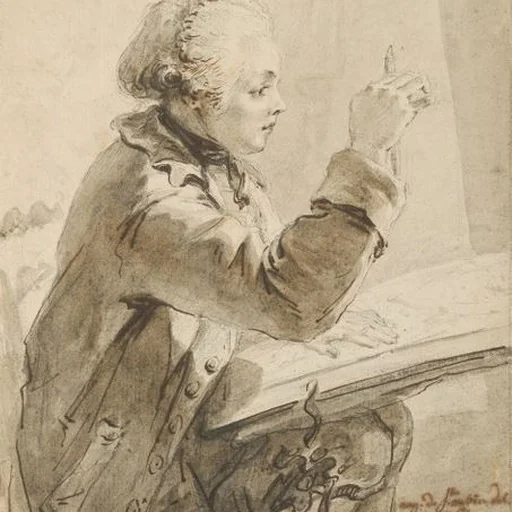
Augustin de Saint-Aubin sometimes styled Auguste de Saint-Aubin (3 January 1736 – 9 November 1807), belongs to an important dynasty of French designers and engravers.

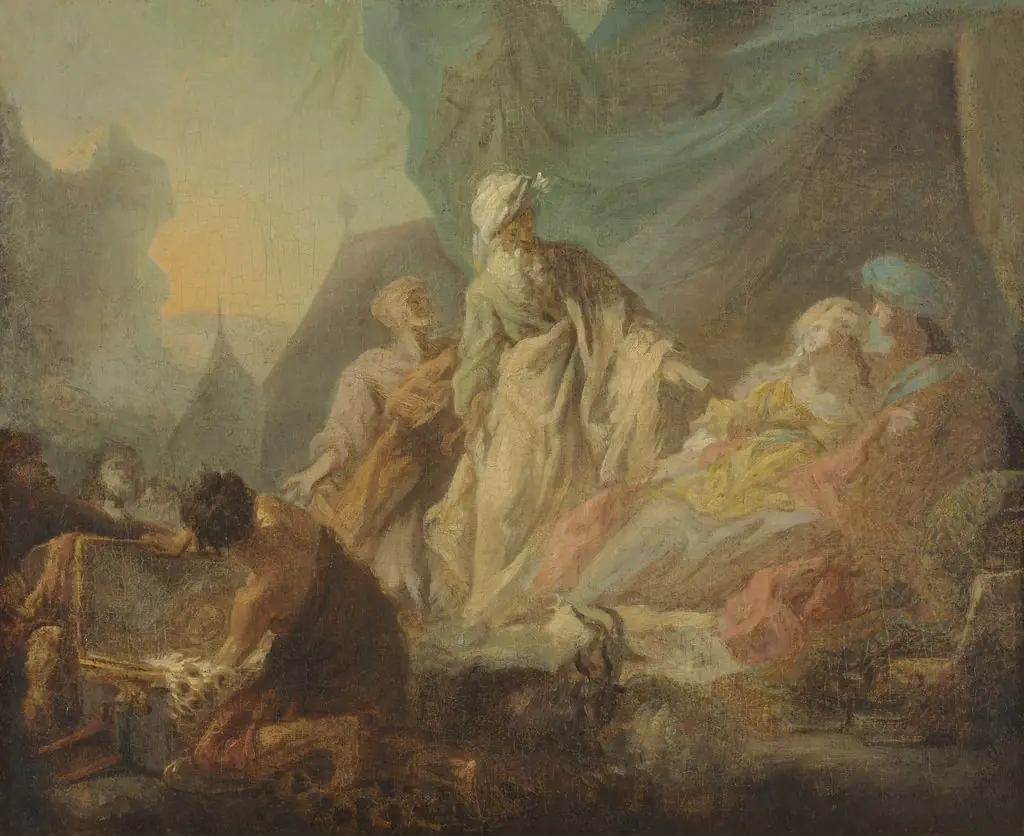 Laban Searching for His Stolen Gods
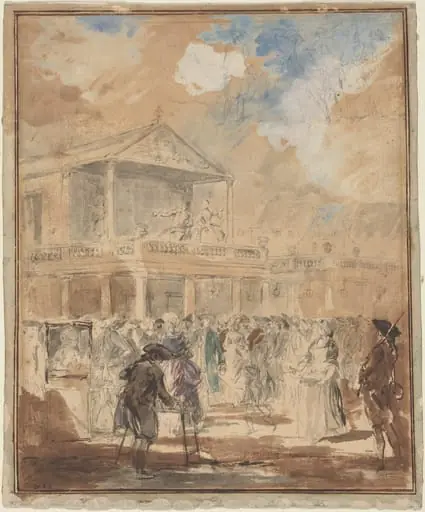 Parade (A Theatrical Procession in Paris)
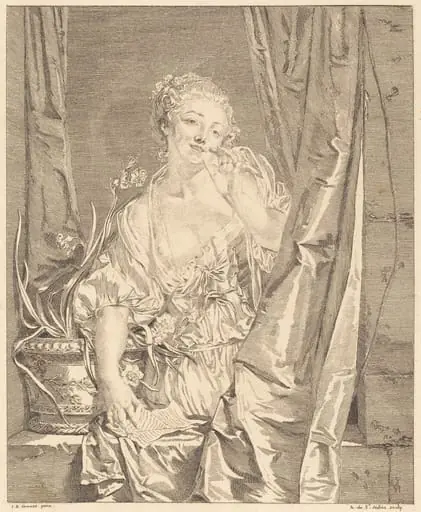 Le baiser envoyé
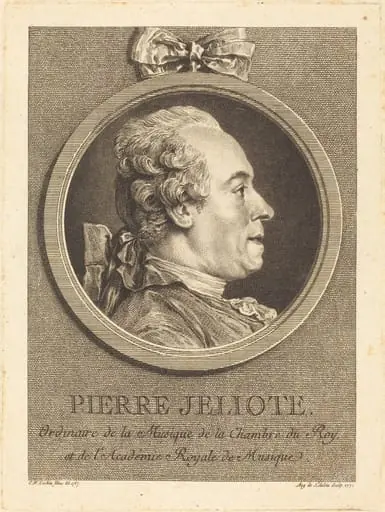 Pierre Jeliote
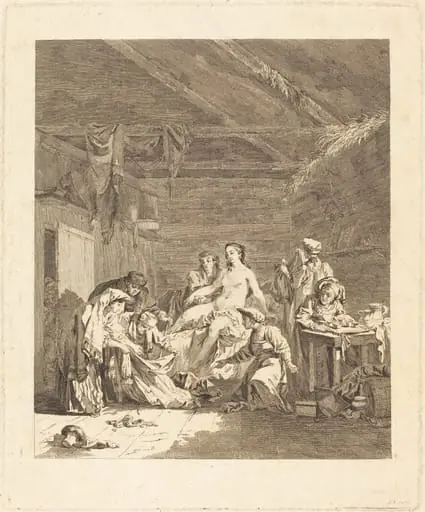 Le lever de la mariée russe (Custom of the Russians after the Marriage Ceremony and before the Wedding Feast)
 J.J. Rousseau
 Le duc de Chartres, son epouse et ses enfants
 Simon-Nicolas-Henri Linguet