Artwork
John R. Smith
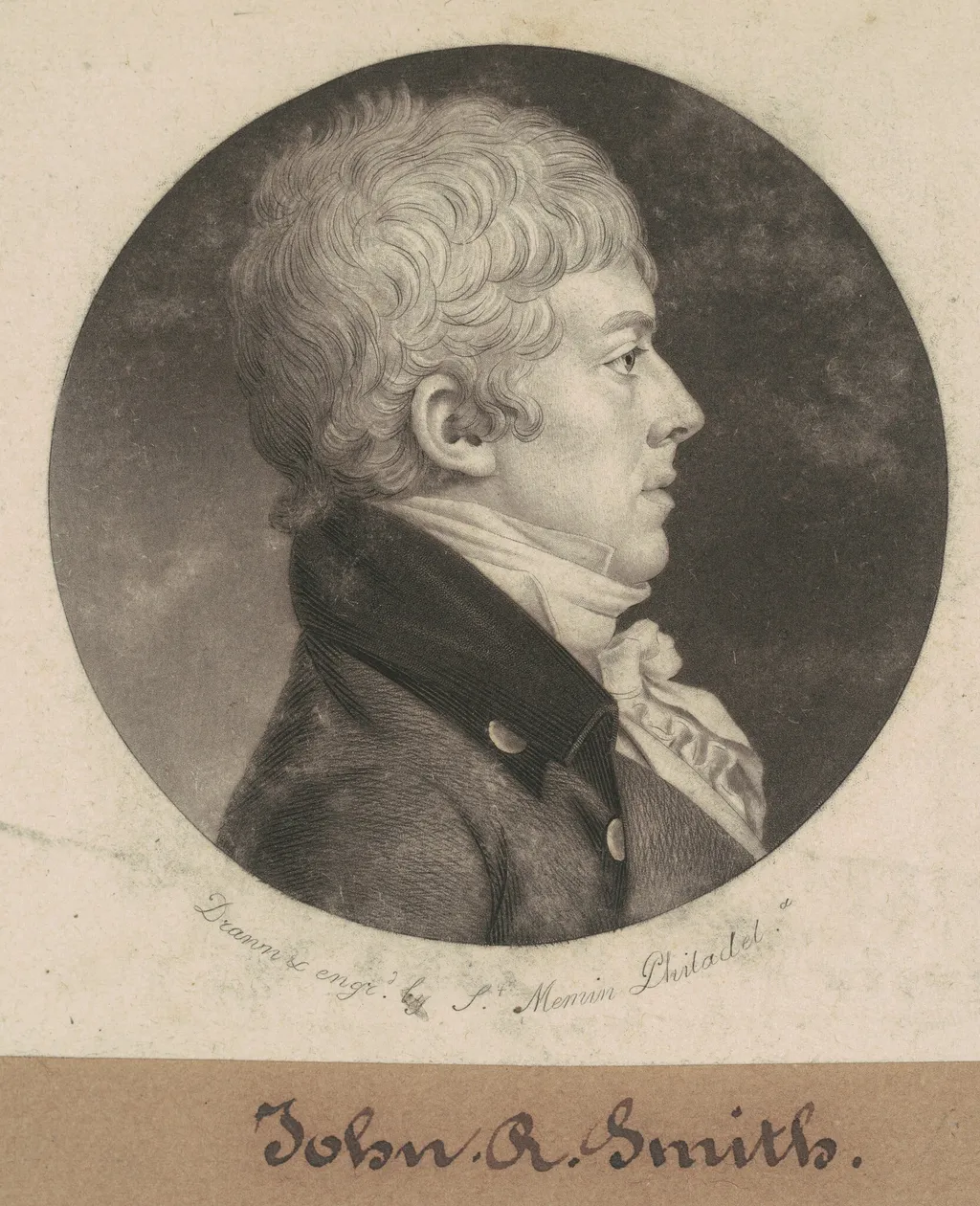
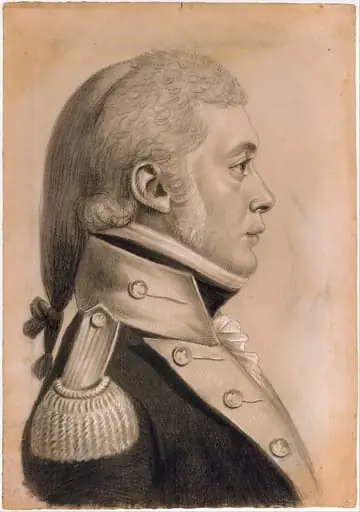
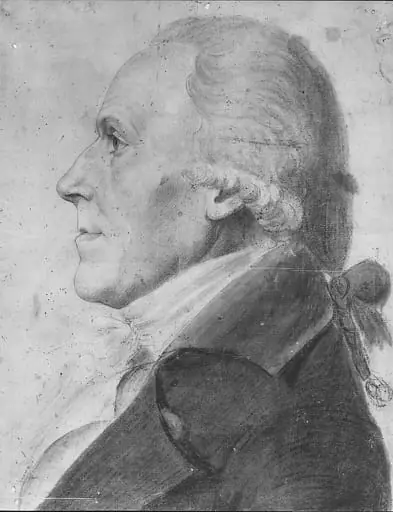
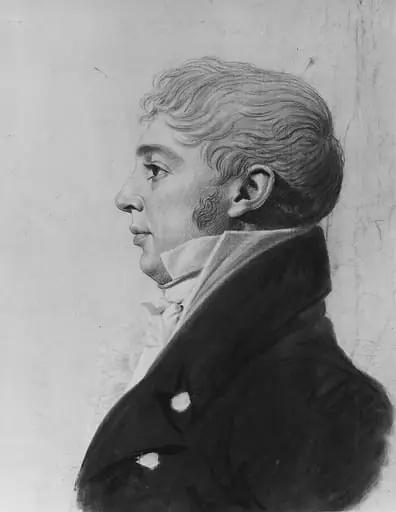
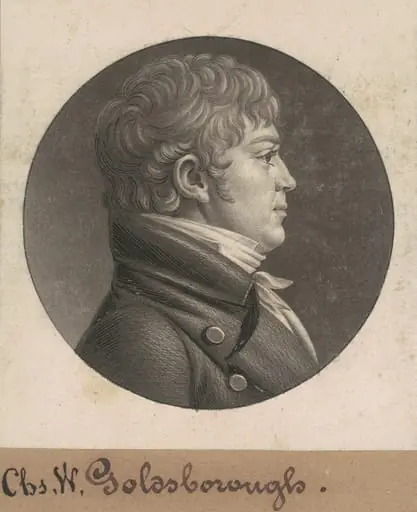
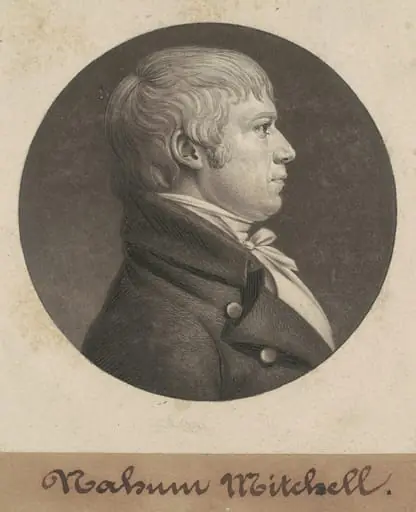
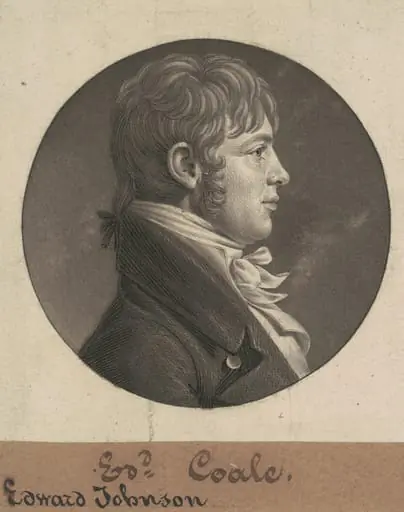
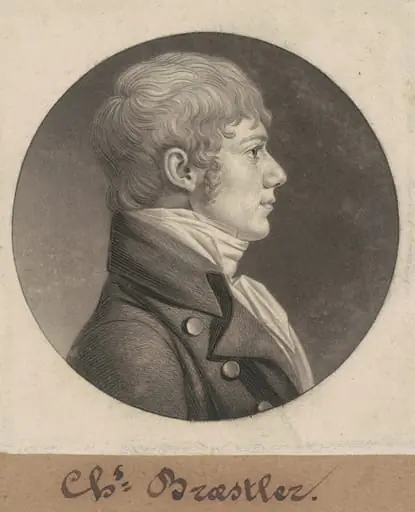
John R. Smith is an ink print by the Romanticist artist Charles Balthazar Julien Févret de Saint-Mémin. It dates from 1802 and is held in the collection of the National Gallery of Art. A small portrait in black ink on wove paper, mounted to a brown backing, was created in 1799 by Charles B.
About this work
Overview
A small portrait in black ink on wove paper, mounted to a brown backing, was created in 1799 by Charles B. J. Févret de Saint-Mémin. The subject is John R. Smith, rendered in mezzotint and engraving. The work measures just over five centimeters square and belongs to the Corcoran Collection, now held by the National Gallery of Art. It is also accessible digitally through Google Arts & Culture.
Subject & Meaning
His dark coat and crisp white collar suggest modest professional status, though no further biographical details are known.
John R. Smith is portrayed in strict profile, a conventional pose for formal portraiture of the period. His dark coat and crisp white collar suggest modest professional status, though no further biographical details are known. The composition avoids ornamentation, focusing attention on the quiet dignity of the sitter’s features, reflecting the era’s preference for restrained, truthful representation.
Technique & Style
Saint-Mémin employed mezzotint to achieve subtle tonal transitions across the face, creating a sense of volume without harsh lines. Engraving added fine details to the collar and hair. The combination allowed for a painterly effect on paper, unusual for small-scale prints. The plain background isolates the figure, emphasizing the texture of skin and fabric through gradations of gray.
History & Provenance
The print entered the Corcoran Collection in the 19th century and was transferred to the National Gallery of Art in 1990 following the dissolution of the Corcoran Gallery. Its small size and intimate scale suggest it was made for private circulation rather than public display. Digital access through Google Arts & Culture reflects modern efforts to broaden its visibility.
Context
In the late 18th and early 19th centuries, mezzotint was favored in America and Europe for portrait reproduction due to its ability to mimic the softness of painted likenesses. Saint-Mémin, a French émigré, became known for this technique in the United States, producing hundreds of similar small portraits of prominent figures during his time in Philadelphia and Washington.
Legacy
Though John R. Smith remains a lesser-known figure, this print exemplifies Saint-Mémin’s contribution to American portraiture. His use of mezzotint helped bridge the gap between hand-painted miniatures and mass-produced prints, influencing how individuals of modest means could commission and preserve their likenesses in an era before photography.
Artist & collection

Artist
Charles Balthazar Julien Févret de Saint-Mémin
Charles Balthazar Julien Févret de Saint-Mémin (French pronunciation: ; 1770–1852) was a French portrait painter and museum director.