Artwork
Thomas Badaraque
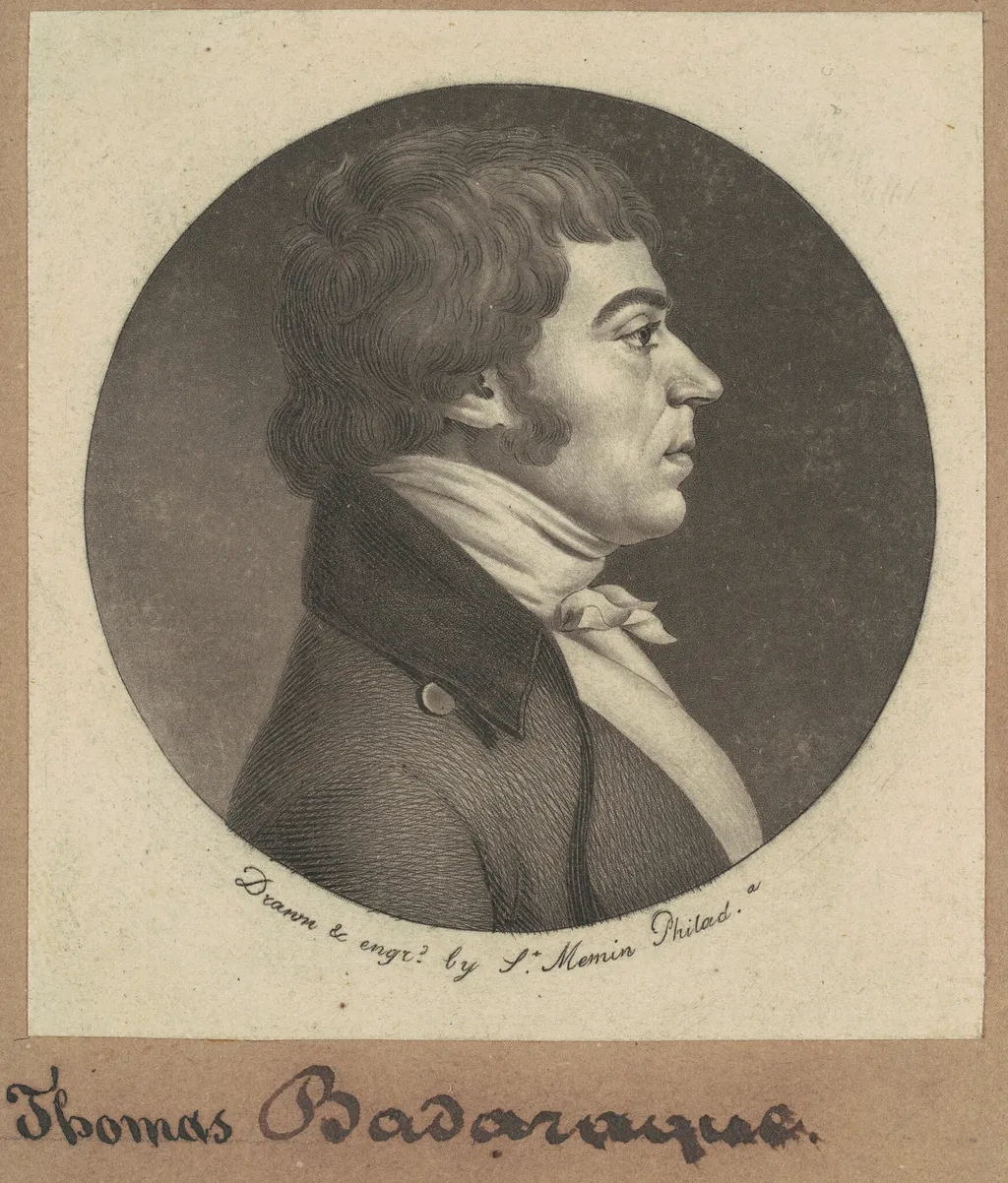
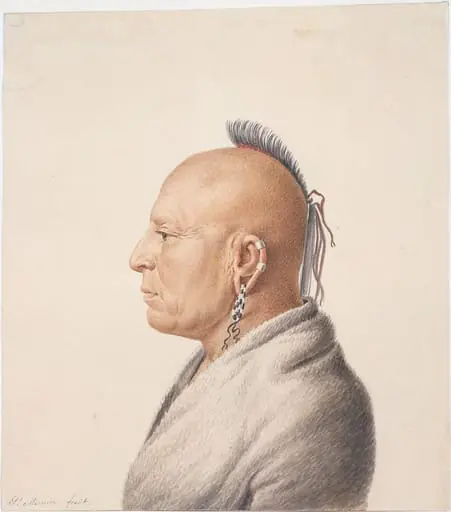
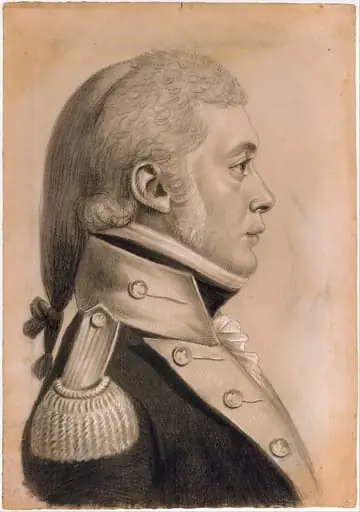
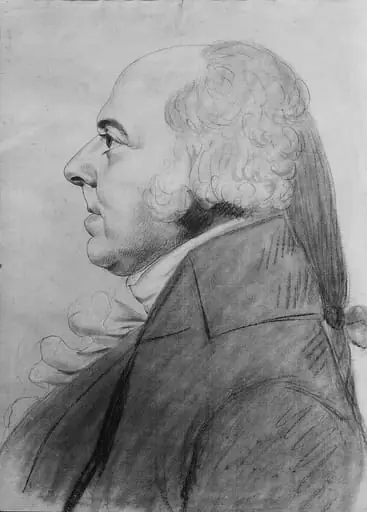
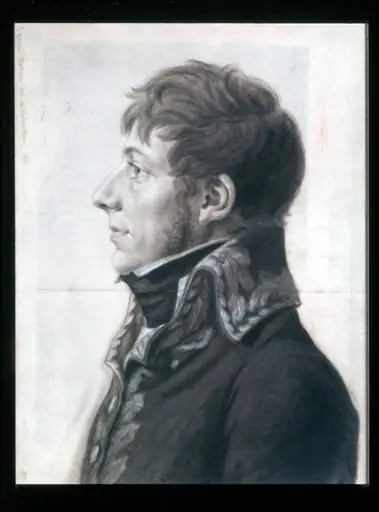
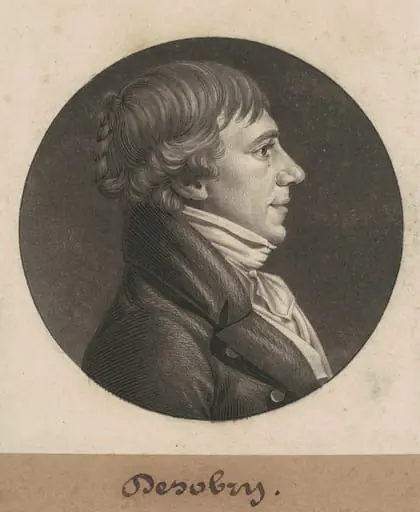
Thomas Badaraque is an ink print by the Romanticist artist Charles Balthazar Julien Févret de Saint-Mémin. It dates from 1800 and is held in the collection of the National Gallery of Art. This 1800 print by Charles B.
About this work
Overview
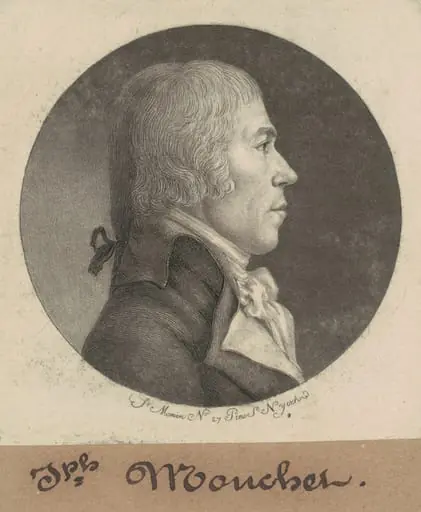
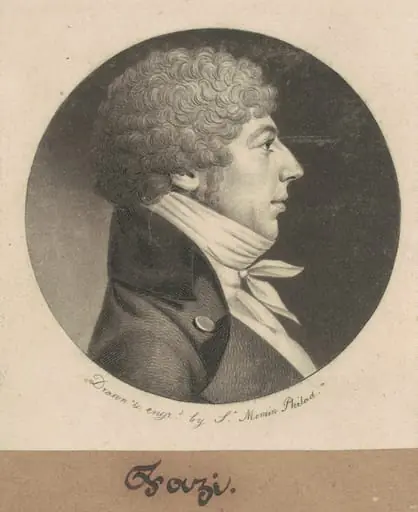
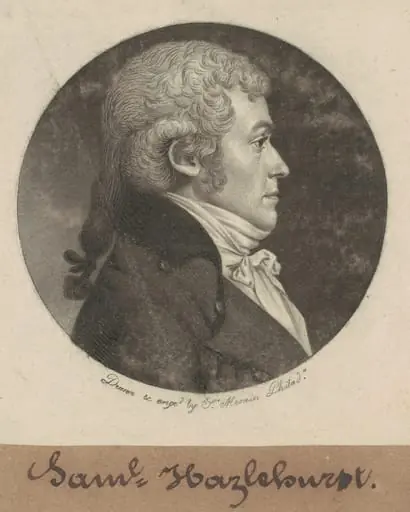
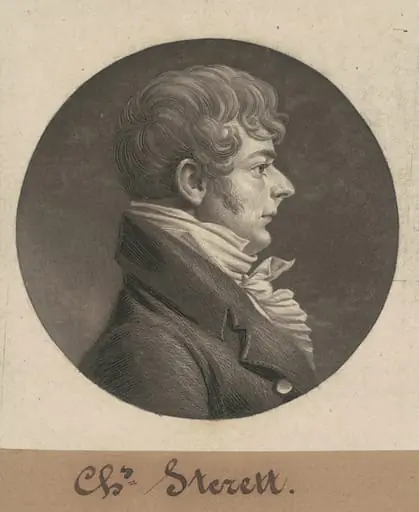
Févret de Saint-Mémin portrays Thomas Badaraque in profile, rendered in mezzotint and engraving on wove paper.
This 1800 print by Charles B. J. Févret de Saint-Mémin portrays Thomas Badaraque in profile, rendered in mezzotint and engraving on wove paper. The image is mounted on a brown wove support, a common practice for preserving delicate prints. The work belongs to the National Gallery of Art’s collection, where it serves as an example of early American portraiture through printmaking techniques refined in the late 18th and early 19th centuries.
Subject & Meaning
Thomas Badaraque, a figure of modest historical record, is depicted without adornment or symbolic context. The profile format, favored for its clarity and neutrality, emphasizes his facial structure and presence rather than status or occupation. The absence of background or attributes suggests an intent to document appearance rather than narrate identity, aligning with the era’s interest in systematic portraiture.
Technique & Style
Saint-Mémin employed mezzotint to achieve subtle tonal gradations, complemented by fine engraving lines for sharp definition. The combination allowed for remarkable detail in skin texture and hair, despite the limitations of hand-operated tools. The monochrome palette and precise contours reflect a commitment to accuracy, characteristic of Saint-Mémin’s approach to portraiture through print.
History & Provenance
Created in 1800, the print was likely made during Saint-Mémin’s time in the United States, where he produced numerous portrait engravings of prominent individuals. The work entered the National Gallery of Art’s collection through established acquisition channels, preserving its original mounting and condition. Its survival reflects the value placed on such documentary prints in early American art collections.
Context
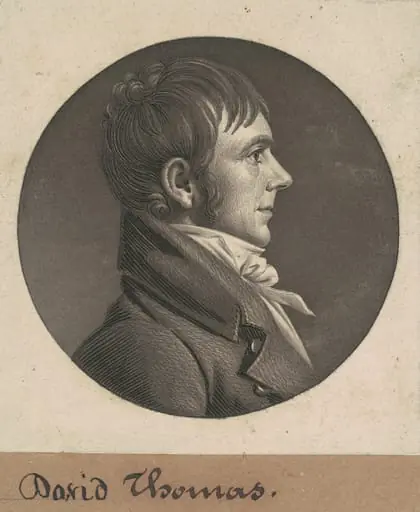
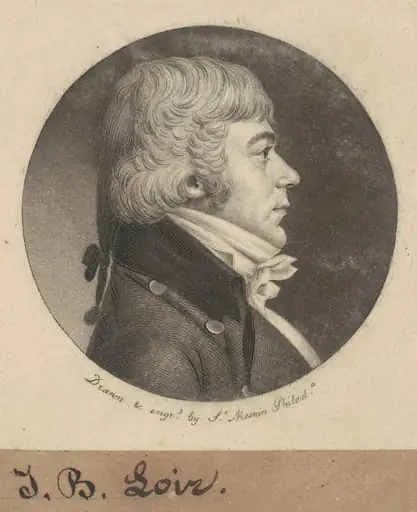
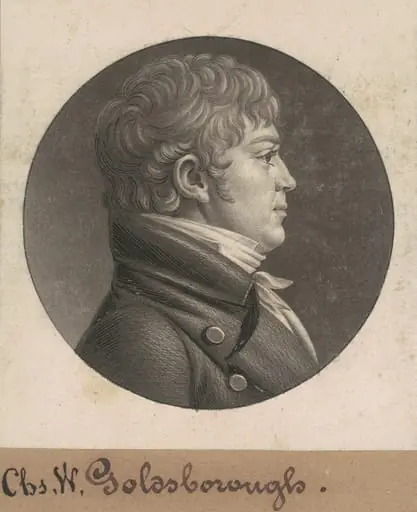
In the early 1800s, mezzotint and engraving were primary methods for disseminating likenesses before photography. Saint-Mémin’s practice of recording profiles of diverse figures—politicians, artists, and lesser-known individuals—contributed to a visual archive of American society. This print is one of many in a broader project to capture the nation’s emerging public figures.
Legacy
Saint-Mémin’s prints, including this one, remain important references for understanding early American portraiture and print culture. While Thomas Badaraque himself is not widely remembered, the technical precision and systematic approach of these works influenced later generations of American engravers and documentarians of identity.
Artist & collection

Artist
Charles Balthazar Julien Févret de Saint-Mémin
Charles Balthazar Julien Févret de Saint-Mémin (French pronunciation: ; 1770–1852) was a French portrait painter and museum director.