Artwork
Agra. The Gateway of the Gardens Surrounding the Taj
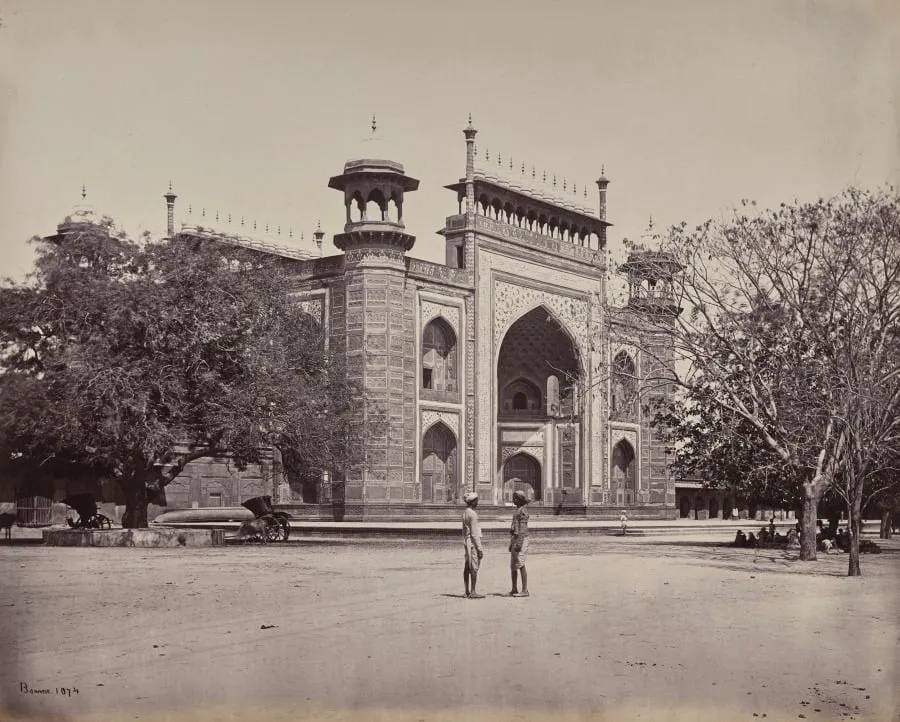
Agra. The Gateway of the Gardens Surrounding the Taj is a photography by the Impressionist artist Samuel Bourne. It dates from 1866 and is held in the collection of the Cleveland Museum of Art. This photograph, taken in the 1860s, captures the entrance to the garden complex leading to the Taj Mahal in Agra.
About this work
It’s one of the earliest clear pictures of the site, showing how it looked when fewer tourists visited.
You see a tall stone archway framing a dusty path that leads to the Taj Mahal in the distance. Trees and low walls line the walkway, and a few people stand near the gate.
This photo was taken in the 1860s, before the Taj was restored. It’s one of the earliest clear pictures of the site, showing how it looked when fewer tourists visited. The shadows and light are simple but careful, making the scene feel quiet and real.
If you like old travel photos, look up Samuel Bourne (British, 1834–1912) for more of his work.
Overview
This photograph, taken in the 1860s, captures the entrance to the garden complex leading to the Taj Mahal in Agra. Part of a larger album of fifty images documenting northern India, it records the monument before major 20th-century restorations altered its surroundings. The image reflects early photographic efforts to systematically document architectural heritage in colonial India.
Subject & Meaning
The image centers on a monumental stone archway, framing a narrow path lined with trees and low walls that leads toward the Taj Mahal in the distance. A handful of figures stand near the gate, suggesting the site’s limited public access at the time. The composition emphasizes quiet solitude, contrasting the grandeur of the monument with the modest scale of human presence.
Technique & Style
The photograph employs natural light with deliberate attention to shadow and tone, creating a subdued, contemplative atmosphere. The composition is carefully balanced, using the arch as a structural frame to draw the eye toward the distant mausoleum. The clarity of detail, unusual for the period, indicates skilled handling of wet-plate collodion processes.
History & Provenance
The photograph was taken by British photographer Samuel Bourne during his extensive travels across India in the 1860s. It belongs to a series commissioned to document architectural landmarks before restoration efforts changed their appearance. Bourne’s work became a key visual archive for scholars and colonial administrators interested in India’s Mughal heritage.
Context
In the 1860s, the Taj Mahal was largely neglected by local authorities and visited by few foreign travelers. British photographers like Bourne played a role in reshaping global perceptions of Indian monuments, often presenting them as relics of a bygone imperial era. This image reflects both documentary intent and the colonial gaze that framed India’s past as something to be preserved, not lived in.
Legacy
Bourne’s photograph remains one of the earliest clear visual records of the Taj Mahal’s original garden setting. It provides valuable evidence of the site’s pre-restoration landscape, including vegetation, pathways, and spatial relationships now altered. His work continues to inform conservation studies and historical reconstructions of Mughal-era architecture.
Artist & collection

Artist
Samuel Bourne was a British photographer known for his prolific seven years' work in India, from 1863 to 1870.

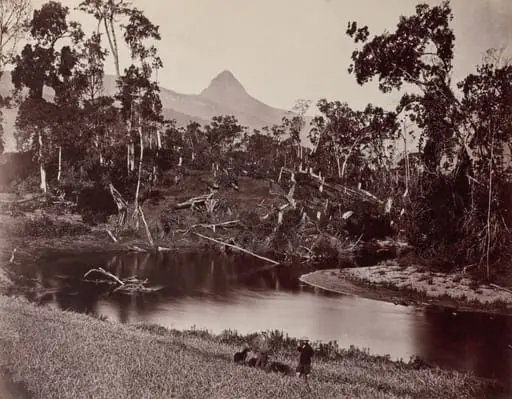 Ceylon Views to Adam's Tooth
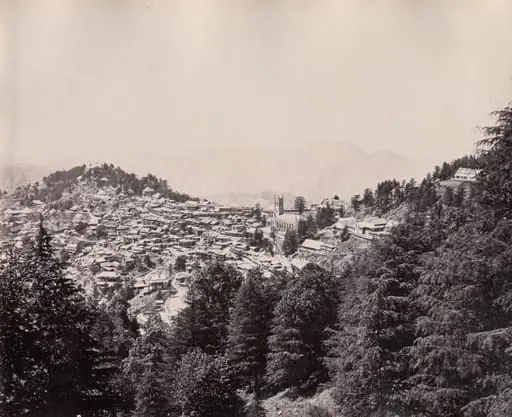 Shimla
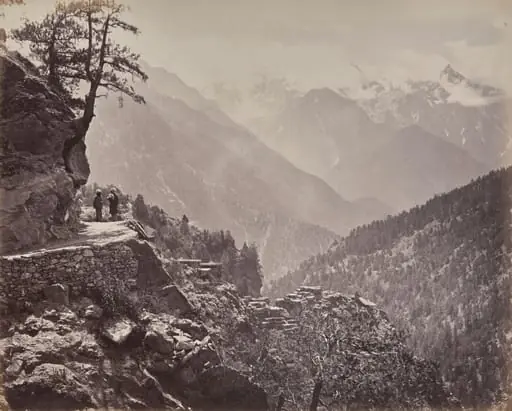 The Upper Himmalayahs. View on the New Road between India and China. Mt. Pangi with the Snowy Peaks of China in the Distance
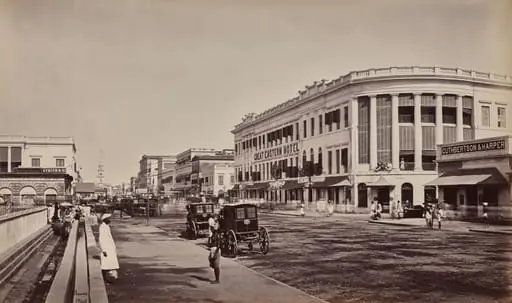 Calcutta. Old Court House Street
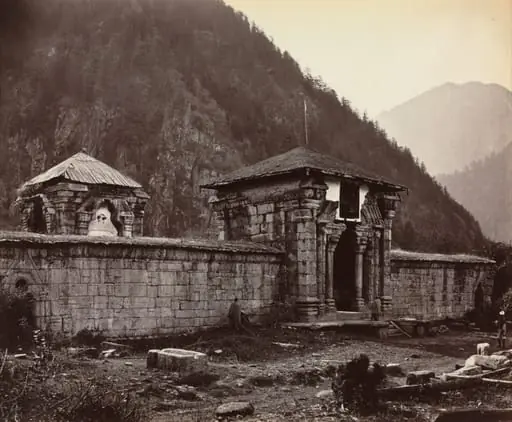 Temple at Naveshera, Kashmir, India
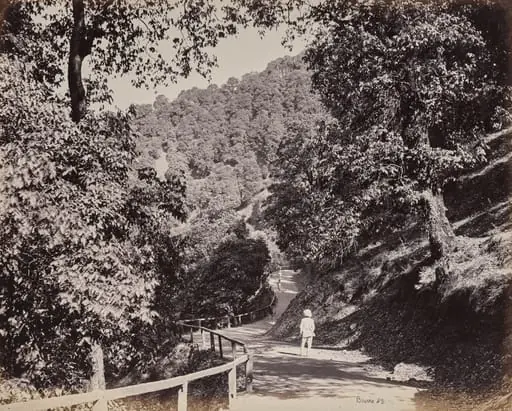 Shimla. The Mall near Rabq Lodge
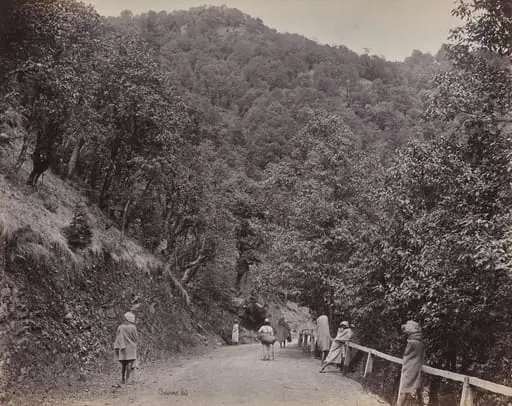 Shimla. The Mall or Principal
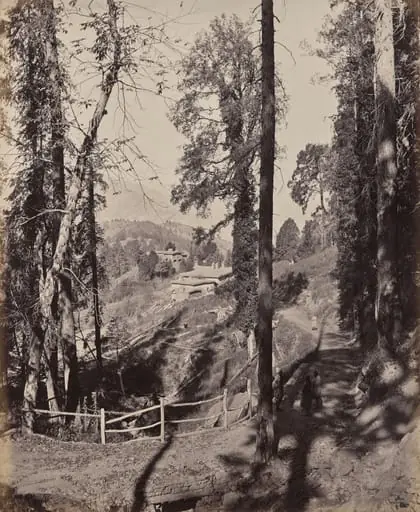 Murree. A Hill Station in the Himmalayahs, View Through the Forest
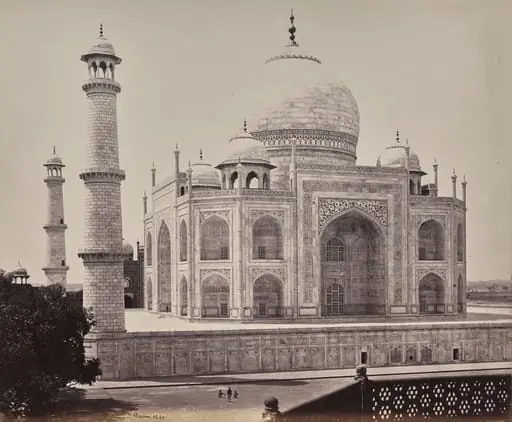 Agra. View of the Taj from a Corner in the Quadrangle
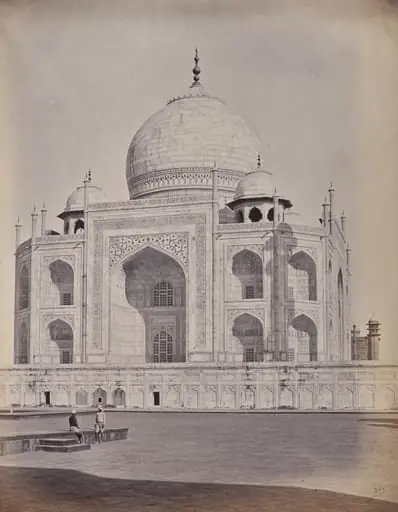 Agra. The Taj, the Central of Principal City
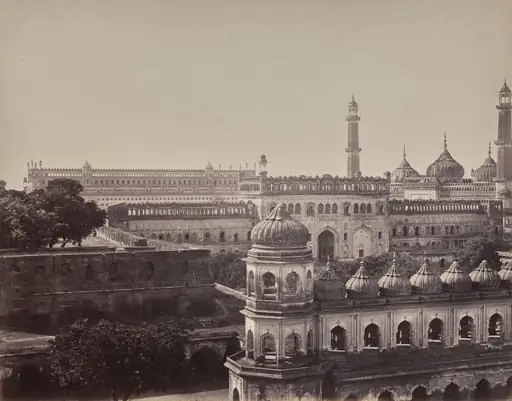 Lucknow. The Great Emambara and Mosque
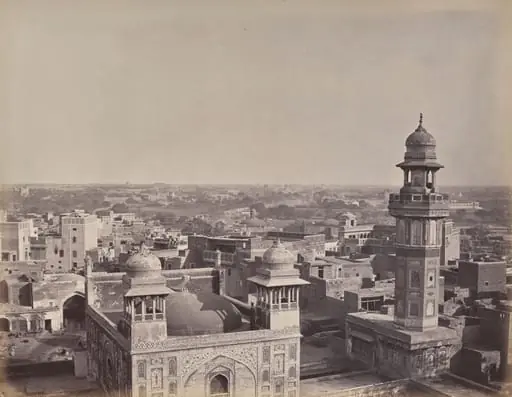 The City of Lahore. Another View Taken from Huzeer Khan's House
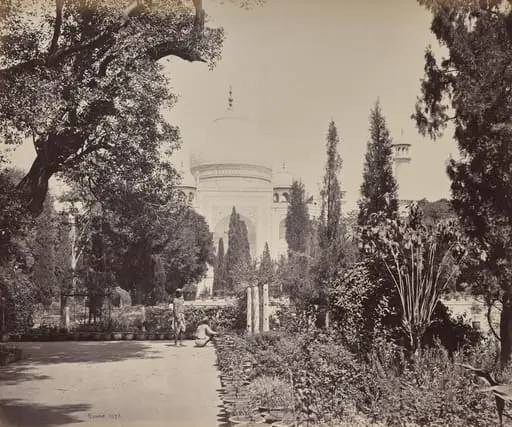 Agra. View of the Taj from the Garden
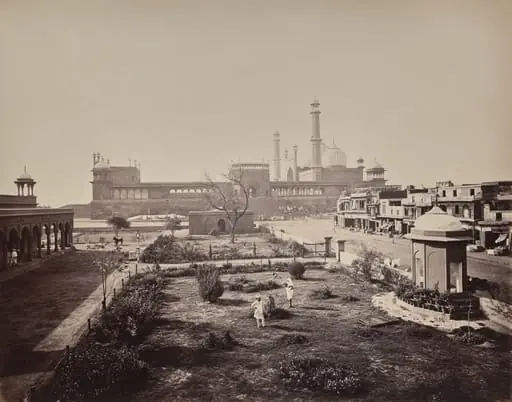 Delhi. View of North Side of the Jamma Musjid in Principal Mabonedau Place of Worship
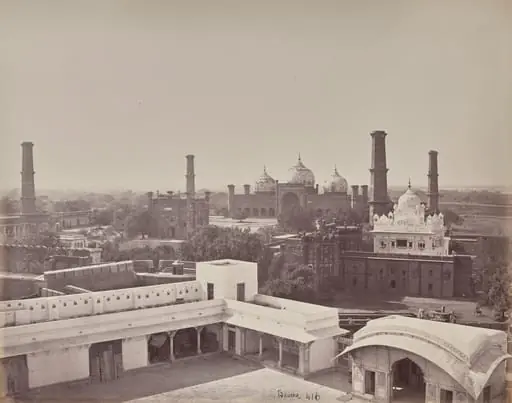 View of the City of Lahore Taken from the Roof of the Palace in the Fort
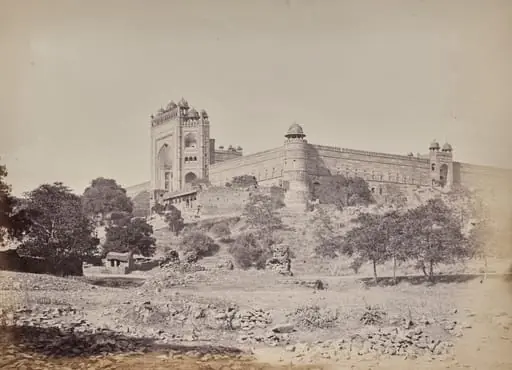 Fort of Futheypoor Sikre near Agra. The Residence of the Emperor Akbar