Artwork
Hyree Lake. South End of the Lake
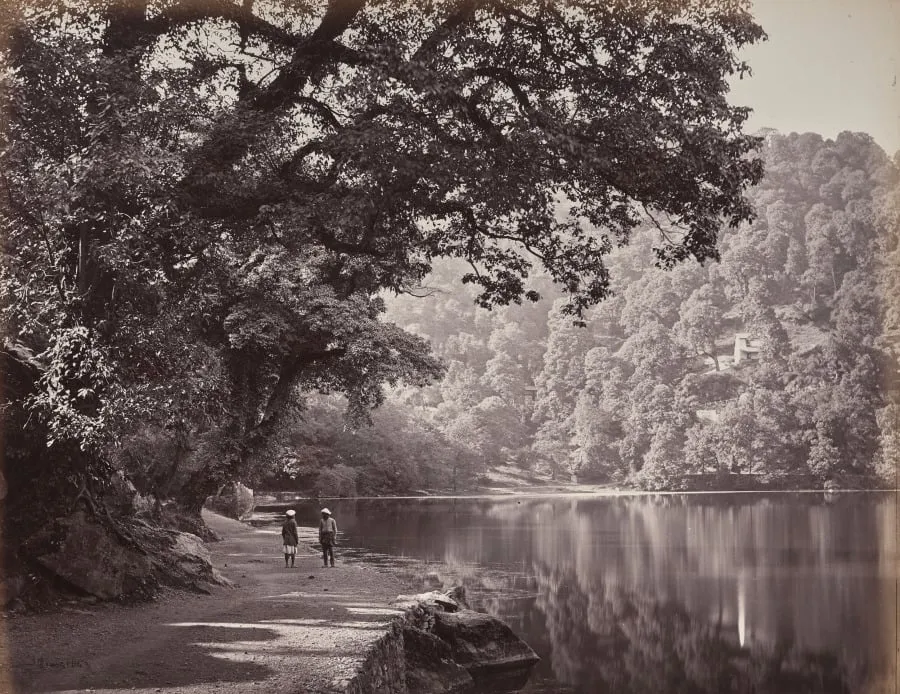
Hyree Lake. South End of the Lake is a photography by the Impressionist artist Samuel Bourne. It dates from 1866 and is held in the collection of the Cleveland Museum of Art.
About this work
Overview
Part of a larger album of fifty images, it documents landscapes and architecture across northern India during a period of early photographic exploration.
This photograph, taken in the 1860s, captures the southern end of Hyree Lake, a tranquil body of water nestled between rugged Himalayan slopes. Part of a larger album of fifty images, it documents landscapes and architecture across northern India during a period of early photographic exploration. The image was produced using glass plate negatives, a cumbersome medium requiring significant physical effort to transport and process in remote terrain.
Subject & Meaning
The scene presents a quiet, undisturbed landscape: still water, modest boats, and a distant village nestled against steep hills. There is no human activity visible, emphasizing solitude and the enduring presence of nature. The composition suggests a documentary intent—recording a place as it existed before widespread modernization, offering a quiet counterpoint to the more frequently photographed monuments of the region.
Technique & Style
Shot with heavy glass plate negatives, the photograph reflects the technical constraints of mid-19th-century photography. Long exposure times required stillness, contributing to the scene’s serene, almost suspended quality. The monochrome palette enhances tonal contrasts between dark hills, light water, and soft sky, while the sharp detail reveals textures of rock, wood, and foliage with precision uncommon in earlier photographic efforts.
History & Provenance
The image was taken by photographer Charles Bourne during a journey through northern India in the 1860s. It belongs to a series documenting architectural and natural sites from the Himalayan foothills to major urban centers. The album was likely compiled for European audiences interested in colonial India, preserving views of places before later restorations or urban expansion altered their appearance.
Context
While contemporaneous photographers focused on imperial monuments like the Taj Mahal, Bourne’s work included quieter, less-celebrated landscapes. Hyree Lake’s inclusion reflects a broader interest in documenting India’s topography alongside its history. The logistical challenge of carrying fragile equipment through mountainous terrain underscores the dedication behind these early field studies, which contributed to both scientific and colonial visual records.
Legacy
The photograph remains a valuable record of a landscape unchanged by modern development. Its quiet composition offers a contrast to the more dramatic imagery of the era, providing insight into everyday environments beyond the tourist or political sites. As part of a larger collection, it contributes to the historical understanding of how India’s natural scenery was perceived and preserved through early photography.
Artist & collection

Artist
Samuel Bourne was a British photographer known for his prolific seven years' work in India, from 1863 to 1870.

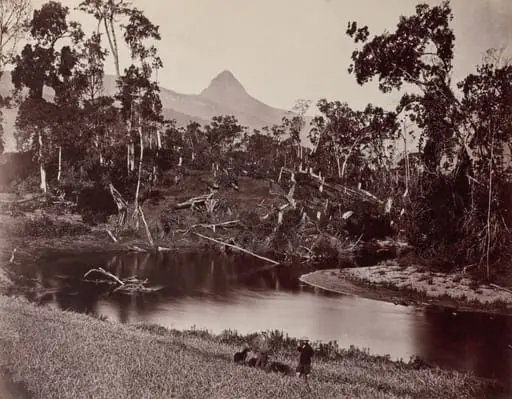 Ceylon Views to Adam's Tooth
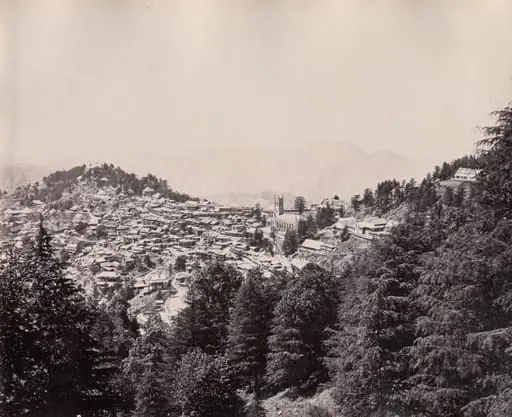 Shimla
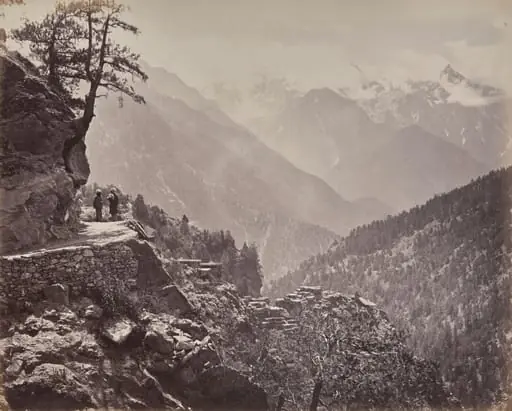 The Upper Himmalayahs. View on the New Road between India and China. Mt. Pangi with the Snowy Peaks of China in the Distance
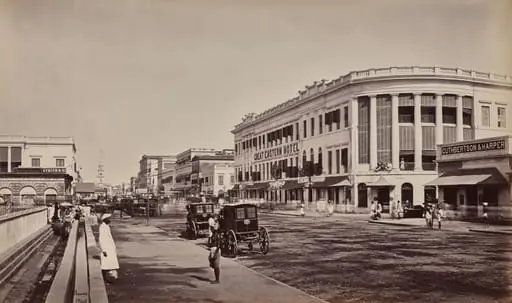 Calcutta. Old Court House Street
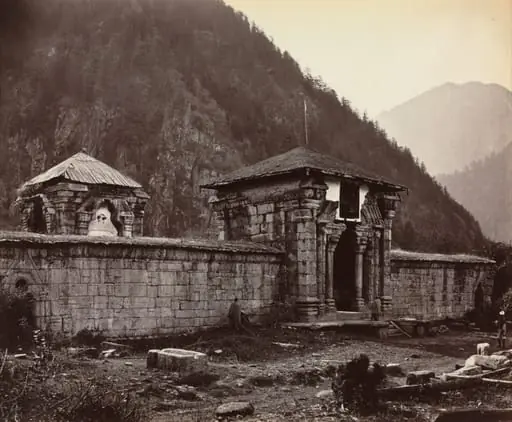 Temple at Naveshera, Kashmir, India
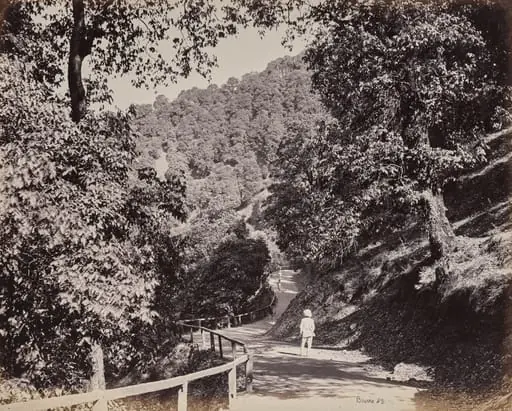 Shimla. The Mall near Rabq Lodge
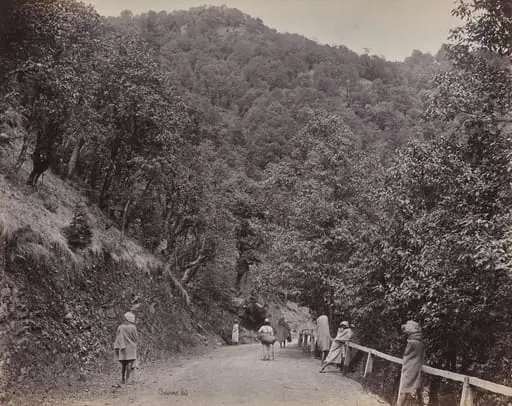 Shimla. The Mall or Principal
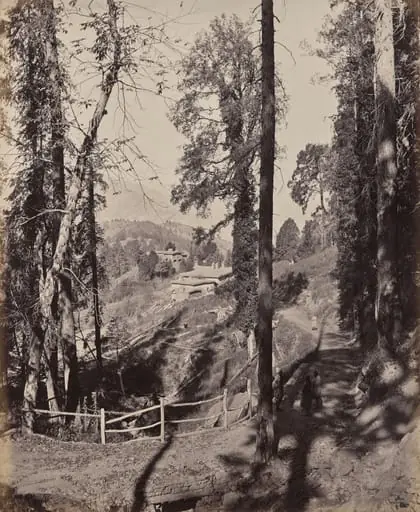 Murree. A Hill Station in the Himmalayahs, View Through the Forest
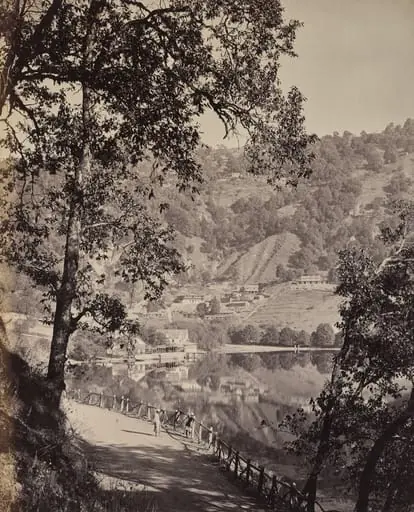 Hyree Lake. Hill Station in the Himmalayahs. View of the Taj Lake with Assembly Rooms, Lhutse
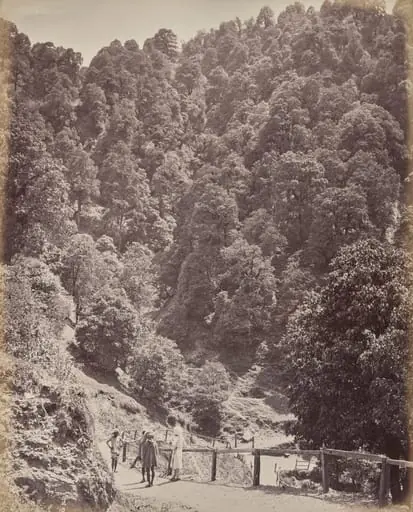 Shimla. View North of Mount Jakko
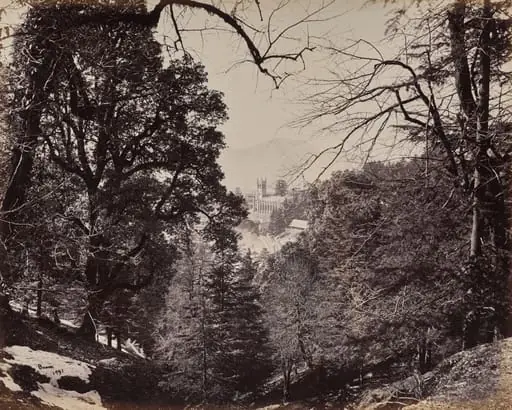 Shimla. The Church Through the Trees, from Jakko
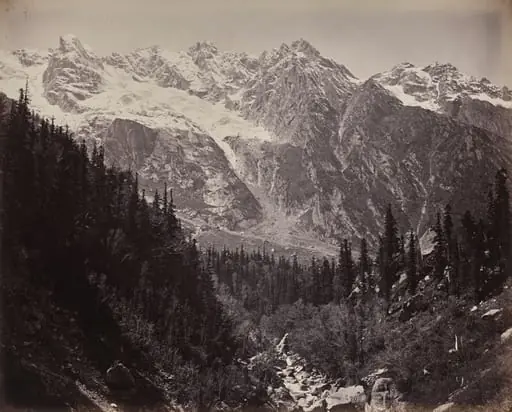 Scene in the Upper Himmalayahs. View in the Manga Valley
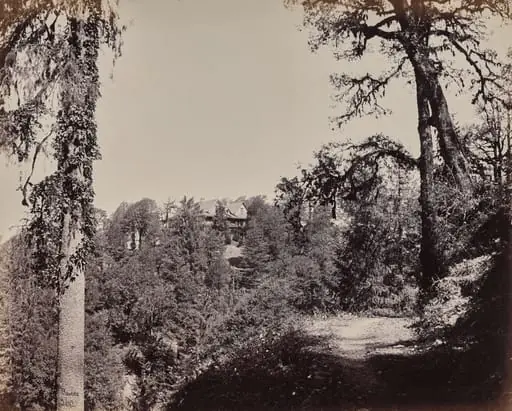 Shimla. Sir Hugh Rose's Bungalow at Mahasso
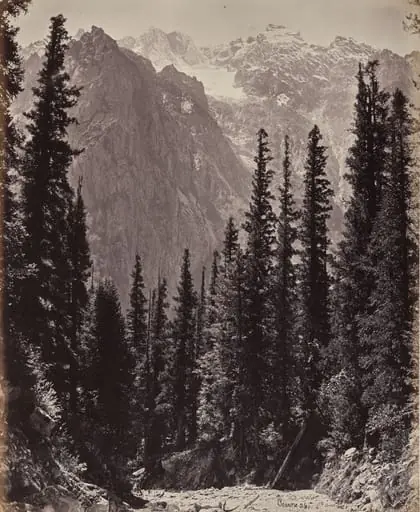 The Upper Himmalayahs. View in the Manga Valley