Artwork
The Upper Himmalayahs. View of the Mountain of Bunderpoonch with the Jumnootri Peak, 20,458 above the Level of the Sea
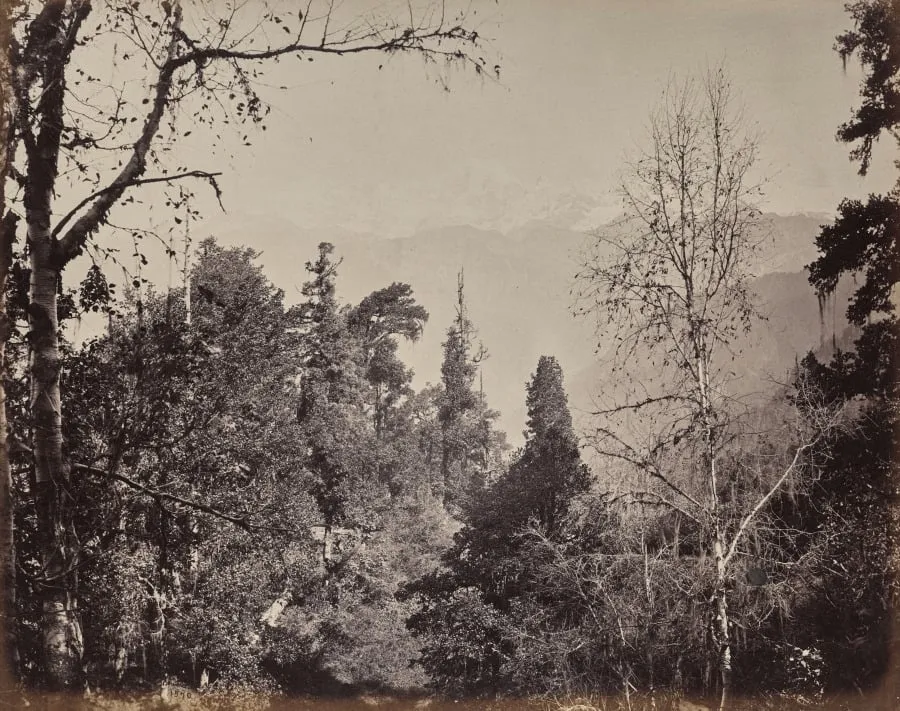
The Upper Himmalayahs. View of the Mountain of Bunderpoonch with the Jumnootri Peak, 20,458 above the Level of the Sea is a photography by the Impressionist artist Samuel Bourne. It dates from 1866 and is held in the collection of the Cleveland Museum of Art. The Upper Himmalayahs.
About this work
Overview
The Upper Himmalayahs. View of the Mountain of Bunderpoonch with the Jumnootri Peak, 20,458 above the Level of the Sea is a mid-19th-century photograph capturing a Himalayan landscape. Taken in the 1860s, it features the snowy peak of Bunderpoonch rising above a valley of dark green trees and pale rock.
Subject & Meaning
The photograph showcases the majestic Bunderpoonch mountain, highlighting its elevation of 20,458 feet above sea level. The subject challenges the contemporary British perception of India as merely jungles and temples, instead presenting a rugged, snowy Himalayan vista.
Technique & Style
The image exhibits crisp shadows and a sense of thin air, lending an almost surreal quality to the mountain. The photographic technique used by Bourne, despite the logistical challenges of transporting heavy camera equipment in the 1860s, achieves a sharp, detailed capture of the natural landscape.
History & Provenance
Part of an album containing 50 images from the 1860s, this photograph is one of several documenting the Himalayan region, hill towns, and major Indian cities like Lahore, Delhi, and Calcutta. It is valued for its historical record of pre-20th-century architectural and natural landscapes.
Context
Unlike Bourne's other works, such as those depicting the Lake District in England, this photograph offers a unique glimpse into 19th-century India's natural beauty, distinct from the architectural studies of monuments like the Taj Mahal and Delhi's imperial mosque found within the same album.
Legacy
The photograph contributes to a broader legacy of 19th-century Indian photography, providing both a historical record of the region's appearance before significant changes and an early example of capturing the Himalayas' grandeur through photography.
Artist & collection

Artist
Samuel Bourne was a British photographer known for his prolific seven years' work in India, from 1863 to 1870.

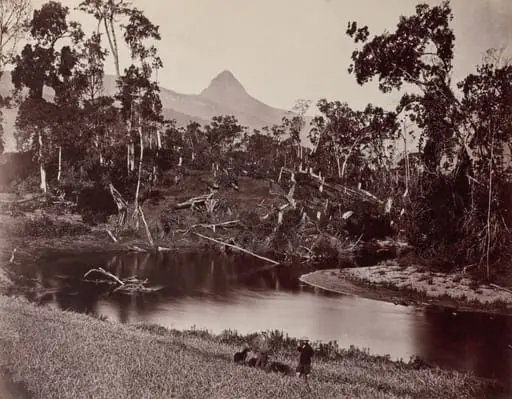 Ceylon Views to Adam's Tooth
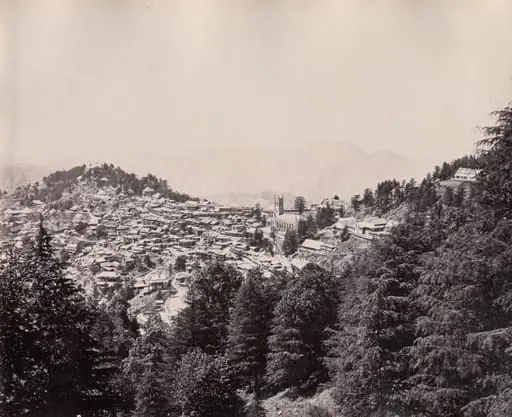 Shimla
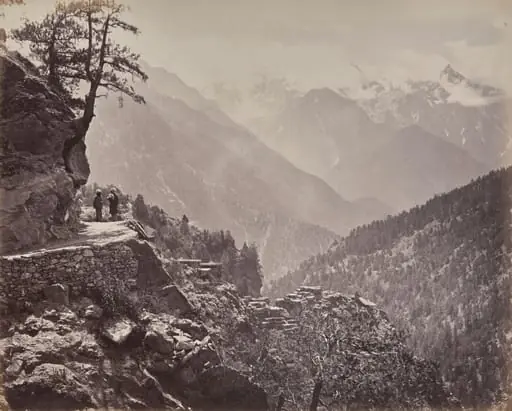 The Upper Himmalayahs. View on the New Road between India and China. Mt. Pangi with the Snowy Peaks of China in the Distance
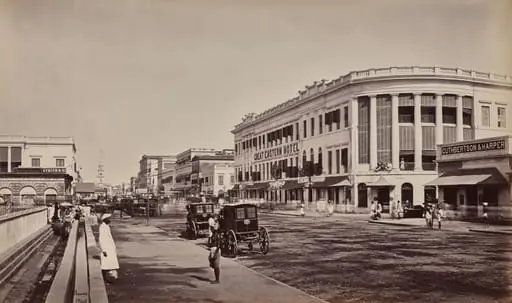 Calcutta. Old Court House Street
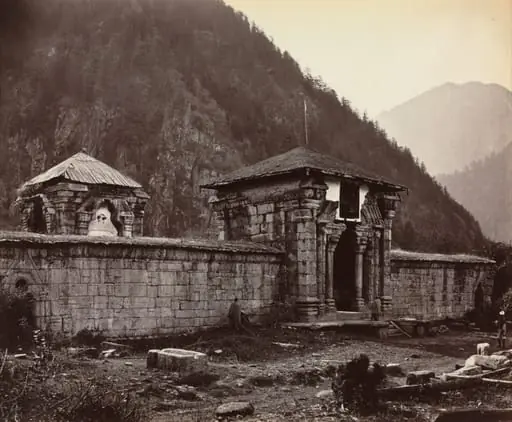 Temple at Naveshera, Kashmir, India
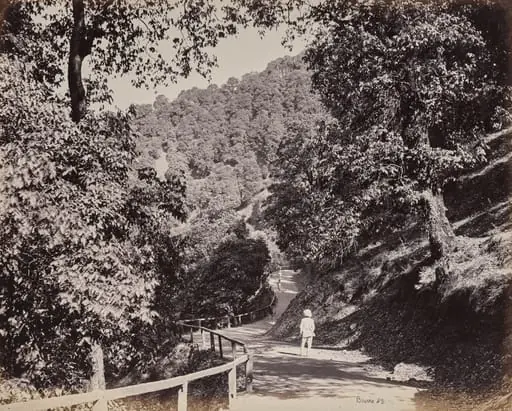 Shimla. The Mall near Rabq Lodge
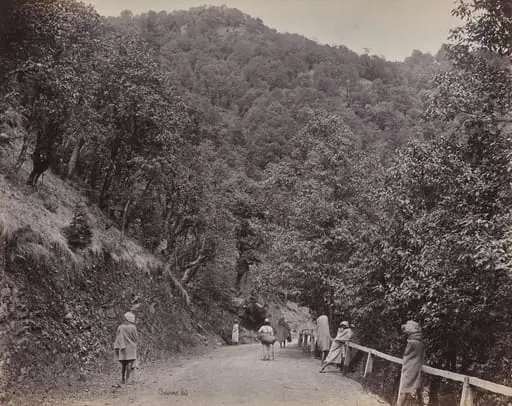 Shimla. The Mall or Principal
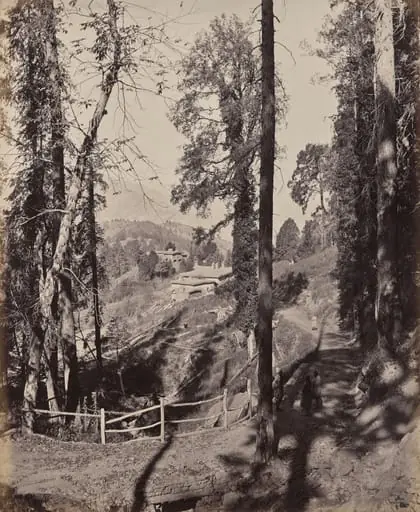 Murree. A Hill Station in the Himmalayahs, View Through the Forest
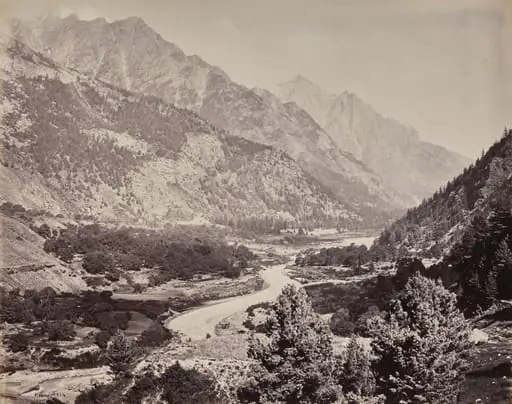 The Upper Himmalayahs. View in the Buspa Valley from Sangla
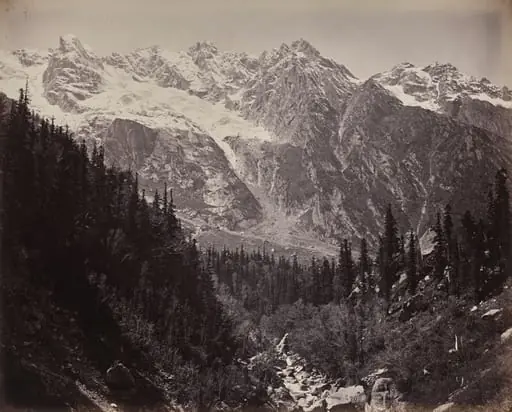 Scene in the Upper Himmalayahs. View in the Manga Valley
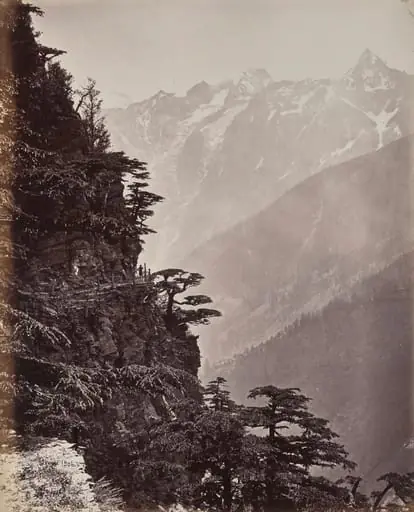 The Upper Himmalayahs. View on the New Road Near Rogi
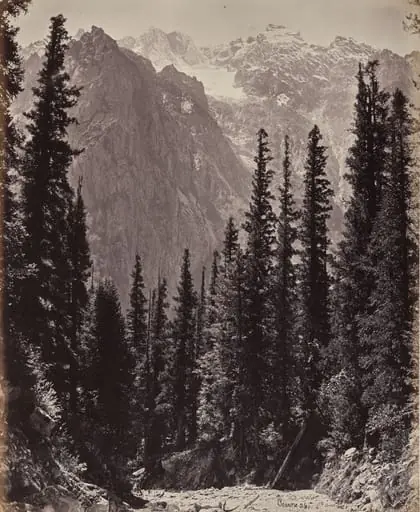 The Upper Himmalayahs. View in the Manga Valley
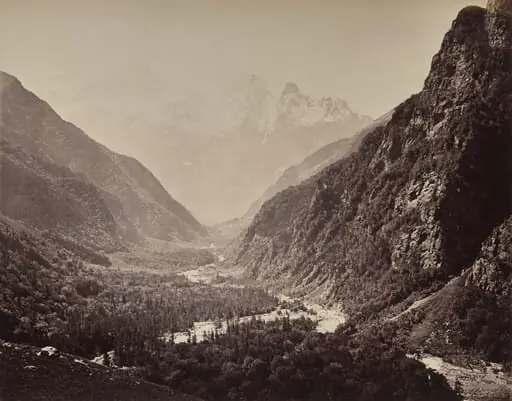 The Upper Himmalayahs. View of Valley from Fallaldasa with Srikanta Peaks in the Distance
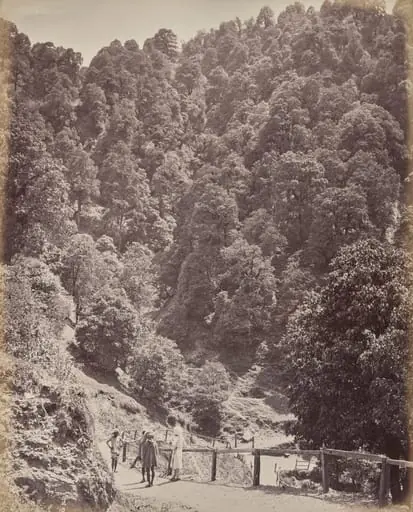 Shimla. View North of Mount Jakko