Artwork
Shimla and the Taj Mahal
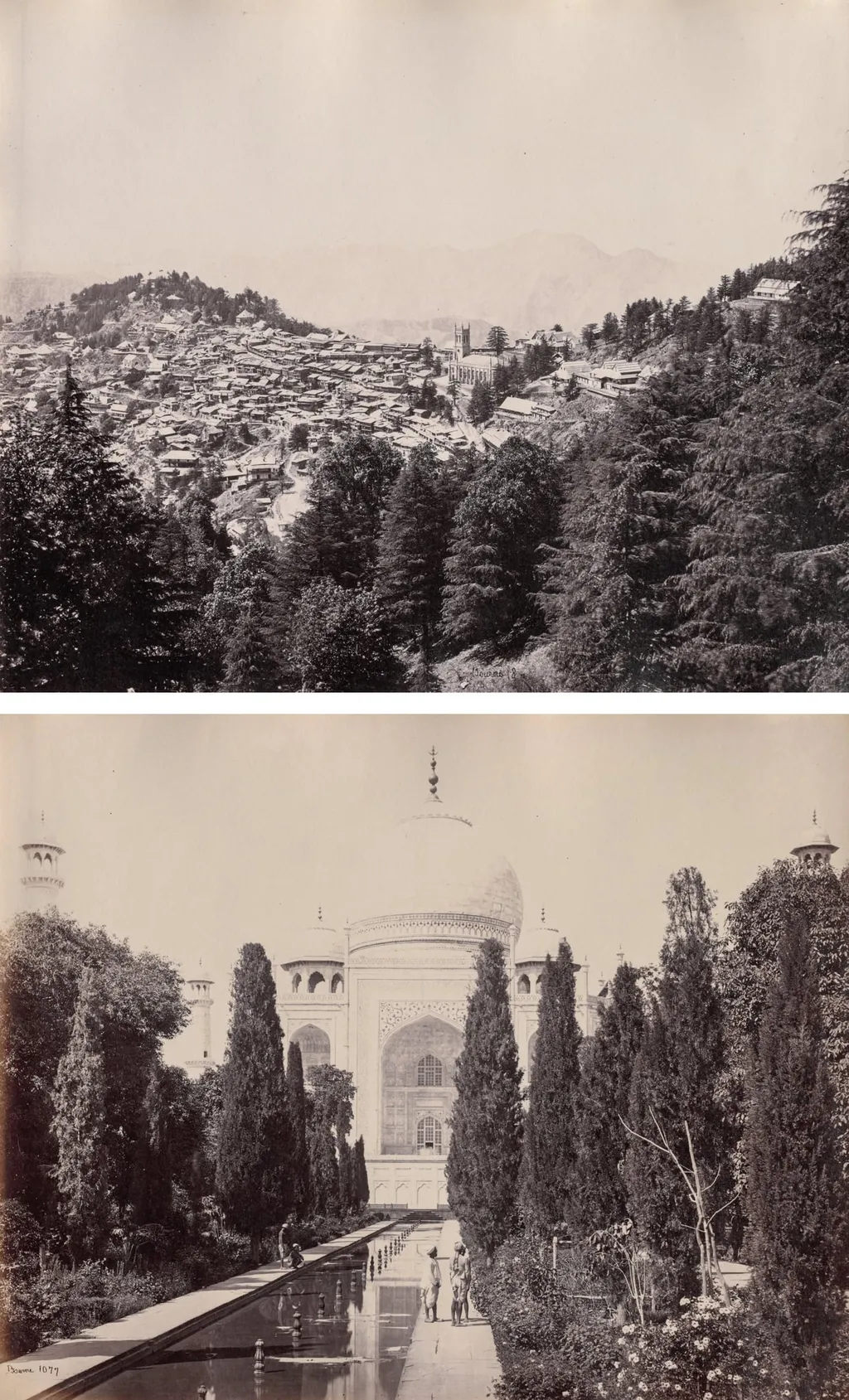
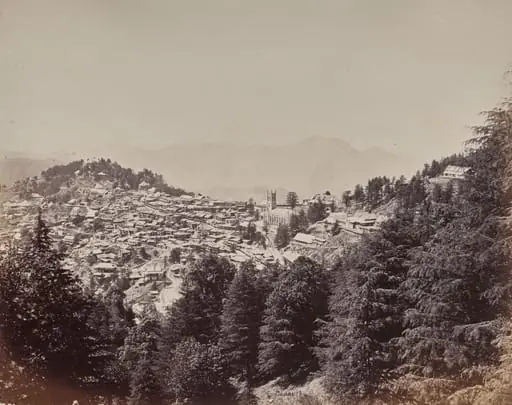
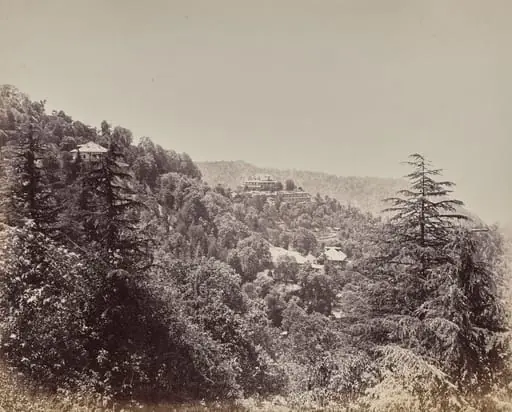
Shimla and the Taj Mahal is a photography by the Impressionist artist Samuel Bourne. It dates from 1864 and is held in the collection of the Cleveland Museum of Art.
About this work
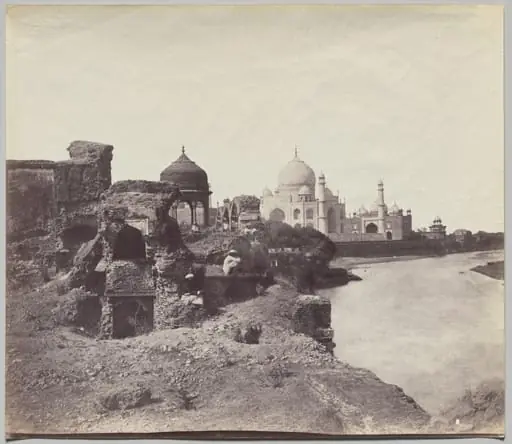
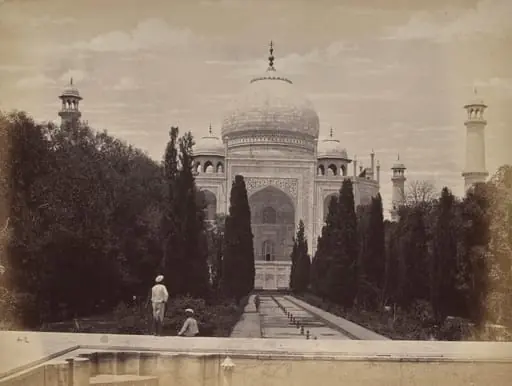
You see a photo of the Taj Mahal with mountains in the background.
The photo was taken in the 1860s, a time when photography was still new. It's interesting because it shows how people traveled to see famous landmarks back then.
You can learn more about this type of photography by looking at the work of artist: Samuel Bourne (British, 1834–1912)
Overview
Taken around 1864, this photograph by Samuel Bourne captures the Taj Mahal with distant mountain ranges visible behind it.
Taken around 1864, this photograph by Samuel Bourne captures the Taj Mahal with distant mountain ranges visible behind it. Produced during the early decades of photographic practice in India, the image reflects both technical experimentation and the growing interest in documenting architectural landmarks. It resides today in The Cleveland Museum of Art, part of a broader collection of 19th-century South Asian photography.
Subject & Meaning
The Taj Mahal is framed not as an isolated monument but as part of a wider landscape, with the Himalayan foothills rising behind its white domes. This composition suggests a deliberate effort to situate the structure within its natural context, subtly reinforcing its grandeur through environmental contrast rather than overt spectacle. The inclusion of mountains may also reflect the traveler’s journey to the site.
Technique & Style
Bourne used large-format glass plate negatives and a laborious wet-plate collodion process, requiring on-site preparation of chemicals and immediate development. The image’s sharp detail and tonal range reveal his technical precision. The composition is carefully balanced, with the monument centered and the mountains framing the horizon, demonstrating an awareness of pictorial convention even within documentary constraints.
History & Provenance
Samuel Bourne, a British photographer based in India during the 1860s, produced this image during one of his extensive expeditions across northern India. The photograph was likely made for commercial distribution or personal documentation, as Bourne regularly sold his work to European audiences. It entered the Cleveland Museum of Art’s collection through later acquisitions of 19th-century photographic material.
Context
In the 1860s, photography in India was still emerging as a tool for both scientific record and colonial curiosity. Bourne’s work contributed to a growing visual archive of India’s monuments, often commissioned or consumed by British audiences seeking to understand or possess the subcontinent’s heritage. Travel to sites like the Taj Mahal was arduous, making such images valuable substitutes or souvenirs.
Legacy
Bourne’s photographs remain among the most systematically documented visual records of India’s architecture from the mid-19th century. His approach—combining technical rigor with compositional clarity—influenced later generations of documentary photographers. This image, in particular, exemplifies how early photographers shaped Western perceptions of Indian monuments through careful framing and environmental context.
Artist & collection

Artist
Samuel Bourne was a British photographer known for his prolific seven years' work in India, from 1863 to 1870.

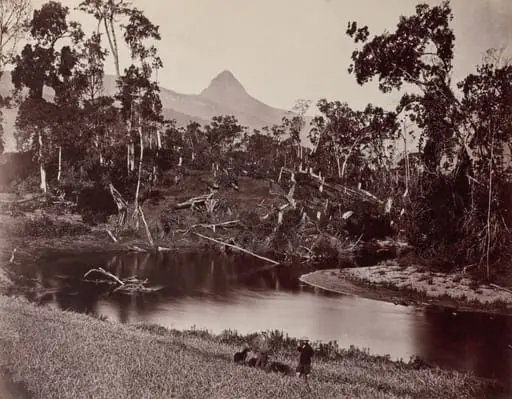 Ceylon Views to Adam's Tooth
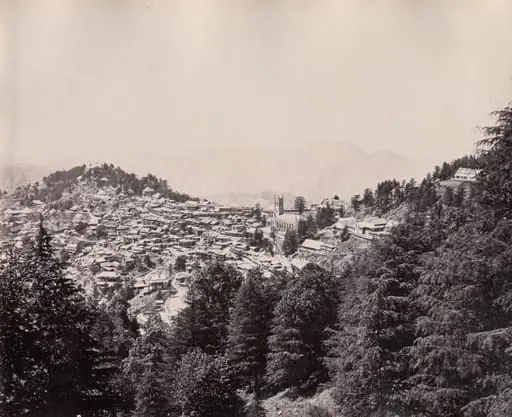 Shimla
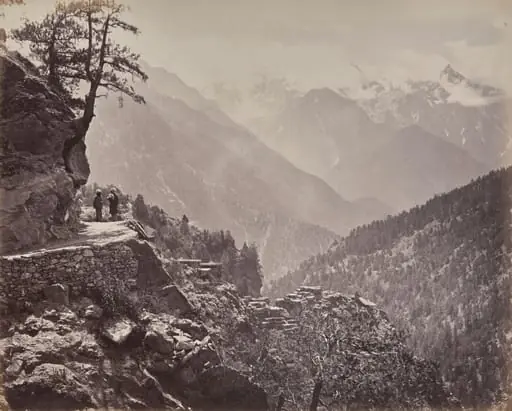 The Upper Himmalayahs. View on the New Road between India and China. Mt. Pangi with the Snowy Peaks of China in the Distance
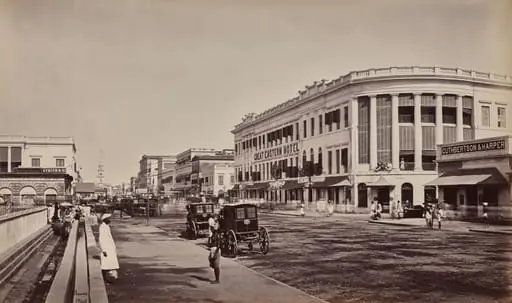 Calcutta. Old Court House Street
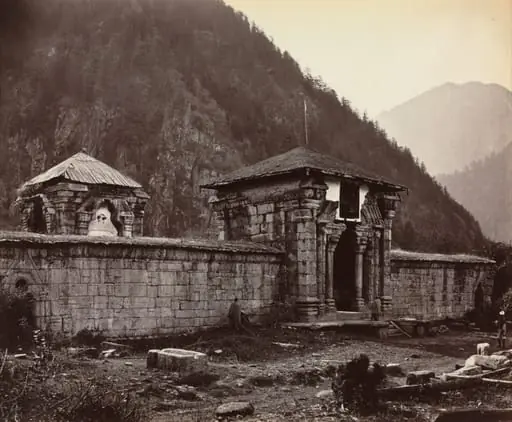 Temple at Naveshera, Kashmir, India
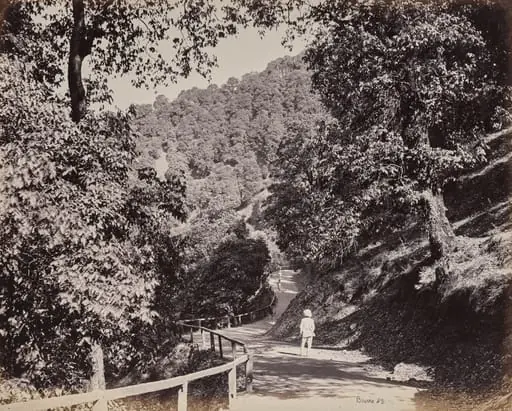 Shimla. The Mall near Rabq Lodge
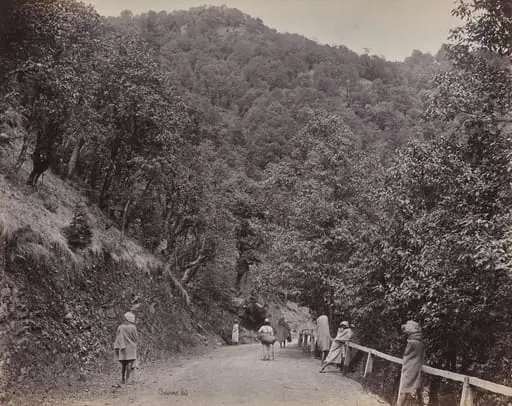 Shimla. The Mall or Principal
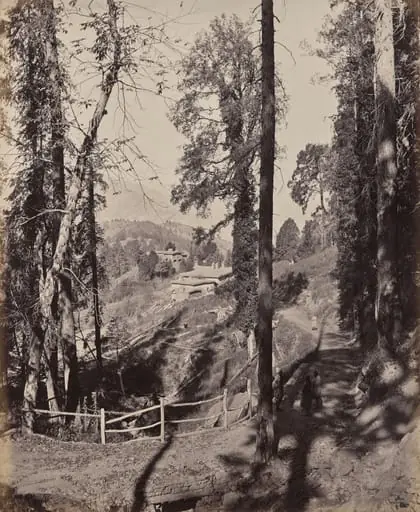 Murree. A Hill Station in the Himmalayahs, View Through the Forest