Artwork
Monastery [recto]
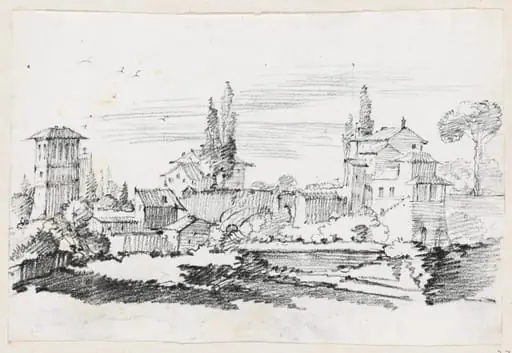
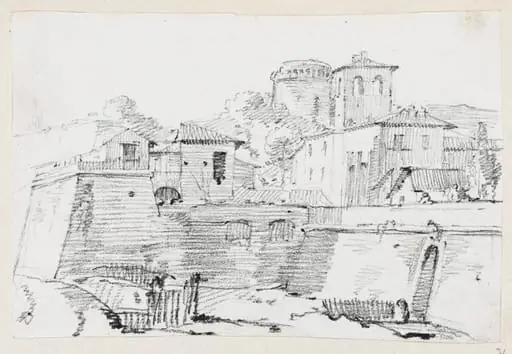
![Monastery [recto], by John Singer Sargent, graphite, 1871](https://artifactworldgallery.com/img/john-singer-sargent--monastery-recto--4a41741dd680f7c9-w1024.webp)
Monastery [recto] is a graphite drawing by the Impressionist artist John Singer Sargent. It dates from 1871 and is held in the collection of the National Gallery of Art.
About this work
This drawing shows a quiet village with a church steeple rising above trees.
This drawing shows a quiet village with a church steeple rising above trees. John Singer Sargent made it with pencil between 1870 and 1872. The lines are soft and the light feels gentle.
The paper has a woven texture you can almost feel. Sargent used only graphite yet made the scene feel real. Tiny details pop without color.
It’s like he paused time with his pencil. Check out more Sargent, John Singer next.
Overview
Created between 1870 and 1872, this graphite drawing by John Singer Sargent captures a quiet rural scene with a church steeple emerging above clustered trees. Executed on wove paper, the work demonstrates Sargent’s early command of tone and texture using only pencil. The absence of color heightens the sensitivity of light and form, revealing his focus on atmospheric quietude rather than narrative detail.
Subject & Meaning
The scene presents a modest village settlement, its architecture subdued beneath a canopy of foliage. The church steeple, the only vertical element breaking the horizontal rhythm, suggests spiritual presence without overt symbolism. There is no human activity depicted—only stillness, as if the landscape holds its breath. The composition invites contemplation rather than storytelling.
Technique & Style
Sargent employed fine, layered graphite strokes to model form with subtle gradations, avoiding harsh lines. The woven texture of the paper interacts with the pencil’s grain, enhancing the sense of tactile depth. Shadows are rendered with delicate hatching, while highlights remain untouched, allowing the paper’s natural tone to suggest light. Details emerge through restraint, not accumulation.
History & Provenance
This drawing belongs to Sargent’s early period, made during his formative years in Europe, likely during travels in Italy or southern France. It was not intended for public exhibition but served as a study in observation and technique. Its survival reflects its value to the artist as a personal record of place and light, preserved in private collections before entering institutional hands.
Context
In the early 1870s, Sargent was refining his draftsmanship outside academic settings, sketching landscapes away from formal commissions. This work aligns with a broader European tradition of topographical drawing, yet its intimacy and sensitivity distinguish it from mere documentation. It reflects a shift toward personal response over idealized representation in landscape art.
Legacy
Though not widely exhibited, this drawing exemplifies Sargent’s foundational skill in monochrome rendering, which later informed his portraiture and watercolors. Its quiet precision reveals an artist attuned to the nuances of light and structure, laying groundwork for his mature style. It remains a quiet testament to his ability to convey presence through absence of color.
Own this work as a print
Artist & collection

Artist
John Singer Sargent (; January 12, 1856 – April 15, 1925) was an American expatriate artist, considered the "leading portrait painter of his generation" for his evocations of Belle Époque and Edwardian-era luxury.


 Houses in Italy
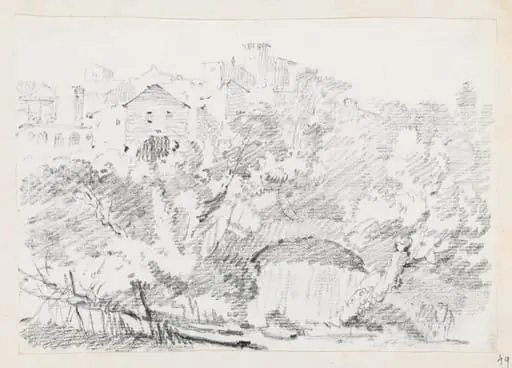 A Waterfall near a Hilltown in Italy
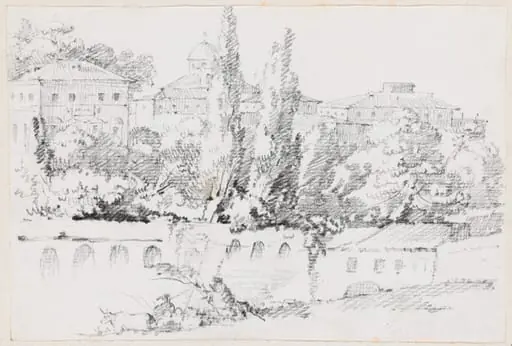 Walls of Rome with Santa Maria del Popolo in the Distance
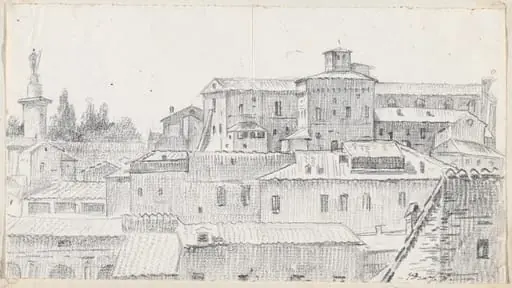 The Capitoline Hill
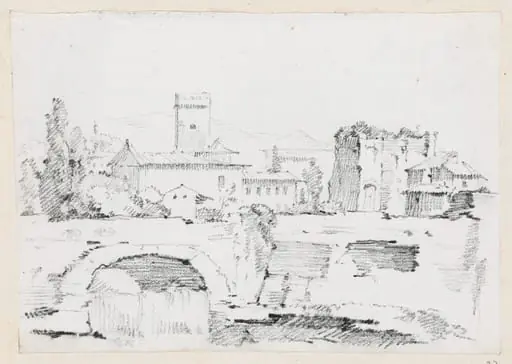 An Italian Town with a Stone Bridge and a Waterfall
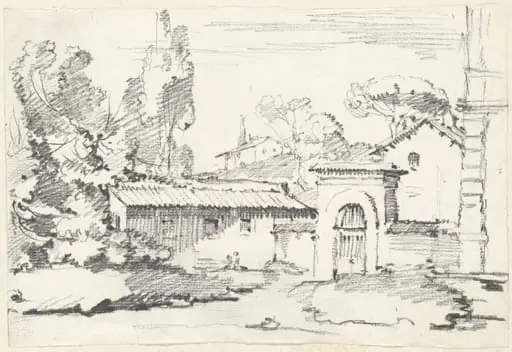 Entrance to the Gardens of the Villa Giulia
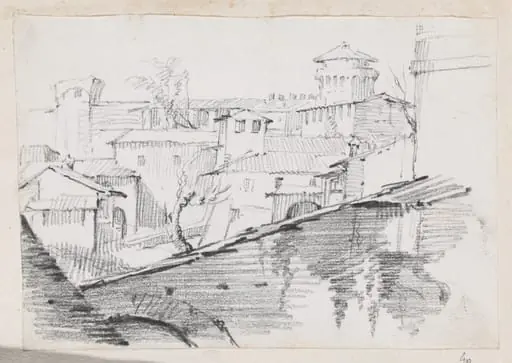 The Forno inside the Walls of the Vatican
![Buildings along a Riverside [verso], by Hubert Robert](https://artifactworldgallery.com/img/hubert-robert--buildings-along-a-riverside-verso--2575ea57b917e17d-w320.webp) Buildings along a Riverside [verso]
Buildings along a Riverside [verso]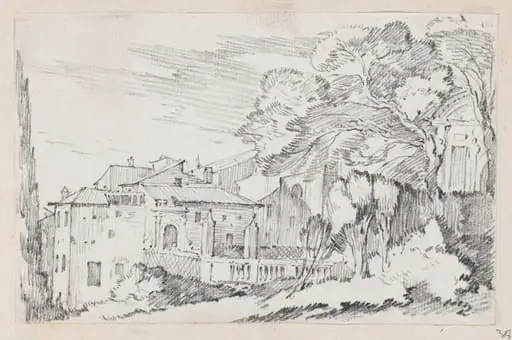 Houses and a Garden on a Hillside in Italy
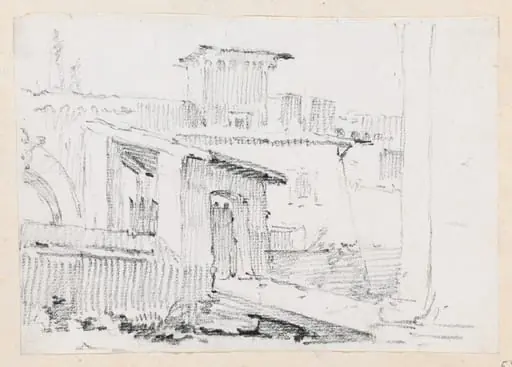 Roman Buildings with an Open Shed
 A Fortified Town in Italy
![Italian Villa [recto], by John Singer Sargent](https://artifactworldgallery.com/img/john-singer-sargent--italian-villa-recto--2e4da7e05805b1fe-w320.webp) Italian Villa [recto]
Italian Villa [recto]