Artwork
În i
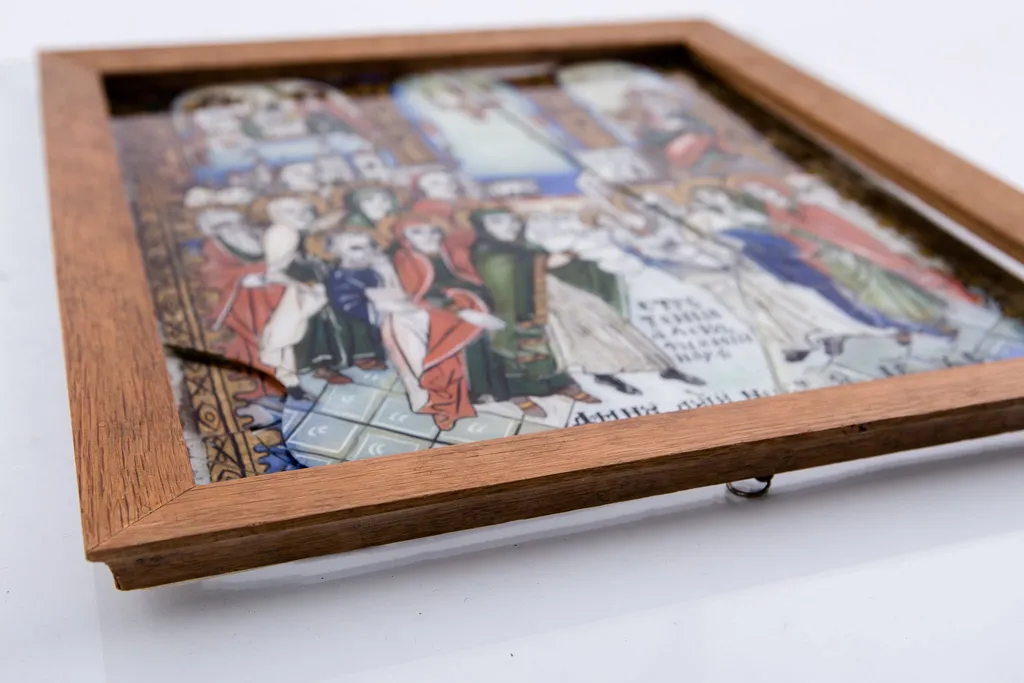
În i is a drawing by Savu Moga. It is held in the collection of the ASTRA National Museum Complex. This drawing features a group of figures arranged in a ceremonial setting, rendered with flat, unmodulated colors and bold black outlines.
About this work
Overview
The background is densely populated with additional figures and architectural forms, creating a layered, symbolic space rather than a realistic one.
This drawing features a group of figures arranged in a ceremonial setting, rendered with flat, unmodulated colors and bold black outlines. The composition includes individuals in varied attire—robes and ornate garments—standing on a decorative floor pattern. A central figure holds a book, suggesting a narrative or ritual context. The background is densely populated with additional figures and architectural forms, creating a layered, symbolic space rather than a realistic one.
Subject & Meaning
The scene appears to depict a religious or liturgical event, with hierarchical positioning indicating social or spiritual rank. The presence of a book implies textual authority, possibly scripture or sacred law. The stylized figures and lack of naturalistic detail suggest an emphasis on symbolic representation over individual identity, aligning with traditions that prioritize communal ritual over personal expression.
Technique & Style
The artwork employs flat areas of intense color—red, blue, and green—without shading or perspective to model form. Figures and structures are defined by thick, uniform black outlines, creating a graphic, almost textile-like quality. The patterned floor and crowded background reinforce a decorative, non-naturalistic approach, characteristic of visual systems that prioritize symbolic clarity over optical realism.
History & Provenance
The work is associated with the collection of the Museum of Ethnography, suggesting it originates from a cultural tradition that values ritual imagery in communal or religious life. Its stylistic traits align with folk or liturgical art forms from regions where such visual conventions were used to convey sacred narratives outside academic artistic frameworks.
Context
This image reflects a visual language common in devotional or ceremonial art from communities where literacy was limited and imagery served as a conduit for religious instruction. The absence of depth and the emphasis on pattern and color mirror practices found in illuminated manuscripts, iconography, or textile designs used in ritual contexts across various cultures.
Legacy
Works like this contribute to broader understandings of how non-Western and non-academic traditions encode meaning through formal simplicity. Their preservation in ethnographic collections highlights their role as cultural artifacts, offering insight into how communities visually articulate belief systems through stylized, collective imagery.
Artist & collection
Artist
Savu Moga painted religious icons in the folk style of 19th‑century Țara Făgărașului.

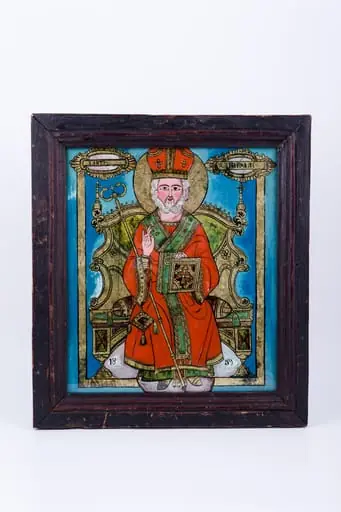 Sfântul Mare Ierarh Nicolae Făcătorul de minuni este redat central, așezat fiind pe un tron arhieresc, ținând în mâna stângă Sfânta Evanghelie închisă și binecuvântează cu mâna dreaptă. Veșmintele arhierești liturgice ale sfântului ierarh sunt într-o alternanță cromatică de roșu vermillon și verde spanac-avocado, kaki și galben-auriu. Epitrahilul, patrafirul este verde, cu patru cruci pe el, sacosul roșu, cu bordură galben-aurie. Poartă mithră și are aureolă. Ține în mâna stângă Sfânta Evanghelie închisă și binecuvântează. Întreaga tematică iconografică este încadrată de un chenar liniar auriu, cu un fond al icoanei albastru-gri. Inscripția din româno-chirilică se traduce Sf Nicolae. Icoana are o cromatică armonioasă și vie-luminoasă: roșu vermillon, roz, verde spanac-avocado, verde kaki, galben-auriu, alb, negru. Icoana este de Țara Făgărașului, este datată 1859 și este atribuită lui Savu Moga.
 Domnul Iisus Hristos primește Botezul, în râul Iordanului, din partea Sfântului Mare Prooroc și Înaintemergător Ioan Botezătorul, care se află în dreapta Mântuitorului. Mântuitorul este înfășurat cu o pânză de culoare brună-bronzie împrejurul șoldurilor și a coapselor. În stânga Lui, este un grup de îngeri evlavioși, care Îl așteaptă cu două ștergare albe gata să înveșmânteze Trupul Domnului. Sfântul Ioan Botezătorul este îmbrăcat cu o mantie brună-bronzie și un himation alb-brun sau o haină din păr de cămilă. Cerurile de culoare brun-gri-aurie sunt deschise și izvorăște o rază de lumină, pe care se pogoară porumbelul, simbolul Sfântului Duh, pe creștetul Mântuitorului. Mandorla de nouri rotunzi, care permite deschiderea Cerurilor au o alternanță cromatică de brun-acajou și verde. Cromatica este specifică Țării Făgărașului: auriu, verde kaki, bej, gri, ocru, brun-nisipiu, alb, negru. Inscripția din româno-chirilică se traduce Botezul IC XC Iisus Hristos. Icoana este datată 1866 și este atribuită lui Savu Moga, din Arpașu de Sus, Țara Făgărașului.
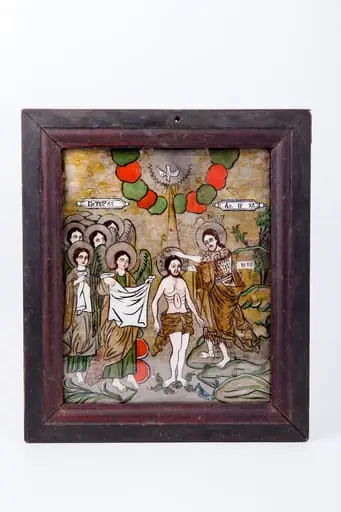 Domnul Iisus Hristos primește Botezul, în râul Iordanului, din partea Sfântului Mare Prooroc și Înaintemergător Ioan Botezătorul, care se află în stânga Mântuitorului. Mântuitorul este înfășurat cu o pânză de culoare brună-bronzie împrejurul șoldurilor și a coapselor. În dreapta Lui, este un grup de îngeri evlavioși, care Îl așteaptă cu două ștergare albe gata să înveșmânteze Trupul Domnului. Sfântul Ioan Botezătorul este îmbrăcat cu o mantie brună-bronzie și un himation alb-brun sau o haină din păr de cămilă. Cerurile de culoare brun-gri-aurie sunt deschise și izvorăște o rază de lumină, pe care se pogoară porumbelul, simbolul Sfântului Duh, pe creștetul Mântuitorului. Mandorla de nouri rotunzi, care permite deschiderea Cerurilor au o alternanță cromatică de roșu-vermillon și verde. Cromatica este specifică Țării Făgărașului: auriu, roșu vermillon, verde kaki, bej, gri, ocru, brun-nisipiu, alb, negru. Inscripția din româno-chirilică se traduce Botezul IC XC Iisus Hristos Ioan. Icoana este datată 1868 și este atribuită lui Savu Moga, din Arpașu de Sus, Țara Făgărașului.
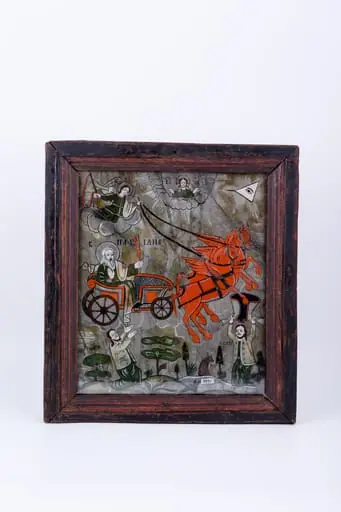 Icoana îl reprezintă pe Sfântul Mare Prooroc Ilie Tesviteanul, traversând Cerurile, în carul de foc, tras de doi cai roșii. Sfântul este îmbrăcat în straie brun-kaki și mantie brună-ocru și Îngerul din spate mână caii cu aripile roșii. Chipul Sfântului Ilie este unul ascetic, asemenea Sfântului Ioan Botezătorul. În registrul inferior sunt Sfântul Prooroc Elisei, ucenicul Sfântului Ilie, care prinde cojocul aruncat și un țăran plugar, care se ține de carul de foc al sfântului prooroc. Asemenea țăranului plugar, care ară pământul, așa și Sfântul Ilie Tesviteanul ară Cerurile cu carul de foc. În registrul superior este Dumnezeu-Tatăl, care binecuvântează și Îngerul care ține hățurile cailor. În colțul din dreapta este Ochiul Divin înscris în triunghiul Sfintei Treimi. Între registre există comunicare și interferență, atât semantică, cât și cromatică. Compoziția este amplă, dezvoltată pe registre și relații între personaje. Cromatica este armonioasă: roșu vermillon și sângeriu, verde kaki, verde mușchi-de-pădure, gri, nisipiu, ocru, bronziu, alb și negru. Inscripția din româno-chirilică se traduce IC XC Iisus Hristos Sf Proroc Ilie Elisei. Icoana aparține lui Savu Moga, din Arpașu de Sus, Țara Făgărașului. Icoana este datată 1859.
 Sfântul Mare Mucenic Haralambie, făcător-de-minuni și vindecător de boli, este cel mai bătrân mucenic din cei prăznuiți de creștini. Este cunoscut ca și făcător-de-minuni, vindecător de boli și ocrotitor al caselor familiilor creștine. Central este pictat Sfântul, îmbrăcat cu veșminte liturgice, arhierești, cu sacos verde kaki, felon brun, epitrahil orange, aureolă. Are barbă foarte lungă, fața palidă, ascetică și ochii blând-pătrunzători. În mâna stângă ține Sfânta Evanghelie închisă și cu aceeași mână ține în lanț ciuma, reprezentată antropomorfic - un schelet gri-cenușiu, antracit, cu coarne de diavol. Ciuma, simbolizând boala incurabilă și moartea, are coarne de diavol, fiind, totodată și păcatul, patima, aducătoare de moartea duhovnicească. Cu mâna dreaptă sfântul ierarh binecuvântează. Ciuma este călcată în picioare se Sfântul Haralambie, iar de sub scheletul antropomorfic-zoomorfic și diabolic, ies și fug trei oameni, salvați și vindecați de făcătorul de minuni și tămăduitorul de boli. În dreapta Sfântului sunt alte trei personaje care îi mulțumesc sfântului pentru ajutor. În registrul îndepărtat sunt elemente arhitectonice, cu o bogăție de detalii decorative. În registrul superior pe o mandorlă din nouri este Dumnezeu Binecuvântând și pe o altă mandorlă este Îngerul Arhanghel Gavriil așezând cununa de mucenicie pe capul Sfântului Haralambie. Fondul este cerul brun-gri. Întreaga compoziție iconografică este încadrată de un chenar decorativ geometrizant, pe laterale, ca două panglici late, cu ghirlande de flori mari, de culoare verde-gri-turcoaz. Inscripția din româno-chirilică se traduce IC XC Iisus Hristos Sfântul Mucenic Haralalmbie. Cromatica este frumoasă, deosebită și armonioasă: orange - roșu vermillon, verde spanac-avocado, verde kaki, gri, brun, bronziu, alb, negru. Icoana este datată 1875. Icoana este a lui Savu Moga, din Arpașu de Sus, Țara Făgărașului.
 Sfânn Ar
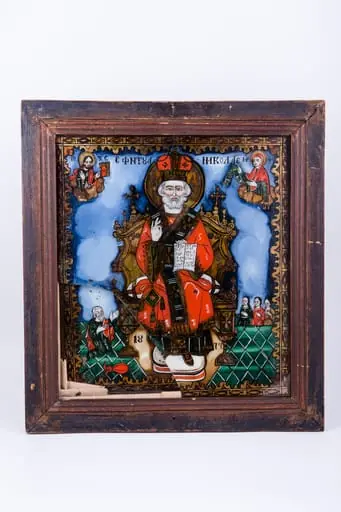 Sfântul Mare Ierarh Nicolae Făcătorul de minuni este redat central, fiind așezat pe un tron arhieresc, bogat ornamentat cu detalii arhitecturale, ținând în mâna stângă Sfânta Evanghelie închisă și binecuvântează cu mâna dreaptă. Veșmintele arhierești liturgice ale sfântului ierarh sunt într-o alternanță cromatică de roșu vermillon - verde - kaki - brun- bronziu. Epitrahilul, patrafirul este brun-kaki, cu patru cruci pe el, sacosul roșu vermillon. Poartă mithră și are aureolă. Ține în mâna stângă Sfânta Evanghelie deschisă și binecuvântează. În registrul superior îndepărtat sunt Dumnezeu-Tatăl și Maica Domnului, care binecuvântează și ocrotesc. Pe fondul albastru ceruleum în degrade cu albastru regal și alb, Mântuitorul și Maica Domnului au veșminte roșii și verzi. În registrul inferior sunt cele trei fete salvate de sfântul ierarh de la sărăcie și păcat și tatăl fetelor, care îngenuncheat, mulțumește pentru minunea și binefacerile primite. Inscripția din româno-chirilică se traduce Sf Nicolae ICXC Iisus Hristos MP Maica Domnului. Icoana are o cromatică puternic-vie, specifică Țării Oltului: roșu vermillon, verde, albastru ceruleum, gri, galben chihlimbar, alb, negru. Icoana este încadrată de un chenar decorativ geometrizant, format dintr-o dantelărie aurie. Icoana aparține lui Savu Moga, din Arpașu de Sus, Țara Făgărașului. Icoana este datată 1877.
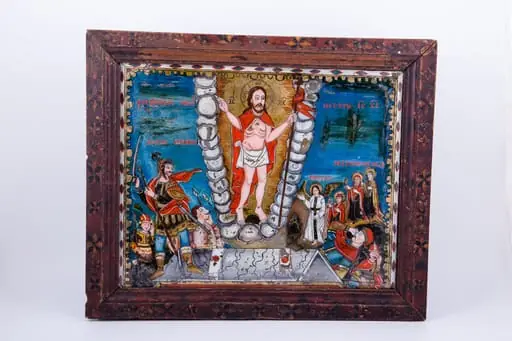 Învierea Domnului Iisus Hristos. Mântuitorul Iisus Hristos, ieșind din mormânt, Înviind, cu steagul biruinței în mâna stângă, zdrobește ușile iadului, cu mâna dreapta arătând și Binecuvântând. În stânga Mântuitorului este Îngerul Gavriil, care aducea Vestea Învierii Domnului. Îngerul a strigat…Vestea… și în urma lui vin cele trei femei mironosițe. Mântuitorul este înfășurat cu o mantie și roșie și o țesătură albă, în mijlocul coapselor și a mijlocului. Este pe o mandorlă de nouri albi, sugerându-se, astfel, deschiderea Cerurilor și poartă Lumina Învierii ca pe o mantie de aripi. Cei patru ostași adormiți sunt aruncați la marginea mormântului. Lateral dreapta Mântuitorului este sutașul Longhin, care a împuns Trupul Mântuitorului pe Cruce cu sulița în coastă, iar sângele și apa ce au izvorât au tămăduit ochii necredinței sutașului. Icoana aparține lui Savu Moga, din Arpașu de Sus, Țara Făgărașului. Are o cromatică vie: albastru regal, albastru ceruleum, roșu vermillon, roz, galben, roșu, roz, auriu. Inscripția în româno-chirilică se traduce Învierea Domnului Iisus Hristos Înviere Mironosițe Longhin sutașul.
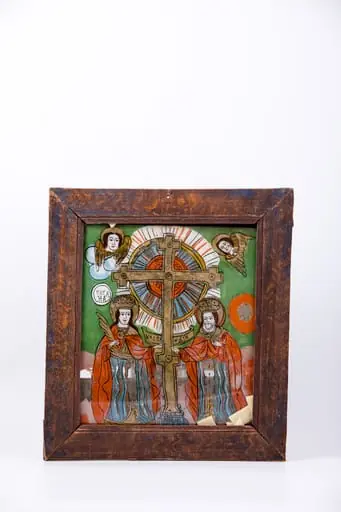 În centrul icoanei este Crucea bronzie, cu capetele brațelor împodobite trilobat, iar în stânga crucii este Sfântul Împărat Constantin și în dreapta este Împărăteasa Elena, mama sa. În spatele Crucii, este un soare mare roșu, circular, cu raze de lumină galbene și albastre, dispuse radiar. Crucea găsită este susținută cu bucurie de cei doi sfinți. Veșmintele Sfinților Constantin și Elena sunt într-o combinație de roșu vermillon, galben și albastru. Spațiul alb-galben de lumină, din fondul icoanei, duce cu gândul la Crucea de lumină apărută pe cer In hoc signo vinces - prin acest semn vei învinge. Fondul icoanei este cerul verde-văratic, în registrul superior, iar în registrul inferior, este un câmp roz-gri-acajou. În registrul superior, în colțurile stânga-dreapta sunt 2 îngeri serafimi. Cromatica este armonioasă: roșu vermillon, roz, galben-ocru, albastru cobalt, verde-iarbă de vară nuanță spanac-avocado, alb, negru. Icoana este de Țara Oltului. Inscripția din româno-chirilică se traduce Constantin Elena.
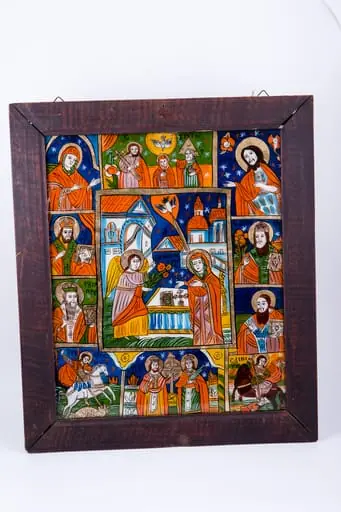
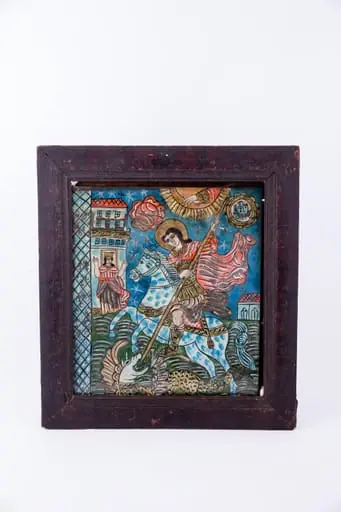
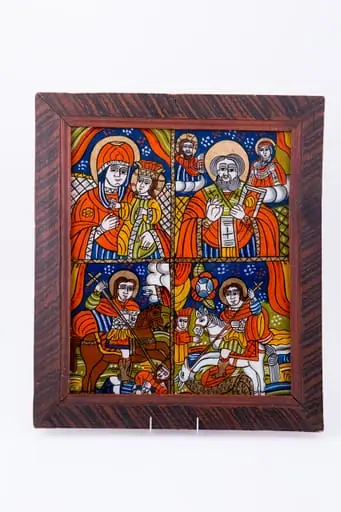 Icoana este pictată la confluența Țării Oltului cu Țara Făgărașului. Este împărțită in patru secvențe, asemenea unei ferestre în cruce. Asemenea unui prăznicar. În partea stîngă, sus, este pictată Maica Domnului Împărăteasă pe tron, cu Pruncul Iisus Hristos în brațe. În ordinea acelor de ceas, urmează Sfântul Mare Ierarh Nicolae, fpcătorul de minuni, În registrul inferior, în dreapta este Sfântul Mare Mucenic Gheorghe, purtător de biruință, omorând balaurul, fiind urmat de Sfântul Mare Mucenic Dimitrie, izvorâtor de mir. Compoziția este echilibrată și simetrică. Cromatica armonioasă, caracteristică picturii Țării Făgărașului. Pruncul Iisus Hristos din brațele Maicii Domnului se întâlnește cu Sfânta Evanghelie din mâna Sfântul Ierarh Nicolae. Cei doi sfinți mucenici martiri, militari au sulițele îndreptate înspre interior, omorând balaurul și omul cel rău. Calul Sfântului Gheorghe este alb, iar calul Sfântului Dimitrie este brun închis. Fondul întregii icoane, ca într-o armonie de unică tematică, este cerul albastru cu stele albe. Aureolele personajelor sunt aurii, prin lipirea foiței aurii. Sulițele, lăncile, balaurul și crucea de chenar interior sunt aurii. Cromatica este armonioasă și luminoasă: albastru-bleumarin, roșu vermillon, verde, galben-ocru, brun, negru, alb. Icoana este un prăznicar cu o tematică rară, din Țara Făgărașului.
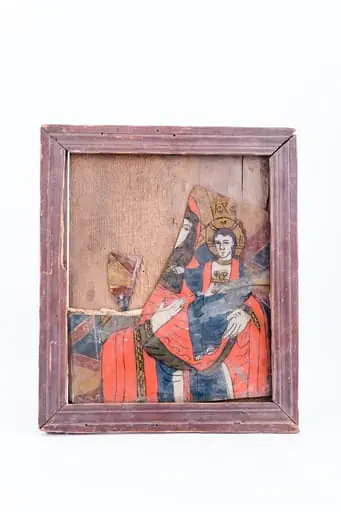 Maica Domnului ține în brațe Pruncul Iisus Hristos arătându-L ca fiind Calea, Adevărul și Viața. Este Maica Domnului Hodighitria. Maica Domnului este înveșmântată în mantie cu maforion roșu vermillon și interiorul căputușit cu albastru și sacos verde - nuanță de spanac-avocado. Pruncul Iisus Hristos este înveșmântat în albastru ceruleum, cu aureolă. Fondul icoanei este albastru cu un chenar decorativ geometrizant, format din romburi și triunghiuri albastru și ocru. Cromatică: roșu vermillon, verde, abastru, alb, ocru-brun-bronziu. Inscripția din româno-chirilică se traduce MP IC XC Maica Domnului Iisus Hristos. Icoana este de Țara Oltului. Este spartă.
 Maica Domnului ține în brațe Pruncul Iisus Hristos, care arată cu mâna dreaptă înspre Maica Domnului, prezentându-ne-o. Maica Domnului este înveșmântată în mantie cu maforion roșu-acajou, cu broderie dantelată pe marginile mânecilor, cu interiorul negru și ciupag brodat auriu-bronziu. Veșmântul este de o eleganță deosebită. Pruncul Iisus Hristos este înveșmântat cu sacos și omofor roșu-acajou, de asemenea, cu interiorul ocru-galben rozaliu, cu coroană și aureolă pe cap. Maica Domnului cu mâna dreaptă ni-L arată pe Mântuitorul Iisus Hristos ca fiind Calea. Adevărul și Viața, este tip Hodighitria. Culorile Maicii Domnului reprezintă noblețea împărătească, suferința monahică și nădejdea bucuriei Învierii. Culorile Mântuitorului reprezintă suferința monahică și patima dureroasă a Jertfei. Fondul icoanei este întunecat, în contrast cu lumina dăruită de chipurile sfinte și veșmintele senine, cu stele crem-gabene. Cromatică: roșu stacojiu, brun, acajou, galben-ocru, brun, bej, alb, negru. Icoana este încadrată și de un chenar decorativ-geometrizant liniar roșu. Inscripția din româno-chirilică se traduce MP IC XC Maica Domnului Iisus Hristos. Icoana este de iconostas. Desenul, cromatica, compoziția, fondul, încadrarea, trăsăturile chipurilor sunt deosebit de frumoase. Icoana este o bijuterie! Este atribuită lui Toader Popovici Zugrav.
 IcoaȚări
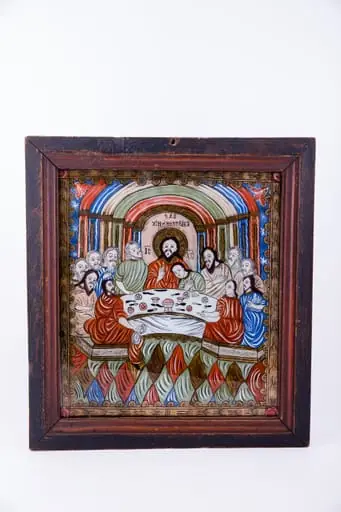 Scena Cinei celei de Taină se desfășoară într-un interior sugerat de elemente arhitectonice, coloane și șase arcade alternativ-cromatic pictate. În centrul icoanei este Mântuitorul Iisus Hristos binecuvântând mâncarea, la masă, alături de ucenici și apostoli. Cu brațul stâng îl ține lipit de piept pe Ioan cel iubit, Sfântul Apostol și Evanghelist Ioan, Teologul. Pe masă sunt așezate un potir pentru vin și tacâmuri și farfurioare mici și pâinici rotunde. Personajele au chipurile expresive, veșmintele personajelor și faldurile feței de masă, cât și draperiile sunt pictate cu măiestrie de pictor. Veșmintele sunt roșii, albastre, vernil și bej, cu liniuțe albe discrete. Cromatica este armonioasă și echilibrată, pornindu-se gradual dinspre exterior înspre interior, de la albastru spre roșu, ajungându-se la albul luminos al mesei celor dăruite. Compoziția este încadrată elemente de arhitectură, draperii, coloane, creându-se, astfel, intimitatea Cinei celei de Taină. Totul este concentric, strângându-se în jurul Potirului. De remarcat este alternanța romboidală din registrul inferior, policromatică. În registrul superior, sunt coloanele și arcadele policrome. Iuda Iscarioteanul este în partea stângă a mesei și se remarcă în mâna lui punga cu cei 30 de arginți, simbolul trădării și vicleniei. Pictura este specifică Țării Făgărașului și datorită compoziției echilibrate, simetrice și circulare. Icoana este pictată de Savu Moga, din Arpașu de Sus, Țara Făgărașului. Inscripția în chirilică se traduce ICXC Iisus Hristos Cina cea de Taină. Cromatica armonioasă este o caracteristică a icoanelor lui Savu Moga: roșu, albastru, vernil, gri, brun, alb, negru. Întreaga narațiune iconografică este încadrată într-un chenar geometrizant, ca de carte veche, asemenea unei dantelării cu colțișori.
 Icoana Schimbarea la Față reprezintă pentru teologia ortodoxă punctul-cheie în privința privirii și vederii Chipului Lui Dumnezeu. Compoziția iconografică Îl înfățișează pe Hristos stând nemișcat, învăluit în Slava și Pacea, izvorâte din El Însuși. Iisus Hristos este străjuit de Sfântul Mare Proroc Ilie Tesviteanul în stânga și de Profetul Moise, în dreapta. Mântuitorul Iisus Hristos între cei doi Moise și Ilie formează un cerc perfect, ce se află sub vălul de lumină necreată, Lumina Sfântului Duh. În registrul inferior, în contrast cu nemișcarea registrului superior, se remarcă dinamismul celor trei martori ai Schimbării la Față a Mântuitorului Iisus Hristos: Petru, Iacob și Ioan. Veșmintele sunt realizate în combinație de gri cu roșu, gri cu albastru, gri cu galben-ocru. Mandorlele de nouri albi rotunzi, pufoși despart și unesc registrele. Mântuitorul Iisus Hristos este deasupra vârfului Muntelui Tabor al Galileii. Cromatica este picturală și armonioasă: alb, galben, auriu, ocru, albastru bleu-ciel, brun, cafeniu, negru. Icoana este semnată - semnătură indescifrabilă și datată 20 oct 1831. Inscripția din româno-chirilică se traduce: Schimbarea la Față.
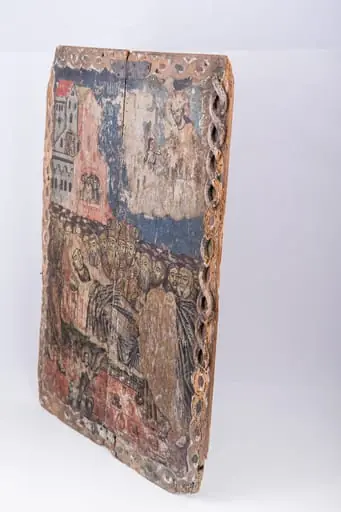 Trupul adormit al Maicii Domnului este susținut pe brațe de o mulțime de credincioși, preoți, arhierei, mitropoliți, ucenici, sfinți părinți. Mulțimea de oameni este sugerată printr-o mare de capete. Trăsăturile Chipului Maicii Domnului sunt pictate cu măiestrie. În registrul inferior, pe o pardoseală roz este un înger ocrotitor. În registrul superior, în dreapta sunt elemente de arhitectură, la ferestre fiind iarăși și iarăși personaje privind cu tristețe și îndurerare. Toate chipurile din icoană arată tristețea și durerea despărțirii de Maica Domnului mult-iubită. În stânga, Dumnezeu-Tatăl o ia de mână pe Maica Domnului, ridicând-o la Cer, și cuprinzând-o în brațele părintești. Maica Domnului este asemenea unei fetițe, ca în icoana cu Intrarea Maicii Domnului în biserică. Cromatica este armonioasă, delicată și rafinată: roșu sângeriu, roz, albastru cobalt, gri, alb, bej, brun, negru. Inscripția din româno-chirilică se traduce Adormirea Maicii Domnului IC XC Iisus Hristos. Icoana este încadrată de un chenar decorativ geometrizant reprezentat de un lanț ondulatoriu.
 Icoaării
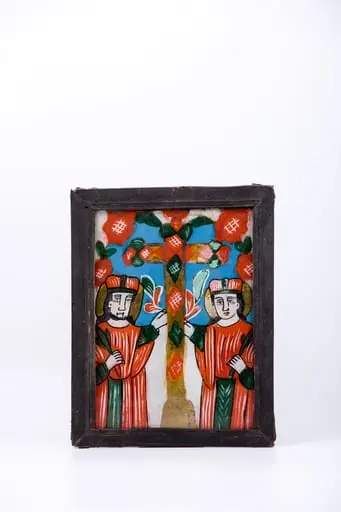 În centrul icoanei este Crucea aurie-bronzie, ornamentată cu elemente decorative romboidale, roșii și verzi, cu grilaj alb, susținută fiind de Sfinții Împărați întocmai cu apostolii. În dreapta crucii este Sfântul Împărat Constantin și în stânga este Împărăteasa Elena, mama sa. În spatele Crucii este un spațiu alb izvorâtor de lumină și două elemente vegetale, asemenea unor martori - îngeri păzitori. Crucea găsită este susținută cu bucurie de cei doi sfinți. Veșmintele Sfinților Constantin și Elena sunt într-o combinație de roșu vermillon și verde brad, alb fin-dungate. Spațiul alb de lumină duce gândul la Crucea de lumină apărută pe cer In hoc signo vinces - prin acest semn vei învinge. Icoana este bogat ornamentată de culoare, lumină și detalii semnificative, elemente decorative geometrizante - romburi și caroiaje albe. Fondul icoanei este cerul senin, albastru regal deschis. Întreaga compoziție este încadrată armonios de un chenar decorativ geometrizant și fitomorf, format din rujele de Nicula. Cromatica este armonioasă și senină: roșu vermillon, galben-ocru, albastru regal, verde brad, alb, negru. Icoana este de Nicula.
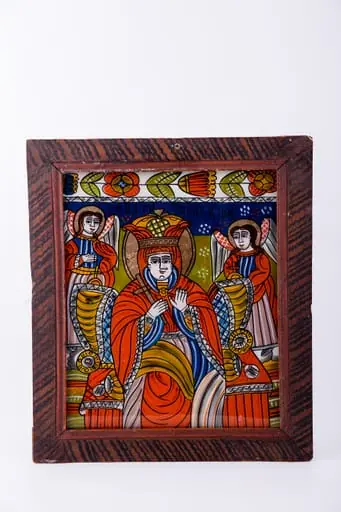 Sfânta Mare Cuvioasă Parascheva de la Iași este așezată pe tron împărătesc, având crucea în mâna dreaptă. Este îmbrăcată în veșmânt roșu vermillon, cu interiorul căptușit cu galben și albastru. Peste maforionul roșu, sfânta cuvioasă are coroniță și aureolă. În spatele tronului, stânga și dreapta, este câte un înger păzitor. În registrul superior este un segment de ghirlandă decorativă, cu flori și frunze. Fondul icoanei este împărțit în o treime de cer albastru și doua treimi vegetație de deal verde, lipite prin stele albe. Stelele sunt desenate asemenea unor floricele stilizate. Compoziția este elaborată și detaliile se întrepătrund armonios cu alternanța cromatică: roșu vermillon, galben, albastru, verde, alb. Este o icoană cu aer luminos, specific Țării Făgărașului. Inscripția în chirilică este pe albastrul cerului, în traducere Sfânta Paraschiva. Cromatica: albastru, roșu vermillon, galben, ocru, verde olive, alb, negru.
 Sfân
Sfân